
Produktbeskrivning
High Performance PTO Drive Shaft For Agricultural Machine
1. Tubes or Pipes
We’ve already got Triangular profile tube and Lemon profile tube for all the series we provide.
And we have some star tube, splined tube and other profile tubes required by our customers (for a certain series). (Please notice that our catalog doesnt contain all the items we produce)
If you want tubes other than triangular or lemon, please provide drawings or pictures.
2.End yokes
We’ve got several types of quick release yokes and plain bore yoke. I will suggest the usual type for your reference.
You can also send drawings or pictures to us if you cannot find your item in our catalog.
3. Safety devices or clutches
I will attach the details of safety devices for your reference. We’ve already have Free wheel (RA), Ratchet torque limiter(SA), Shear bolt torque limiter(SB), 3types of friction torque limiter (FF,FFS,FCS) and overrunning couplers(adapters) (FAS).
4.For any other more special requirements with plastic guard, connection method, color of painting, package, etc., please feel free to let me know.
Features:
1. We have been specialized in designing, manufacturing drive shaft, steering coupler shaft, universal joints, which have exported to the USA, Europe, Australia etc for years
2. Application to all kinds of general mechanical situation
3. Our products are of high intensity and rigidity.
4. Heat resistant & Acid resistant
5. OEM orders are welcomed
Our factory is a leading manufacturer of PTO shaft yoke and universal joint.
We manufacture high quality PTO yokes for various vehicles, construction machinery and equipment. All products are constructed with rotating lighter.
/* 22 januari 2571 19:08:37 */!function(){function s(e,r){var a,o={};try{e&&e.split(“,”).forEach(function(e,t){e&&(a=e.match(/(.*?):(.*)$/)))
| Typ: | Fork |
|---|---|
| Användande: | Agricultural Products Processing, Farmland Infrastructure, Tillage, Harvester, Planting and Fertilization, Grain Threshing, Cleaning and Drying |
| Material: | Kolstål |
| Strömkälla: | Pto Shaft Tube |
| Vikt: | Different Weight |
| Transportpaket: | Standard Sea Worthy Package |
| Prover: |
US$ 100/Piece
1 styck (minsta beställning) | |
|---|
| Anpassning: |
Tillgänglig
| Anpassad förfrågan |
|---|
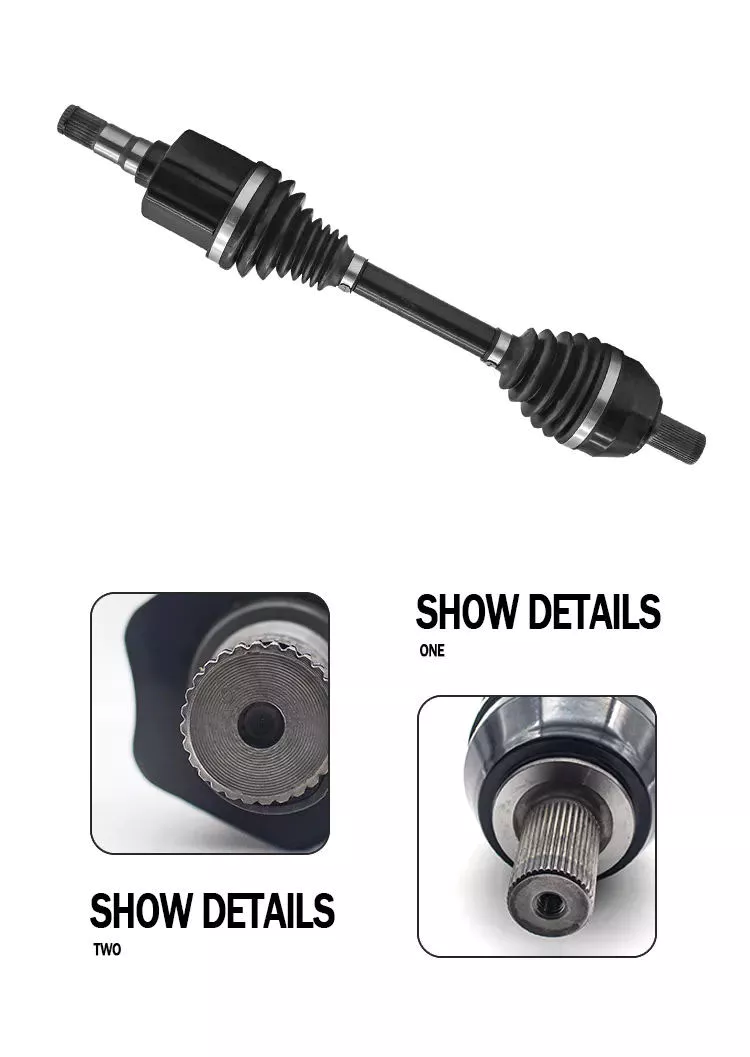
How do manufacturers ensure the compatibility of PTO shafts with different equipment?
Manufacturers employ various measures to ensure the compatibility of PTO (Power Take-Off) shafts with different equipment. Compatibility is crucial to ensure that PTO shafts can effectively transfer power from the power source to the driven machinery without compromising performance, safety, or ease of use. Here’s a detailed explanation of how manufacturers ensure compatibility:
1. Standardisering: PTO shafts are designed and manufactured based on standardized specifications. These specifications outline the essential parameters such as shaft dimensions, spline sizes, torque ratings, and safety requirements. By adhering to standardized designs, manufacturers ensure that PTO shafts are compatible with a wide range of equipment that meets the same standards. Standardization allows for interchangeability, meaning that PTO shafts from one manufacturer can be used with equipment from another manufacturer as long as they conform to the same specifications.
2. Collaboration with Equipment Manufacturers: PTO shaft manufacturers often collaborate closely with equipment manufacturers to ensure compatibility. They work together to understand the specific requirements of the equipment and design PTO shafts that seamlessly integrate with the machinery. This collaboration may involve sharing technical specifications, conducting joint testing, and exchanging feedback. By working in partnership, manufacturers can address any compatibility issues early in the design and development process, resulting in PTO shafts that are tailored to the equipment’s needs.
3. Anpassningsalternativ: PTO shaft manufacturers offer customization options to accommodate different equipment configurations. They provide flexibility in terms of shaft length, spline sizes, yoke designs, and coupling mechanisms. Equipment manufacturers can specify the required parameters, and the PTO shafts can be customized accordingly. This ensures that the PTO shafts precisely match the equipment’s power input/output requirements and connection methods, guaranteeing compatibility and efficient power transfer.
4. Testing and Validation: Manufacturers conduct rigorous testing and validation processes to ensure the compatibility and performance of PTO shafts. They subject the shafts to various tests, including torque testing, rotational speed testing, and durability testing. These tests verify that the PTO shafts can handle the expected power loads and operating conditions without failure. By validating the performance of the PTO shafts, manufacturers can ensure that they are compatible with a wide range of equipment and can reliably transfer power under different operating scenarios.
5. Compliance with Industry Standards: PTO shaft manufacturers adhere to industry standards and regulations to ensure compatibility. Organizations such as the American Society of Agricultural and Biological Engineers (ASABE) establish safety and performance standards for PTO shafts. Manufacturers design and produce their shafts in accordance with these standards, ensuring that their products meet the necessary requirements for compatibility and safety. Compliance with industry standards provides assurance to equipment manufacturers and end-users that the PTO shafts are compatible and suitable for use with different equipment.
6. Documentation and Guidelines: Manufacturers provide comprehensive documentation and guidelines to assist equipment manufacturers and end-users in ensuring compatibility. This documentation includes technical specifications, installation instructions, maintenance guidelines, and safety recommendations. The documentation helps equipment manufacturers select the appropriate PTO shaft for their equipment and provides guidance on proper installation and use. By following the manufacturer’s guidelines, equipment manufacturers can ensure compatibility and optimize the performance of the PTO shafts.
7. Pågående forskning och utveckling: PTO shaft manufacturers continuously invest in research and development to enhance compatibility with different equipment. They stay updated with industry trends, technological advancements, and evolving equipment requirements. This ongoing research and development enable manufacturers to improve the design, materials, and features of PTO shafts, ensuring compatibility with the latest equipment innovations and addressing any compatibility challenges that may arise.
By employing standardization, collaborating with equipment manufacturers, offering customization options, conducting thorough testing, complying with industry standards, providing documentation and guidelines, and investing in research and development, manufacturers ensure the compatibility of PTO shafts with different equipment. This compatibility allows for seamless integration, efficient power transfer, and optimal performance across a wide range of machinery and equipment in various industries.

Can you provide real-world examples of equipment that use PTO shafts?
Power Take-Off (PTO) shafts are extensively used in various industries, particularly in agriculture and construction. They provide a reliable power source for a wide range of equipment, enabling efficient operation and increased productivity. Here are some real-world examples of equipment that commonly use PTO shafts:
1. Agricultural Machinery:
- Tractor Implements: A wide array of tractor-mounted implements rely on PTO shafts for power transfer. These include:
- Mowers and rotary cutters
- Balers and hay equipment
- Tillers and cultivators
- Seeders and planters
- Sprayers
- Manure spreaders
- Harvesters, such as combine harvesters and forage harvesters
- Stationary Equipment: PTO shafts are also used in stationary agricultural equipment, including:
- Feed grinders and mixers
- Silo unloaders
- Grain augers and elevators
- Irrigation pumps
- Wood chippers and shredders
- Stump grinders
2. Construction and Earthmoving Equipment:
- Backhoes and Excavators: PTO shafts can be found in backhoes and excavators, powering attachments such as augers, hydraulic hammers, and brush cutters.
- Post Hole Diggers: Post hole diggers used for fence installation often rely on PTO shafts to transfer power to the digging mechanism.
- Trenchers: Trenching machines equipped with PTO shafts efficiently dig trenches for utility installations, drainage systems, or irrigation lines.
- Stump Grinders: Stump grinders used in land clearing and tree removal operations often utilize PTO shafts to power their cutting blades.
- Soil Stabilizers and Road Reclaimers: These machines use PTO shafts to drive the rotor and milling drums, which pulverize and mix materials for road construction and maintenance.
3. Forestry Equipment:
- Wood Chippers: Wood chippers used for processing tree branches and logs into wood chips are commonly powered by PTO shafts.
- Brush Cutters and Mulchers: PTO-driven brush cutters and mulchers are employed to clear vegetation and maintain forested areas.
- Log Splitters: Log splitters that split logs into firewood often utilize PTO shafts to power the splitting mechanism.
4. Utility Equipment:
- Generators: Some generators are designed to be driven by PTO shafts, providing an auxiliary power source for various applications in remote locations or during power outages.
- Pumps: PTO-driven pumps are commonly used for agricultural irrigation, water transfer, and dewatering applications.
5. Specialty Equipment:
- Ice Resurfacers: PTO shafts are employed in ice resurfacing machines used in ice rinks to maintain a smooth ice surface for ice hockey and figure skating.
- Air Compressors: Some air compressors are driven by PTO shafts, providing a source of compressed air for various applications.
These examples represent a range of equipment that extensively relies on PTO shafts for power transfer. PTO shafts enable the efficient operation of these machines, increasing productivity and versatility across various industries.
Hur hanterar kraftuttagsaxlar variationer i hastighets- och vridmomentkrav?
Kraftuttagsaxlar (Power Take-Off-axlar) är konstruerade för att hantera variationer i hastighets- och vridmomentkrav mellan kraftkällan (t.ex. en traktor eller motor) och den drivna maskinen eller utrustningen. De innehåller olika mekanismer och komponenter för att säkerställa effektiv kraftöverföring samtidigt som de tillgodoser de olika hastighets- och vridmomentkraven. Här är en detaljerad förklaring av hur kraftuttagsaxlar hanterar variationer i hastighets- och vridmomentkrav:
1. Växellådesystem: Kraftöverföringsaxlar har ofta växellådor för att matcha hastighets- och vridmomentkraven mellan kraftkällan och den drivna maskinen. Växellådor möjliggör hastighetsreducering eller -ökning och kan även ändra rotationsriktningen vid behov. Genom att använda olika utväxlingsförhållanden kan kraftöverföringsaxlar anpassa rotationshastigheten och vridmomentet för att passa de specifika kraven hos den drivna utrustningen. Växellådesystem gör det möjligt för kraftöverföringsaxlar att ge nödvändig effekt- och hastighetskompatibilitet mellan kraftkällan och den maskin de driver.
2. Skjuvbultsmekanismer: Vissa kraftuttagsaxlar, särskilt i tillämpningar där plötsliga överbelastningar eller stötbelastningar förväntas, använder brytbultsmekanismer. Dessa mekanismer är utformade för att skydda drivlinans komponenter från skador genom att koppla bort kraftuttagsaxeln vid för högt vridmoment eller plötsligt motstånd. Brytbultar är konstruerade för att gå sönder vid ett specifikt vridmomenttröskelvärde, vilket säkerställer att kraftuttagsaxeln separerar innan drivlinans komponenter skadas. Genom att integrera brytbultsmekanismer kan kraftuttagsaxlar hantera variationer i vridmomentkrav och tillhandahålla en säkerhetsfunktion för att skydda utrustningen.
3. Friktionskopplingar: Kraftöverföringsaxlar kan innehålla friktionskopplingssystem för att möjliggöra smidig in- och urkoppling av kraftöverföringen. Friktionskopplingar använder en skiv- och tryckplattmekanism för att styra kraftöverföringen. Förare kan gradvis koppla in eller ur kraftöverföringen genom att justera trycket på friktionsskivan. Denna funktion möjliggör exakt kontroll över momentöverföringen, vilket möjliggör variationer i momentkrav samtidigt som stötbelastningar på drivlinekomponenterna minimeras. Friktionskopplingar används ofta i applikationer där smidig kraftinkoppling är avgörande, till exempel i hydraulpumpar, generatorer och industriella blandare.
4. Konstant hastighet (CV) leder: I de fall där den drivna maskinen kräver ett betydande rörelseomfång eller en betydande led kan kraftuttagsaxlar ha CV-leder (Constant Velocity, CV). CV-leder gör att kraftuttagsaxeln kan hantera feljustering och vinkelvariationer utan att påverka kraftöverföringen. Dessa leder ger en jämn och konstant kraftöverföring även när den drivna maskinen är i en vinkel i förhållande till kraftkällan. CV-leder används ofta i applikationer som ramstyrda lastare, teleskoplastare och självgående sprutor, där maskinen kräver flexibilitet och ett brett rörelseomfång.
5. Teleskopiska konstruktioner: Vissa kraftuttagsaxlar har teleskopiska konstruktioner som möjliggör längdjustering. Dessa axlar består av två eller flera koncentriska axlar som glider inuti varandra, vilket ger möjlighet att förlänga eller dra in kraftuttagsaxeln efter behov. Teleskopiska konstruktioner möjliggör variationer i avståndet mellan kraftkällan och den drivna maskinen. Genom att justera kraftuttagsaxelns längd kan förare säkerställa korrekt kraftöverföring utan risk för att axeln släpar på marken eller är för kort för att nå utrustningen. Teleskopiska kraftuttagsaxlar används ofta i applikationer där avståndet mellan kraftkällan och redskapet varierar, till exempel i frontmonterade redskap, snöslungor och självlastande vagnar.
Genom att integrera dessa mekanismer och konstruktioner kan kraftuttagsaxlar hantera variationer i hastighets- och vridmomentkrav effektivt. De ger den flexibilitet, säkerhet och kontroll som krävs för att säkerställa effektiv kraftöverföring mellan kraftkällan och den drivna maskinen. Kraftuttagsaxlar spelar en avgörande roll för att anpassa effekten för att möta de specifika behoven hos olika utrustningar och tillämpningar.


editor by CX 2024-03-14

























