Productbeschrijving
Premium Agricultural Machinery Transmission, Driveline, Pto Shaft
| Product No | PTO-as |
| Use For | Agricultual Machinery |
| OEM | Acceptable |
| Tube Types for PTO Shaft | Triangle,Lemon.Star |
| Universal Joint | Series1-8 |
| Colors of PTO Shaft | Base on Customer’s requirement |
| PTO Shaft Series | Series1-8 |
| Yoke Type | Available Options |
| Equipment End Connection Way | CV,Clutch,Yoke |
| Warranty | 1 jaar |
Productspecificaties
Detailed Photos
Bedrijfsprofiel
HangZhou Rongwang Industry and Trade Co., Ltd. was established in 2007. The company develops and produces gearboxes, transmission shafts, and related accessories for various types of lawn mowers, rotary tillers, excavators, and other agricultural machinery. The products are sold to various countries in Europe and America. The company currently has processing and testing equipment such as machining centers, CNC machine tools, and coordinate measuring instruments, and has a strong research and development team, as well as complete after-sales support services.
The company is committed to meeting and surpassing customer needs with a rigorous work style, providing high-performance and high-quality products. We warmly welcome domestic and foreign enterprises to come and discuss cooperation. The company is willing to take on a new look and constantly innovate. Sincere and enthusiastic service, as always, close communication and cooperation with colleagues at home and abroad, working hand in hand to create brilliance.
Applicatio
Corporate Purpose
The company always adheres to the business philosophy of “integrity, excellence, innovation, and progress” , striving for survival with quality and development with technology.The employees of Rongwang Industry and Trade have many years of experience in mechanical processing and manufacturing, while also absorbing advanced technology and processes from both domestic and foreign countries.And has passed ISO9001 quality system certification certification.
Rongwang Enterprise Purpose: To create excellent enterprises with excellent products, discounted prices, and excellent services.
Vision:Power the industry, Transmit the world.Rongwang Machinery aims to be the leader in the power transmission industry.Mission: To provide trustworthy and affordable products for our customers.”Trustworthy”means high quality and safe products.We are trying to offer lower cost products without sacrificing quality.
/* May 10, 2571 16:49:51 */!function(){function d(e,r){var a,o={};try{e&&e.split(“,”).forEach(function(e,t){e&&(a=e.match(/(.*?):(.*)$/))&&1
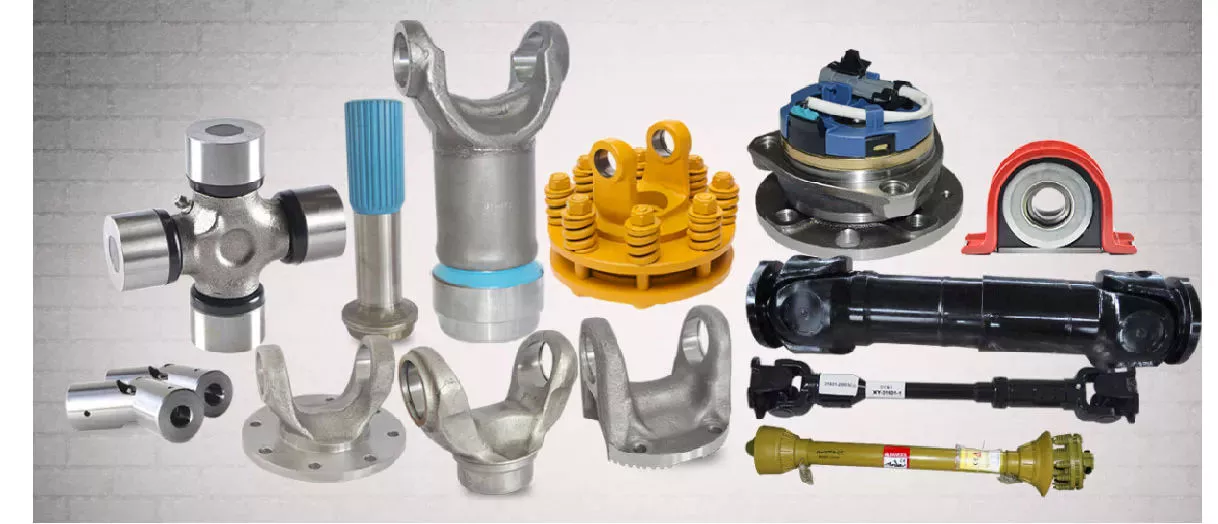
Are there variations in PTO shaft designs for different types of machinery?
Yes, there are variations in PTO (Power Take-Off) shaft designs to accommodate the specific requirements of different types of machinery. PTO shafts are highly versatile and adaptable components used to transfer power from a power source, such as a tractor or engine, to driven machinery or equipment. The design variations in PTO shafts are necessary to ensure compatibility, efficiency, and safety in various applications. Here’s a detailed explanation of the different PTO shaft designs for different types of machinery:
1. Standard PTO Shafts: Standard PTO shafts are the most common design and are widely used in a variety of applications. They typically consist of a solid steel shaft with a universal joint at each end. These universal joints allow for angular misalignment between the power source and the driven machinery. Standard PTO shafts are suitable for applications where the distance between the power source and the driven machinery remains relatively fixed. They are commonly used in agricultural implements, such as mowers, balers, tillers, and seeders, as well as in industrial applications.
2. Telescopic PTO Shafts: Telescopic PTO shafts feature a telescoping design that allows for length adjustment. These shafts consist of two or more concentric shafts that can slide within each other. Telescopic PTO shafts are beneficial in applications where the distance between the power source and the driven machinery varies. By adjusting the length of the shaft, operators can ensure proper power transmission without the risk of the shaft dragging on the ground or being too short to reach the equipment. Telescopic PTO shafts are commonly used in front-mounted implements, snow blowers, self-loading wagons, and other applications where the distance between the power source and the implement changes.
3. CV (Constant Velocity) PTO Shafts: CV PTO shafts incorporate Constant Velocity joints to accommodate misalignment and angular variations. These joints maintain a constant speed and torque transfer even when the driven machinery is at an angle relative to the power source. CV PTO shafts are beneficial in applications where the driven machinery requires flexibility and a wide range of movement. They are commonly used in articulated loaders, telescopic handlers, self-propelled sprayers, and other equipment that requires continuous power transmission while operating at various angles.
4. Gearbox Driven PTO Shafts: Some machinery requires specific speed or torque ratios between the power source and the driven equipment. In such cases, PTO shafts may incorporate gearbox systems. Gearbox driven PTO shafts allow for speed reduction or increase and can change the rotational direction if necessary. The gear ratios in the gearbox can be adjusted to match the speed and torque requirements of the driven machinery. These PTO shafts are commonly used in applications where the power source operates at a different speed or torque level than the equipment it drives, such as in certain industrial manufacturing processes and specialized machinery.
5. High-Torque PTO Shafts: Some heavy-duty machinery requires high torque levels for power transmission. High-torque PTO shafts are designed to handle these demanding applications. They are constructed with reinforced components, including larger diameter shafts and heavier-duty universal joints, to withstand the increased torque requirements. High-torque PTO shafts are commonly used in equipment such as wood chippers, crushers, and heavy-duty agricultural implements that require substantial power and torque for their operation.
6. Safety PTO Shafts: Safety is a crucial consideration when using PTO shafts. Safety PTO shafts incorporate mechanisms to reduce the risk of accidents and injuries. One common safety feature is the use of protective guards that cover the rotating shaft to prevent accidental contact. These guards are typically made of metal or plastic and are designed to shield the rotating components while allowing the necessary movement for power transmission. Safety PTO shafts are used in various applications where the risk of entanglement or accidental contact with the rotating shaft is high, such as in grass mowers, rotary cutters, and other equipment used in landscaping and agriculture.
These are some of the key variations in PTO shaft designs for different types of machinery. The specific design used depends on factors such as the application requirements, power source characteristics, torque levels, movement flexibility, and safety considerations. PTO shaft manufacturers offer a range of designs to ensure compatibility and efficient power transmission in diverse industries and applications.
Zijn er beperkingen of nadelen verbonden aan aftakasassen?
Hoewel aftakasassen (PTO-assen) talrijke voordelen bieden op het gebied van krachtoverbrenging en veelzijdigheid, hebben ze ook bepaalde beperkingen en nadelen. Het is belangrijk om met deze factoren rekening te houden bij het gebruik van aftakasassen om een veilige en efficiënte werking te garanderen. Hieronder volgt een gedetailleerde uitleg van enkele beperkingen en nadelen die verbonden zijn aan aftakasassen:
1. Veiligheidsrisico's: Een van de grootste zorgen bij aftakasassen is het potentiële veiligheidsrisico. Aftakasassen draaien met hoge snelheden en kunnen een aanzienlijk risico vormen als ze niet goed afgeschermd of behandeld zijn. Onbedoeld contact met een onbeschermde of onvoldoende afgeschermde aftakas kan leiden tot ernstig letsel, waaronder beknelling, amputatie of zelfs de dood. Het is cruciaal om veiligheidsrichtlijnen te volgen, de juiste afscherming te implementeren en ervoor te zorgen dat operators goed getraind zijn in veilige hanteringsprocedures om deze risico's te beperken.
2. Onderhoud en smering: Aftakasassen vereisen regelmatig onderhoud en smering om optimale prestaties en een lange levensduur te garanderen. De bewegende onderdelen, zoals kruiskoppelingen en spiebanen, moeten volgens de aanbevolen intervallen worden geïnspecteerd, gereinigd en gesmeerd. Verwaarlozing van het onderhoud kan leiden tot voortijdige slijtage, verminderde efficiëntie en mogelijke storingen. Goed onderhoud, inclusief regelmatige inspecties en tijdige smering, is essentieel om deze problemen te voorkomen.
3. Uitlijning en hoeken: De aftakas is afhankelijk van een correcte uitlijning en de juiste hoeken voor een efficiënte krachtoverbrenging. Een verkeerde uitlijning of te grote hoeken tussen de krachtbron en de aangedreven machine kunnen leiden tot verhoogde slijtage en belasting van de onderdelen, met vroegtijdige uitval tot gevolg. Het is belangrijk om een correcte uitlijning en hoekafstelling te garanderen, bijvoorbeeld met behulp van verstelbare schuifjukken, om overmatige belasting van de aftakas en de bijbehorende apparatuur te voorkomen.
4. Lengtebeperkingen: Aftakasassen hebben beperkingen qua maximale en minimale lengte vanwege technische beperkingen. Het telescopische ontwerp maakt enige aanpassing mogelijk, maar er is een praktische limiet aan hoeveel de as kan uitschuiven of intrekken. Als de afstand tussen de krachtbron en de aangedreven machine de maximale of minimale lengte van de aftakas overschrijdt, of onder de minimale lengte komt, kunnen alternatieve oplossingen of aanpassingen nodig zijn. In sommige gevallen kunnen extra componenten, zoals aandrijfasverlengstukken of tandwielkasten, nodig zijn om de afstand te overbruggen.
5. Compatibiliteit: Hoewel fabrikanten ernaar streven compatibiliteit te garanderen, kan het nog steeds een uitdaging zijn om de juiste aftakas te vinden voor specifieke machineconfiguraties. Apparatuur kan unieke eisen stellen aan bijvoorbeeld spiebanen, koppelwaarden of aansluitmethoden, die mogelijk niet direct beschikbaar of compatibel zijn met standaard aftakassen. Maatwerk kan nodig zijn om deze compatibiliteitsproblemen op te lossen, wat kan leiden tot hogere kosten of langere levertijden.
6. Geluid en trillingen: Aftakasassen kunnen tijdens gebruik aanzienlijk lawaai en trillingen produceren, vooral bij hogere snelheden. Dit kan hinderlijk zijn voor machinisten en kan extra maatregelen vereisen om het geluidsniveau te verlagen of trillingen te dempen. Overmatige trillingen kunnen ook de algehele prestaties en levensduur van de aftakas en de aangesloten apparatuur beïnvloeden. Het gebruik van trillingsdempers of flexibele koppelingen kan deze problemen helpen verhelpen.
7. Vermogenslimieten: Aftakasassen hebben specifieke vermogenslimieten op basis van hun ontwerp, materialen en componenten. Het overschrijden van deze vermogenslimieten kan leiden tot voortijdige slijtage, defecten aan componenten of zelfs asbreuk. Het is cruciaal om de aanbevolen vermogenswaarden voor aftakasassen te begrijpen en na te leven om een veilige en betrouwbare werking te garanderen. In sommige gevallen kan het nodig zijn om een aftakas met een hogere capaciteit te installeren of extra componenten voor de krachtoverbrenging toe te voegen om aan de hogere vermogensvereisten te voldoen.
8. Complexe installatie en verwijdering: Het monteren en demonteren van aftakasassen kan een complex proces zijn, vooral in krappe ruimtes of bij het werken met zware machines. Het kan nodig zijn om spiebanen uit te lijnen, koppelingen aan te sluiten en vergrendelingsmechanismen vast te zetten. Onjuiste montage- of demontagetechnieken kunnen leiden tot schade aan de as of de bijbehorende apparatuur. Goede training, de juiste apparatuur en het volgen van de richtlijnen van de fabrikant zijn essentieel om de montage en demontage van aftakasassen te vereenvoudigen en veilig te laten verlopen.
Ondanks deze beperkingen en nadelen blijven aftakasassen veelvuldig gebruikt en waardevolle componenten voor krachtoverbrenging in diverse industrieën. Door rekening te houden met deze aspecten en de juiste veiligheidsmaatregelen, onderhoudsprocedures en uitlijningstechnieken toe te passen, kunnen de potentiële nadelen van aftakasassen effectief worden beperkt, wat een veilige en efficiënte werking mogelijk maakt.

How do PTO shafts handle variations in speed and torque requirements?
PTO shafts (Power Take-Off shafts) are designed to handle variations in speed and torque requirements between the power source (such as a tractor or engine) and the driven machinery or equipment. They incorporate various mechanisms and components to ensure efficient power transmission while accommodating the different speed and torque demands. Here’s a detailed explanation of how PTO shafts handle variations in speed and torque requirements:
1. Gearbox Systems: PTO shafts often incorporate gearbox systems to match the speed and torque requirements between the power source and the driven machinery. Gearboxes allow for speed reduction or increase and can also change the rotational direction if necessary. By using different gear ratios, PTO shafts can adapt the rotational speed and torque output to suit the specific requirements of the driven equipment. Gearbox systems enable PTO shafts to provide the necessary power and speed compatibility between the power source and the machinery they drive.
2. Shear Bolt Mechanisms: Some PTO shafts, particularly in applications where sudden overloads or shock loads are expected, use shear bolt mechanisms. These mechanisms are designed to protect the driveline components from damage by disconnecting the PTO shaft in case of excessive torque or sudden resistance. Shear bolts are designed to break at a specific torque threshold, ensuring that the PTO shaft separates before the driveline components suffer damage. By incorporating shear bolt mechanisms, PTO shafts can handle variations in torque requirements and provide a safety feature to protect the equipment.
3. Friction Clutches: PTO shafts may incorporate friction clutch systems to enable smooth engagement and disengagement of power transfer. Friction clutches use a disc and pressure plate mechanism to control the transmission of power. Operators can gradually engage or disengage the power transfer by adjusting the pressure on the friction disc. This feature allows for precise control over torque transmission, accommodating variations in torque requirements while minimizing shock loads on the driveline components. Friction clutches are commonly used in applications where smooth power engagement is essential, such as in hydraulic pumps, generators, and industrial mixers.
4. Constant Velocity (CV) Joints: In cases where the driven machinery requires a significant range of movement or articulation, PTO shafts may incorporate Constant Velocity (CV) joints. CV joints allow the PTO shaft to accommodate misalignment and angular variations without affecting power transmission. These joints provide a smooth and constant power transfer even when the driven machinery is at an angle relative to the power source. CV joints are commonly used in applications such as articulated loaders, telescopic handlers, and self-propelled sprayers, where the machinery requires flexibility and a wide range of movement.
5. Telescopic Designs: Some PTO shafts feature telescopic designs that allow for length adjustment. These shafts consist of two or more concentric shafts that slide within each other, providing the ability to extend or retract the PTO shaft as needed. Telescopic designs accommodate variations in the distance between the power source and the driven machinery. By adjusting the length of the PTO shaft, operators can ensure proper power transmission without the risk of the shaft dragging on the ground or being too short to reach the equipment. Telescopic PTO shafts are commonly used in applications where the distance between the power source and the implement varies, such as in front-mounted implements, snow blowers, and self-loading wagons.
By incorporating these mechanisms and designs, PTO shafts can handle variations in speed and torque requirements effectively. They provide the necessary flexibility, safety, and control to ensure efficient power transmission between the power source and the driven machinery. PTO shafts play a critical role in adapting power to meet the specific needs of various equipment and applications.


editor by lmc 2024-11-19