製品説明
T4-660-01B-07G-YIIIP Agriculture PTO Drive Shaft for Earth Mover and Potato Harvester
| Product: | PTO駆動シャフト |
| Model: | T4-660-01B-07G-YIIIP |
| Size: | φ27*74.6 Length 660mm |
| Raw Material: | 45# Steel |
| Hardness: | 58-64HRC |
| Delivery Date: | 7-60 Days |
| MOQ: | 100 sets or according to stocks without minimum Qty. |
| Sample: | Acceptable |
| We could produce all kinds of PTO Drive Shaft and Parts according to customers’ requirement. | |
| REF. | UJ | L.mm |
| T4-660-01B-07G-YIIIP | ø27*74.6 | 660 |
About us
We have more than 17 years experience of Spare parts, especially on Drive Line Parts.
We deeply participant in the Auto Spare parts business in HangZhou city which is the most import spare parts production area in China.
We are supply products with good cost performance for different customers of all over the world.
We keep very good relationship with local produces with the WIN-WIN-WIN policy.
Factory supply good and fast products;
We supply good and fast service;
And Customers gain the good products and good service for their customers.
This is a healthy and strong equilateral triangle keep HangZhou Speedway going forward until now.
/* 2571 年 1 月 22 日 19:08:37 */!function(){function s(e,r){var a,o={};try{e&&e.split(“,”).forEach(function(e,t){e&&(a=e.match(/(.*?):(.*)$/))&&1
| タイプ: | Transmission |
|---|---|
| 使用法: | Tillage, Harvester, Planting and Fertilization |
| 材料: | 45# Steel |
| 電源: | ディーゼル |
| 重さ: | 8 |
| アフターサービス: | オンラインサポート |
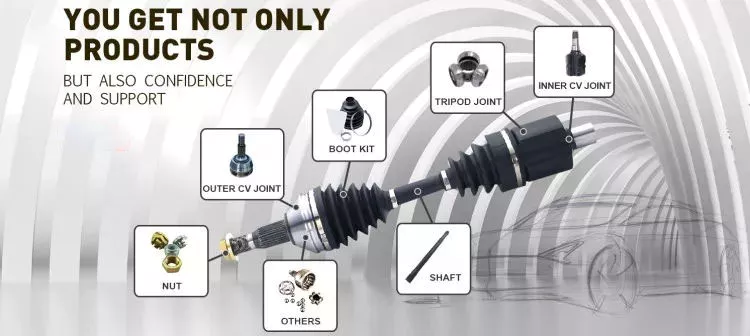
How do drive shafts ensure efficient power transfer while maintaining balance?
Drive shafts employ various mechanisms to ensure efficient power transfer while maintaining balance. Efficient power transfer refers to the ability of the drive shaft to transmit rotational power from the source (such as an engine) to the driven components (such as wheels or machinery) with minimal energy loss. Balancing, on the other hand, involves minimizing vibrations and eliminating any uneven distribution of mass that can cause disturbances during operation. Here’s an explanation of how drive shafts achieve both efficient power transfer and balance:
1. Material Selection:
The material selection for drive shafts is crucial for maintaining balance and ensuring efficient power transfer. Drive shafts are commonly made from materials such as steel or aluminum alloys, chosen for their strength, stiffness, and durability. These materials have excellent dimensional stability and can withstand the torque loads encountered during operation. By using high-quality materials, drive shafts can minimize deformation, flexing, and imbalances that could compromise power transmission and generate vibrations.
2. Design Considerations:
The design of the drive shaft plays a significant role in both power transfer efficiency and balance. Drive shafts are engineered to have appropriate dimensions, including diameter and wall thickness, to handle the anticipated torque loads without excessive deflection or vibration. The design also considers factors such as the length of the drive shaft, the number and type of joints (such as universal joints or constant velocity joints), and the use of balancing weights. By carefully designing the drive shaft, manufacturers can achieve optimal power transfer efficiency while minimizing the potential for imbalance-induced vibrations.
3. Balancing Techniques:
Balance is crucial for drive shafts as any imbalance can cause vibrations, noise, and accelerated wear. To maintain balance, drive shafts undergo various balancing techniques during the manufacturing process. Static and dynamic balancing methods are employed to ensure that the mass distribution along the drive shaft is uniform. Static balancing involves adding counterweights at specific locations to offset any weight imbalances. Dynamic balancing is performed by spinning the drive shaft at high speeds and measuring any vibrations. If imbalances are detected, additional adjustments are made to achieve a balanced state. These balancing techniques help minimize vibrations and ensure smooth operation of the drive shaft.
4. Universal Joints and Constant Velocity Joints:
Drive shafts often incorporate universal joints (U-joints) or constant velocity (CV) joints to accommodate misalignment and maintain balance during operation. U-joints are flexible joints that allow for angular movement between shafts. They are typically used in applications where the drive shaft operates at varying angles. CV joints, on the other hand, are designed to maintain a constant velocity of rotation and are commonly used in front-wheel-drive vehicles. By incorporating these joints, drive shafts can compensate for misalignment, reduce stress on the shaft, and minimize vibrations that can negatively impact power transfer efficiency and balance.
5. Maintenance and Inspection:
Regular maintenance and inspection of drive shafts are essential for ensuring efficient power transfer and balance. Periodic checks for wear, damage, or misalignment can help identify any issues that may affect the drive shaft’s performance. Lubrication of the joints and proper tightening of fasteners are also critical for maintaining optimal operation. By adhering to recommended maintenance procedures, any imbalances or inefficiencies can be addressed promptly, ensuring continued efficient power transfer and balance.
In summary, drive shafts ensure efficient power transfer while maintaining balance through careful material selection, thoughtful design considerations, balancing techniques, and the incorporation of flexible joints. By optimizing these factors, drive shafts can transmit rotational power smoothly and reliably, minimizing energy losses and vibrations that can impact performance and longevity.

ドライブシャフトは、自動車やトラックの性能をどのように向上させるのでしょうか?
ドライブシャフトは、自動車やトラックの性能向上において重要な役割を果たします。動力伝達、トラクション、ハンドリング、そして総合的な効率など、車両性能の様々な側面に貢献します。ここでは、ドライブシャフトが自動車やトラックの性能をどのように向上させるのかを詳しく解説します。
1. 電力供給: ドライブシャフトは、エンジンから車輪へ動力を伝達し、車両を前進させる役割を担っています。ドライブシャフトは、大きな損失なく効率的に動力を伝達することで、エンジンのパワーを効果的に活用し、加速性能と全体的なパフォーマンスを向上させます。動力損失を最小限に抑えた優れた設計のドライブシャフトは、車両が車輪へ効率的に動力を伝達する能力に貢献します。
2. トルク伝達: ドライブシャフトは、エンジンから車輪へのトルク伝達を担います。トルクとは、車両を前進させる回転力のことです。適切なトルク変換能力を備えた高品質のドライブシャフトは、エンジンで発生したトルクを効率的に車輪に伝達します。これにより、車両の加速性能、重量物の牽引能力、急勾配の登坂能力が向上し、総合的な性能が向上します。
3. トラクションと安定性: ドライブシャフトは、乗用車やトラックの牽引力と安定性に貢献します。ドライブシャフトは車輪に動力を伝達し、車輪が路面に力を加えることを可能にします。これにより、特に加速時や滑りやすい路面、凹凸のある路面を走行する際に、車両は牽引力を維持することができます。ドライブシャフトを介した効率的な動力伝達は、すべての車輪へのバランスの取れた動力配分を確保することで車両の安定性を高め、操縦性とハンドリング性能を向上させます。
4. ハンドリングと操縦性: ドライブシャフトは、車両の操縦性と機動性に大きな影響を与えます。エンジンと車輪を直接接続することで、正確な制御と応答性の高いハンドリングを実現します。遊びやバックラッシュが最小限に抑えられた、適切に設計されたドライブシャフトは、ドライバーの操作に対してより直接的かつ迅速な反応をもたらし、車両の俊敏性と機動性を向上させます。
5. 減量: ドライブシャフトは、乗用車やトラックの軽量化に貢献します。アルミニウムや炭素繊維強化複合材などの素材で作られた軽量ドライブシャフトは、車両全体の重量を軽減します。軽量化によって出力重量比が向上し、加速性能、操縦性、燃費が向上します。さらに、軽量ドライブシャフトは回転質量を低減するため、エンジンの回転上昇が速くなり、パフォーマンスがさらに向上します。
6. 機械効率: 高効率ドライブシャフトは、動力伝達時のエネルギー損失を最小限に抑えます。高品質ベアリング、低摩擦シール、最適化された潤滑などの機能を搭載することで、ドライブシャフトは摩擦を低減し、内部抵抗による動力損失を最小限に抑えます。これにより、駆動系システムの機械効率が向上し、より多くの動力が車輪に伝達され、車両全体の性能が向上します。
7. パフォーマンスの向上: ドライブシャフトのアップグレードは、エンスージアストにとって人気の高いパフォーマンス向上策です。より強度のある素材を使用したり、トルク容量を強化したりしたドライブシャフトは、改造エンジンからの高出力に対応できます。これらのアップグレードにより、加速性能の向上、最高速度の向上、そして全体的な走行性能の向上など、パフォーマンスの向上が実現します。
8. パフォーマンス変更との互換性: エンジンのアップグレード、出力向上、駆動系システムの変更といった性能向上には、多くの場合、互換性のあるドライブシャフトが必要となります。より高いトルク負荷に対応したり、変更された駆動系構成に適合するように設計されたドライブシャフトは、最適な性能と信頼性を保証します。これにより、車両は増加した出力とトルクを効果的に活用でき、性能と応答性の向上につながります。
9. 耐久性と信頼性: 頑丈で適切にメンテナンスされたドライブシャフトは、自動車やトラックの耐久性と信頼性に貢献します。これらは、動力伝達に伴うストレスや負荷に耐えられるように設計されています。高品質の素材、適切なバランス調整、そして定期的なメンテナンスにより、ドライブシャフトはスムーズに作動し、故障や性能低下のリスクを最小限に抑えます。信頼性の高いドライブシャフトは、安定した動力伝達とダウンタイムの最小化によって、車両全体の性能を向上させます。
10.先進技術との互換性: ドライブシャフトは、車両技術の進歩と並行して進化を遂げています。ハイブリッドパワートレイン、電気モーター、回生ブレーキといった先進システムとの統合がますます進んでいます。これらの技術とシームレスに連携するように設計されたドライブシャフトは、効率と性能を最大限に引き出し、車両全体の性能向上に貢献します。
要約すると、ドライブシャフトは、動力伝達の最適化、トルク伝達の促進、トラクションと安定性の向上、ハンドリングと操縦性の向上、軽量化、機械効率の向上、性能向上や先進技術との互換性の確保、耐久性と信頼性の確保などにより、自動車やトラックの性能を向上させます。効率的な動力伝達、応答性の高い加速、正確なハンドリング、そして車両全体の性能向上において、ドライブシャフトは極めて重要な役割を果たします。
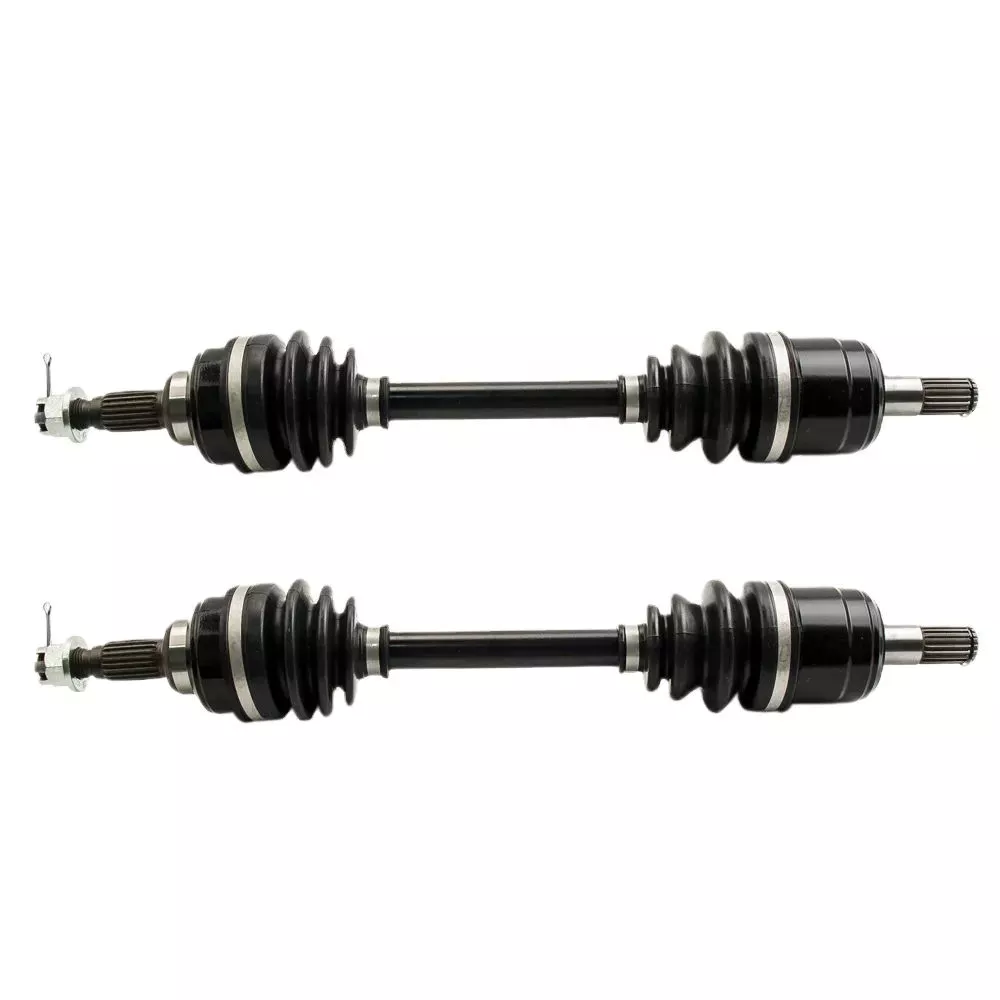
What is a drive shaft and how does it function in vehicles and machinery?
A drive shaft, also known as a propeller shaft or prop shaft, is a mechanical component that plays a critical role in transmitting rotational power from the engine to the wheels or other driven components in vehicles and machinery. It is commonly used in various types of vehicles, including cars, trucks, motorcycles, and agricultural or industrial machinery. Here’s a detailed explanation of what a drive shaft is and how it functions:
1. Definition and Construction: A drive shaft is a cylindrical metal tube that connects the engine or power source to the wheels or driven components. It is typically made of steel or aluminum and consists of one or more tubular sections with universal joints (U-joints) at each end. These U-joints allow for angular movement and compensation of misalignment between the engine/transmission and the driven wheels or components.
2. Power Transmission: The primary function of a drive shaft is to transmit rotational power from the engine or power source to the wheels or driven components. In vehicles, the drive shaft connects the transmission or gearbox output shaft to the differential, which then transfers power to the wheels. In machinery, the drive shaft transfers power from the engine or motor to various driven components such as pumps, generators, or other mechanical systems.
3. Torque and Speed: The drive shaft is responsible for transmitting both torque and rotational speed. Torque is the rotational force generated by the engine or power source, while rotational speed is the number of revolutions per minute (RPM). The drive shaft must be capable of transmitting the required torque without excessive twisting or bending and maintaining the desired rotational speed for efficient operation of the driven components.
4. フレキシブルカップリング: The U-joints on the drive shaft provide a flexible coupling that allows for angular movement and compensation of misalignment between the engine/transmission and the driven wheels or components. As the suspension system of a vehicle moves or the machinery operates on uneven terrain, the drive shaft can adjust its length and angle to accommodate these movements, ensuring smooth power transmission and preventing damage to the drivetrain components.
5. Length and Balance: The length of the drive shaft is determined by the distance between the engine or power source and the driven wheels or components. It should be appropriately sized to ensure proper power transmission and avoid excessive vibrations or bending. Additionally, the drive shaft is carefully balanced to minimize vibrations and rotational imbalances, which can cause discomfort, reduce efficiency, and lead to premature wear of drivetrain components.
6. Safety Considerations: Drive shafts in vehicles and machinery require proper safety measures. In vehicles, drive shafts are often enclosed within a protective tube or housing to prevent contact with moving parts and reduce the risk of injury in the event of a malfunction or failure. Additionally, safety shields or guards are commonly installed around exposed drive shafts in machinery to protect operators from potential hazards associated with rotating components.
7. Maintenance and Inspection: Regular maintenance and inspection of drive shafts are essential to ensure their proper functioning and longevity. This includes checking for signs of wear, damage, or excessive play in the U-joints, inspecting the drive shaft for any cracks or deformations, and lubricating the U-joints as recommended by the manufacturer. Proper maintenance helps prevent failures, ensures optimal performance, and prolongs the service life of the drive shaft.
In summary, a drive shaft is a mechanical component that transmits rotational power from the engine or power source to the wheels or driven components in vehicles and machinery. It functions by providing a rigid connection between the engine/transmission and the driven wheels or components, while also allowing for angular movement and compensation of misalignment through the use of U-joints. The drive shaft plays a crucial role in power transmission, torque and speed delivery, flexible coupling, length and balance considerations, safety, and maintenance requirements. Its proper functioning is essential for the smooth and efficient operation of vehicles and machinery.


editor by CX 2024-05-16