
製品説明
製品説明
Product Parameters
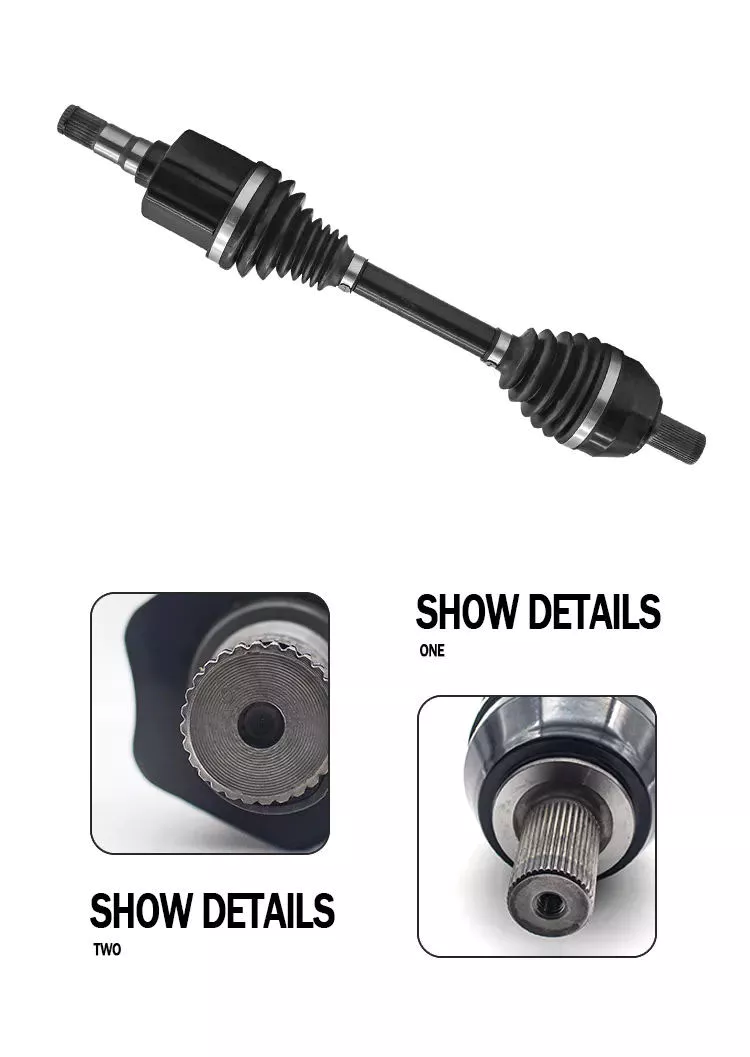
| Item | Spur Gear Axle Shaft |
| Material | 4140,4340,40Cr,42Crmo,42Crmo4,20Cr,20CrMnti, 20Crmo,35Crmo |
| OEM NO | Customize |
| Certification | ISO/TS16949 |
| Test Requirement | Magnetic Powder Test, Hardness Test, Dimension Test |
| Color | Paint , Natural Finish ,Machining All Around |
| Material | Aluminum: 5000series(5052…)/6000series(6061…)/7000series(7075…) |
| Steel: Carbon Steel,Middle Steel,Steel Alloy,etc. | |
| Stainess Steel: 303/304/316,etc. | |
| Copper/Brass/Bronze/Red Copper,etc. | |
| Plastic:ABS,PP,PC,Nylon,Delrin(POM),Bakelite,etc. | |
| サイズ | According to Customer’s drawing or samples |
| Process | CNC machining,Turning,Milling,Stamping,Grinding,Welding,Wire Injection,Cutting,etc. |
| Tolerance | ≥+/-0.03mm |
| 表面処理 | (Sandblast)&(Hard)&(Color)Anodizing,(Chrome,Nickel,Zinc…)Plating,Painting,Powder Coating,Polishing,Blackened,Hardened,Lasering,Engraving,etc. |
| File Formats | ProE,SolidWorks,UG,CAD,PDF(IGS,X-T,STP,STL) |
| Sample | 利用可能 |
| Packing | Spline protect cover ,Wood box ,Waterproof membrane; Or per customers’ requirements. |
Our Advantages
Why Choose US ???
1. Equipment :
Our company boasts all necessary production equipment,
including Hydraulic press machines, Japanese CNC lathe (TAKISAWA), Korean gear hobbing machine (I SNT), gear shaping machine, machining center, CNC grinder, heat treatment line etc.
2. Processing precision:
We are a professional gear & gear shafts manufacturer. Our gears are around 6-7 grade in mass production.
3. Company:
We have 90 employees, including 10 technical staffs. Covering an area of 20000 square meters.
4. Certification :
Oue company has passed ISO 14001 and TS16949
5.Sample service :
We provide free sample for confirmation and customer bears the freight charges
6.OEM service :
Having our own factory and professional technicians,we welcome OEM orders as well.We can design and produce the specific product you need according to your detail information
Cooperation Partner
Company Profile
Our Featured Products
/* March 10, 2571 17:59:20 */!function(){function s(e,r){var a,o={};try{e&&e.split(“,”).forEach(function(e,t){e&&(a=e.match(/(.*?):(.*)$/))&&1
| 材料: | Alloy Steel |
|---|---|
| Load: | Drive Shaft |
| Axis Shape: | Straight Shaft |
| Appearance Shape: | Round |
| Rotation: | Cw |
| Yield: | 5, 000PCS / Month |
| Samples: |
US$ 0/Piece
1 Piece(Min.Order) | |
|---|
| カスタマイズ: |
利用可能
| カスタマイズされたリクエスト |
|---|
Are there any limitations or disadvantages associated with drive shafts?
While drive shafts are widely used and offer several advantages, they also have certain limitations and disadvantages that should be considered. Here’s a detailed explanation of the limitations and disadvantages associated with drive shafts:
1. Length and Misalignment Constraints:
Drive shafts have a maximum practical length due to factors such as material strength, weight considerations, and the need to maintain rigidity and minimize vibrations. Longer drive shafts can be prone to increased bending and torsional deflection, leading to reduced efficiency and potential driveline vibrations. Additionally, drive shafts require proper alignment between the driving and driven components. Misalignment can cause increased wear, vibrations, and premature failure of the drive shaft or its associated components.
2. Limited Operating Angles:
Drive shafts, especially those using U-joints, have limitations on operating angles. U-joints are typically designed to operate within specific angular ranges, and operating beyond these limits can result in reduced efficiency, increased vibrations, and accelerated wear. In applications requiring large operating angles, constant velocity (CV) joints are often used to maintain a constant speed and accommodate greater angles. However, CV joints may introduce higher complexity and cost compared to U-joints.
3. Maintenance Requirements:
Drive shafts require regular maintenance to ensure optimal performance and reliability. This includes periodic inspection, lubrication of joints, and balancing if necessary. Failure to perform routine maintenance can lead to increased wear, vibrations, and potential driveline issues. Maintenance requirements should be considered in terms of time and resources when using drive shafts in various applications.
4. Noise and Vibration:
Drive shafts can generate noise and vibrations, especially at high speeds or when operating at certain resonant frequencies. Imbalances, misalignment, worn joints, or other factors can contribute to increased noise and vibrations. These vibrations may affect the comfort of vehicle occupants, contribute to component fatigue, and require additional measures such as dampers or vibration isolation systems to mitigate their effects.
5. Weight and Space Constraints:
Drive shafts add weight to the overall system, which can be a consideration in weight-sensitive applications, such as automotive or aerospace industries. Additionally, drive shafts require physical space for installation. In compact or tightly packaged equipment or vehicles, accommodating the necessary drive shaft length and clearances can be challenging, requiring careful design and integration considerations.
6. Cost Considerations:
Drive shafts, depending on their design, materials, and manufacturing processes, can involve significant costs. Customized or specialized drive shafts tailored to specific equipment requirements may incur higher expenses. Additionally, incorporating advanced joint configurations, such as CV joints, can add complexity and cost to the drive shaft system.
7. Inherent Power Loss:
Drive shafts transmit power from the driving source to the driven components, but they also introduce some inherent power loss due to friction, bending, and other factors. This power loss can reduce overall system efficiency, particularly in long drive shafts or applications with high torque requirements. It is important to consider power loss when determining the appropriate drive shaft design and specifications.
8. Limited Torque Capacity:
While drive shafts can handle a wide range of torque loads, there are limits to their torque capacity. Exceeding the maximum torque capacity of a drive shaft can lead to premature failure, resulting in downtime and potential damage to other driveline components. It is crucial to select a drive shaft with sufficient torque capacity for the intended application.
Despite these limitations and disadvantages, drive shafts remain a widely used and effective means of power transmission in various industries. Manufacturers continuously work to address these limitations through advancements in materials, design techniques, joint configurations, and balancing processes. By carefully considering the specific application requirements and potential drawbacks, engineers and designers can mitigate the limitations and maximize the benefits of drive shafts in their respective systems.

ドライブシャフトを使用している車両や機械の実例を挙げてもらえますか?
ドライブシャフトは、エンジンや動力源から車輪や駆動部品に動力を伝達するために、様々な車両や機械で広く使用されています。以下に、ドライブシャフトを使用している実際の車両や機械の例をいくつか示します。
1. 自動車:
ドライブシャフトは、特に後輪駆動または四輪駆動システムを搭載した自動車によく見られます。これらの車両では、ドライブシャフトはトランスミッションまたはトランスファーケースから、それぞれリアディファレンシャルまたはフロントディファレンシャルに動力を伝達します。これにより、エンジンの動力が車輪に分配され、車両が前進します。
2. トラックおよび商用車:
ドライブシャフトは、トラックや商用車において不可欠な部品です。トランスミッションまたはトランスファーケースから後車軸、あるいは大型トラックの場合は複数の車軸へ動力を伝達するために使用されます。商用車のドライブシャフトは、より高いトルク負荷に対応できるように設計されており、乗用車に使用されるものよりも大型で頑丈な場合が多いです。
3. 建設機械および土木機械:
掘削機、ローダー、ブルドーザー、グレーダーなど、さまざまな種類の建設機械や土木機械は、動力伝達にドライブシャフトを使用しています。これらの機械は通常、複雑な駆動系システムを備えており、ドライブシャフトを使ってエンジンから車輪や履帯に動力を伝達することで、建設現場や鉱山作業において重作業を行うことができます。
4. 農業機械:
トラクター、コンバイン、収穫機などの農業機械は、エンジンから車輪や駆動部品に動力を伝達するために駆動軸を使用します。農業機械の駆動軸は過酷な条件下にさらされることが多く、部品間の距離を可変にするために伸縮式セクションなどの追加機能が備えられている場合があります。
5. 産業機械:
製造装置、発電機、ポンプ、コンプレッサーなどの産業機械は、動力伝達システムに駆動軸を組み込んでいることが多い。これらの駆動軸は、電動モーター、エンジン、その他の動力源から様々な駆動部品に動力を伝達し、産業現場において機械が特定の作業を実行できるようにする。
6. 船舶:
船舶用途では、ドライブシャフトは一般的に、ボート、船舶、その他の水上艇において、エンジンからプロペラへ動力を伝達するために使用されます。船舶用ドライブシャフトは通常、より長く、耐腐食性や適切なシール機構など、水環境特有の課題に耐えられるように設計されています。
7. レクリエーション用車両(RV)およびモーターホーム:
キャンピングカーやモーターホームでは、駆動系の一部としてドライブシャフトがよく用いられます。これらのドライブシャフトは、トランスミッションから後輪車軸に動力を伝達し、車両の走行と推進力を生み出します。キャンピングカーのドライブシャフトには、走行中の快適性を高めるために、ダンパーや振動低減部品などの追加機能が備わっている場合もあります。
8. オフロード車およびレーシングカー:
SUV、トラック、全地形対応車(ATV)などのオフロード車やレーシングカーでは、ドライブシャフトが頻繁に使用されます。これらのドライブシャフトは、オフロード走行や高性能レースの過酷な条件に耐えられるように設計されており、効率的に動力を車輪に伝達し、最適なトラクションとパフォーマンスを確保します。
9. 鉄道車両:
鉄道システムでは、機関車や一部の車両に駆動軸が用いられます。駆動軸は機関車のエンジンから車輪または推進システムに動力を伝達し、列車が線路に沿って走行できるようにします。鉄道用の駆動軸は通常、非常に長く、一部の列車の構成における関節式または柔軟な構造に対応するための追加機能が備わっている場合があります。
10. 風力タービン:
発電に用いられる大型風力タービンは、動力伝達システムに駆動軸を組み込んでいる。駆動軸はタービンのブレードから発電機へ回転エネルギーを伝達し、発電機で電気エネルギーに変換される。風力タービンの駆動軸は、風によって発生する大きなトルクと回転力に耐えられるよう設計されている。
これらの例は、効率的な動力伝達と推進のために駆動軸に依存する車両や機械の幅広い範囲を示しています。駆動軸は様々な産業において不可欠な部品であり、動力源から駆動される部品への動力伝達を可能にし、最終的には移動、操作、または特定の作業の遂行を容易にします。
What benefits do drive shafts offer for different types of vehicles and equipment?
Drive shafts offer several benefits for different types of vehicles and equipment. They play a crucial role in power transmission and contribute to the overall performance, efficiency, and functionality of various systems. Here’s a detailed explanation of the benefits that drive shafts provide:
1. Efficient Power Transmission:
Drive shafts enable efficient power transmission from the engine or power source to the wheels or driven components. By connecting the engine or motor to the driven system, drive shafts efficiently transfer rotational power, allowing vehicles and equipment to perform their intended functions. This efficient power transmission ensures that the power generated by the engine is effectively utilized, optimizing the overall performance and productivity of the system.
2. Versatility:
Drive shafts offer versatility in their applications. They are used in various types of vehicles, including cars, trucks, motorcycles, and off-road vehicles. Additionally, drive shafts are employed in a wide range of equipment and machinery, such as agricultural machinery, construction equipment, industrial machinery, and marine vessels. The ability to adapt to different types of vehicles and equipment makes drive shafts a versatile component for power transmission.
3. Torque Handling:
Drive shafts are designed to handle high levels of torque. Torque is the rotational force generated by the engine or power source. Drive shafts are engineered to efficiently transmit this torque without excessive twisting or bending. By effectively handling torque, drive shafts ensure that the power generated by the engine is reliably transferred to the wheels or driven components, enabling vehicles and equipment to overcome resistance, such as heavy loads or challenging terrains.
4. Flexibility and Compensation:
Drive shafts provide flexibility and compensation for angular movement and misalignment. In vehicles, drive shafts accommodate the movement of the suspension system, allowing the wheels to move up and down independently. This flexibility ensures a constant power transfer even when the vehicle encounters uneven terrain. Similarly, in machinery, drive shafts compensate for misalignment between the engine or motor and the driven components, ensuring smooth power transmission and preventing excessive stress on the drivetrain.
5. Weight Reduction:
Drive shafts contribute to weight reduction in vehicles and equipment. Compared to other forms of power transmission, such as belt drives or chain drives, drive shafts are typically lighter in weight. This reduction in weight helps improve fuel efficiency in vehicles and reduces the overall weight of equipment, leading to enhanced maneuverability and increased payload capacity. Additionally, lighter drive shafts contribute to a better power-to-weight ratio, resulting in improved performance and acceleration.
6. Durability and Longevity:
Drive shafts are designed to be durable and long-lasting. They are constructed using materials such as steel or aluminum, which offer high strength and resistance to wear and fatigue. Drive shafts undergo rigorous testing and quality control measures to ensure their reliability and longevity. Proper maintenance, including lubrication and regular inspections, further enhances their durability. The robust construction and long lifespan of drive shafts contribute to the overall reliability and cost-effectiveness of vehicles and equipment.
7. Safety:
Drive shafts incorporate safety features to protect operators and bystanders. In vehicles, drive shafts are often enclosed within a protective tube or housing, preventing contact with moving parts and reducing the risk of injury in the event of a failure. Similarly, in machinery, safety shields or guards are commonly installed around exposed drive shafts to minimize the potential hazards associated with rotating components. These safety measures ensure the well-being of individuals operating or working in proximity to vehicles and equipment.
In summary, drive shafts offer several benefits for different types of vehicles and equipment. They enable efficient power transmission, provide versatility in various applications, handle torque effectively, offer flexibility and compensation, contribute to weight reduction, ensure durability and longevity, and incorporate safety features. By providing these advantages, drive shafts enhance the performance, efficiency, reliability, and safety of vehicles and equipment across a wide range of industries.


editor by CX 2024-02-05

























