
Description du produit
Brief Introduction
Processing flow
Applications
Quality Control
Packaging & Delivery
Packaging details:Standard plywood case
Delivery detail: 15 -20 working days,depend on the actual produce condition
FAQ
Q1: What is the location of your company?
A1: Our company is located in the HangZhou City ,ZheJiang ,China.Welcome to visit our factory at anytime!
Q2: How does your factory do regarding quality control?
A2: Our standard QC system to control quality.
Q3: What is your delivery time?
A3: Usually within 25 days after the receipt of payment.Delivery time must depend on the actual produce condition.
Q4: What are your strengths?
A4: 1.We are the manufacturer,having competitive advantage in price.
2.A large part of money is put into advancing CNC equipments and productR&D department annual,the performance of cardan shaft can be guaranteed.
3.About quality issues or follow-up after-sales service,we report directly to the boss.
4.We have the ambitions to exploring and developing the world’s cardan shaft market and we believe we can.
/* January 22, 2571 19:08:37 */!function(){function s(e,r){var a,o={};try{e&&e.split(“,”).forEach(function(e,t){e&&(a=e.match(/(.*?):(.*)$/))&&1
| Matériel: | Alloy Steel |
|---|---|
| Charger: | Arbre de transmission |
| Rigidité et flexibilité : | Stiffness / Rigid Axle |
| Journal Diameter Dimensional Accuracy: | IT6-IT9 |
| Forme de l'axe : | Arbre droit |
| Forme de la tige : | Hollow Axis |
| Personnalisation : |
Disponible
| Demande personnalisée |
|---|
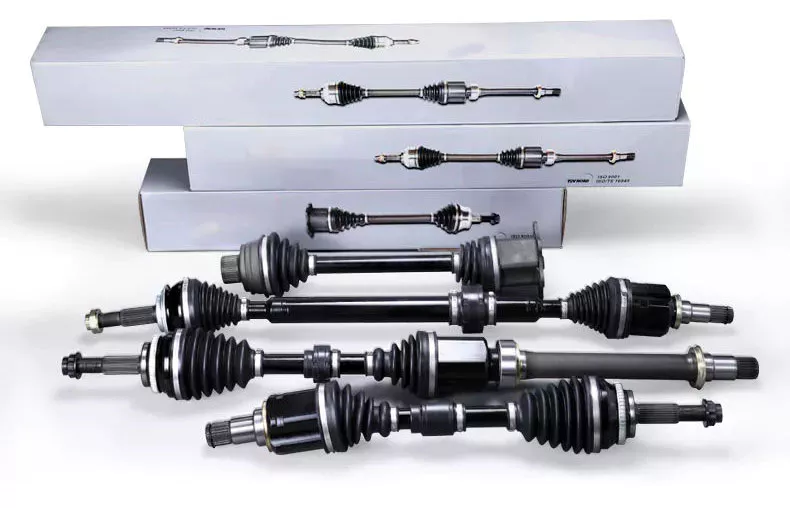
What maintenance practices are crucial for prolonging the lifespan of drive shafts?
To prolong the lifespan of drive shafts and ensure their optimal performance, several maintenance practices are crucial. Regular maintenance helps identify and address potential issues before they escalate, reduces wear and tear, and ensures the drive shaft operates smoothly and efficiently. Here are some essential maintenance practices for prolonging the lifespan of drive shafts:
1. Regular Inspection:
Performing regular inspections is vital for detecting any signs of wear, damage, or misalignment. Inspect the drive shaft visually, looking for cracks, dents, or any signs of excessive wear on the shaft itself and its associated components such as joints, yokes, and splines. Check for any signs of lubrication leaks or contamination. Additionally, inspect the fasteners and mounting points to ensure they are secure. Early detection of any issues allows for timely repairs or replacements, preventing further damage to the drive shaft.
2. Lubrication:
Proper lubrication is essential for the smooth operation and longevity of drive shafts. Lubricate the joints, such as universal joints or constant velocity joints, as recommended by the manufacturer. Lubrication reduces friction, minimizes wear, and helps dissipate heat generated during operation. Use the appropriate lubricant specified for the specific drive shaft and application, considering factors such as temperature, load, and operating conditions. Regularly check the lubrication levels and replenish as necessary to ensure optimal performance and prevent premature failure.
3. Balancing and Alignment:
Maintaining proper balancing and alignment is crucial for the lifespan of drive shafts. Imbalances or misalignments can lead to vibrations, accelerated wear, and potential failure. If vibrations or unusual noises are detected during operation, it is important to address them promptly. Perform balancing procedures as necessary, including dynamic balancing, to ensure even weight distribution along the drive shaft. Additionally, verify that the drive shaft is correctly aligned with the engine or power source and the driven components. Misalignment can cause excessive stress on the drive shaft, leading to premature failure.
4. Protective Coatings:
Applying protective coatings can help prolong the lifespan of drive shafts, particularly in applications exposed to harsh environments or corrosive substances. Consider using coatings such as zinc plating, powder coating, or specialized corrosion-resistant coatings to enhance the drive shaft’s resistance to corrosion, rust, and chemical damage. Regularly inspect the coating for any signs of degradation or damage, and reapply or repair as necessary to maintain the protective barrier.
5. Torque and Fastener Checks:
Ensure that the drive shaft’s fasteners, such as bolts, nuts, or clamps, are properly torqued and secured according to the manufacturer’s specifications. Loose or improperly tightened fasteners can lead to excessive vibrations, misalignment, or even detachment of the drive shaft. Periodically check and retighten the fasteners as recommended or after any maintenance or repair procedures. Additionally, monitor the torque levels during operation to ensure they remain within the specified range, as excessive torque can strain the drive shaft and lead to premature failure.
6. Environmental Protection:
Protecting the drive shaft from environmental factors can significantly extend its lifespan. In applications exposed to extreme temperatures, moisture, chemicals, or abrasive substances, take appropriate measures to shield the drive shaft. This may include using protective covers, seals, or guards to prevent contaminants from entering and causing damage. Regular cleaning of the drive shaft, especially in dirty or corrosive environments, can also help remove debris and prevent buildup that could compromise its performance and longevity.
7. Manufacturer Guidelines:
Follow the manufacturer’s guidelines and recommendations for maintenance practices specific to the drive shaft model and application. The manufacturer’s instructions may include specific intervals for inspections, lubrication, balancing, or other maintenance tasks. Adhering to these guidelines ensures that the drive shaft is properly maintained and serviced, maximizing its lifespan and minimizing the risk of unexpected failures.
By implementing these maintenance practices, drive shafts can operate reliably, maintain efficient power transmission, and have an extended service life, ultimately reducing downtime and ensuring optimal performance in various applications.
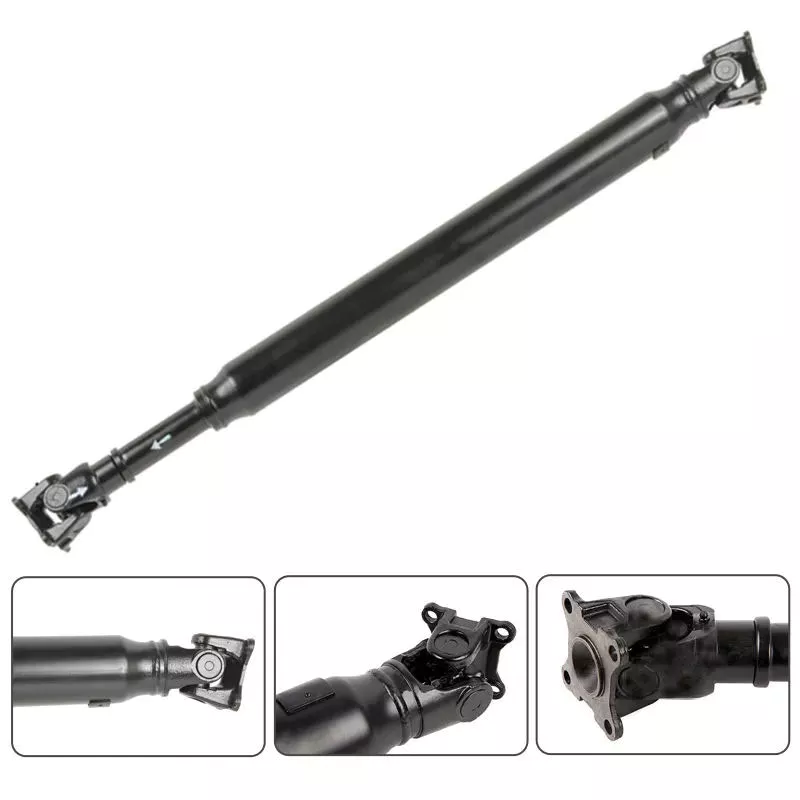
Les arbres de transmission peuvent-ils être personnalisés pour répondre aux exigences spécifiques d'un véhicule ou d'un équipement ?
Oui, les arbres de transmission peuvent être personnalisés pour répondre aux exigences spécifiques d'un véhicule ou d'un équipement. La personnalisation permet aux fabricants d'adapter la conception, les dimensions, les matériaux et autres paramètres de l'arbre de transmission afin de garantir la compatibilité et des performances optimales au sein d'un véhicule ou d'un équipement particulier. Voici une explication détaillée de la manière dont les arbres de transmission peuvent être personnalisés :
1. Personnalisation dimensionnelle :
Les arbres de transmission peuvent être fabriqués sur mesure pour répondre aux exigences dimensionnelles du véhicule ou de l'équipement. Cela inclut l'ajustement de la longueur totale, du diamètre et de la configuration des cannelures afin de garantir un montage et des dégagements optimaux pour l'application spécifique. Grâce à ces dimensions sur mesure, l'arbre de transmission s'intègre parfaitement au système de transmission, sans aucune interférence ni limitation.
2. Sélection des matériaux :
Le choix des matériaux pour les arbres de transmission peut être personnalisé en fonction des exigences spécifiques du véhicule ou de l'équipement. Différents matériaux, tels que les alliages d'acier, les alliages d'aluminium ou des composites spéciaux, peuvent être sélectionnés afin d'optimiser la résistance, le poids et la durabilité. La sélection des matériaux peut être adaptée au couple, à la vitesse et aux conditions de fonctionnement de l'application, garantissant ainsi la fiabilité et la longévité de l'arbre de transmission.
3. Configuration des articulations :
Les arbres de transmission peuvent être personnalisés avec différentes configurations d'articulations afin de répondre aux exigences spécifiques des véhicules ou des équipements. Par exemple, les joints de cardan conviennent aux applications présentant des angles de fonctionnement réduits et des couples modérés, tandis que les joints homocinétiques sont souvent utilisés pour les applications nécessitant des angles de fonctionnement plus importants et une transmission de puissance plus fluide. Le choix de la configuration d'articulation dépend de facteurs tels que l'angle de fonctionnement, le couple admissible et les performances souhaitées.
4. Couple et capacité de puissance :
La personnalisation permet de concevoir des arbres de transmission adaptés au couple et à la puissance requis pour chaque véhicule ou équipement. Les fabricants peuvent analyser les besoins en couple, les conditions de fonctionnement et les marges de sécurité de l'application afin de déterminer le couple nominal et la puissance optimaux de l'arbre de transmission. Ceci garantit que l'arbre de transmission supporte les charges nécessaires sans défaillance prématurée ni problème de performance.
5. Équilibrage et contrôle des vibrations :
Les arbres de transmission peuvent être personnalisés grâce à un équilibrage de précision et à des mesures de contrôle des vibrations. Un déséquilibre dans l'arbre de transmission peut engendrer des vibrations, une usure accrue et d'éventuels problèmes de transmission. En utilisant des techniques d'équilibrage dynamique lors de la fabrication, les constructeurs peuvent minimiser les vibrations et garantir un fonctionnement optimal. De plus, des amortisseurs de vibrations ou des systèmes d'isolation peuvent être intégrés à la conception de l'arbre de transmission afin d'atténuer davantage les vibrations et d'améliorer les performances globales du système.
6. Considérations relatives à l'intégration et au montage :
La personnalisation des arbres de transmission tient compte des exigences d'intégration et de montage propres au véhicule ou à l'équipement. Les fabricants collaborent étroitement avec les concepteurs du véhicule ou de l'équipement afin de garantir une intégration parfaite de l'arbre de transmission dans le système de transmission. Cela implique d'adapter les points de fixation, les interfaces et les jeux pour assurer un alignement et une installation corrects de l'arbre de transmission dans le véhicule ou l'équipement.
7. Collaboration et retour d'information :
Les fabricants collaborent fréquemment avec les constructeurs automobiles, les équipementiers (OEM) ou les utilisateurs finaux afin de recueillir leurs commentaires et d'intégrer leurs exigences spécifiques au processus de personnalisation des arbres de transmission. En sollicitant activement des avis et des retours d'information, les fabricants peuvent répondre à des besoins spécifiques, optimiser les performances et garantir la compatibilité avec le véhicule ou l'équipement. Cette approche collaborative améliore le processus de personnalisation et permet de produire des arbres de transmission parfaitement adaptés aux exigences de l'application.
8. Conformité aux normes :
Les arbres de transmission sur mesure peuvent être conçus pour être conformes aux normes et réglementations industrielles en vigueur. Le respect de normes telles que l'ISO (Organisation internationale de normalisation) ou des normes industrielles spécifiques garantit que les arbres de transmission sur mesure répondent aux exigences de qualité, de sécurité et de performance. Le respect de ces normes assure la compatibilité des arbres de transmission et leur intégration aisée au véhicule ou à l'équipement concerné.
En résumé, les arbres de transmission peuvent être personnalisés pour répondre aux exigences spécifiques d'un véhicule ou d'un équipement grâce à la personnalisation des dimensions, le choix des matériaux, la configuration des joints, l'optimisation du couple et de la puissance, l'équilibrage et le contrôle des vibrations, les considérations d'intégration et de montage, la collaboration avec les parties prenantes et la conformité aux normes industrielles. La personnalisation permet d'adapter précisément les arbres de transmission aux besoins de l'application, garantissant ainsi compatibilité, fiabilité et performances optimales.
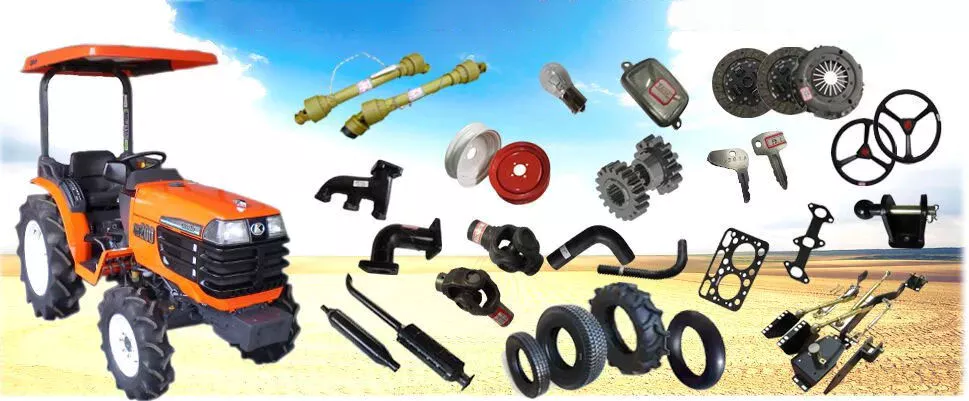
Are there variations in drive shaft designs for different types of machinery?
Yes, there are variations in drive shaft designs to cater to the specific requirements of different types of machinery. The design of a drive shaft is influenced by factors such as the application, power transmission needs, space limitations, operating conditions, and the type of driven components. Here’s an explanation of how drive shaft designs can vary for different types of machinery:
1. Automotive Applications:
In the automotive industry, drive shaft designs can vary depending on the vehicle’s configuration. Rear-wheel-drive vehicles typically use a single-piece or two-piece drive shaft, which connects the transmission or transfer case to the rear differential. Front-wheel-drive vehicles often use a different design, employing a drive shaft that combines with the constant velocity (CV) joints to transmit power to the front wheels. All-wheel-drive vehicles may have multiple drive shafts to distribute power to all wheels. The length, diameter, material, and joint types can differ based on the vehicle’s layout and torque requirements.
2. Industrial Machinery:
Drive shaft designs for industrial machinery depend on the specific application and power transmission requirements. In manufacturing machinery, such as conveyors, presses, and rotating equipment, drive shafts are designed to transfer power efficiently within the machine. They may incorporate flexible joints or use a splined or keyed connection to accommodate misalignment or allow for easy disassembly. The dimensions, materials, and reinforcement of the drive shaft are selected based on the torque, speed, and operating conditions of the machinery.
3. Agriculture and Farming:
Agricultural machinery, such as tractors, combines, and harvesters, often requires drive shafts that can handle high torque loads and varying operating angles. These drive shafts are designed to transmit power from the engine to attachments and implements, such as mowers, balers, tillers, and harvesters. They may incorporate telescopic sections to accommodate adjustable lengths, flexible joints to compensate for misalignment during operation, and protective shielding to prevent entanglement with crops or debris.
4. Construction and Heavy Equipment:
Construction and heavy equipment, including excavators, loaders, bulldozers, and cranes, require robust drive shaft designs capable of transmitting power in demanding conditions. These drive shafts often have larger diameters and thicker walls to handle high torque loads. They may incorporate universal joints or CV joints to accommodate operating angles and absorb shocks and vibrations. Drive shafts in this category may also have additional reinforcements to withstand the harsh environments and heavy-duty applications associated with construction and excavation.
5. Marine and Maritime Applications:
Drive shaft designs for marine applications are specifically engineered to withstand the corrosive effects of seawater and the high torque loads encountered in marine propulsion systems. Marine drive shafts are typically made from stainless steel or other corrosion-resistant materials. They may incorporate flexible couplings or dampening devices to reduce vibration and mitigate the effects of misalignment. The design of marine drive shafts also considers factors such as shaft length, diameter, and support bearings to ensure reliable power transmission in marine vessels.
6. Mining and Extraction Equipment:
In the mining industry, drive shafts are used in heavy machinery and equipment such as mining trucks, excavators, and drilling rigs. These drive shafts need to withstand extremely high torque loads and harsh operating conditions. Drive shaft designs for mining applications often feature larger diameters, thicker walls, and specialized materials such as alloy steel or composite materials. They may incorporate universal joints or CV joints to handle operating angles, and they are designed to be resistant to abrasion and wear.
These examples highlight the variations in drive shaft designs for different types of machinery. The design considerations take into account factors such as power requirements, operating conditions, space constraints, alignment needs, and the specific demands of the machinery or industry. By tailoring the drive shaft design to the unique requirements of each application, optimal power transmission efficiency and reliability can be achieved.


editor by CX 2024-04-10

























