
Mô tả sản phẩm
Trục truyền động PTO nông nghiệp T4-660-01B-07G-YIIIP dùng cho máy xúc đất và máy thu hoạch khoai tây
| Sản phẩm: | Trục truyền động PTO |
| Người mẫu: | T4-660-01B-07G-YIIIP |
| Kích cỡ: | Đường kính φ27*74.6mm, chiều dài 660mm. |
| Nguyên liệu thô: | Thép 45# |
| Độ cứng: | 58-64HRC |
| Ngày giao hàng: | 7-60 ngày |
| Số lượng đặt hàng tối thiểu: | 100 bộ hoặc theo số lượng hàng tồn kho, không giới hạn số lượng tối thiểu. |
| Vật mẫu: | Chấp nhận được |
| Chúng tôi có thể sản xuất tất cả các loại trục truyền động PTO và phụ tùng theo yêu cầu của khách hàng. | |
| THAM CHIẾU. | UJ | L.mm |
| T4-660-01B-07G-YIIIP | ø27*74.6 | 660 |
Về chúng tôi
Chúng tôi có hơn 17 năm kinh nghiệm trong lĩnh vực phụ tùng, đặc biệt là phụ tùng hệ thống truyền động.
Chúng tôi tham gia sâu rộng vào hoạt động kinh doanh phụ tùng ô tô tại thành phố Hàng Châu, khu vực sản xuất phụ tùng nhập khẩu lớn nhất Trung Quốc.
Chúng tôi cung cấp các sản phẩm có hiệu quả chi phí tốt cho nhiều khách hàng trên toàn thế giới.
Chúng tôi duy trì mối quan hệ rất tốt với các nhà sản xuất địa phương dựa trên chính sách cùng có lợi cho tất cả các bên.
Nhà máy cung cấp sản phẩm chất lượng tốt và nhanh chóng;
Chúng tôi cung cấp dịch vụ tốt và nhanh chóng;
Và khách hàng sẽ có được những sản phẩm tốt và dịch vụ tốt cho khách hàng của họ.
Đây là một tam giác đều khỏe mạnh và vững chắc, giúp cho đường đua Hàng Châu tiếp tục phát triển cho đến nay.
/* Ngày 22 tháng 1 năm 2571 19:08:37 */!function(){function s(e,r){var a,o={};try{e&&e.split(“,”).forEach(function(e,t){e&&(a=e.match(/(.*?):(.*)$/))&&1
| Kiểu: | Quá trình lây truyền |
|---|---|
| Cách sử dụng: | Cày xới, thu hoạch, gieo trồng và bón phân |
| Vật liệu: | Thép 45# |
| Nguồn điện: | Dầu diesel |
| Cân nặng: | 8 |
| Dịch vụ hậu mãi: | Hỗ trợ trực tuyến |
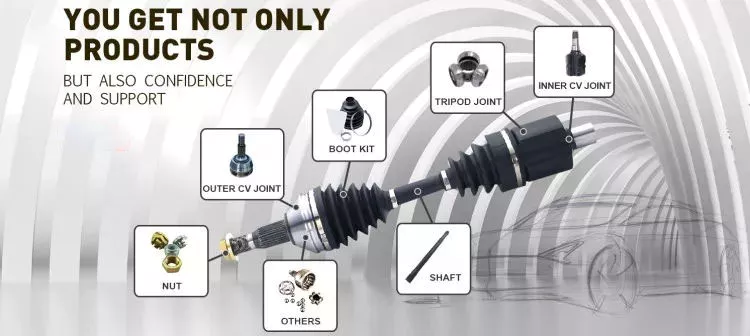
How do drive shafts ensure efficient power transfer while maintaining balance?
Drive shafts employ various mechanisms to ensure efficient power transfer while maintaining balance. Efficient power transfer refers to the ability of the drive shaft to transmit rotational power from the source (such as an engine) to the driven components (such as wheels or machinery) with minimal energy loss. Balancing, on the other hand, involves minimizing vibrations and eliminating any uneven distribution of mass that can cause disturbances during operation. Here’s an explanation of how drive shafts achieve both efficient power transfer and balance:
1. Material Selection:
The material selection for drive shafts is crucial for maintaining balance and ensuring efficient power transfer. Drive shafts are commonly made from materials such as steel or aluminum alloys, chosen for their strength, stiffness, and durability. These materials have excellent dimensional stability and can withstand the torque loads encountered during operation. By using high-quality materials, drive shafts can minimize deformation, flexing, and imbalances that could compromise power transmission and generate vibrations.
2. Các yếu tố cần xem xét khi thiết kế:
The design of the drive shaft plays a significant role in both power transfer efficiency and balance. Drive shafts are engineered to have appropriate dimensions, including diameter and wall thickness, to handle the anticipated torque loads without excessive deflection or vibration. The design also considers factors such as the length of the drive shaft, the number and type of joints (such as universal joints or constant velocity joints), and the use of balancing weights. By carefully designing the drive shaft, manufacturers can achieve optimal power transfer efficiency while minimizing the potential for imbalance-induced vibrations.
3. Balancing Techniques:
Balance is crucial for drive shafts as any imbalance can cause vibrations, noise, and accelerated wear. To maintain balance, drive shafts undergo various balancing techniques during the manufacturing process. Static and dynamic balancing methods are employed to ensure that the mass distribution along the drive shaft is uniform. Static balancing involves adding counterweights at specific locations to offset any weight imbalances. Dynamic balancing is performed by spinning the drive shaft at high speeds and measuring any vibrations. If imbalances are detected, additional adjustments are made to achieve a balanced state. These balancing techniques help minimize vibrations and ensure smooth operation of the drive shaft.
4. Universal Joints and Constant Velocity Joints:
Drive shafts often incorporate universal joints (U-joints) or constant velocity (CV) joints to accommodate misalignment and maintain balance during operation. U-joints are flexible joints that allow for angular movement between shafts. They are typically used in applications where the drive shaft operates at varying angles. CV joints, on the other hand, are designed to maintain a constant velocity of rotation and are commonly used in front-wheel-drive vehicles. By incorporating these joints, drive shafts can compensate for misalignment, reduce stress on the shaft, and minimize vibrations that can negatively impact power transfer efficiency and balance.
5. Bảo trì và kiểm tra:
Regular maintenance and inspection of drive shafts are essential for ensuring efficient power transfer and balance. Periodic checks for wear, damage, or misalignment can help identify any issues that may affect the drive shaft’s performance. Lubrication of the joints and proper tightening of fasteners are also critical for maintaining optimal operation. By adhering to recommended maintenance procedures, any imbalances or inefficiencies can be addressed promptly, ensuring continued efficient power transfer and balance.
In summary, drive shafts ensure efficient power transfer while maintaining balance through careful material selection, thoughtful design considerations, balancing techniques, and the incorporation of flexible joints. By optimizing these factors, drive shafts can transmit rotational power smoothly and reliably, minimizing energy losses and vibrations that can impact performance and longevity.

Trục truyền động giúp cải thiện hiệu suất của ô tô và xe tải như thế nào?
Trục truyền động đóng vai trò quan trọng trong việc nâng cao hiệu suất của ô tô và xe tải. Chúng góp phần vào nhiều khía cạnh hiệu suất của xe, bao gồm truyền lực, độ bám đường, khả năng điều khiển và hiệu quả tổng thể. Dưới đây là giải thích chi tiết về cách trục truyền động nâng cao hiệu suất của ô tô và xe tải:
1. Cung cấp điện: Drive shafts are responsible for transmitting power from the engine to the wheels, enabling the vehicle to move forward. By efficiently transferring power without significant losses, drive shafts ensure that the engine’s power is effectively utilized, resulting in improved acceleration and overall performance. Well-designed drive shafts with minimal power loss contribute to the vehicle’s ability to deliver power to the wheels efficiently.
2. Truyền mô-men xoắn: Trục truyền động giúp truyền mô-men xoắn từ động cơ đến bánh xe. Mô-men xoắn là lực quay đẩy xe tiến về phía trước. Trục truyền động chất lượng cao với khả năng chuyển đổi mô-men xoắn phù hợp đảm bảo mô-men xoắn do động cơ tạo ra được truyền hiệu quả đến bánh xe. Điều này giúp tăng khả năng tăng tốc nhanh, kéo tải nặng và leo dốc của xe, từ đó cải thiện hiệu suất tổng thể.
3. Độ bám đường và độ ổn định: Trục truyền động góp phần tạo nên lực kéo và sự ổn định của ô tô và xe tải. Chúng truyền lực đến các bánh xe, cho phép chúng tạo lực lên mặt đường. Điều này giúp xe duy trì lực kéo, đặc biệt là khi tăng tốc hoặc khi lái xe trên địa hình trơn trượt hoặc không bằng phẳng. Việc truyền lực hiệu quả thông qua trục truyền động giúp tăng cường sự ổn định của xe bằng cách đảm bảo phân bổ lực cân bằng cho tất cả các bánh xe, cải thiện khả năng điều khiển và vận hành.
4. Khả năng điều khiển và vận hành: Trục truyền động có ảnh hưởng lớn đến khả năng điều khiển và vận hành của xe. Chúng giúp thiết lập kết nối trực tiếp giữa động cơ và bánh xe, cho phép điều khiển chính xác và khả năng xử lý nhạy bén. Các trục truyền động được thiết kế tốt với độ rơ hoặc độ trễ tối thiểu góp phần tạo ra phản hồi trực tiếp và tức thời hơn đối với các thao tác của người lái, nâng cao sự nhanh nhẹn và khả năng điều khiển của xe.
5. Giảm cân: Trục truyền động có thể góp phần giảm trọng lượng cho ô tô và xe tải. Trục truyền động nhẹ được làm từ các vật liệu như nhôm hoặc vật liệu composite gia cường sợi carbon giúp giảm trọng lượng tổng thể của xe. Trọng lượng giảm giúp cải thiện tỷ lệ công suất trên trọng lượng, dẫn đến khả năng tăng tốc, điều khiển và tiết kiệm nhiên liệu tốt hơn. Ngoài ra, trục truyền động nhẹ còn giảm khối lượng quay, cho phép động cơ tăng tốc nhanh hơn, từ đó nâng cao hiệu suất.
6. Hiệu suất cơ học: Trục truyền động hiệu quả giúp giảm thiểu tổn thất năng lượng trong quá trình truyền lực. Bằng cách tích hợp các tính năng như vòng bi chất lượng cao, phớt ma sát thấp và hệ thống bôi trơn tối ưu, trục truyền động giảm ma sát và giảm thiểu tổn thất công suất do lực cản bên trong. Điều này giúp tăng hiệu suất cơ học của hệ thống truyền động, cho phép truyền nhiều công suất hơn đến bánh xe và cải thiện hiệu suất tổng thể của xe.
7. Nâng cấp hiệu năng: Drive shaft upgrades can be popular performance enhancements for enthusiasts. Upgraded drive shafts, such as those made from stronger materials or with enhanced torque capacity, can handle higher power outputs from modified engines. These upgrades allow for increased performance, such as improved acceleration, higher top speeds, and better overall driving dynamics.
8. Khả năng tương thích với các nâng cấp hiệu năng: Những thay đổi về hiệu suất, chẳng hạn như nâng cấp động cơ, tăng công suất hoặc thay đổi hệ thống truyền động, thường yêu cầu trục truyền động tương thích. Trục truyền động được thiết kế để chịu được tải trọng mô-men xoắn cao hơn hoặc thích ứng với cấu hình truyền động đã được sửa đổi sẽ đảm bảo hiệu suất và độ tin cậy tối ưu. Chúng cho phép xe khai thác hiệu quả công suất và mô-men xoắn tăng lên, dẫn đến hiệu suất và khả năng phản hồi được cải thiện.
9. Độ bền và độ tin cậy: Trục truyền động chắc chắn và được bảo dưỡng tốt góp phần vào độ bền và độ tin cậy của ô tô và xe tải. Chúng được thiết kế để chịu được các ứng suất và tải trọng liên quan đến việc truyền tải năng lượng. Vật liệu chất lượng cao, cân bằng thích hợp và bảo dưỡng thường xuyên giúp đảm bảo trục truyền động hoạt động trơn tru, giảm thiểu nguy cơ hỏng hóc hoặc các vấn đề về hiệu suất. Trục truyền động đáng tin cậy nâng cao hiệu suất tổng thể bằng cách cung cấp năng lượng ổn định và giảm thiểu thời gian ngừng hoạt động.
10. Khả năng tương thích với các công nghệ tiên tiến: Trục truyền động đang phát triển song song với những tiến bộ trong công nghệ ô tô. Chúng ngày càng được tích hợp với các hệ thống tiên tiến như hệ thống truyền động hybrid, động cơ điện và phanh tái tạo năng lượng. Trục truyền động được thiết kế để hoạt động liền mạch với các công nghệ này sẽ tối đa hóa hiệu quả và lợi ích về hiệu suất, góp phần cải thiện hiệu suất tổng thể của xe.
In summary, drive shafts enhance the performance of automobiles and trucks by optimizing power delivery, facilitating torque transfer, improving traction and stability, enhancing handling and maneuverability, reducing weight, increasing mechanical efficiency, enabling compatibility with performance upgrades and advanced technologies, and ensuring durability and reliability. They play a crucial role in ensuring efficient power transmission, responsive acceleration, precise handling, and overall improved performance of vehicles.

What is a drive shaft and how does it function in vehicles and machinery?
A drive shaft, also known as a propeller shaft or prop shaft, is a mechanical component that plays a critical role in transmitting rotational power from the engine to the wheels or other driven components in vehicles and machinery. It is commonly used in various types of vehicles, including cars, trucks, motorcycles, and agricultural or industrial machinery. Here’s a detailed explanation of what a drive shaft is and how it functions:
1. Definition and Construction: A drive shaft is a cylindrical metal tube that connects the engine or power source to the wheels or driven components. It is typically made of steel or aluminum and consists of one or more tubular sections with universal joints (U-joints) at each end. These U-joints allow for angular movement and compensation of misalignment between the engine/transmission and the driven wheels or components.
2. Power Transmission: The primary function of a drive shaft is to transmit rotational power from the engine or power source to the wheels or driven components. In vehicles, the drive shaft connects the transmission or gearbox output shaft to the differential, which then transfers power to the wheels. In machinery, the drive shaft transfers power from the engine or motor to various driven components such as pumps, generators, or other mechanical systems.
3. Torque and Speed: The drive shaft is responsible for transmitting both torque and rotational speed. Torque is the rotational force generated by the engine or power source, while rotational speed is the number of revolutions per minute (RPM). The drive shaft must be capable of transmitting the required torque without excessive twisting or bending and maintaining the desired rotational speed for efficient operation of the driven components.
4. Khớp nối linh hoạt: The U-joints on the drive shaft provide a flexible coupling that allows for angular movement and compensation of misalignment between the engine/transmission and the driven wheels or components. As the suspension system of a vehicle moves or the machinery operates on uneven terrain, the drive shaft can adjust its length and angle to accommodate these movements, ensuring smooth power transmission and preventing damage to the drivetrain components.
5. Length and Balance: The length of the drive shaft is determined by the distance between the engine or power source and the driven wheels or components. It should be appropriately sized to ensure proper power transmission and avoid excessive vibrations or bending. Additionally, the drive shaft is carefully balanced to minimize vibrations and rotational imbalances, which can cause discomfort, reduce efficiency, and lead to premature wear of drivetrain components.
6. Safety Considerations: Drive shafts in vehicles and machinery require proper safety measures. In vehicles, drive shafts are often enclosed within a protective tube or housing to prevent contact with moving parts and reduce the risk of injury in the event of a malfunction or failure. Additionally, safety shields or guards are commonly installed around exposed drive shafts in machinery to protect operators from potential hazards associated with rotating components.
7. Maintenance and Inspection: Regular maintenance and inspection of drive shafts are essential to ensure their proper functioning and longevity. This includes checking for signs of wear, damage, or excessive play in the U-joints, inspecting the drive shaft for any cracks or deformations, and lubricating the U-joints as recommended by the manufacturer. Proper maintenance helps prevent failures, ensures optimal performance, and prolongs the service life of the drive shaft.
In summary, a drive shaft is a mechanical component that transmits rotational power from the engine or power source to the wheels or driven components in vehicles and machinery. It functions by providing a rigid connection between the engine/transmission and the driven wheels or components, while also allowing for angular movement and compensation of misalignment through the use of U-joints. The drive shaft plays a crucial role in power transmission, torque and speed delivery, flexible coupling, length and balance considerations, safety, and maintenance requirements. Its proper functioning is essential for the smooth and efficient operation of vehicles and machinery.


editor by CX 2024-05-16

























