Produktbeskrivning
T4-660-01B-07G-YIIIP Agriculture PTO Drive Shaft for Earth Mover and Potato Harvester
| Product: | PTO Drive Shaft |
| Model: | T4-660-01B-07G-YIIIP |
| Size: | φ27*74.6 Length 660mm |
| Raw Material: | 45# Steel |
| Hardness: | 58-64HRC |
| Delivery Date: | 7-60 Days |
| MOQ: | 100 sets or according to stocks without minimum Qty. |
| Sample: | Acceptable |
| We could produce all kinds of PTO Drive Shaft and Parts according to customers’ requirement. | |
| REF. | UJ | L.mm |
| T4-660-01B-07G-YIIIP | ø27*74.6 | 660 |
About us
We have more than 17 years experience of Spare parts, especially on Drive Line Parts.
We deeply participant in the Auto Spare parts business in HangZhou city which is the most import spare parts production area in China.
We are supply products with good cost performance for different customers of all over the world.
We keep very good relationship with local produces with the WIN-WIN-WIN policy.
Factory supply good and fast products;
We supply good and fast service;
And Customers gain the good products and good service for their customers.
This is a healthy and strong equilateral triangle keep HangZhou Speedway going forward until now.
/* 22 januari 2571 19:08:37 */!function(){function s(e,r){var a,o={};try{e&&e.split(“,”).forEach(function(e,t){e&&(a=e.match(/(.*?):(.*)$/)))
| Typ: | Transmission |
|---|---|
| Användande: | Tillage, Harvester, Planting and Fertilization |
| Material: | 45# Steel |
| Strömkälla: | Diesel |
| Vikt: | 8 |
| Eftermarknadsservice: | Onlinesupport |
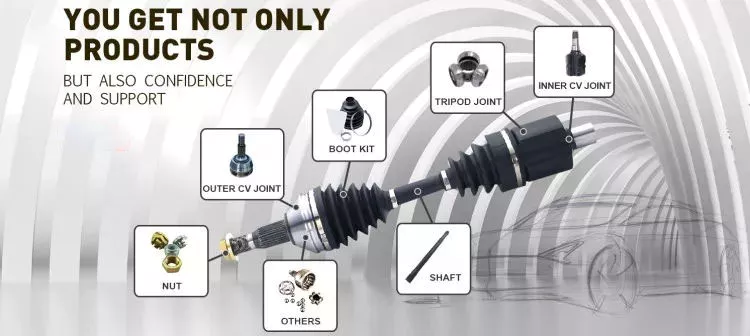
Hur säkerställer drivaxlar effektiv kraftöverföring samtidigt som balansen bibehålls?
Drivaxlar använder olika mekanismer för att säkerställa effektiv kraftöverföring samtidigt som balansen bibehålls. Effektiv kraftöverföring avser drivaxelns förmåga att överföra rotationskraft från källan (t.ex. en motor) till de drivna komponenterna (t.ex. hjul eller maskiner) med minimal energiförlust. Balansering, å andra sidan, innebär att minimera vibrationer och eliminera ojämn massfördelning som kan orsaka störningar under drift. Här är en förklaring av hur drivaxlar uppnår både effektiv kraftöverföring och balans:
1. Materialval:
Materialvalet för drivaxlar är avgörande för att bibehålla balans och säkerställa effektiv kraftöverföring. Drivaxlar tillverkas vanligtvis av material som stål eller aluminiumlegeringar, valda för sin styrka, styvhet och hållbarhet. Dessa material har utmärkt dimensionsstabilitet och kan motstå de vridmomentbelastningar som uppstår under drift. Genom att använda högkvalitativa material kan drivaxlar minimera deformation, böjning och obalanser som kan äventyra kraftöverföringen och generera vibrationer.
2. Designöverväganden:
Drivaxelns konstruktion spelar en viktig roll för både kraftöverföringseffektivitet och balans. Drivaxlar är konstruerade för att ha lämpliga dimensioner, inklusive diameter och väggtjocklek, för att hantera de förväntade momentbelastningarna utan överdriven nedböjning eller vibration. Konstruktionen tar också hänsyn till faktorer som drivaxelns längd, antal och typ av leder (såsom universalkopplingar eller konstanthastighetskopplingar) och användningen av balansvikter. Genom att noggrant utforma drivaxeln kan tillverkare uppnå optimal kraftöverföringseffektivitet samtidigt som risken för obalansinducerade vibrationer minimeras.
3. Balanseringstekniker:
Balans är avgörande för drivaxlar eftersom obalans kan orsaka vibrationer, buller och accelererat slitage. För att upprätthålla balansen genomgår drivaxlar olika balanseringstekniker under tillverkningsprocessen. Statiska och dynamiska balanseringsmetoder används för att säkerställa att massfördelningen längs drivaxeln är jämn. Statisk balansering innebär att motvikter läggs till på specifika platser för att kompensera för eventuella viktobalanser. Dynamisk balansering utförs genom att rotera drivaxeln med höga hastigheter och mäta eventuella vibrationer. Om obalanser upptäcks görs ytterligare justeringar för att uppnå ett balanserat tillstånd. Dessa balanseringstekniker hjälper till att minimera vibrationer och säkerställa en smidig drift av drivaxeln.
4. Universalkopplingar och konstanthastighetskopplingar:
Drivaxlar har ofta universalkopplingar (U-kopplingar) eller konstanthastighetskopplingar (CV-kopplingar) för att hantera feljustering och bibehålla balans under drift. U-kopplingar är flexibla kopplingar som möjliggör vinkelrörelse mellan axlar. De används vanligtvis i applikationer där drivaxeln arbetar i varierande vinklar. CV-kopplingar, å andra sidan, är konstruerade för att bibehålla en konstant rotationshastighet och används ofta i framhjulsdrivna fordon. Genom att integrera dessa kopplingar kan drivaxlar kompensera för feljustering, minska belastningen på axeln och minimera vibrationer som kan påverka kraftöverföringens effektivitet och balans negativt.
5. Underhåll och inspektion:
Regelbundet underhåll och inspektion av drivaxlar är avgörande för att säkerställa effektiv kraftöverföring och balans. Regelbundna kontroller av slitage, skador eller feljustering kan hjälpa till att identifiera eventuella problem som kan påverka drivaxelns prestanda. Smörjning av leder och korrekt åtdragning av fästelement är också avgörande för att upprätthålla optimal drift. Genom att följa rekommenderade underhållsprocedurer kan eventuella obalanser eller ineffektivitet åtgärdas snabbt, vilket säkerställer fortsatt effektiv kraftöverföring och balans.
Sammanfattningsvis säkerställer drivaxlar effektiv kraftöverföring samtidigt som balansen bibehålls genom noggrant materialval, genomtänkta designöverväganden, balanseringstekniker och införlivande av flexibla leder. Genom att optimera dessa faktorer kan drivaxlar överföra rotationskraft smidigt och tillförlitligt, vilket minimerar energiförluster och vibrationer som kan påverka prestanda och livslängd.
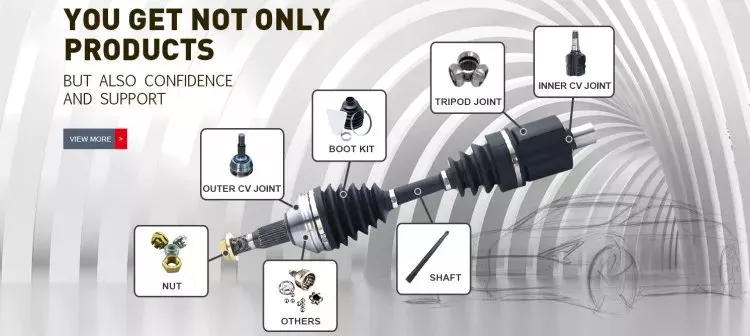
How do drive shafts enhance the performance of automobiles and trucks?
Drive shafts play a significant role in enhancing the performance of automobiles and trucks. They contribute to various aspects of vehicle performance, including power delivery, traction, handling, and overall efficiency. Here’s a detailed explanation of how drive shafts enhance the performance of automobiles and trucks:
1. Power Delivery: Drive shafts are responsible for transmitting power from the engine to the wheels, enabling the vehicle to move forward. By efficiently transferring power without significant losses, drive shafts ensure that the engine’s power is effectively utilized, resulting in improved acceleration and overall performance. Well-designed drive shafts with minimal power loss contribute to the vehicle’s ability to deliver power to the wheels efficiently.
2. Torque Transfer: Drive shafts facilitate the transfer of torque from the engine to the wheels. Torque is the rotational force that drives the vehicle forward. High-quality drive shafts with proper torque conversion capabilities ensure that the torque generated by the engine is effectively transmitted to the wheels. This enhances the vehicle’s ability to accelerate quickly, tow heavy loads, and climb steep gradients, thereby improving overall performance.
3. Traction and Stability: Drive shafts contribute to the traction and stability of automobiles and trucks. They transmit power to the wheels, allowing them to exert force on the road surface. This enables the vehicle to maintain traction, especially during acceleration or when driving on slippery or uneven terrain. The efficient power delivery through the drive shafts enhances the vehicle’s stability by ensuring balanced power distribution to all wheels, improving control and handling.
4. Handling and Maneuverability: Drive shafts have an impact on the handling and maneuverability of vehicles. They help establish a direct connection between the engine and the wheels, allowing for precise control and responsive handling. Well-designed drive shafts with minimal play or backlash contribute to a more direct and immediate response to driver inputs, enhancing the vehicle’s agility and maneuverability.
5. Weight Reduction: Drive shafts can contribute to weight reduction in automobiles and trucks. Lightweight drive shafts made from materials such as aluminum or carbon fiber-reinforced composites reduce the overall weight of the vehicle. The reduced weight improves the power-to-weight ratio, resulting in better acceleration, handling, and fuel efficiency. Additionally, lightweight drive shafts reduce the rotational mass, allowing the engine to rev up more quickly, further enhancing performance.
6. Mechanical Efficiency: Efficient drive shafts minimize energy losses during power transmission. By incorporating features such as high-quality bearings, low-friction seals, and optimized lubrication, drive shafts reduce friction and minimize power losses due to internal resistance. This enhances the mechanical efficiency of the drivetrain system, allowing more power to reach the wheels and improving overall vehicle performance.
7. Performance Upgrades: Drive shaft upgrades can be popular performance enhancements for enthusiasts. Upgraded drive shafts, such as those made from stronger materials or with enhanced torque capacity, can handle higher power outputs from modified engines. These upgrades allow for increased performance, such as improved acceleration, higher top speeds, and better overall driving dynamics.
8. Compatibility with Performance Modifications: Performance modifications, such as engine upgrades, increased power output, or changes to the drivetrain system, often require compatible drive shafts. Drive shafts designed to handle higher torque loads or adapt to modified drivetrain configurations ensure optimal performance and reliability. They enable the vehicle to effectively harness the increased power and torque, resulting in improved performance and responsiveness.
9. Durability and Reliability: Robust and well-maintained drive shafts contribute to the durability and reliability of automobiles and trucks. They are designed to withstand the stresses and loads associated with power transmission. High-quality materials, appropriate balancing, and regular maintenance help ensure that drive shafts operate smoothly, minimizing the risk of failures or performance issues. Reliable drive shafts enhance the overall performance by providing consistent power delivery and minimizing downtime.
10. Compatibility with Advanced Technologies: Drive shafts are evolving in tandem with advancements in vehicle technologies. They are increasingly being integrated with advanced systems such as hybrid powertrains, electric motors, and regenerative braking. Drive shafts designed to work seamlessly with these technologies maximize their efficiency and performance benefits, contributing to improved overall vehicle performance.
In summary, drive shafts enhance the performance of automobiles and trucks by optimizing power delivery, facilitating torque transfer, improving traction and stability, enhancing handling and maneuverability, reducing weight, increasing mechanical efficiency, enabling compatibility with performance upgrades and advanced technologies, and ensuring durability and reliability. They play a crucial role in ensuring efficient power transmission, responsive acceleration, precise handling, and overall improved performance of vehicles.

What is a drive shaft and how does it function in vehicles and machinery?
A drive shaft, also known as a propeller shaft or prop shaft, is a mechanical component that plays a critical role in transmitting rotational power from the engine to the wheels or other driven components in vehicles and machinery. It is commonly used in various types of vehicles, including cars, trucks, motorcycles, and agricultural or industrial machinery. Here’s a detailed explanation of what a drive shaft is and how it functions:
1. Definition and Construction: A drive shaft is a cylindrical metal tube that connects the engine or power source to the wheels or driven components. It is typically made of steel or aluminum and consists of one or more tubular sections with universal joints (U-joints) at each end. These U-joints allow for angular movement and compensation of misalignment between the engine/transmission and the driven wheels or components.
2. Power Transmission: The primary function of a drive shaft is to transmit rotational power from the engine or power source to the wheels or driven components. In vehicles, the drive shaft connects the transmission or gearbox output shaft to the differential, which then transfers power to the wheels. In machinery, the drive shaft transfers power from the engine or motor to various driven components such as pumps, generators, or other mechanical systems.
3. Torque and Speed: The drive shaft is responsible for transmitting both torque and rotational speed. Torque is the rotational force generated by the engine or power source, while rotational speed is the number of revolutions per minute (RPM). The drive shaft must be capable of transmitting the required torque without excessive twisting or bending and maintaining the desired rotational speed for efficient operation of the driven components.
4. Flexible Coupling: The U-joints on the drive shaft provide a flexible coupling that allows for angular movement and compensation of misalignment between the engine/transmission and the driven wheels or components. As the suspension system of a vehicle moves or the machinery operates on uneven terrain, the drive shaft can adjust its length and angle to accommodate these movements, ensuring smooth power transmission and preventing damage to the drivetrain components.
5. Length and Balance: The length of the drive shaft is determined by the distance between the engine or power source and the driven wheels or components. It should be appropriately sized to ensure proper power transmission and avoid excessive vibrations or bending. Additionally, the drive shaft is carefully balanced to minimize vibrations and rotational imbalances, which can cause discomfort, reduce efficiency, and lead to premature wear of drivetrain components.
6. Safety Considerations: Drive shafts in vehicles and machinery require proper safety measures. In vehicles, drive shafts are often enclosed within a protective tube or housing to prevent contact with moving parts and reduce the risk of injury in the event of a malfunction or failure. Additionally, safety shields or guards are commonly installed around exposed drive shafts in machinery to protect operators from potential hazards associated with rotating components.
7. Maintenance and Inspection: Regular maintenance and inspection of drive shafts are essential to ensure their proper functioning and longevity. This includes checking for signs of wear, damage, or excessive play in the U-joints, inspecting the drive shaft for any cracks or deformations, and lubricating the U-joints as recommended by the manufacturer. Proper maintenance helps prevent failures, ensures optimal performance, and prolongs the service life of the drive shaft.
In summary, a drive shaft is a mechanical component that transmits rotational power from the engine or power source to the wheels or driven components in vehicles and machinery. It functions by providing a rigid connection between the engine/transmission and the driven wheels or components, while also allowing for angular movement and compensation of misalignment through the use of U-joints. The drive shaft plays a crucial role in power transmission, torque and speed delivery, flexible coupling, length and balance considerations, safety, and maintenance requirements. Its proper functioning is essential for the smooth and efficient operation of vehicles and machinery.


editor by CX 2024-05-16