
Opis produktu
Opis produktu
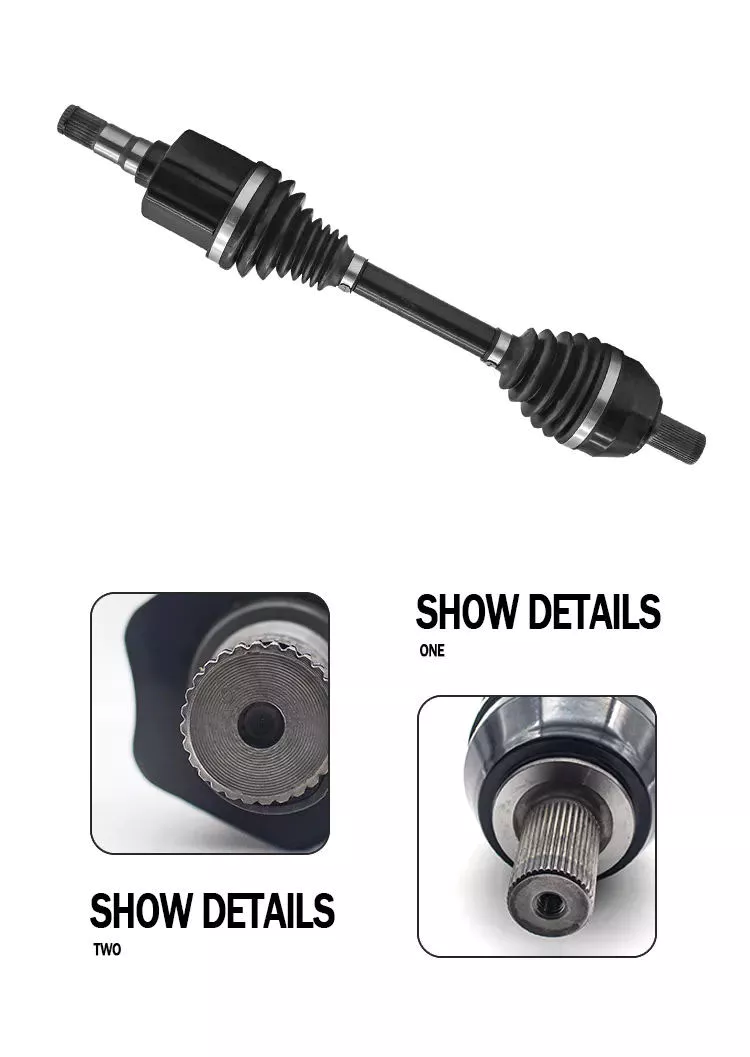
The weasler 44 series is a special PTO (power transmission shaft) shaft system widely used in cranes, excavators, and other industrial equipment. It is made of high-quality alloy steel and undergoes fine processing and heat treatment to ensure its excellent durability and reliability.
Product Parameters
Drivelines
| Shaft | Tractor Yoke | Overall Compressed Length Dim. “A” | Max. Length | |
| 14004448 | 1 5/16″ | 1 3/8″ × 6 Spl. Q.D. | 48″ | 72″ |
| 14004460 | 1 5/16″ | 1 3/8″ × 6 Spl. Q.D. | 60″ | 96″ |
| 14044448 | 1 11/16″ × 20 Spl. | 1 3/8″ × 6 Spl. Q.D. | 48″ | 72″ |
Related products
|
Cross Kit/ Universal Joint
|
Rura
|
Shaft Shield Guard
|
Yoke
|
|
Torque Limiter
|
PTO Spline & Adaptor & Hub |
Universal Coupling
|
Wide Angle Joint
|
Profil firmy
As a China PTO shaft manufacturer, we have the following advantages:
- High quality products: We use the most advanced technology and materials to ensure that the PTO shafts we produce have excellent quality and durability.
- Comprehensive product line: Our PTO shafts cover a variety of types and sizes to meet the needs of different customers.
- Customized service: We can produce customized PTO shaft products according to the specific needs of customers, thereby ensuring that customer requirements are met.
- Fast delivery time: Our production line operates efficiently and can quickly respond to customer needs, ensuring rapid delivery of PTO shaft products.
- Professional technical support: We have a professional technical team that can provide customers with various technical support and consulting services to ensure that customers receive the best solution.
We welcome you to our PTO shaft production factory in China. We are 1 of the largest China PTO shaft manufacturers , focusing on providing customers with high-quality and high-performance PTO shaft. We are an experienced manufacturer dedicated to producing high-quality PTO shafts to help customers successfully complete their various projects.
We are committed to using the most advanced technology and equipment to ensure that the PTO shafts we produce have excellent quality and reliability, to ensure that customers receive the best performance and service life. Our team is composed of experienced professionals who can tailor the PTO shaft to the customer’s needs to best meet their specific requirements.
In addition, our factory has a strict quality management system to ensure that each PTO shaft meets industry standards and passes all necessary quality tests. We have first-class after-sales service and will make every effort to ensure customer satisfaction.
We look CHINAMFG to working with you and manufacturing high-quality PTO shafts for you to help your project achieve greater success. If you have any questions about our factory, please feel free to contact us.
/* January 22, 2571 19:08:37 */!function(){function s(e,r){var a,o={};try{e&&e.split(“,”).forEach(function(e,t){e&&(a=e.match(/(.*?):(.*)$/))&&1
| Tworzywo: | Carbon Steel |
|---|---|
| Load: | Drive Shaft |
| Stiffness & Flexibility: | Stiffness / Rigid Axle |
| Journal Diameter Dimensional Accuracy: | IT6-IT9 |
| Axis Shape: | Straight Shaft |
| Shaft Shape: | Real Axis |
| Próbki: |
US$ 9999/Piece
1 sztuka (minimalne zamówienie) | |
|---|
How do manufacturers ensure the compatibility of PTO shafts with different equipment?
Manufacturers employ various measures to ensure the compatibility of PTO (Power Take-Off) shafts with different equipment. Compatibility is crucial to ensure that PTO shafts can effectively transfer power from the power source to the driven machinery without compromising performance, safety, or ease of use. Here’s a detailed explanation of how manufacturers ensure compatibility:
1. Standardization: PTO shafts are designed and manufactured based on standardized specifications. These specifications outline the essential parameters such as shaft dimensions, spline sizes, torque ratings, and safety requirements. By adhering to standardized designs, manufacturers ensure that PTO shafts are compatible with a wide range of equipment that meets the same standards. Standardization allows for interchangeability, meaning that PTO shafts from one manufacturer can be used with equipment from another manufacturer as long as they conform to the same specifications.
2. Collaboration with Equipment Manufacturers: PTO shaft manufacturers often collaborate closely with equipment manufacturers to ensure compatibility. They work together to understand the specific requirements of the equipment and design PTO shafts that seamlessly integrate with the machinery. This collaboration may involve sharing technical specifications, conducting joint testing, and exchanging feedback. By working in partnership, manufacturers can address any compatibility issues early in the design and development process, resulting in PTO shafts that are tailored to the equipment’s needs.
3. Customization Options: PTO shaft manufacturers offer customization options to accommodate different equipment configurations. They provide flexibility in terms of shaft length, spline sizes, yoke designs, and coupling mechanisms. Equipment manufacturers can specify the required parameters, and the PTO shafts can be customized accordingly. This ensures that the PTO shafts precisely match the equipment’s power input/output requirements and connection methods, guaranteeing compatibility and efficient power transfer.
4. Testing and Validation: Manufacturers conduct rigorous testing and validation processes to ensure the compatibility and performance of PTO shafts. They subject the shafts to various tests, including torque testing, rotational speed testing, and durability testing. These tests verify that the PTO shafts can handle the expected power loads and operating conditions without failure. By validating the performance of the PTO shafts, manufacturers can ensure that they are compatible with a wide range of equipment and can reliably transfer power under different operating scenarios.
5. Compliance with Industry Standards: PTO shaft manufacturers adhere to industry standards and regulations to ensure compatibility. Organizations such as the American Society of Agricultural and Biological Engineers (ASABE) establish safety and performance standards for PTO shafts. Manufacturers design and produce their shafts in accordance with these standards, ensuring that their products meet the necessary requirements for compatibility and safety. Compliance with industry standards provides assurance to equipment manufacturers and end-users that the PTO shafts are compatible and suitable for use with different equipment.
6. Documentation and Guidelines: Manufacturers provide comprehensive documentation and guidelines to assist equipment manufacturers and end-users in ensuring compatibility. This documentation includes technical specifications, installation instructions, maintenance guidelines, and safety recommendations. The documentation helps equipment manufacturers select the appropriate PTO shaft for their equipment and provides guidance on proper installation and use. By following the manufacturer’s guidelines, equipment manufacturers can ensure compatibility and optimize the performance of the PTO shafts.
7. Ongoing Research and Development: PTO shaft manufacturers continuously invest in research and development to enhance compatibility with different equipment. They stay updated with industry trends, technological advancements, and evolving equipment requirements. This ongoing research and development enable manufacturers to improve the design, materials, and features of PTO shafts, ensuring compatibility with the latest equipment innovations and addressing any compatibility challenges that may arise.
By employing standardization, collaborating with equipment manufacturers, offering customization options, conducting thorough testing, complying with industry standards, providing documentation and guidelines, and investing in research and development, manufacturers ensure the compatibility of PTO shafts with different equipment. This compatibility allows for seamless integration, efficient power transfer, and optimal performance across a wide range of machinery and equipment in various industries.

How do PTO shafts handle variations in load and torque during operation?
PTO (Power Take-Off) shafts are designed to handle variations in load and torque during operation by employing specific mechanisms and features that ensure efficient power transfer and protection against overload conditions. Here’s a detailed explanation of how PTO shafts handle variations in load and torque:
1. Mechanical Design: PTO shafts are engineered with robust mechanical design principles that enable them to handle variations in load and torque. They are typically constructed using high-strength materials such as steel, which provides durability and resistance to bending or twisting forces. The shaft’s diameter, wall thickness, and overall dimensions are carefully calculated to withstand the expected torque levels and load variations. The mechanical design of the PTO shaft ensures that it can transmit power reliably and accommodate the dynamic forces encountered during operation.
2. Universal Joints: Universal joints are a key component of PTO shafts that allow for flexibility and compensation of misalignment between the power source and driven machinery. These joints can accommodate variations in angular alignment, which may occur due to changes in load or movement of the machinery. Universal joints consist of a cross-shaped yoke with needle bearings that allow for smooth rotation and transfer of torque, even when the shafts are not perfectly aligned. The design of universal joints enables PTO shafts to handle variations in load and torque while maintaining consistent power transmission.
3. Slip Clutches: Slip clutches are often incorporated into PTO shafts to provide overload protection. These clutches allow the PTO shaft to slip or disengage momentarily when excessive torque or resistance is encountered. Slip clutches typically consist of friction plates that can be adjusted to a specific torque setting. When the torque surpasses the predetermined limit, the clutch slips, preventing damage to the PTO shaft and connected equipment. Slip clutches are particularly useful when sudden changes in load or torque occur, providing a safety mechanism to protect the PTO shaft and associated machinery.
4. Torque Limiters: Torque limiters are another protective feature found in some PTO shafts. These devices are designed to automatically disengage the power transmission when a predetermined torque threshold is exceeded. Torque limiters can be mechanical, such as shear pin couplings or friction clutches, or electronic, utilizing sensors and control systems. When the torque exceeds the set limit, the torque limiter disengages, preventing further power transfer and protecting the PTO shaft from overload conditions. Torque limiters are effective in handling sudden spikes in torque and safeguarding the PTO shaft and associated equipment.
5. Maintenance and Inspection: Regular maintenance and inspection of PTO shafts are essential to ensure their proper functioning and ability to handle variations in load and torque. Routine maintenance includes lubrication of universal joints, inspection of shaft integrity, and tightening of fasteners. Regular inspections allow for early detection of wear, misalignment, or other issues that may affect the PTO shaft’s performance. By addressing maintenance and inspection requirements, operators can identify and address any concerns that may arise due to variations in load and torque, ensuring the continued safe and efficient operation of the PTO shaft.
6. Operator Awareness and Control: Operators play a crucial role in managing variations in load and torque during PTO shaft operation. They should be aware of the machinery’s operational limits, including the recommended torque ratings and load capacities of the PTO shaft. Proper training and understanding of the equipment’s capabilities enable operators to make informed decisions and adjust the operation when encountering significant load or torque changes. Operators should also be vigilant in monitoring the equipment’s performance, watching for any signs of excessive vibration, noise, or other indications of potential issues related to load and torque variations.
By incorporating robust mechanical design, utilizing universal joints, slip clutches, torque limiters, and implementing proper maintenance practices, PTO shafts are equipped to handle variations in load and torque during operation. These features ensure reliable power transmission, protect against overload conditions, and contribute to the safe and efficient functioning of the PTO shaft and the machinery it drives.

Jakie korzyści oferują wały odbioru mocy w różnych typach maszyn?
Wały odbioru mocy (WOM) oferują szereg korzyści dla różnych typów maszyn rolniczych i przemysłowych. Zapewniają elastyczny i wydajny sposób przenoszenia mocy, umożliwiając maszynom wykonywanie określonych zadań i funkcji. Oto szczegółowe wyjaśnienie korzyści, jakie oferują wały odbioru mocy dla różnych typów maszyn:
Wszechstronność: Wały przegubowo-teleskopowe zwiększają wszechstronność maszyn, umożliwiając ich zasilanie ze wspólnego źródła zasilania, takiego jak ciągnik lub silnik. Oznacza to, że jedno źródło zasilania może być używane do napędzania wielu narzędzi lub maszyn poprzez proste podłączanie i odłączanie wału WOM. Na przykład, w rolnictwie ciągnik wyposażony w wał WOM może napędzać różne narzędzia, takie jak kosiarki, prasy, glebogryzarki, opryskiwacze i ślimaki zbożowe. Podobnie, w zastosowaniach przemysłowych, wały WOM umożliwiają wykorzystanie jednego silnika do zasilania różnych maszyn lub urządzeń, takich jak generatory, pompy, sprężarki i mieszalniki przemysłowe.
Efektywność: Wały przegubowo-teleskopowe (WOM) oferują efektywny sposób przenoszenia mocy ze źródła napędu do maszyny. Poprzez bezpośrednie połączenie źródła napędu z maszyną napędzaną, wały WOM minimalizują straty energii, które mogą występować w przypadku innych metod przenoszenia mocy. To bezpośrednie przenoszenie mocy przekłada się na poprawę ogólnej sprawności i wydajności maszyn. Ponadto wały WOM umożliwiają regulację prędkości obrotowej i mocy wyjściowej w celu dopasowania do wymagań konkretnej maszyny, zapewniając optymalną pracę i redukując zbędne zużycie energii.
Oszczędności kosztów: Zastosowanie wałów odbioru mocy (WOM) może prowadzić do oszczędności na wiele sposobów. Po pierwsze, dzięki wykorzystaniu jednego źródła zasilania do napędzania wielu maszyn lub narzędzi, eliminuje się potrzebę stosowania oddzielnych silników dla każdego urządzenia, co obniża koszty kapitałowe. Po drugie, wały odbioru mocy (WOM) eliminują potrzebę stosowania dodatkowych źródeł paliwa lub energii, ponieważ wykorzystują istniejące źródło zasilania, co przekłada się na niższe koszty paliwa lub energii. Ponadto, wszechstronność wałów odbioru mocy (WOM) pozwala na lepsze wykorzystanie sprzętu, maksymalizując zwrot z inwestycji.
Elastyczność: Wały odbioru mocy zapewniają elastyczność w zakresie konfiguracji i ustawienia sprzętu. Można je regulować pod względem długości lub wyposażyć w sekcje teleskopowe, co pozwala na łatwe dopasowanie do różnych konfiguracji sprzętu i różnych odległości między źródłem zasilania a napędzaną maszyną. Ta elastyczność umożliwia operatorom szybkie podłączanie i odłączanie wałów odbioru mocy w razie potrzeby, co ułatwia sprawną wymianę sprzętu i skraca przestoje. Ponadto, możliwość regulacji prędkości obrotowej i mocy wyjściowej wałów odbioru mocy dodatkowo zwiększa elastyczność, dostosowując je do specyficznych wymagań różnych maszyn i zastosowań.
Łatwość użytkowania: Wały odbioru mocy (WOM) są stosunkowo łatwe w obsłudze, dzięki czemu są dostępne dla operatorów z minimalnym przeszkoleniem. Proces podłączania i odłączania wałów WOM jest prosty i często wymaga użycia prostego mechanizmu sprzęgającego lub blokującego. Ta łatwość obsługi usprawnia obsługę sprzętu, umożliwiając operatorom szybkie przełączanie się między różnymi narzędziami lub maszynami bez znacznego wysiłku i czasochłonnych procedur. Co więcej, bezpośrednie przenoszenie mocy przez wały WOM upraszcza obsługę sprzętu, ponieważ maszyny mogą być zasilane z istniejącego źródła zasilania bez potrzeby stosowania dodatkowych elementów sterujących lub systemów zarządzania energią.
Zwiększona produktywność: Wały przegubowo-teleskopowe przyczyniają się do zwiększenia wydajności w rolnictwie i przemyśle. Umożliwiając stosowanie wszechstronnych konfiguracji maszyn, operatorzy mogą wykonywać szeroki zakres zadań z jednego źródła zasilania. Eliminuje to konieczność pracy ręcznej lub korzystania z wielu maszyn, usprawniając przepływ pracy i skracając czas potrzebny na wykonanie różnych czynności. Sprawność i niezawodność przenoszenia mocy przez wały przegubowo-teleskopowe również przyczyniają się do poprawy wydajności, zapewniając spójną i efektywną pracę maszyn, co przekłada się na zwiększoną wydajność i skrócenie przestojów.
Bezpieczeństwo: Choć nie są bezpośrednio związane z wydajnością maszyn, wały WOM oferują również korzyści w zakresie bezpieczeństwa. Zastosowanie osłon zabezpieczających na wałach WOM pomaga zapobiegać przypadkowemu kontaktowi z obracającym się wałem, zmniejszając ryzyko obrażeń operatorów. Te zabezpieczenia mają na celu ochronę obracającego się wału i przegubów Cardana, uniemożliwiając operatorom kontakt z nimi podczas pracy. Odpowiednie przeszkolenie w zakresie obsługi wału WOM i przestrzeganie wytycznych bezpieczeństwa dodatkowo zwiększają bezpieczeństwo operatora podczas pracy z maszynami napędzanymi za pomocą WOM.
Podsumowując, wały przegubowo-teleskopowe oferują szereg korzyści dla różnych typów maszyn. Należą do nich: większa wszechstronność, lepsza wydajność, oszczędność kosztów, elastyczność konfiguracji sprzętu, łatwość obsługi, zwiększona produktywność i zwiększone bezpieczeństwo operatora. Wały przegubowo-teleskopowe odgrywają kluczową rolę w zastosowaniach rolniczych i przemysłowych, umożliwiając bezpośrednie przenoszenie mocy ze wspólnego źródła zasilania na różne maszyny lub narzędzia, co przekłada się na optymalizację wydajności i efektywności operacyjnej.


editor by CX 2024-03-10

























