Descripción del Producto
Descripción del Producto
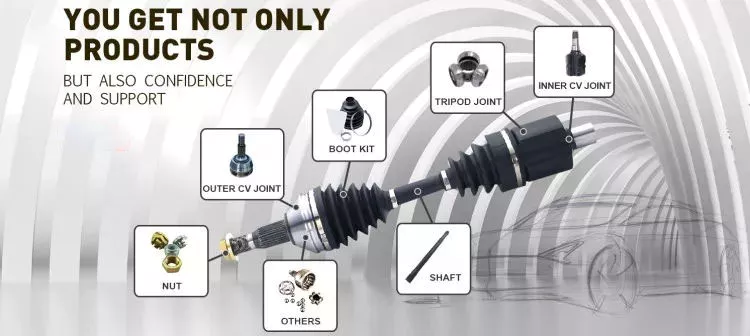
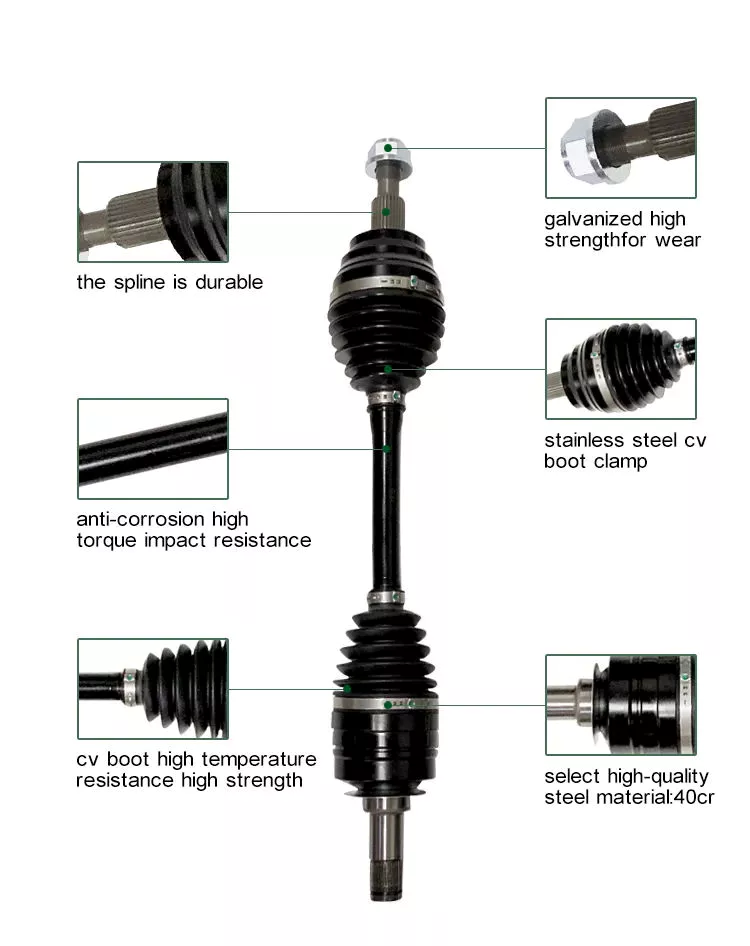
| Product name | Drive shaft |
| Applicable model | 655D Z525710040 Z525710030 Z52571571 |
| Material | Acero |
| Feature | High hardness, high wear resistance |
| Manufacturing Technology | Forging/casting |
| certification | ISO9001 |
The company focuses on the loader of the whole vehicle accessories,
the major models of accessories in sufficient supply,
can provide a one-stop procurement program.
If you have any questions about our products or technologies,
please feel free to contact us.
Certifications
Perfil de la empresa
The company undertakes all kinds of engineering machin- ery pin shaftbushing production.All the processes of the products are made by our company,which can support all kinds of materials and customized processes.The company has complete quality inspection equipmentcan provide you with a complete quality inspection process report.Our company adheres to product quality as the primarystandard,after-sales service as the first criterion. and strictly control the delivery period, looking CZPT to cooperating with you.
Manufacturing Technique
Total workshop covers an area of 6000 square meters, more than 80 sets of professional equipment,with strong production capacity.
Company garden
and workshop
display.
Our office building, the middle- level staff has 15, can provide quality service for your products.
Quality inspection area, we have 3 professional quality inspectors, has a strict quality inspection system and full inspection process.
Equipment demonstration
Product packaging
About product packaging and transport packaging
We will according to customer requirements to custom packaging,in general,we will do a good job rust-proof products,then wrapped with a layer of plastic bags,the last set of anti-collision net to ensure product transportation.The second way is to wrap the oil paperusing our tape seal,and put on the collision net.
(we will listen to the relevant advice if the customer requests)
The use of fumigated wooden box as the outer packaging,solid and reliable,fully in line with international transport requirements.
Have a complete quality inspection system
and advanced quality inspection equipment
Quality assurance is our top priorityin this regard we have advanced coordinate measuring instrument,internal diameter Rockwell hardness and metallographic examination.
In addition to high-quality equipment,we must be strict with the requirements of quality inspectors,careful,decisive.
Do a good job quality inspection process for your product quality escort!
Preguntas frecuentes
1. What do we do?
The company mainly engaged in various manufacturers of various series of loader, excavator whole car accessories, and many large machinery manufacturing companies cooperation for many years, sufficient supply, quality assurance, can provide you with different quotation procurement methods, as well as one-stop procurement services.
Among them, all the loader pins, bushings are independently developed and produced by our company, can provide customized services, and there are various series of models in stock.
2. How do we ensure quality and output?
First of all, we have cooperated with many large machinery parts manufacturing companies in mainland China for many years, these companies are complete in qualifications, quality assurance, sufficient supply, we also have professional technical quality personnel regular inspection, to ensure the provision of high-quality products.
Secondly, we have more than 90 sets of professional production equipment, 63 employees, and 3 professional engineers to escort you. In the aspect of heat treatment, we have high quality carburizing quenching equipment, medium frequency induction quenching and modulation processing equipment, can provide you with all process quality control management report, the company passed the IOS9001 quality system management certification, has 12 years of production and processing experience, for your quality and delivery escort.
3. What can you buy from us?
The company mainly engaged in various series of loader parts, can provide one-stop procurement services
We have all the major Chinese loader main engine factory pin shaft, bushing auxiliary parts inventory, and support custom and OEM.
4. What are the advantages of buying from our company?
A. Sufficient supply and quality assurance
B, professional technical team, can provide professional technical services
C. Rich experience, can guarantee the quality and delivery time
D. Excellent after-sales service
5. What services can we provide?
Accepted delivery terms :FOB, CFR, CIF, EXW, FAS, CIP, FCA, CPT, DEQ, DDP, DDU, Express, DAF, DES;
Payment currency accepted: US dollar, Euro, Japanese yen, Canadian dollar, Australian dollar, Hong Kong dollar, British pound, RMB, Swiss Franc;
Payment methods accepted: Telegraphic transfer, letter of credit, D/A, Moneygram, credit card, PayPal, Western Union, cash, escrow;
Languages: English, Chinese, Spanish, Japanese, Portuguese, German, Arabic, French, Russian, Korean, Hindi, Italian.
Now we sell these goods directly to everyone at Alibaba, so that everyone can enjoy the same product quality at a lower price!
/* 22 de enero de 2571 19:08:37 */!function(){function s(e,r){var a,o={};try{e&&e.split(“”,).forEach(function(e,t){e&&(a=e.match(/(.*?):(.*)$/))&&1
| Servicio posventa: | Provided |
|---|---|
| Garantía: | 6 Months |
| Tipo: | Transmission System |
| Muestras: |
US$ 100/Piece
1 unidad (pedido mínimo) | Solicitar muestra |
|---|
| Personalización: |
Disponible
| Solicitud personalizada |
|---|
.shipping-cost-tm .tm-status-off{background: none;padding:0;color: #1470cc}
|
Costo de envío:
Coste estimado por unidad. |
sobre el costo de envío y el tiempo estimado de entrega. |
|---|
| Método de pago: |
|
|---|---|
|
Pago inicial Pago completo |
| Divisa: | US$ |
|---|
| Devoluciones y reembolsos: | Puedes solicitar un reembolso hasta 30 días después de recibir los productos. |
|---|
How do drive shafts ensure efficient power transfer while maintaining balance?
Drive shafts employ various mechanisms to ensure efficient power transfer while maintaining balance. Efficient power transfer refers to the ability of the drive shaft to transmit rotational power from the source (such as an engine) to the driven components (such as wheels or machinery) with minimal energy loss. Balancing, on the other hand, involves minimizing vibrations and eliminating any uneven distribution of mass that can cause disturbances during operation. Here’s an explanation of how drive shafts achieve both efficient power transfer and balance:
1. Material Selection:
The material selection for drive shafts is crucial for maintaining balance and ensuring efficient power transfer. Drive shafts are commonly made from materials such as steel or aluminum alloys, chosen for their strength, stiffness, and durability. These materials have excellent dimensional stability and can withstand the torque loads encountered during operation. By using high-quality materials, drive shafts can minimize deformation, flexing, and imbalances that could compromise power transmission and generate vibrations.
2. Consideraciones de diseño:
The design of the drive shaft plays a significant role in both power transfer efficiency and balance. Drive shafts are engineered to have appropriate dimensions, including diameter and wall thickness, to handle the anticipated torque loads without excessive deflection or vibration. The design also considers factors such as the length of the drive shaft, the number and type of joints (such as universal joints or constant velocity joints), and the use of balancing weights. By carefully designing the drive shaft, manufacturers can achieve optimal power transfer efficiency while minimizing the potential for imbalance-induced vibrations.
3. Balancing Techniques:
Balance is crucial for drive shafts as any imbalance can cause vibrations, noise, and accelerated wear. To maintain balance, drive shafts undergo various balancing techniques during the manufacturing process. Static and dynamic balancing methods are employed to ensure that the mass distribution along the drive shaft is uniform. Static balancing involves adding counterweights at specific locations to offset any weight imbalances. Dynamic balancing is performed by spinning the drive shaft at high speeds and measuring any vibrations. If imbalances are detected, additional adjustments are made to achieve a balanced state. These balancing techniques help minimize vibrations and ensure smooth operation of the drive shaft.
4. Universal Joints and Constant Velocity Joints:
Drive shafts often incorporate universal joints (U-joints) or constant velocity (CV) joints to accommodate misalignment and maintain balance during operation. U-joints are flexible joints that allow for angular movement between shafts. They are typically used in applications where the drive shaft operates at varying angles. CV joints, on the other hand, are designed to maintain a constant velocity of rotation and are commonly used in front-wheel-drive vehicles. By incorporating these joints, drive shafts can compensate for misalignment, reduce stress on the shaft, and minimize vibrations that can negatively impact power transfer efficiency and balance.
5. Maintenance and Inspection:
Regular maintenance and inspection of drive shafts are essential for ensuring efficient power transfer and balance. Periodic checks for wear, damage, or misalignment can help identify any issues that may affect the drive shaft’s performance. Lubrication of the joints and proper tightening of fasteners are also critical for maintaining optimal operation. By adhering to recommended maintenance procedures, any imbalances or inefficiencies can be addressed promptly, ensuring continued efficient power transfer and balance.
In summary, drive shafts ensure efficient power transfer while maintaining balance through careful material selection, thoughtful design considerations, balancing techniques, and the incorporation of flexible joints. By optimizing these factors, drive shafts can transmit rotational power smoothly and reliably, minimizing energy losses and vibrations that can impact performance and longevity.

Can drive shafts be customized for specific vehicle or equipment requirements?
Yes, drive shafts can be customized to meet specific vehicle or equipment requirements. Customization allows manufacturers to tailor the design, dimensions, materials, and other parameters of the drive shaft to ensure compatibility and optimal performance within a particular vehicle or equipment. Here’s a detailed explanation of how drive shafts can be customized:
1. Dimensional Customization:
Drive shafts can be customized to match the dimensional requirements of the vehicle or equipment. This includes adjusting the overall length, diameter, and spline configuration to ensure proper fitment and clearances within the specific application. By customizing the dimensions, the drive shaft can be seamlessly integrated into the driveline system without any interference or limitations.
2. Material Selection:
The choice of materials for drive shafts can be customized based on the specific requirements of the vehicle or equipment. Different materials, such as steel alloys, aluminum alloys, or specialized composites, can be selected to optimize strength, weight, and durability. The material selection can be tailored to meet the torque, speed, and operating conditions of the application, ensuring the drive shaft’s reliability and longevity.
3. Joint Configuration:
Drive shafts can be customized with different joint configurations to accommodate specific vehicle or equipment requirements. For example, universal joints (U-joints) may be suitable for applications with lower operating angles and moderate torque demands, while constant velocity (CV) joints are often used in applications requiring higher operating angles and smoother power transmission. The choice of joint configuration depends on factors such as operating angle, torque capacity, and desired performance characteristics.
4. Torque and Power Capacity:
Customization allows drive shafts to be designed with the appropriate torque and power capacity for the specific vehicle or equipment. Manufacturers can analyze the torque requirements, operating conditions, and safety margins of the application to determine the optimal torque rating and power capacity of the drive shaft. This ensures that the drive shaft can handle the required loads without experiencing premature failure or performance issues.
5. Balancing and Vibration Control:
Drive shafts can be customized with precision balancing and vibration control measures. Imbalances in the drive shaft can lead to vibrations, increased wear, and potential driveline issues. By employing dynamic balancing techniques during the manufacturing process, manufacturers can minimize vibrations and ensure smooth operation. Additionally, vibration dampers or isolation systems can be integrated into the drive shaft design to further mitigate vibrations and enhance overall system performance.
6. Integration and Mounting Considerations:
Customization of drive shafts takes into account the integration and mounting requirements of the specific vehicle or equipment. Manufacturers work closely with the vehicle or equipment designers to ensure that the drive shaft fits seamlessly into the driveline system. This includes adapting the mounting points, interfaces, and clearances to ensure proper alignment and installation of the drive shaft within the vehicle or equipment.
7. Collaboration and Feedback:
Manufacturers often collaborate with vehicle manufacturers, OEMs (Original Equipment Manufacturers), or end-users to gather feedback and incorporate their specific requirements into the drive shaft customization process. By actively seeking input and feedback, manufacturers can address specific needs, optimize performance, and ensure compatibility with the vehicle or equipment. This collaborative approach enhances the customization process and results in drive shafts that meet the exact requirements of the application.
8. Compliance with Standards:
Customized drive shafts can be designed to comply with relevant industry standards and regulations. Compliance with standards, such as ISO (International Organization for Standardization) or specific industry standards, ensures that the customized drive shafts meet quality, safety, and performance requirements. Adhering to these standards provides assurance that the drive shafts are compatible and can be seamlessly integrated into the specific vehicle or equipment.
In summary, drive shafts can be customized to meet specific vehicle or equipment requirements through dimensional customization, material selection, joint configuration, torque and power capacity optimization, balancing and vibration control, integration and mounting considerations, collaboration with stakeholders, and compliance with industry standards. Customization allows drive shafts to be precisely tailored to the needs of the application, ensuring compatibility, reliability, and optimal performance.
¿Podrías explicar los diferentes tipos de ejes de transmisión y sus aplicaciones específicas?
Existen diversos tipos de ejes de transmisión, cada uno diseñado para adaptarse a aplicaciones y requisitos específicos. La elección del eje de transmisión depende de factores como el tipo de vehículo o equipo, las necesidades de transmisión de potencia, las limitaciones de espacio y las condiciones de funcionamiento. A continuación, se explican los diferentes tipos de ejes de transmisión y sus aplicaciones específicas:
1. Eje macizo:
Un eje macizo, también conocido como eje de transmisión de una sola pieza o de acero macizo, es un eje único e ininterrumpido que va desde el motor o la fuente de energía hasta los componentes accionados. Su diseño es sencillo y robusto, y se utiliza en numerosas aplicaciones. Los ejes macizos se encuentran comúnmente en vehículos de tracción trasera, donde transmiten la potencia desde la transmisión al eje trasero. También se utilizan en maquinaria industrial, como bombas, generadores y cintas transportadoras, donde se requiere una transmisión de potencia recta y rígida.
2. Eje tubular:
Los ejes tubulares, también llamados ejes huecos, son ejes de transmisión con una estructura cilíndrica tubular. Están construidos con un núcleo hueco y suelen ser más ligeros que los ejes macizos. Los ejes tubulares ofrecen ventajas como un menor peso, una mayor rigidez torsional y una mejor amortiguación de las vibraciones. Se utilizan en diversos vehículos, como automóviles, camiones y motocicletas, así como en maquinaria y equipos industriales. Los ejes de transmisión tubulares se utilizan comúnmente en vehículos de tracción delantera, donde conectan la transmisión con las ruedas delanteras.
3. Eje de velocidad constante (CV):
Los ejes de velocidad constante (CV) están diseñados específicamente para gestionar el movimiento angular y mantener una velocidad constante entre el motor/transmisión y los componentes accionados. Incorporan juntas homocinéticas en ambos extremos, lo que permite flexibilidad y compensación ante cambios de ángulo. Los ejes CV se utilizan habitualmente en vehículos de tracción delantera y tracción integral, así como en vehículos todoterreno y cierta maquinaria pesada. Las juntas homocinéticas permiten una transmisión de potencia suave incluso al girar las ruedas o al moverse la suspensión, reduciendo las vibraciones y mejorando el rendimiento general.
4. Eje con junta deslizante:
Los ejes de junta deslizante, también conocidos como ejes telescópicos, constan de dos o más secciones tubulares que se deslizan una dentro de la otra. Este diseño permite ajustar la longitud, adaptándose a los cambios de distancia entre el motor/transmisión y los componentes accionados. Los ejes de junta deslizante se utilizan comúnmente en vehículos con distancias entre ejes largas o sistemas de suspensión ajustables, como algunos camiones, autobuses y vehículos recreativos. Al ofrecer flexibilidad en la longitud, los ejes de junta deslizante garantizan una transmisión de potencia constante, incluso cuando el chasis del vehículo experimenta movimientos o cambios en la geometría de la suspensión.
5. Eje cardán doble:
Un eje de transmisión de doble cardán, también conocido como eje de doble junta universal, incorpora dos juntas universales. Esta configuración ayuda a reducir las vibraciones y minimizar los ángulos de operación de las juntas, lo que resulta en una transmisión de potencia más suave. Los ejes de doble cardán se utilizan comúnmente en aplicaciones de servicio pesado, como camiones, vehículos todoterreno y maquinaria agrícola. Son especialmente adecuados para aplicaciones con altos requisitos de torque y grandes ángulos de operación, proporcionando mayor durabilidad y rendimiento.
6. Eje compuesto:
Los ejes compuestos están fabricados con materiales compuestos como fibra de carbono o fibra de vidrio, ofreciendo ventajas como menor peso, mayor resistencia y resistencia a la corrosión. Los ejes de transmisión compuestos se utilizan cada vez más en vehículos de alto rendimiento, deportivos y de competición, donde la reducción de peso y la mejora de la relación potencia-peso son cruciales. La construcción compuesta permite un ajuste preciso de la rigidez y la amortiguación, lo que se traduce en una mejor dinámica del vehículo y una mayor eficiencia de la transmisión.
7. Eje de la toma de fuerza:
Los ejes de toma de fuerza (TDF) son ejes de transmisión especializados que se utilizan en maquinaria agrícola y ciertos equipos industriales. Están diseñados para transferir potencia del motor o fuente de alimentación a diversos implementos, como segadoras, empacadoras o bombas. Los ejes de TDF suelen tener una conexión estriada en un extremo para conectarse a la fuente de alimentación y una junta universal en el otro para permitir el movimiento angular. Se caracterizan por su capacidad para transmitir altos niveles de par y su compatibilidad con una amplia gama de implementos accionados.
8. Eje marino:
Los ejes marinos, también conocidos como ejes de hélice o ejes de cola, están diseñados específicamente para embarcaciones. Transmiten la potencia del motor a la hélice, permitiendo la propulsión. Suelen ser largos y operan en entornos hostiles, expuestos al agua, la corrosión y altas cargas de torsión. Generalmente están fabricados de acero inoxidable u otros materiales resistentes a la corrosión y están diseñados para soportar las exigentes condiciones propias de las aplicaciones marinas.
Es importante destacar que las aplicaciones específicas de los ejes de transmisión pueden variar según el fabricante del vehículo o equipo, así como los requisitos específicos de diseño e ingeniería. Los ejemplos anteriores ilustran las aplicaciones comunes de cada tipo de eje de transmisión, pero pueden existir variaciones adicionales y diseños especializados según las necesidades específicas de la industria y los avances tecnológicos.


editor by CX 2024-03-12