产品描述
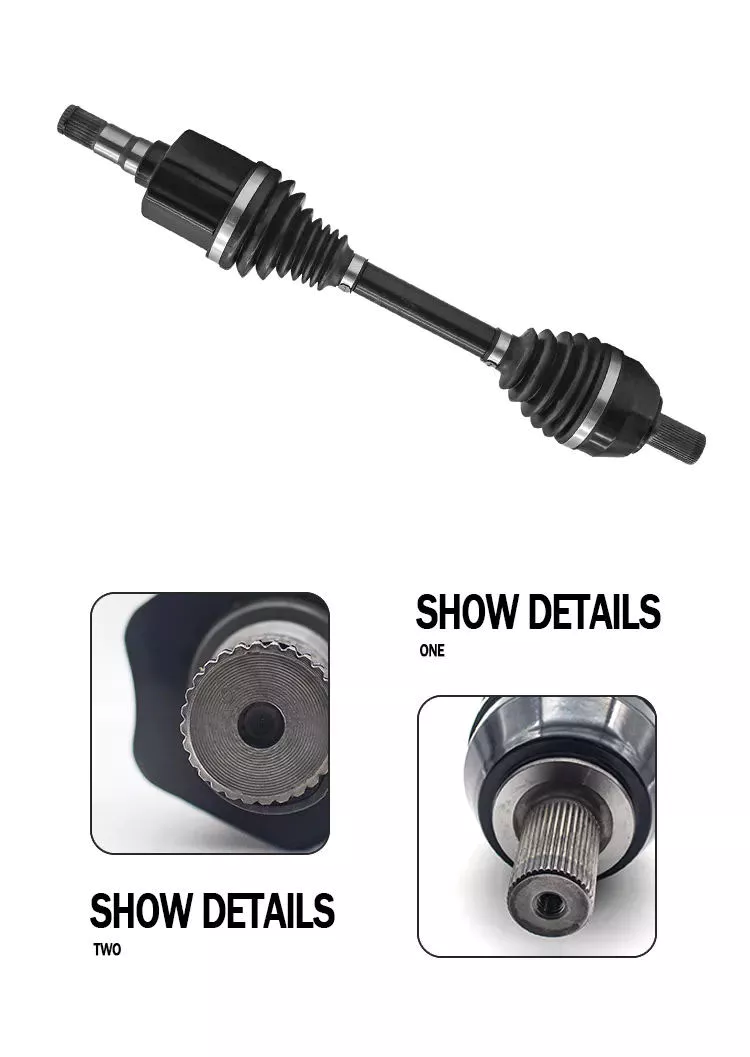
Our company produce more difference Russian car drive shafts and compoents, including to GAZ, MTZ, KAMAZ, UAZ, LADA, please contact us if you need anything.
/* 2571 年 1 月 22 日 19:08:37 */!function(){function s(e,r){var a,o={};try{e&&e.split(“,”).forEach(function(e,t){e&&(a=e.match(/(.*?):(.*)$/))&&1
| 健康)状况: | 新的 |
|---|---|
| 认证: | ISO |
| 类型: | Universal Joint |
| 材料: | Alloy |
| Automatic: | Automatic |
| 运输包装: | Export Packing |
| 示例: |
US$ 1/Piece
1 件(最低订购量) | |
|---|
| 定制化: |
可用的
| 定制请求 |
|---|
Are there any limitations or disadvantages associated with drive shafts?
While drive shafts are widely used and offer several advantages, they also have certain limitations and disadvantages that should be considered. Here’s a detailed explanation of the limitations and disadvantages associated with drive shafts:
1. Length and Misalignment Constraints:
Drive shafts have a maximum practical length due to factors such as material strength, weight considerations, and the need to maintain rigidity and minimize vibrations. Longer drive shafts can be prone to increased bending and torsional deflection, leading to reduced efficiency and potential driveline vibrations. Additionally, drive shafts require proper alignment between the driving and driven components. Misalignment can cause increased wear, vibrations, and premature failure of the drive shaft or its associated components.
2. Limited Operating Angles:
Drive shafts, especially those using U-joints, have limitations on operating angles. U-joints are typically designed to operate within specific angular ranges, and operating beyond these limits can result in reduced efficiency, increased vibrations, and accelerated wear. In applications requiring large operating angles, constant velocity (CV) joints are often used to maintain a constant speed and accommodate greater angles. However, CV joints may introduce higher complexity and cost compared to U-joints.
3. Maintenance Requirements:
Drive shafts require regular maintenance to ensure optimal performance and reliability. This includes periodic inspection, lubrication of joints, and balancing if necessary. Failure to perform routine maintenance can lead to increased wear, vibrations, and potential driveline issues. Maintenance requirements should be considered in terms of time and resources when using drive shafts in various applications.
4. Noise and Vibration:
Drive shafts can generate noise and vibrations, especially at high speeds or when operating at certain resonant frequencies. Imbalances, misalignment, worn joints, or other factors can contribute to increased noise and vibrations. These vibrations may affect the comfort of vehicle occupants, contribute to component fatigue, and require additional measures such as dampers or vibration isolation systems to mitigate their effects.
5. Weight and Space Constraints:
Drive shafts add weight to the overall system, which can be a consideration in weight-sensitive applications, such as automotive or aerospace industries. Additionally, drive shafts require physical space for installation. In compact or tightly packaged equipment or vehicles, accommodating the necessary drive shaft length and clearances can be challenging, requiring careful design and integration considerations.
6. Cost Considerations:
Drive shafts, depending on their design, materials, and manufacturing processes, can involve significant costs. Customized or specialized drive shafts tailored to specific equipment requirements may incur higher expenses. Additionally, incorporating advanced joint configurations, such as CV joints, can add complexity and cost to the drive shaft system.
7. Inherent Power Loss:
Drive shafts transmit power from the driving source to the driven components, but they also introduce some inherent power loss due to friction, bending, and other factors. This power loss can reduce overall system efficiency, particularly in long drive shafts or applications with high torque requirements. It is important to consider power loss when determining the appropriate drive shaft design and specifications.
8. Limited Torque Capacity:
While drive shafts can handle a wide range of torque loads, there are limits to their torque capacity. Exceeding the maximum torque capacity of a drive shaft can lead to premature failure, resulting in downtime and potential damage to other driveline components. It is crucial to select a drive shaft with sufficient torque capacity for the intended application.
Despite these limitations and disadvantages, drive shafts remain a widely used and effective means of power transmission in various industries. Manufacturers continuously work to address these limitations through advancements in materials, design techniques, joint configurations, and balancing processes. By carefully considering the specific application requirements and potential drawbacks, engineers and designers can mitigate the limitations and maximize the benefits of drive shafts in their respective systems.

你能提供一些使用传动轴的车辆和机械的实际例子吗?
传动轴广泛应用于各种车辆和机械中,用于将发动机或动力源的动力传递到车轮或驱动部件。以下是一些使用传动轴的车辆和机械的实际示例:
1. 汽车:
传动轴在汽车中很常见,尤其是在后轮驱动或四轮驱动的车辆中。在这些车辆中,传动轴分别将动力从变速箱或分动箱传递到后差速器或前差速器。这样,发动机的动力就能分配到车轮,从而驱动车辆前进。
2. 卡车和商用车辆:
传动轴是卡车和商用车的重要组成部分。它们用于将动力从变速箱或分动箱传递到后桥,重型卡车则传递到多个后桥。商用车的传动轴设计用于承受更高的扭矩负载,通常比乘用车的传动轴更大、更坚固。
3. 建筑和土方设备:
各种类型的建筑和土方设备,例如挖掘机、装载机、推土机和平地机,都依靠传动轴进行动力传输。这些机器通常拥有复杂的传动系统,利用传动轴将动力从发动机传递到车轮或履带,使其能够在建筑工地或矿山作业中执行重型任务。
4. 农业机械:
包括拖拉机、联合收割机和收割机在内的农业机械,都利用传动轴将发动机的动力传递到车轮或驱动部件。农业机械中的传动轴通常承受着严苛的工况,并且可能具有伸缩节等附加功能,以适应部件之间不同的距离。
5. 工业机械:
工业机械,例如制造设备、发电机、泵和压缩机,通常在其动力传输系统中采用传动轴。这些传动轴将来自电动机、发动机或其他动力源的动力传递到各种驱动部件,使机械能够在工业环境中执行特定任务。
6. 海洋船舶:
在船舶应用中,传动轴通常用于将发动机的动力传递到船艇和其他水上交通工具的螺旋桨。船用传动轴通常更长,并且经过专门设计以应对水环境带来的独特挑战,包括耐腐蚀性和合适的密封机制。
7. 休闲车辆(RV)和露营车:
房车和露营车通常使用传动轴作为其动力传动系统的一部分。这些传动轴将动力从变速器传递到后轴,使车辆能够行驶并提供驱动力。房车的传动轴可能还配备减震器或振动抑制组件等附加功能,以提高行驶舒适性。
8. 越野车和赛车:
越野车辆,例如SUV、卡车和全地形车(ATV),以及赛车,通常都使用传动轴。这些传动轴的设计旨在承受越野路况或高性能赛车的严苛考验,高效地将动力传递至车轮,确保最佳的牵引力和性能。
9. 铁路车辆:
在铁路系统中,传动轴用于机车和某些类型的车辆。它们将机车发动机的动力传递到车轮或推进系统,使列车能够沿轨道行驶。铁路传动轴通常更长,并且可能具有额外的结构,以适应某些列车铰接式或柔性结构的特性。
10. 风力涡轮机:
用于发电的大型风力涡轮机在其动力传输系统中集成了传动轴。传动轴将涡轮机叶片的旋转能量传递到发电机,发电机再将其转化为电能。风力涡轮机中的传动轴设计用于承受风产生的巨大扭矩和旋转力。
这些例子表明,依赖传动轴进行高效动力传输和推进的车辆和机械种类繁多。传动轴是各行各业的关键部件,能够将动力从动力源传递到被驱动部件,最终实现运动、操作或特定任务的执行。

传动轴如何应对长度和扭矩要求的变化?
传动轴的设计旨在应对长度和扭矩需求的变化,从而高效地传递旋转动力。以下是对传动轴如何应对这些变化的解释:
长度变化:
传动轴有多种长度可供选择,以适应发动机或动力源与被驱动部件之间不同的距离。根据具体应用,传动轴可以定制,也可以购买标准长度的传动轴。在发动机与被驱动部件距离较长的情况下,可以使用多根带有合适联轴器或万向节的传动轴来连接。这些额外的传动轴有效地延长了动力传输系统的总长度。
此外,一些传动轴采用伸缩式设计。这些伸缩节可以伸长或缩回,从而调整长度以适应不同的车辆配置或动态运动。伸缩式传动轴常用于发动机与驱动部件之间距离可能发生变化的场合,例如某些类型的卡车、公共汽车和越野车。
扭矩要求:
传动轴的设计旨在满足不同的扭矩需求,这些需求取决于发动机或动力源的功率输出以及被驱动部件的要求。通过传动轴传递的扭矩取决于多种因素,例如发动机功率、负载情况以及被驱动部件所遇到的阻力。
制造商在选择传动轴的合适材料和尺寸时会考虑扭矩要求。传动轴通常采用高强度材料(例如钢或铝合金)制造,以承受扭矩载荷而不发生变形或断裂。传动轴的直径、壁厚和设计都经过精心计算,以确保其能够承受预期的扭矩,而不会出现过度挠曲或振动。
在重型卡车、工业机械或高性能车辆等高扭矩需求应用中,传动轴可能需要额外的加固措施。这些加固措施包括加厚壁厚、采用强度优化的横截面形状,或使用具有卓越扭矩承受能力的复合材料。
此外,传动轴通常采用柔性连接件,例如万向节或等速万向节(CV接头)。这些连接件允许一定的角度偏差,并补偿发动机、变速器和被驱动部件之间工作角度的变化。它们还有助于吸收振动和冲击,从而降低传动轴的应力,并提高其扭矩承受能力。
总而言之,传动轴通过可定制的长度、伸缩节、合适的材料和尺寸以及柔性接头的加入,来应对长度和扭矩需求的变化。通过仔细考虑这些因素,传动轴能够高效可靠地传递动力,同时满足不同应用的特定需求。


editor by CX 2024-04-17