
产品描述
HangZhou Custom metal shaft for screw pump manufacturing Swiss CNC machining stainless steel alloy stator Coupling Rod Drive shaft
Click here and specify your inquiry, contact us to get an online quote now!
How to get a quote?
1. First: Email us and offer your 3D drawing/2D drawing to us to quote.
2. Second: Let us know the required material, surface finish and special tolerance requirements, quantity information, we’ll arrange for our engineer to review your drawings and quote soon!
Note: Workable 3D Drawing Formats: STEP/IGS/X_T/STL/SOLIDWORKS etc, 2D Drawing with PDF will do.
Project Support: Free Sample Offered Before Production starts
Examples projects
What we can offer
| Advantages | »Free sample offered before production »Good machining quality and warm service »Reasonable Pricing and outstanding quality provided »Competitive shipping cost service with discount sometimes »MOQ 1PCS and small quantity order accepted, mass production supported »Professional engineering service when any modification required »Any turnkey assembly or customized package requirements, we’ll meet your demands! |
|||||
| Equipment |
»20 sets of CNC turning machines; »30 sets of the most technologically advanced machining CNC milling machines; »25 sets of Multi-Spindle Japan Precision Swiss CNC lathes |
|||||
| RFQ | Customer Inquiry →Engineering Communication →Cost Analysis →Sales Analysis →Quote to Customer » 1-3 Work Days Only » Submit RFQ with complete commercial terms |
|||||
| Sample Making | Sample Order → Engineering Review → Sample Plan to Customer → Sample Status Tracking → Submit Samples with Doc. » Sample L/T: 1 week » Continuous Sample Status Tracking » Complete Documents for sample approval |
|||||
| Order Management | CRM System → Open Order Confirm → Logistic Arrangement. » Production L/T: 2-4 wks » Weekly Open Order Confirm » Preferred 3PL Service to Customers |
|||||
| 质量控制 | Certificates: RoHS, ISO9001:2008, SGS. IQC → IPQC → OQC/FQC → Quality Complain Feedback → Audit & Training. » Plant Audit and Qualified by world famous company » Strict Quality Management Procedure with Traceability |
|||||
| Application | »Aerospace »Automotive »Lighting fittings »Motorbike »PhotoGear »EDC Tools » Marine »Office equipment »Home appliance »Medical equipment »Telecommunication »Electrical & Electronics »Fire detection system, etc. |
|||||
Production information
1). Material Capabilities: Following GB, DIN, and ISO and applying good quality homemade and import materials, we have already provided single/assembly products for international customers mainly from the USA and Europe, etc.
| Stainless Steel | SS201, SS301, SS303, SS304, SS316, SS416 etc. |
| Steel | Mild steel, Carbon steel, 4140, 4340, Q235, Q345B, 20#, 45#, etc. |
| Brass | HPb63, HPb62, HPb61, HPb59, H59, H62, H68, H80 etc. |
| Copper | C11000, C12000, C12000 C36000 etc. |
| Aluminum | AL6061, Al6063, AL6082, AL7075, AL5052, A380 etc. |
| Iron | A36, 45#, 1213, 12L14, 1215 etc. |
| Plastic | ABS, PC, PE, POM, Delrin, Nylon, PP, PEI, Peek etc. |
2). Quality control:
*We have specialized QC testers to check the quality of the products according to different customers’ requirements. Usually, it’s a random inspection, and we also offer 100% inspection at a reasonable price if required.
*We have IQC to check the dimensions and surface of the incoming material
*We have PQC to inspect full-course during the manufacturing processing
*We have FQC to inspect all the anodizing/plating and other finishes’ products from our supplier and proceed with the professional quality and appearance inspection before shipping.
3).Surface Finish: sandblasted/normal and hard anodized finish/polish/coating/polish/passivation/plating/brush/heat treatment/fine glass beads/grounding/tumbled finish , etc. More detailed information for different material parts is below,
|
Aluminum parts |
Brushing Polishing Clear Anodized Color Anodized Sandblast Anodized Chemical Film |
| Stainless Steel parts | Polishing Passivated Sandblasting Plating |
| Steel Parts | Zinc plating Oxide Black Nickel plating Chrome plating Carburized Heat treatment Powder Coated |
| Plastic Parts | Chrome plating Polishing |
4). Payment terms: T/T payment. The Sample order is paid by full payment; Mass production with order amount exceeding can be paid a 50% deposit before production, and balance paid before shipping.
5). Production schedule: Usually, it takes 5~10 working days for sample production; 15~20 working days for mass production days, it depends on your design, simple parts can be produced quickly, the complicated design parts would take us more machining time.
6). Machining capability: 30 sets of the most technologically advanced machining CNC milling machines, 20 sets of CNC turning machines, 25 sets of Multi-Spindle Japan Precision Swiss CNC lathes, and 4 sets of 2D &3D CMM (image measuring instrument) quality control equipment 3 QC staff, enabling CNC Manufacturing to deliver precise parts within the tightest of tolerances, ensuring the highest quality results to meet different
customers’ requirements.
7). Tolerance: +/- 0.02mm (for Metal shaft), +/-0.03mm ( for plastic), for special tolerance requirements, please point them out in the email, we will Check if it’s feasible to make it after studying it.
8). Packing & Shipping way:
1. Packing Detail: Each product is packed with plastic preservative, EPE, foam plastic bag, Carton outside, wood case or iron case or as per the customer’s special requirement. Besides, the custom package takes a week to prepare in advance.
2. Delivery Detail: the fast International Shipping time takes 3 ~5 working days by DHL/UPS/FedEx, slow shipping time takes 7~ 8 working days by DHL/UPS/FedEx/TNT, etc.
3. Shipping options:
1) 0-100kg: express&air freight priority,
2) >100kg: sea freight priority,
3) As per customized specifications
About us
Full-service precision CNC machining services for prototypes and short and low to high production runs. Capabilities are CNC milled and turned metal parts and assemblies. Materials worked with include aluminum, brass, copper, stainless, steel, iron, other precious metals, and other plastic materials. Lead times are 2 to 3 weeks for prototypes and 4 to 6 weeks for production runs. Emergency and rush services are available. Industries served include aircraft and aerospace, consumer electronics, automotive, machinery fittings, audio equipment, EDC tools, computer, and Secondary processes such as anodizing, sandblasting, blackening, grinding, honing, heat treating, powder coating, passivation, polishing, plating, and brushing are also provided.
We put high attention and effort into all of the work that we do. Every part that comes off our machines is an extension of us. We take great pride in bringing machining CZPT to our customers. The amazing quality parts we machined here will be your best choice to find a supplier!
Customer’s comment
Want to know more about us? Email us now!
/* March 10, 2571 17:59:20 */!function(){function s(e,r){var a,o={};try{e&&e.split(“,”).forEach(function(e,t){e&&(a=e.match(/(.*?):(.*)$/))&&1
| 售后服务: | Email Us Anytime If Any Problems |
|---|---|
| Warranty: | Email Us Anytime If Any Requirements |
| 健康)状况: | 新的 |
| Certification: | CE, RoHS, GS, ISO9001 |
| Standard: | DIN, Custom Metal Parts & Free Sample Offered |
| Customized: | Customized |
| 示例: |
US$ 0/Piece
1 件(最低订购量) | |
|---|
| 定制化: |
可用的
| 定制请求 |
|---|
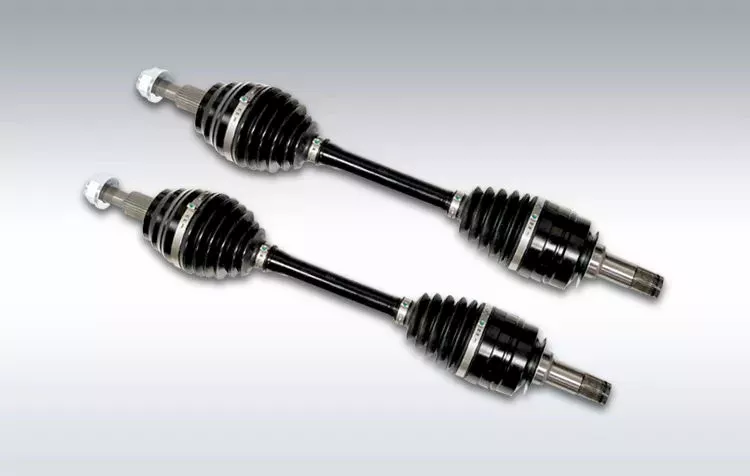
How do manufacturers ensure the compatibility of drive shafts with different equipment?
Manufacturers employ various strategies and processes to ensure the compatibility of drive shafts with different equipment. Compatibility refers to the ability of a drive shaft to effectively integrate and function within a specific piece of equipment or machinery. Manufacturers take into account several factors to ensure compatibility, including dimensional requirements, torque capacity, operating conditions, and specific application needs. Here’s a detailed explanation of how manufacturers ensure the compatibility of drive shafts:
1. Application Analysis:
Manufacturers begin by conducting a thorough analysis of the intended application and equipment requirements. This analysis involves understanding the specific torque and speed demands, operating conditions (such as temperature, vibration levels, and environmental factors), and any unique characteristics or constraints of the equipment. By gaining a comprehensive understanding of the application, manufacturers can tailor the design and specifications of the drive shaft to ensure compatibility.
2. Customization and Design:
Manufacturers often offer customization options to adapt drive shafts to different equipment. This customization involves tailoring the dimensions, materials, joint configurations, and other parameters to match the specific requirements of the equipment. By working closely with the equipment manufacturer or end-user, manufacturers can design drive shafts that align with the equipment’s mechanical interfaces, mounting points, available space, and other constraints. Customization ensures that the drive shaft fits seamlessly into the equipment, promoting compatibility and optimal performance.
3. Torque and Power Capacity:
Drive shaft manufacturers carefully determine the torque and power capacity of their products to ensure compatibility with different equipment. They consider factors such as the maximum torque requirements of the equipment, the expected operating conditions, and the safety margins necessary to withstand transient loads. By engineering drive shafts with appropriate torque ratings and power capacities, manufacturers ensure that the shaft can handle the demands of the equipment without experiencing premature failure or performance issues.
4. Material Selection:
Manufacturers choose materials for drive shafts based on the specific needs of different equipment. Factors such as torque capacity, operating temperature, corrosion resistance, and weight requirements influence material selection. Drive shafts may be made from various materials, including steel, aluminum alloys, or specialized composites, to provide the necessary strength, durability, and performance characteristics. The selected materials ensure compatibility with the equipment’s operating conditions, load requirements, and other environmental factors.
5. Joint Configurations:
Drive shafts incorporate joint configurations, such as universal joints (U-joints) or constant velocity (CV) joints, to accommodate different equipment needs. Manufacturers select and design the appropriate joint configuration based on factors such as operating angles, misalignment tolerances, and the desired level of smooth power transmission. The choice of joint configuration ensures that the drive shaft can effectively transmit power and accommodate the range of motion required by the equipment, promoting compatibility and reliable operation.
6. Quality Control and Testing:
Manufacturers implement stringent quality control processes and testing procedures to verify the compatibility of drive shafts with different equipment. These processes involve conducting dimensional inspections, material testing, torque and stress analysis, and performance testing under simulated operating conditions. By subjecting drive shafts to rigorous quality control measures, manufacturers can ensure that they meet the required specifications and performance criteria, guaranteeing compatibility with the intended equipment.
7. Compliance with Standards:
Manufacturers ensure that their drive shafts comply with relevant industry standards and regulations. Compliance with standards, such as ISO (International Organization for Standardization) or specific industry standards, provides assurance of quality, safety, and compatibility. Adhering to these standards helps manufacturers meet the expectations and requirements of equipment manufacturers and end-users, ensuring that the drive shafts are compatible and can be seamlessly integrated into different equipment.
8. Collaboration and Feedback:
Manufacturers often collaborate closely with equipment manufacturers, OEMs (Original Equipment Manufacturers), or end-users to gather feedback and incorporate their specific requirements into the drive shaft design and manufacturing processes. This collaborative approach ensures that the drive shafts are compatible with the intended equipment and meet the expectations of the end-users. By actively seeking input and feedback, manufacturers can continuously improve their products’ compatibility and performance.
In summary, manufacturers ensure the compatibility of drive shafts with different equipment through a combination of application analysis, customization, torque and power capacity considerations, material selection, joint configurations, quality control and testing, compliance with standards, and collaboration with equipment manufacturers and end-users. These efforts enable manufacturers to design and produce drive shafts that seamlessly integrate with various equipment, ensuring optimal performance, reliability, and compatibility in different applications.

How do drive shafts contribute to the efficiency of vehicle propulsion and power transmission?
Drive shafts play a crucial role in the efficiency of vehicle propulsion and power transmission systems. They are responsible for transferring power from the engine or power source to the wheels or driven components. Here’s a detailed explanation of how drive shafts contribute to the efficiency of vehicle propulsion and power transmission:
1. 功率传输:
Drive shafts transmit power from the engine or power source to the wheels or driven components. By efficiently transferring rotational energy, drive shafts enable the vehicle to move forward or drive the machinery. The design and construction of drive shafts ensure minimal power loss during the transfer process, maximizing the efficiency of power transmission.
2. Torque Conversion:
Drive shafts can convert torque from the engine or power source to the wheels or driven components. Torque conversion is necessary to match the power characteristics of the engine with the requirements of the vehicle or machinery. Drive shafts with appropriate torque conversion capabilities ensure that the power delivered to the wheels is optimized for efficient propulsion and performance.
3. Constant Velocity (CV) Joints:
Many drive shafts incorporate Constant Velocity (CV) joints, which help maintain a constant speed and efficient power transmission, even when the driving and driven components are at different angles. CV joints allow for smooth power transfer and minimize vibration or power losses that may occur due to changing operating angles. By maintaining constant velocity, drive shafts contribute to efficient power transmission and improved overall vehicle performance.
4. Lightweight Construction:
Efficient drive shafts are often designed with lightweight materials, such as aluminum or composite materials. Lightweight construction reduces the rotational mass of the drive shaft, which results in lower inertia and improved efficiency. Reduced rotational mass enables the engine to accelerate and decelerate more quickly, allowing for better fuel efficiency and overall vehicle performance.
5. Minimized Friction:
Efficient drive shafts are engineered to minimize frictional losses during power transmission. They incorporate features such as high-quality bearings, low-friction seals, and proper lubrication to reduce energy losses caused by friction. By minimizing friction, drive shafts enhance power transmission efficiency and maximize the available power for propulsion or operating other machinery.
6. Balanced and Vibration-Free Operation:
Drive shafts undergo dynamic balancing during the manufacturing process to ensure smooth and vibration-free operation. Imbalances in the drive shaft can lead to power losses, increased wear, and vibrations that reduce overall efficiency. By balancing the drive shaft, it can spin evenly, minimizing vibrations and optimizing power transmission efficiency.
7. Maintenance and Regular Inspection:
Proper maintenance and regular inspection of drive shafts are essential for maintaining their efficiency. Regular lubrication, inspection of joints and components, and prompt repair or replacement of worn or damaged parts help ensure optimal power transmission efficiency. Well-maintained drive shafts operate with minimal friction, reduced power losses, and improved overall efficiency.
8. Integration with Efficient Transmission Systems:
Drive shafts work in conjunction with efficient transmission systems, such as manual, automatic, or continuously variable transmissions. These transmissions help optimize power delivery and gear ratios based on driving conditions and vehicle speed. By integrating with efficient transmission systems, drive shafts contribute to the overall efficiency of the vehicle propulsion and power transmission system.
9. Aerodynamic Considerations:
In some cases, drive shafts are designed with aerodynamic considerations in mind. Streamlined drive shafts, often used in high-performance or electric vehicles, minimize drag and air resistance to improve overall vehicle efficiency. By reducing aerodynamic drag, drive shafts contribute to the efficient propulsion and power transmission of the vehicle.
10. Optimized Length and Design:
Drive shafts are designed to have optimal lengths and designs to minimize energy losses. Excessive drive shaft length or improper design can introduce additional rotational mass, increase bending stresses, and result in energy losses. By optimizing the length and design, drive shafts maximize power transmission efficiency and contribute to improved overall vehicle efficiency.
Overall, drive shafts contribute to the efficiency of vehicle propulsion and power transmission through effective power transfer, torque conversion, utilization of CV joints, lightweight construction, minimized friction, balanced operation, regular maintenance, integration with efficient transmission systems, aerodynamic considerations, and optimized length and design. By ensuring efficient power delivery and minimizing energy losses, drive shafts play a significant role in enhancing the overall efficiency and performance of vehicles and machinery.
传动轴在各种应用中如何传递旋转动力?
在各种应用中,传动轴在将发动机或动力源的旋转动力传递到车轮或被驱动部件方面起着至关重要的作用。无论是在车辆还是机械中,传动轴都能实现高效的动力传输,并促进不同系统的运行。以下详细解释了传动轴如何传递旋转动力:
1. 车辆应用:
在车辆中,传动轴负责将发动机的旋转动力传递到车轮,使车辆能够行驶。传动轴连接变速箱或传动装置的输出轴和差速器,差速器再将动力分配到车轮。发动机产生扭矩后,扭矩通过传动轴传递到车轮,推动车辆前进。这种动力传递使车辆能够加速、保持速度并克服阻力,例如摩擦力和坡度。
2. 机械应用:
在机械设备中,传动轴用于将发动机或电动机的旋转动力传递到各种驱动部件。例如,在工业机械中,传动轴可用于将动力传递给泵、发电机、传送带或其他机械系统。在农业机械中,传动轴通常用于连接动力源和收割机、打捆机或灌溉系统等设备。传动轴通过将旋转动力传递给必要的部件,使这些机器能够执行其预期功能。
3. 动力传输:
传动轴旨在高效可靠地传递旋转动力。它们能够将发动机产生的强大扭矩传递至车轮或被驱动部件。发动机产生的扭矩通过传动轴传递,几乎没有动力损失。通过保持发动机与被驱动部件之间的刚性连接,传动轴确保发动机产生的动力能够有效地用于完成有用的工作。
4. 柔性联轴器:
传动轴的关键功能之一是提供发动机/变速器与车轮或被驱动部件之间的柔性连接。这种柔性使传动轴能够适应角度运动,并补偿发动机与被驱动系统之间的不对中。在车辆中,当悬架系统运动或车轮遇到不平坦的路面时,传动轴会调整其长度和角度,以保持恒定的动力传输。这种柔性有助于防止传动系统部件承受过大的压力,并确保动力传输的平稳性。
5. 扭矩和速度传递:
传动轴负责传递扭矩和转速。扭矩是指发动机或动力源产生的旋转力,而转速是指每分钟的转数(RPM)。传动轴必须能够承受应用所需的扭矩,且不会过度扭曲或弯曲。此外,它们还需要保持所需的转速,以确保被驱动部件的正常运转。传动轴的合理设计、材料选择和平衡有助于实现高效的扭矩和转速传递。
6. 长度和平衡:
传动轴的长度和平衡是影响其性能的关键因素。传动轴的长度取决于发动机或动力源与被驱动部件之间的距离。其尺寸应适当,以避免过度振动或弯曲。传动轴经过精心平衡,以最大限度地减少振动和旋转不平衡,这些因素会影响传动系统的整体性能、舒适性和使用寿命。
7. 安全和维护:
传动轴需要采取适当的安全措施并定期维护。在车辆中,传动轴通常被包裹在保护管或壳体内,以防止与运动部件接触,从而降低受伤风险。在机械设备中,裸露的传动轴周围也可能安装安全护罩或防护装置,以保护操作人员免受潜在危险。定期维护包括检查传动轴的磨损、损坏或错位情况,并确保万向节得到充分润滑。这些措施有助于预防故障,确保最佳性能,并延长传动轴的使用寿命。
总而言之,传动轴在各种应用中传递旋转动力方面发挥着至关重要的作用。无论是在车辆还是机械中,传动轴都能实现从发动机或动力源到车轮或被驱动部件的高效动力传输。它们提供柔性联轴器,处理扭矩和速度传递,适应角度运动,并有助于系统的安全性和维护。通过有效地传递旋转动力,传动轴促进了众多行业中车辆和机械的运行和性能。


editor by CX 2024-02-24

























