Descrizione del prodotto
HangZhou Custom metal shaft for screw pump manufacturing Swiss CNC machining stainless steel alloy stator Coupling Rod Drive shaft
Click here and specify your inquiry, contact us to get an online quote now!
How to get a quote?
1. First: Email us and offer your 3D drawing/2D drawing to us to quote.
2. Second: Let us know the required material, surface finish and special tolerance requirements, quantity information, we’ll arrange for our engineer to review your drawings and quote soon!
Note: Workable 3D Drawing Formats: STEP/IGS/X_T/STL/SOLIDWORKS etc, 2D Drawing with PDF will do.
Project Support: Free Sample Offered Before Production starts
Examples projects
What we can offer
| Advantages | »Free sample offered before production »Good machining quality and warm service »Reasonable Pricing and outstanding quality provided »Competitive shipping cost service with discount sometimes »MOQ 1PCS and small quantity order accepted, mass production supported »Professional engineering service when any modification required »Any turnkey assembly or customized package requirements, we’ll meet your demands! |
|||||
| Equipment |
»20 sets of CNC turning machines; »30 sets of the most technologically advanced machining CNC milling machines; »25 sets of Multi-Spindle Japan Precision Swiss CNC lathes |
|||||
| RFQ | Customer Inquiry →Engineering Communication →Cost Analysis →Sales Analysis →Quote to Customer » 1-3 Work Days Only » Submit RFQ with complete commercial terms |
|||||
| Sample Making | Sample Order → Engineering Review → Sample Plan to Customer → Sample Status Tracking → Submit Samples with Doc. » Sample L/T: 1 week » Continuous Sample Status Tracking » Complete Documents for sample approval |
|||||
| Order Management | CRM System → Open Order Confirm → Logistic Arrangement. » Production L/T: 2-4 wks » Weekly Open Order Confirm » Preferred 3PL Service to Customers |
|||||
| Quality Control | Certificates: RoHS, ISO9001:2008, SGS. IQC → IPQC → OQC/FQC → Quality Complain Feedback → Audit & Training. » Plant Audit and Qualified by world famous company » Strict Quality Management Procedure with Traceability |
|||||
| Application | »Aerospace »Automotive »Lighting fittings »Motorbike »PhotoGear »EDC Tools » Marine »Office equipment »Home appliance »Medical equipment »Telecommunication »Electrical & Electronics »Fire detection system, etc. |
|||||
Production information
1). Material Capabilities: Following GB, DIN, and ISO and applying good quality homemade and import materials, we have already provided single/assembly products for international customers mainly from the USA and Europe, etc.
| Stainless Steel | SS201, SS301, SS303, SS304, SS316, SS416 etc. |
| Steel | Mild steel, Carbon steel, 4140, 4340, Q235, Q345B, 20#, 45#, etc. |
| Brass | HPb63, HPb62, HPb61, HPb59, H59, H62, H68, H80 etc. |
| Copper | C11000, C12000, C12000 C36000 etc. |
| Aluminum | AL6061, Al6063, AL6082, AL7075, AL5052, A380 etc. |
| Ferro | A36, 45#, 1213, 12L14, 1215 etc. |
| Plastic | ABS, PC, PE, POM, Delrin, Nylon, PP, PEI, Peek etc. |
2). Quality control:
*We have specialized QC testers to check the quality of the products according to different customers’ requirements. Usually, it’s a random inspection, and we also offer 100% inspection at a reasonable price if required.
*We have IQC to check the dimensions and surface of the incoming material
*We have PQC to inspect full-course during the manufacturing processing
*We have FQC to inspect all the anodizing/plating and other finishes’ products from our supplier and proceed with the professional quality and appearance inspection before shipping.
3).Surface Finish: sandblasted/normal and hard anodized finish/polish/coating/polish/passivation/plating/brush/heat treatment/fine glass beads/grounding/tumbled finish , etc. More detailed information for different material parts is below,
|
Aluminum parts |
Brushing Polishing Clear Anodized Color Anodized Sandblast Anodized Chemical Film |
| Stainless Steel parts | Polishing Passivated Sandblasting Plating |
| Steel Parts | Zinc plating Oxide Black Nickel plating Chrome plating Carburized Heat treatment Powder Coated |
| Plastic Parts | Chrome plating Polishing |
4). Payment terms: T/T payment. The Sample order is paid by full payment; Mass production with order amount exceeding can be paid a 50% deposit before production, and balance paid before shipping.
5). Production schedule: Usually, it takes 5~10 working days for sample production; 15~20 working days for mass production days, it depends on your design, simple parts can be produced quickly, the complicated design parts would take us more machining time.
6). Machining capability: 30 sets of the most technologically advanced machining CNC milling machines, 20 sets of CNC turning machines, 25 sets of Multi-Spindle Japan Precision Swiss CNC lathes, and 4 sets of 2D &3D CMM (image measuring instrument) quality control equipment 3 QC staff, enabling CNC Manufacturing to deliver precise parts within the tightest of tolerances, ensuring the highest quality results to meet different
customers’ requirements.
7). Tolerance: +/- 0.02mm (for Metal shaft), +/-0.03mm ( for plastic), for special tolerance requirements, please point them out in the email, we will Check if it’s feasible to make it after studying it.
8). Packing & Shipping way:
1. Packing Detail: Each product is packed with plastic preservative, EPE, foam plastic bag, Carton outside, wood case or iron case or as per the customer’s special requirement. Besides, the custom package takes a week to prepare in advance.
2. Delivery Detail: the fast International Shipping time takes 3 ~5 working days by DHL/UPS/FedEx, slow shipping time takes 7~ 8 working days by DHL/UPS/FedEx/TNT, etc.
3. Shipping options:
1) 0-100kg: express&air freight priority,
2) >100kg: sea freight priority,
3) As per customized specifications
About us
Full-service precision CNC machining services for prototypes and short and low to high production runs. Capabilities are CNC milled and turned metal parts and assemblies. Materials worked with include aluminum, brass, copper, stainless, steel, iron, other precious metals, and other plastic materials. Lead times are 2 to 3 weeks for prototypes and 4 to 6 weeks for production runs. Emergency and rush services are available. Industries served include aircraft and aerospace, consumer electronics, automotive, machinery fittings, audio equipment, EDC tools, computer, and Secondary processes such as anodizing, sandblasting, blackening, grinding, honing, heat treating, powder coating, passivation, polishing, plating, and brushing are also provided.
We put high attention and effort into all of the work that we do. Every part that comes off our machines is an extension of us. We take great pride in bringing machining CZPT to our customers. The amazing quality parts we machined here will be your best choice to find a supplier!
Customer’s comment
Want to know more about us? Email us now!
/* March 10, 2571 17:59:20 */!function(){function s(e,r){var a,o={};try{e&&e.split(“,”).forEach(function(e,t){e&&(a=e.match(/(.*?):(.*)$/))&&1
| After-sales Service: | Email Us Anytime If Any Problems |
|---|---|
| Warranty: | Email Us Anytime If Any Requirements |
| Condition: | New |
| Certification: | CE, RoHS, GS, ISO9001 |
| Standard: | DIN, Custom Metal Parts & Free Sample Offered |
| Customized: | Customized |
| Samples: |
US$ 0/Piece
1 Piece(Min.Order) | |
|---|
| Personalizzazione: |
Disponibile
| Richiesta personalizzata |
|---|
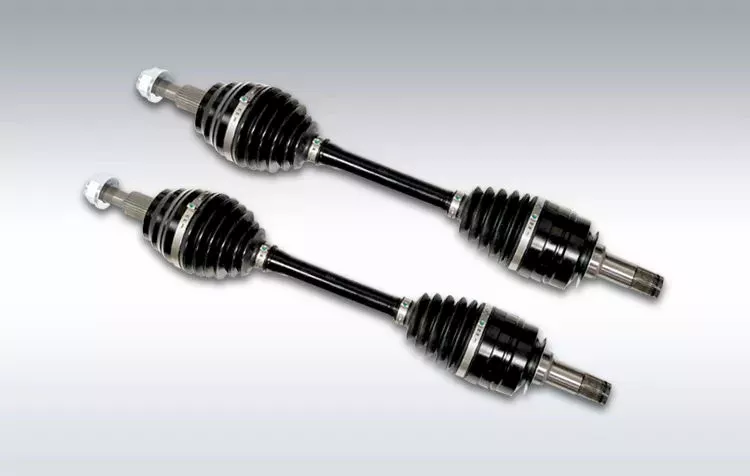
How do manufacturers ensure the compatibility of drive shafts with different equipment?
Manufacturers employ various strategies and processes to ensure the compatibility of drive shafts with different equipment. Compatibility refers to the ability of a drive shaft to effectively integrate and function within a specific piece of equipment or machinery. Manufacturers take into account several factors to ensure compatibility, including dimensional requirements, torque capacity, operating conditions, and specific application needs. Here’s a detailed explanation of how manufacturers ensure the compatibility of drive shafts:
1. Application Analysis:
Manufacturers begin by conducting a thorough analysis of the intended application and equipment requirements. This analysis involves understanding the specific torque and speed demands, operating conditions (such as temperature, vibration levels, and environmental factors), and any unique characteristics or constraints of the equipment. By gaining a comprehensive understanding of the application, manufacturers can tailor the design and specifications of the drive shaft to ensure compatibility.
2. Customization and Design:
Manufacturers often offer customization options to adapt drive shafts to different equipment. This customization involves tailoring the dimensions, materials, joint configurations, and other parameters to match the specific requirements of the equipment. By working closely with the equipment manufacturer or end-user, manufacturers can design drive shafts that align with the equipment’s mechanical interfaces, mounting points, available space, and other constraints. Customization ensures that the drive shaft fits seamlessly into the equipment, promoting compatibility and optimal performance.
3. Torque and Power Capacity:
Drive shaft manufacturers carefully determine the torque and power capacity of their products to ensure compatibility with different equipment. They consider factors such as the maximum torque requirements of the equipment, the expected operating conditions, and the safety margins necessary to withstand transient loads. By engineering drive shafts with appropriate torque ratings and power capacities, manufacturers ensure that the shaft can handle the demands of the equipment without experiencing premature failure or performance issues.
4. Material Selection:
Manufacturers choose materials for drive shafts based on the specific needs of different equipment. Factors such as torque capacity, operating temperature, corrosion resistance, and weight requirements influence material selection. Drive shafts may be made from various materials, including steel, aluminum alloys, or specialized composites, to provide the necessary strength, durability, and performance characteristics. The selected materials ensure compatibility with the equipment’s operating conditions, load requirements, and other environmental factors.
5. Joint Configurations:
Drive shafts incorporate joint configurations, such as universal joints (U-joints) or constant velocity (CV) joints, to accommodate different equipment needs. Manufacturers select and design the appropriate joint configuration based on factors such as operating angles, misalignment tolerances, and the desired level of smooth power transmission. The choice of joint configuration ensures that the drive shaft can effectively transmit power and accommodate the range of motion required by the equipment, promoting compatibility and reliable operation.
6. Quality Control and Testing:
Manufacturers implement stringent quality control processes and testing procedures to verify the compatibility of drive shafts with different equipment. These processes involve conducting dimensional inspections, material testing, torque and stress analysis, and performance testing under simulated operating conditions. By subjecting drive shafts to rigorous quality control measures, manufacturers can ensure that they meet the required specifications and performance criteria, guaranteeing compatibility with the intended equipment.
7. Compliance with Standards:
Manufacturers ensure that their drive shafts comply with relevant industry standards and regulations. Compliance with standards, such as ISO (International Organization for Standardization) or specific industry standards, provides assurance of quality, safety, and compatibility. Adhering to these standards helps manufacturers meet the expectations and requirements of equipment manufacturers and end-users, ensuring that the drive shafts are compatible and can be seamlessly integrated into different equipment.
8. Collaboration and Feedback:
Manufacturers often collaborate closely with equipment manufacturers, OEMs (Original Equipment Manufacturers), or end-users to gather feedback and incorporate their specific requirements into the drive shaft design and manufacturing processes. This collaborative approach ensures that the drive shafts are compatible with the intended equipment and meet the expectations of the end-users. By actively seeking input and feedback, manufacturers can continuously improve their products’ compatibility and performance.
In summary, manufacturers ensure the compatibility of drive shafts with different equipment through a combination of application analysis, customization, torque and power capacity considerations, material selection, joint configurations, quality control and testing, compliance with standards, and collaboration with equipment manufacturers and end-users. These efforts enable manufacturers to design and produce drive shafts that seamlessly integrate with various equipment, ensuring optimal performance, reliability, and compatibility in different applications.

How do drive shafts contribute to the efficiency of vehicle propulsion and power transmission?
Drive shafts play a crucial role in the efficiency of vehicle propulsion and power transmission systems. They are responsible for transferring power from the engine or power source to the wheels or driven components. Here’s a detailed explanation of how drive shafts contribute to the efficiency of vehicle propulsion and power transmission:
1. Power Transfer:
Drive shafts transmit power from the engine or power source to the wheels or driven components. By efficiently transferring rotational energy, drive shafts enable the vehicle to move forward or drive the machinery. The design and construction of drive shafts ensure minimal power loss during the transfer process, maximizing the efficiency of power transmission.
2. Torque Conversion:
Drive shafts can convert torque from the engine or power source to the wheels or driven components. Torque conversion is necessary to match the power characteristics of the engine with the requirements of the vehicle or machinery. Drive shafts with appropriate torque conversion capabilities ensure that the power delivered to the wheels is optimized for efficient propulsion and performance.
3. Constant Velocity (CV) Joints:
Many drive shafts incorporate Constant Velocity (CV) joints, which help maintain a constant speed and efficient power transmission, even when the driving and driven components are at different angles. CV joints allow for smooth power transfer and minimize vibration or power losses that may occur due to changing operating angles. By maintaining constant velocity, drive shafts contribute to efficient power transmission and improved overall vehicle performance.
4. Lightweight Construction:
Efficient drive shafts are often designed with lightweight materials, such as aluminum or composite materials. Lightweight construction reduces the rotational mass of the drive shaft, which results in lower inertia and improved efficiency. Reduced rotational mass enables the engine to accelerate and decelerate more quickly, allowing for better fuel efficiency and overall vehicle performance.
5. Minimized Friction:
Efficient drive shafts are engineered to minimize frictional losses during power transmission. They incorporate features such as high-quality bearings, low-friction seals, and proper lubrication to reduce energy losses caused by friction. By minimizing friction, drive shafts enhance power transmission efficiency and maximize the available power for propulsion or operating other machinery.
6. Balanced and Vibration-Free Operation:
Drive shafts undergo dynamic balancing during the manufacturing process to ensure smooth and vibration-free operation. Imbalances in the drive shaft can lead to power losses, increased wear, and vibrations that reduce overall efficiency. By balancing the drive shaft, it can spin evenly, minimizing vibrations and optimizing power transmission efficiency.
7. Maintenance and Regular Inspection:
Proper maintenance and regular inspection of drive shafts are essential for maintaining their efficiency. Regular lubrication, inspection of joints and components, and prompt repair or replacement of worn or damaged parts help ensure optimal power transmission efficiency. Well-maintained drive shafts operate with minimal friction, reduced power losses, and improved overall efficiency.
8. Integration with Efficient Transmission Systems:
Drive shafts work in conjunction with efficient transmission systems, such as manual, automatic, or continuously variable transmissions. These transmissions help optimize power delivery and gear ratios based on driving conditions and vehicle speed. By integrating with efficient transmission systems, drive shafts contribute to the overall efficiency of the vehicle propulsion and power transmission system.
9. Aerodynamic Considerations:
In some cases, drive shafts are designed with aerodynamic considerations in mind. Streamlined drive shafts, often used in high-performance or electric vehicles, minimize drag and air resistance to improve overall vehicle efficiency. By reducing aerodynamic drag, drive shafts contribute to the efficient propulsion and power transmission of the vehicle.
10. Optimized Length and Design:
Drive shafts are designed to have optimal lengths and designs to minimize energy losses. Excessive drive shaft length or improper design can introduce additional rotational mass, increase bending stresses, and result in energy losses. By optimizing the length and design, drive shafts maximize power transmission efficiency and contribute to improved overall vehicle efficiency.
Overall, drive shafts contribute to the efficiency of vehicle propulsion and power transmission through effective power transfer, torque conversion, utilization of CV joints, lightweight construction, minimized friction, balanced operation, regular maintenance, integration with efficient transmission systems, aerodynamic considerations, and optimized length and design. By ensuring efficient power delivery and minimizing energy losses, drive shafts play a significant role in enhancing the overall efficiency and performance of vehicles and machinery.
In che modo gli alberi di trasmissione contribuiscono al trasferimento della potenza rotazionale in diverse applicazioni?
Gli alberi di trasmissione svolgono un ruolo cruciale nel trasferimento della potenza rotazionale dal motore o dalla fonte di energia alle ruote o ai componenti azionati in diverse applicazioni. Sia nei veicoli che nei macchinari, gli alberi di trasmissione consentono una trasmissione di potenza efficiente e facilitano il funzionamento di diversi sistemi. Ecco una spiegazione dettagliata di come gli alberi di trasmissione contribuiscono al trasferimento della potenza rotazionale:
1. Applicazioni per veicoli:
Nei veicoli, gli alberi di trasmissione sono responsabili del trasferimento della potenza rotazionale dal motore alle ruote, consentendo al veicolo di muoversi. L'albero di trasmissione collega l'albero di uscita del cambio o della trasmissione al differenziale, che a sua volta distribuisce la potenza alle ruote. Quando il motore genera coppia, questa viene trasferita attraverso l'albero di trasmissione alle ruote, spingendo il veicolo in avanti. Questo trasferimento di potenza permette al veicolo di accelerare, mantenere la velocità e superare le resistenze, come l'attrito e le pendenze.
2. Applicazioni nei macchinari:
Nei macchinari, gli alberi di trasmissione vengono utilizzati per trasferire la potenza rotazionale dal motore ai vari componenti azionati. Ad esempio, nei macchinari industriali, gli alberi di trasmissione possono essere utilizzati per trasmettere potenza a pompe, generatori, nastri trasportatori o altri sistemi meccanici. Nei macchinari agricoli, gli alberi di trasmissione sono comunemente impiegati per collegare la fonte di energia ad attrezzature come mietitrici, presse o sistemi di irrigazione. Gli alberi di trasmissione consentono a queste macchine di svolgere le loro funzioni previste, fornendo potenza rotazionale ai componenti necessari.
3. Trasmissione di potenza:
Gli alberi di trasmissione sono progettati per trasmettere la potenza rotazionale in modo efficiente e affidabile. Sono in grado di trasferire notevoli quantità di coppia dal motore alle ruote o ai componenti azionati. La coppia generata dal motore viene trasmessa attraverso l'albero di trasmissione senza perdite di potenza significative. Mantenendo un collegamento rigido tra il motore e i componenti azionati, gli alberi di trasmissione assicurano che la potenza prodotta dal motore venga utilizzata efficacemente per svolgere lavoro utile.
4. Giunto flessibile:
Una delle funzioni principali degli alberi di trasmissione è quella di fornire un accoppiamento flessibile tra il motore/cambio e le ruote o i componenti azionati. Questa flessibilità consente all'albero di trasmissione di adattarsi ai movimenti angolari e di compensare i disallineamenti tra il motore e il sistema azionato. Nei veicoli, quando il sistema di sospensione si muove o le ruote incontrano un terreno irregolare, l'albero di trasmissione regola la sua lunghezza e la sua angolazione per mantenere un trasferimento di potenza costante. Questa flessibilità contribuisce a prevenire sollecitazioni eccessive sui componenti della trasmissione e garantisce una trasmissione di potenza fluida.
5. Trasmissione di coppia e velocità:
Gli alberi di trasmissione sono responsabili della trasmissione sia della coppia che della velocità di rotazione. La coppia è la forza di rotazione generata dal motore o dalla fonte di energia, mentre la velocità di rotazione è il numero di giri al minuto (RPM). Gli alberi di trasmissione devono essere in grado di gestire i requisiti di coppia dell'applicazione senza torsioni o flessioni eccessive. Inoltre, devono mantenere la velocità di rotazione desiderata per garantire il corretto funzionamento dei componenti azionati. Una progettazione adeguata, la scelta dei materiali e il bilanciamento degli alberi di trasmissione contribuiscono a una trasmissione efficiente di coppia e velocità.
6. Lunghezza ed equilibrio:
La lunghezza e l'equilibrio degli alberi di trasmissione sono fattori critici per le loro prestazioni. La lunghezza dell'albero di trasmissione è determinata dalla distanza tra il motore o la fonte di energia e i componenti azionati. Deve essere dimensionato in modo appropriato per evitare vibrazioni o flessioni eccessive. Gli alberi di trasmissione vengono bilanciati con cura per ridurre al minimo le vibrazioni e gli squilibri di rotazione, che possono influire sulle prestazioni complessive, sul comfort e sulla durata del sistema di trasmissione.
7. Sicurezza e manutenzione:
Gli alberi di trasmissione richiedono adeguate misure di sicurezza e una manutenzione regolare. Nei veicoli, gli alberi di trasmissione sono spesso racchiusi in un tubo o alloggiamento protettivo per evitare il contatto con le parti in movimento, riducendo il rischio di lesioni. Anche nei macchinari possono essere installati schermi o protezioni di sicurezza attorno agli alberi di trasmissione esposti per proteggere gli operatori da potenziali pericoli. La manutenzione regolare prevede l'ispezione dell'albero di trasmissione per verificare l'eventuale presenza di usura, danni o disallineamenti e la corretta lubrificazione dei giunti cardanici. Queste misure contribuiscono a prevenire guasti, garantire prestazioni ottimali e prolungare la durata dell'albero di trasmissione.
In sintesi, gli alberi di trasmissione svolgono un ruolo fondamentale nel trasferimento della potenza rotazionale in diverse applicazioni. Sia nei veicoli che nei macchinari, gli alberi di trasmissione consentono un'efficiente trasmissione della potenza dal motore o dalla fonte di energia alle ruote o ai componenti azionati. Forniscono un accoppiamento flessibile, gestiscono la trasmissione di coppia e velocità, assecondano i movimenti angolari e contribuiscono alla sicurezza e alla manutenzione del sistema. Trasferendo efficacemente la potenza rotazionale, gli alberi di trasmissione facilitano il funzionamento e le prestazioni di veicoli e macchinari in numerosi settori industriali.


editor by CX 2024-02-24