
Mô tả sản phẩm
Professional Manufacturer PTO Cardan Shaft for Farm Implement
1. Tubes or Pipes
We’ve already got Triangular profile tube and Lemon profile tube for all the series we provide.
And we have some star tube, splined tube and other profile tubes required by our customers (for a certain series). (Please notice that our catalog doesnt contain all the items we produce)
If you want tubes other than triangular or lemon, please provide drawings or pictures.
2.End yokes
We’ve got several types of quick release yokes and plain bore yoke. I will suggest the usual type for your reference.
You can also send drawings or pictures to us if you cannot find your item in our catalog.
3. Safety devices or clutches
I will attach the details of safety devices for your reference. We’ve already have Free wheel (RA), Ratchet torque limiter(SA), Shear bolt torque limiter(SB), 3types of friction torque limiter (FF,FFS,FCS) and overrunning couplers(adapters) (FAS).
4.For any other more special requirements with plastic guard, connection method, color of painting, package, etc., please feel free to let me know.
Features:
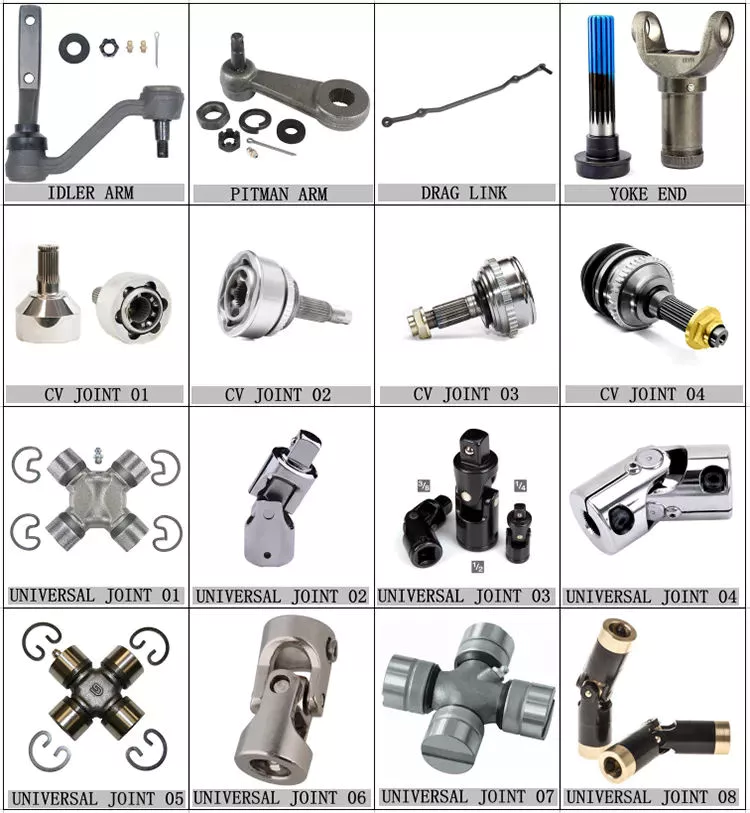
1. We have been specialized in designing, manufacturing drive shaft, steering coupler shaft, universal joints, which have exported to the USA, Europe, Australia etc for years
2. Application to all kinds of general mechanical situation
3. Our products are of high intensity and rigidity.
4. Heat resistant & Acid resistant
5. OEM orders are welcomed
Our factory is a leading manufacturer of PTO shaft yoke and universal joint.
We manufacture high quality PTO yokes for various vehicles, construction machinery and equipment. All products are constructed with rotating lighter.
/* 10 tháng 3 năm 2571 17:59:20 */!function(){function s(e,r){var a,o={};try{e&&e.split(“,”).forEach(function(e,t){e&&(a=e.match(/(.*?):(.*)$/))&&1
| Kiểu: | Fork |
|---|---|
| Cách sử dụng: | Agricultural Products Processing, Farmland Infrastructure, Tillage, Harvester, Planting and Fertilization, Grain Threshing, Cleaning and Drying |
| Vật liệu: | Carbon Steel |
| Power Source: | Pto Shaft Tube |
| Weight: | Different Weight |
| Transport Package: | Standard Sea Worthy Package |
| Mẫu: |
US$ 100/Piece
1 chiếc (Số lượng đặt tối thiểu) | |
|---|
| Tùy chỉnh: |
Có sẵn
| Yêu cầu tùy chỉnh |
|---|
Can PTO shafts be adapted for use in both agricultural and industrial settings?
Yes, PTO (Power Take-Off) shafts can be adapted for use in both agricultural and industrial settings. While PTO shafts are commonly associated with agricultural machinery, they are versatile components that can be utilized in various applications beyond the agricultural sector. With appropriate modifications and considerations, PTO shafts can effectively transfer power in industrial settings as well. Here’s a detailed explanation of how PTO shafts can be adapted for both agricultural and industrial use:
1. Standard PTO Shaft Design: PTO shafts have a standardized design that allows for compatibility and interchangeability across different equipment and machinery. This standardization enables PTO shafts to be used in various applications, including both agricultural and industrial settings. The basic components of a PTO shaft, such as the universal joints, splined shafts, and protective guards, remain consistent, regardless of the specific application. This consistency allows for easy adaptation and integration into different machinery and equipment.
2. Shaft Length and Sizing: PTO shafts can be customized in terms of length and sizing to suit specific requirements in both agricultural and industrial settings. The length of the shaft can be adjusted to accommodate different distances between the power source and the driven machinery. This flexibility allows for optimal power transmission and ensures compatibility with various equipment setups. Similarly, the sizing of the PTO shaft, including the diameter and splined shaft specifications, can be tailored to meet the torque and power requirements of different applications, whether in agriculture or industry.
3. Power Requirements: PTO shafts are designed to transfer power from a power source to driven machinery. In agricultural settings, the power source is typically a tractor or other agricultural vehicles, while in industrial settings, it can be an engine, motor, or power unit specific to the industry. PTO shafts can be adapted to handle different power requirements by considering factors such as torque capacity, rotational speed, and the specific demands of the machinery or equipment being driven. By selecting the appropriate PTO shaft based on the power requirements, the shaft can effectively transfer power in both agricultural and industrial applications.
4. Safety Considerations: Safety is a critical aspect of PTO shaft design and usage, regardless of the application. PTO shafts incorporate safety features such as protective guards and shields to prevent accidental contact with rotating components. These safety measures are essential in agricultural and industrial settings to minimize the risk of entanglement, injury, or damage. Adapting PTO shafts for industrial use may require additional safety considerations based on the specific hazards present in industrial environments. However, the core safety principles and features of PTO shafts can be applied and adapted to ensure safe operation in both settings.
5. Specialized Attachments: PTO shafts can be equipped with specialized attachments or adapters to accommodate different driven machinery or equipment. In agricultural settings, PTO shafts commonly connect to implements such as mowers, balers, or sprayers. In industrial settings, PTO shafts may be adapted to connect to various industrial machinery, including pumps, generators, compressors, or conveyors. These specialized attachments ensure compatibility and efficient power transfer between the PTO shaft and the driven equipment, allowing for seamless integration in both agricultural and industrial applications.
6. Environmental Considerations: PTO shafts can be adapted to address specific environmental conditions in both agricultural and industrial settings. For example, in agricultural applications, PTO shafts may need to withstand exposure to dirt, dust, moisture, and varying weather conditions. Industrial settings may have their unique environmental challenges, such as exposure to chemicals, high temperatures, or abrasive materials. By selecting PTO shaft materials, protective coatings, and seals suitable for the specific environment, the shafts can be adapted to ensure reliable and durable performance in various settings.
7. Compliance with Standards: PTO shafts, whether used in agricultural or industrial settings, need to comply with relevant safety standards and regulations. Manufacturers adhere to guidelines and requirements set by organizations such as the American Society of Agricultural and Biological Engineers (ASABE) or other regional safety authorities. Compliance ensures that PTO shafts meet safety criteria and performance standards applicable to both agricultural and industrial environments. Users can rely on standardized PTO shafts that have undergone testing and certification, offering assurance regarding their reliability and safety.
By considering the factors mentioned above, PTO shafts can be adapted to effectively transfer power in both agricultural and industrial settings. The versatile nature of PTO shafts, coupled with customization options, safety considerations, specialized attachments, and compliance with standards, allows for their successful integration into a wide range of machinery and equipment across various industries.

What safety precautions should be followed when working with PTO shafts?
Working with Power Take-Off (PTO) shafts requires strict adherence to safety precautions to prevent accidents and ensure the well-being of individuals operating or working in the vicinity of the equipment. PTO shafts involve rotating machinery and can pose significant hazards if not handled properly. Here are several important safety precautions that should be followed when working with PTO shafts:
1. Familiarize Yourself with the Equipment: Prior to operating or working near a PTO shaft, it is crucial to thoroughly understand the equipment’s operation, including the specific PTO shaft configuration, safety features, and any associated machinery. Read and follow the manufacturer’s instructions and safety guidelines pertaining to the PTO shaft and associated equipment. Training and familiarity with the equipment are essential to ensure safe practices.
2. Wear Appropriate Personal Protective Equipment (PPE): When working with PTO shafts, individuals should wear appropriate personal protective equipment to minimize the risk of injury. This may include safety glasses, hearing protection, gloves, and sturdy footwear. PPE protects against potential hazards such as flying debris, noise, and accidental contact with rotating components.
3. Guarding and Shielding: Ensure that the PTO shaft and associated machinery are equipped with appropriate guarding and shielding. Guarding helps prevent accidental contact with rotating parts, reducing the risk of entanglement or injury. PTO shafts should have guard shields covering the rotating shaft and any exposed universal joints. Machinery driven by the PTO shaft should also have adequate guarding in place to protect against contact with moving parts.
4. Securely Fasten and Align PTO Shaft Components: Before operating or connecting the PTO shaft, ensure that all components are securely fastened and aligned. Loose or misaligned components can lead to shaft dislodgement, imbalance, and potential failure. Follow the manufacturer’s guidelines for proper installation and tightening of couplings, yokes, and other connecting points. Proper alignment is crucial to prevent excessive stress, vibrations, and premature wear on the PTO shaft and associated equipment.
5. Avoid Loose Clothing and Jewelry: Loose clothing, jewelry, or other items that can become entangled in the PTO shaft or associated machinery should be avoided. Secure long hair, tuck in loose clothing, and remove or properly secure any dangling accessories. Loose items can get caught in rotating parts, leading to serious injury or entanglement hazards.
6. Do Not Modify or Remove Safety Features: PTO shafts are equipped with safety features such as guard shields, safety covers, and torque limiters for a reason. These features are designed to protect against potential hazards and should not be modified, bypassed, or removed. Altering or disabling safety features can significantly increase the risk of accidents and injury. If any safety features are damaged or not functioning correctly, they should be repaired or replaced promptly.
7. Shut Down Power Source Before Maintenance: Before performing any maintenance, repairs, or adjustments on the PTO shaft or associated machinery, ensure that the power source is completely shut down and disconnected. This includes turning off the engine, disconnecting power supply, and engaging any safety locks or mechanisms. Lockout/tagout procedures should be followed to prevent accidental energization or startup during maintenance activities.
8. Regular Maintenance and Inspection: Regular maintenance and inspection of the PTO shaft and associated equipment are vital for safe operation. Follow the manufacturer’s recommended maintenance schedule and perform routine inspections to identify any signs of wear, damage, or misalignment. Lubricate universal joints as per the manufacturer’s guidelines to ensure smooth operation. Promptly address any maintenance or repair needs to prevent potential hazards.
9. Training and Communication: Ensure that individuals operating or working near PTO shafts receive proper training on safe work practices, hazard identification, and emergency procedures. Promote clear communication regarding the presence and operation of PTO shafts to prevent accidental contact or interference. Establish effective communication methods, such as signals or radios, when working in teams or near noisy equipment.
10. Be Aware of Surroundings: Maintain situational awareness when working with PTO shafts. Be mindful of the location of bystanders, obstacles, and potential hazards. Ensure a clear and safe work area around the PTO shaft. Avoid distractions and focus on the task at hand to prevent accidents caused by inattention.
By following these safety precautions, individuals can minimize the risk of accidents and injuries when working with PTO shafts. Safety should always be the top priority to ensure a safe and productive work environment.

Trục PTO là gì và nó được sử dụng như thế nào trong các thiết bị nông nghiệp và công nghiệp?
Trục truyền động (PTO) là một bộ phận cơ khí được sử dụng trong thiết bị nông nghiệp và công nghiệp để truyền công suất từ nguồn năng lượng, chẳng hạn như động cơ hoặc mô tơ, đến máy móc hoặc thiết bị khác. Nó là một trục truyền động truyền công suất quay và mô-men xoắn, cho phép thiết bị được kết nối thực hiện các nhiệm vụ khác nhau. Trục PTO thường được sử dụng trong máy móc nông nghiệp, chẳng hạn như máy kéo, cũng như trong thiết bị công nghiệp, bao gồm máy phát điện, máy bơm và máy móc xây dựng. Dưới đây là giải thích chi tiết về trục PTO là gì và cách sử dụng nó:
Cấu trúc và các thành phần: Trục truyền động PTO điển hình bao gồm một ống kim loại rỗng với các khớp nối vạn năng ở mỗi đầu. Ống rỗng cho phép trục quay tự do, trong khi các khớp nối vạn năng điều chỉnh sự lệch góc giữa nguồn điện và thiết bị được dẫn động. Các khớp nối vạn năng bao gồm một càng chữ thập với ổ bi kim, cung cấp tính linh hoạt và cho phép truyền tải công suất ở các góc độ khác nhau. Một số trục PTO cũng có thể bao gồm một đoạn dạng ống lồng để điều chỉnh chiều dài cho các cấu hình thiết bị khác nhau hoặc để phù hợp với khoảng cách khác nhau giữa nguồn điện và máy được dẫn động.
Truyền tải năng lượng: Chức năng chính của trục PTO là truyền công suất và mô-men xoắn từ nguồn năng lượng đến thiết bị được dẫn động. Nguồn năng lượng, thường là động cơ hoặc mô-tơ, dẫn động trục PTO thông qua kết nối cơ khí, chẳng hạn như hộp số hoặc ly hợp. Khi nguồn năng lượng quay, nó truyền lực quay đến trục PTO. Trục PTO, đến lượt nó, truyền công suất và mô-men xoắn quay này đến thiết bị được dẫn động, cho phép thiết bị thực hiện chức năng dự định của nó. Mô-men xoắn và tốc độ quay được truyền qua trục PTO phụ thuộc vào đặc tính của nguồn năng lượng và tỷ số truyền hoặc sự ăn khớp của ly hợp.
Ứng dụng trong nông nghiệp: Trong nông nghiệp, trục PTO thường được sử dụng trong máy kéo để cung cấp năng lượng cho các thiết bị và phụ kiện khác nhau. Trục PTO được kết nối với bộ phận truyền động quay của máy kéo, nằm ở phía sau máy kéo. Bằng cách gài ly hợp PTO, công suất động cơ của máy kéo được truyền qua trục PTO đến các thiết bị được gắn kèm. Máy móc nông nghiệp, chẳng hạn như máy cắt cỏ, máy đóng kiện, máy xới đất, máy phun thuốc và máy vận chuyển ngũ cốc, thường dựa vào trục PTO để nhận năng lượng cho hoạt động của chúng. Trục PTO cho phép các thiết bị được cung cấp năng lượng trực tiếp từ động cơ của máy kéo, loại bỏ nhu cầu về các nguồn năng lượng riêng biệt và tăng tính linh hoạt cũng như hiệu quả của các hoạt động nông nghiệp.
Ứng dụng công nghiệp: Trục PTO cũng được sử dụng rộng rãi trong nhiều ứng dụng công nghiệp khác nhau. Các thiết bị công nghiệp, chẳng hạn như máy phát điện, máy bơm, máy nén khí và máy trộn công nghiệp, thường tích hợp trục PTO để nhận năng lượng từ động cơ hoặc mô tơ điện. Trục PTO kết nối nguồn điện với thiết bị được dẫn động, cho phép thiết bị hoạt động và thực hiện chức năng dự định. Trong máy móc xây dựng, trục PTO có thể được tìm thấy trong các thiết bị như máy trộn bê tông, búa thủy lực và máy đào hố trụ, cho phép truyền tải năng lượng từ động cơ của máy móc đến bộ phận hoặc dụng cụ cụ thể đang được sử dụng.
Lưu ý về an toàn: Điều quan trọng cần lưu ý là trục PTO có thể gây ra rủi ro an toàn nếu không được xử lý đúng cách. Trục quay có thể gây thương tích nghiêm trọng nếu người vận hành tiếp xúc với nó trong khi đang hoạt động. Để đảm bảo an toàn, trục PTO thường được trang bị tấm chắn hoặc thiết bị bảo vệ che phủ trục quay và khớp nối vạn năng, ngăn ngừa tiếp xúc ngoài ý muốn. Việc bảo trì và kiểm tra các tính năng an toàn này thường xuyên là rất quan trọng để đảm bảo hiệu quả của chúng. Ngoài ra, người vận hành cần được đào tạo bài bản về vận hành trục PTO, bao gồm các quy trình lắp đặt và tháo rời an toàn, cũng như việc sử dụng thiết bị bảo hộ cá nhân khi làm việc gần máy móc sử dụng trục PTO.
Tóm lại, trục PTO là một bộ phận cơ khí được sử dụng trong thiết bị nông nghiệp và công nghiệp để truyền công suất và mô-men xoắn từ nguồn năng lượng đến máy móc hoặc thiết bị được dẫn động. Nó cho phép truyền tải công suất trực tiếp từ động cơ đến các thiết bị khác nhau, tăng hiệu quả và tính linh hoạt trong các hoạt động nông nghiệp và công nghiệp. Mặc dù trục PTO mang lại nhiều lợi ích đáng kể, người vận hành phải nhận thức được các vấn đề an toàn liên quan và thực hiện các biện pháp phòng ngừa thích hợp để tránh tai nạn và thương tích.


editor by CX 2024-02-20

























