آسٹریلیا میں موورز کے لیے ہائی-ٹارک PTO شافٹ
Engineered for extreme outback conditions, our power transmission solutions deliver relentless performance for rotary slashers, flail mowers, and finishing mowers.
⚙️ Drive System Selection Essentials
When configuring a پی ٹی او شافٹ for heavy-duty mowing applications, standard duty cycles often fail prematurely under high-impact shock loads. Mower drivelines must accommodate severe torsional vibration and sudden blockages caused by hidden stumps or dense scrub.
- Overload Protection: Mandatory integration of slip clutches or shear bolts to protect the tractor gearbox from catastrophic failure during blade jams.
- Dynamic Balancing: Class G16 balancing at 1000 RPM is critical to prevent harmonic resonance from destroying gearbox output seals.
- Guarding Integrity: Must comply with Australian WHS standards, featuring UV-resistant polymer shields to withstand intense sun exposure without embrittlement.
Engineer’s Field Notes: Overcoming Component Fatigue in Queensland
“In our 20 years of analyzing driveline failures across sugarcane plantations in Queensland, we consistently observed that off-the-shelf universal joints were overheating within 400 hours of continuous slashing. The fine, abrasive dust generated by rotary mowers acts as a grinding compound on the cross and bearing kits. Based on this field data, EVER-POWER re-engineered the sealing mechanism. We introduced a triple-lip nitrile seal on our premium ٹریکٹر پی ٹی او شافٹ range, effectively isolating the needle rollers from silicate dust ingress. This modification alone extended the MTBF (Mean Time Between Failures) from 400 hours to over 1,500 hours in identical operating environments.”
Comprehensive Engineering Specifications
| پیرامیٹر | Standard Specification | Heavy-Duty Custom Range |
|---|---|---|
| Series Designations | Series 1 to 8 (Metric/Lemon tube) | Series 4 to 10 (Triangular/Star tube) |
| Dynamic Torque Capacity | 150 Nm – 1800 Nm | Up to 4500 Nm (for extreme flail mowers) |
| Yoke Material | Forged 1045 Carbon Steel | 42CrMo Alloy Steel, Induction Hardened |
| Cross & Bearing (U-Joint) | 22x54mm to 35x106mm | 41x118mm (Heavy forged with grease zerks) |
| Tractor Connection Spline | 1-3/8″ 6-spline (540 RPM) | 1-3/4″ 20-spline / 1-3/8″ 21-spline (1000 RPM) |
| کنکشن کو نافذ کریں۔ | Plain bore with keyway or clamp | Flange yoke / Splined with locking pin |
| Telescopic Tubing | Cold-drawn seamless (Triangular/Lemon) | Rilsan coated splined shaft (Anti-friction) |
| Overload Clutch Type | Shear Bolt (Grade 8.8) | Friction Slip Clutch (2 to 4 discs) |
| Freewheel (Overrunning) | Optional on standard models | Mandatory for high-inertia rotors |
| Safety Guarding | Standard CE Plastic Shield | AS 1121.4 compliant, UV-stabilized heavy casing |
| Operating Temperature | -20°C to +60°C | -40°C to +85°C (High-temp synthetic grease) |
| Maximum Angle (Continuous) | 15 Degrees | 25 Degrees |
| Maximum Angle (Short Term) | 45 Degrees | 80 Degrees (with Constant Velocity / CV Joint) |
| Lubrication Interval | Every 8 hours of operation | Extended 50-hour lubrication kits available |
| Surface Treatment | Standard Zinc plating / Black paint | KTL / E-coating for extreme rust prevention |
| Runout Tolerance | 0.50 mm | 0.15 mm precision balancing |
| Overall Length (Collapsed) | 800mm – 1200mm | Custom cut (From 500mm to 2000mm) |
| Tube Wall Thickness | 3.0 mm – 4.5 mm | 5.5 mm – 7.0 mm for rock-strike resistance |
| Locking Mechanism (Tractor) | Push Pin | Slide Collar / Ball Lock Mechanism |
| Locking Mechanism (Implement) | Interfering Bolt | Tapered Pin / Splined Clamp |
Kinematic Function in Mowing Assemblies
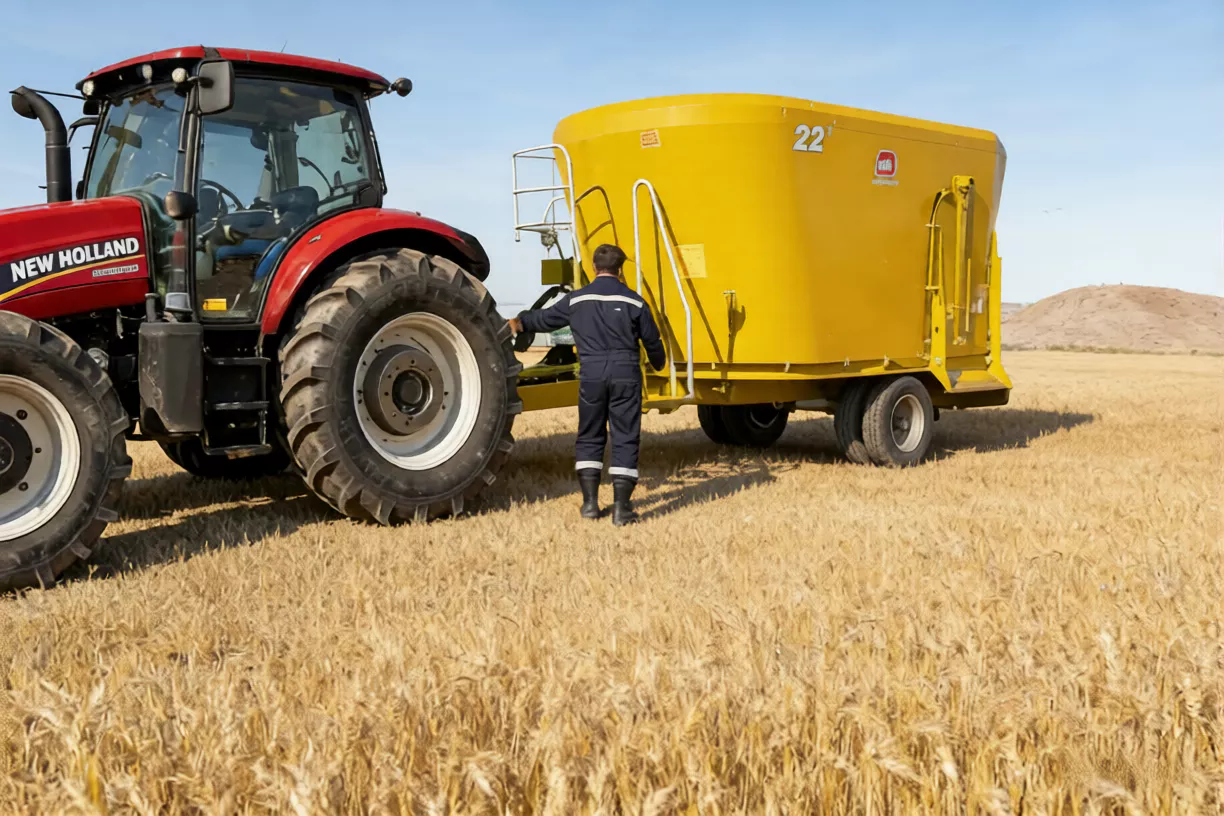
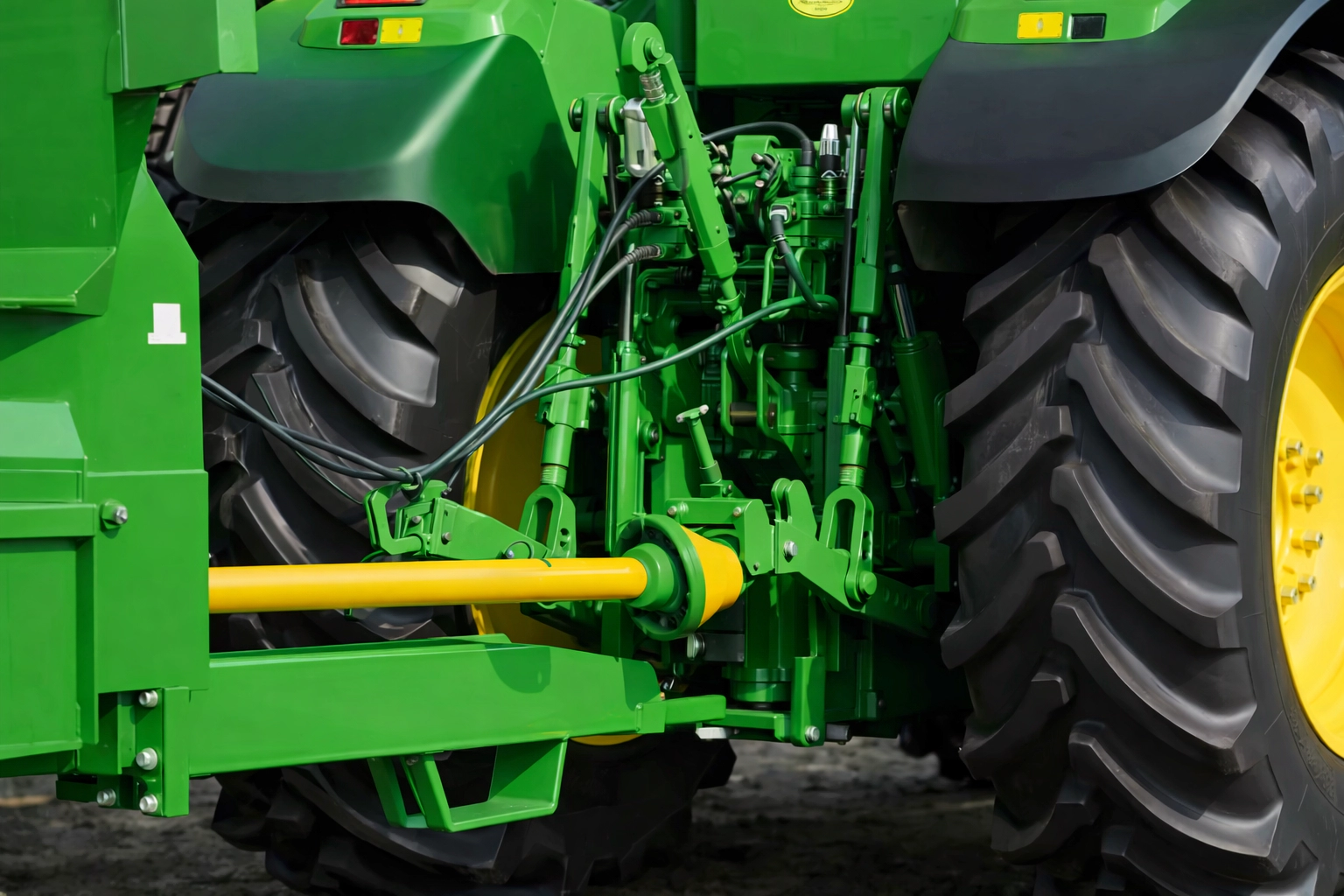
The PTO drive shaft serves as the primary mechanical artery between the tractor’s power take-off stub and the implement’s input زرعی گیئر باکس. In mowing applications—whether handling roadside verges with an offset flail mower or clearing paddocks with a twin-rotor slasher—the shaft must instantly transmit immense kinetic energy while simultaneously accommodating dynamic geometry changes.
As the tractor navigates uneven terrain, the three-point hitch constantly alters the vertical and horizontal alignment between the two machines. The telescopic profiled tubes slide axially to adjust for length variations, while the universal joints pivot to maintain power flow at varying angles.
For high-inertia mowers, the sudden deceleration of the tractor engine can cause the massive spinning blades to act as a flywheel, driving torque backward into the tractor transmission. To mitigate this, our specialized assemblies integrate an overrunning clutch (freewheel), allowing the mower blades to spool down independently of the tractor engine.
Seamless Integration: Brand Compatibility
Sourcing exact replacements for imported agricultural machinery can result in extensive downtime and exorbitant freight costs. Our driveline assemblies are mathematically engineered to match or exceed the dimensional and metallurgical specifications of leading global OEM systems.
Our components provide direct drop-in replacement capability for profiles typically found in:
- ✅ Walterscheid™ Series
- ✅ Comer Industries™ Profiles
- ✅ Bondioli & Pavesi™ (SFT)
- ✅ GKN™ Drivelines
- ✅ Weasler™ Engineering
- ✅ Bare-Co™ Components
Australian WHS Regulations & Guarding Standards
Operating rotating machinery in the Australian agricultural sector is heavily regulated to prevent entanglement fatalities. WorkSafe authorities across all states strictly enforce machinery guarding.
AS/NZS 2153.1 Compliance
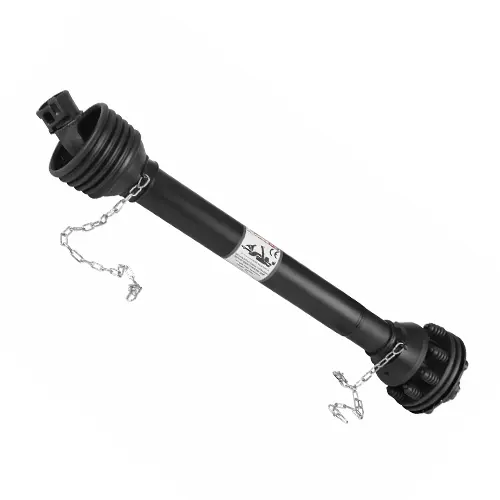
Our shafts feature master shields that enclose the universal joints to a specified degree. The non-rotating plastic guard tubes are tested to resist shattering upon impact and must not rotate with the steel inner shaft.
Restraining Chains
In accordance with local farm safety guidelines, all our PTO units are supplied with high-tensile anti-rotation chains. These anchor the plastic shield to a stationary point on the tractor and the mower to prevent the shield from spinning.
UV Stabilization for Outback
Standard European plastics rapidly degrade in the harsh Australian sun. Our polymer shields are infused with carbon-black and UV inhibitors, preventing them from becoming brittle and cracking after a single summer season.
National Deployment: Real-World Mower Applications
📍 Brisbane, Queensland: Sugarcane Mulching
Challenge: A contractor utilizing 6-meter folding flail mowers experienced continuous cross-bearing failures due to extreme fibrous residue wrapping around the shaft.
Solution: We implemented a Series 8 shaft with a Wide-Angle Constant Velocity (CV) joint and a robust friction slip clutch. The CV joint allowed for sharp turns at headlands without disengaging the PTO.
Client Feedback: “The sheer torque these shafts handle without shuddering is incredible. We haven’t snapped a shear bolt since moving to the slip clutch model.”
📍 Melbourne, Victoria: Vineyard Inter-row Slashing
Challenge: Narrow tractors operating in tight Yarra Valley vineyards required compact power delivery. Standard shafts bottomed out during lift operations.
Solution: Custom cut-to-length triangular profile shafts with a specialized short-tube design to prevent internal binding when the three-point linkage is raised to maximum height.
Client Feedback: “Perfect length straight out of the crate. The slide collar lock makes it much safer for our operators to hook up in tight spaces.”
📍 Sydney, New South Wales: Highway Verge Maintenance
Challenge: Municipal councils running offset boom mowers on roadside embankments faced severe angle operations causing heavy vibration.
Solution: Deployment of our 80-degree CV drive lines with heavy-wall 5.5mm tubing to resist high-velocity rock strikes from passing traffic and the mower deck.
Client Feedback: “We’ve drastically reduced our fleet downtime. The balancing on these shafts means our tractor gearbox seals are no longer leaking.”
📍 Perth, Western Australia: Broadacre Stubble Management
Challenge: Dust ingress in the wheatbelt was causing premature seizing of the telescopic tubes, leading to thrust damage on tractor bearings.
Solution: Rilsan-coated internal splined tubes combined with heavy-duty wiper seals on the guard rings, eliminating metal-to-metal galling.
Client Feedback: “Even after a 12-hour shift in absolute dust, the shaft still slides effortlessly. Superior engineering.”
📍 Adelaide, South Australia: Orchard Mowing
Challenge: Sudden stops when hitting hidden irrigation pipes caused frequent catastrophic gear failures.
Solution: High-capacity overrun clutch (freewheel) integrated into the implement yoke, isolating the tractor’s braking mass from the mower’s kinetic energy.
Client Feedback: “The overrunning feature saved our primary tractor last month. Excellent build quality.”
Rapid Sizing & Selection Guide for Mowers
| Mower Type | Tractor Horsepower Range | Recommended Series | Essential Safety Device | Common Cross Size |
|---|---|---|---|---|
| Finishing Mowers (Lawn/Turf) | 15 HP – 35 HP | Series 2 / Series 4 | Shear Bolt or Overrun | 23.8 x 61.3 mm |
| Rotary Slashers (Medium Pasture) | 40 HP – 75 HP | Series 5 / Series 6 | Slip Clutch (2 Disc) | 30.2 x 92.0 mm |
| Heavy Flail Mowers (Scrub/Forestry) | 80 HP – 120 HP | Series 8 / Series 9 | Slip Clutch (4 Disc) + Freewheel | 35.0 x 106.5 mm |
| Offset / Boom Mowers | 60 HP – 150 HP | Series 6 CV / Series 8 CV | Wide Angle CV Joint | Various CV types |
Precision Installation Protocol
Improper sizing is the leading cause of drive component destruction. Follow this strictly to ensure equipment longevity:
- Identify Minimum & Maximum Distances: Connect the mower to the tractor’s three-point linkage. Raise and lower the implement to find the shortest distance (usually when the PTO output and gearbox input are perfectly horizontal) and the longest distance.
- Calculate Cutting Length: Separate the two halves of the shaft. Hold the halves parallel beside the tractor and implement. Mark the outer and inner tubes. Ensure at least 1/3 of the tube length overlaps during the maximum extension position. Ensure a minimum 25mm clearance exists when the assembly is completely bottomed out (shortest position).
- Cut and Deburr: Use a hacksaw to cut the plastic guard tube first, then cut the steel profile tube identically. Vigorously file the edges to remove burrs. Metal shavings inside the tube will cause severe binding.
- Lubricate Profiles: Apply a liberal coating of high-pressure lithium grease along the inner sliding tube.
- Secure Guards: Slide the halves together. Attach the locking yokes to the splines, ensuring the push-pins click firmly into the detent grooves. Finally, attach the safety chains perpendicular to the shaft axis to avoid wrapping during turns.
Operational Troubleshooting Diagnostics
| Observed Symptom | Root Cause Analysis | Corrective Action |
|---|---|---|
| Severe Vibration at High RPM | Shaft halves assembled out of phase (yokes not aligned); bent tubing from rock strike. | Disassemble and realign the internal profiles so the yokes at both ends are perfectly parallel. Replace if tubing is bent. |
| U-Joint Cross Operating Hot or Discolored | Lack of lubrication; operating angle exceeds 15 degrees continuously. | Grease immediately. If turning sharply, disengage the drive or upgrade to a Wide Angle (CV) joint setup. |
| Telescopic Tube Seized/Binding | Accumulation of abrasive dust and hardened grease; shaft cut too long (bottoming out). | Clean profiles with solvent, inspect for galling, re-grease. Recalculate working lengths to ensure clearance. |
| Slip Clutch Constantly Smoking/Slipping | Friction discs worn below minimum tolerance; spring tension backed off. | Check disc thickness (replace if glazed or worn). Recalibrate spring compression bolts according to torque specs. |
Expert Insights: Frequently Asked Driveline Questions
1. How do I determine which spline type I need for my tractor?
Count the teeth on the tractor’s output stub and measure the outer diameter. The most standard agricultural size worldwide is the 1-3/8″ (35mm) diameter with 6 splines, which typically runs at 540 RPM. Larger tractors use 1-3/8″ with 21 splines or 1-3/4″ with 20 splines, running at 1000 RPM.
2. Can I use a shear bolt shaft on a heavy flail mower?
While possible, it is highly discouraged. Flail mowers hit dense material frequently, which would result in snapping shear bolts every few minutes. A friction slip clutch is highly recommended for slashers and flail mowers to absorb the shock without halting production.
3. What is the difference between Lemon and Triangular profiles?
These refer to the shape of the telescopic tubes. Lemon tubes are a traditional European design offering good torque transfer, while triangular tubes (common in Italian designs like Comer) offer a larger surface area for power transmission and are often favored in heavy-duty slashing.
4. Why does my mower push the tractor when I throttle down?
This is caused by the kinetic energy of the spinning mower deck. If your tractor doesn’t have an internal live/independent clutch, you must install an overrunning clutch (freewheel) on the implement side of the drive shaft to prevent this dangerous back-driving effect.
5. How frequently should the cross bearings be lubricated?
Under standard conditions, every 8 hours of use. However, in the dusty, high-heat conditions of the Australian outback, we recommend greasing before every extended shift. Purge until fresh grease appears at all four seals to push out contaminants.
6. Are your guards compliant with Australian safety standards?
Yes. Our shielding assemblies meet stringent global safety directives, including CE and AS regulations, providing robust full-enclosure guarding with anti-rotation retention chains.
7. How do I maintain a friction slip clutch?
Slip clutches must be “slipped” at the start of every season to ensure the friction discs haven’t rusted to the metal plates. Loosen the compression bolts, engage the drive briefly to allow slippage, then retighten the bolts to the exact specified spring height dimension.
8. Can I replace just one half of the shaft?
It is only possible if the replacement half exactly matches the manufacturer profile, series, and dimensions of the existing half. Mixing profiles (e.g., metric inner with imperial outer) is impossible and extremely dangerous.
9. What does “CV” or Wide Angle mean?
CV stands for Constant Velocity. A wide-angle joint contains two U-joints connected by a centering mechanism. It allows the machinery to operate smoothly at angles up to 80 degrees for short periods (like turning at the end of a paddock row) without causing catastrophic vibration.
10. Do you provide custom engineering for non-standard mowers?
Absolutely. We operate a massive manufacturing facility. If your OEM equipment is obsolete or requires a heavier duty cycle, we can reverse-engineer and manufacture custom lengths, yoke splines, and torque capacities based on your technical drawings or physical samples.
Complete Driveline Synergy: Companion Components
A robust drive shaft is only half of the power transmission equation. We manufacture the corresponding mechanical ecosystems to ensure zero-loss torque delivery from the tractor engine to the mower blades.
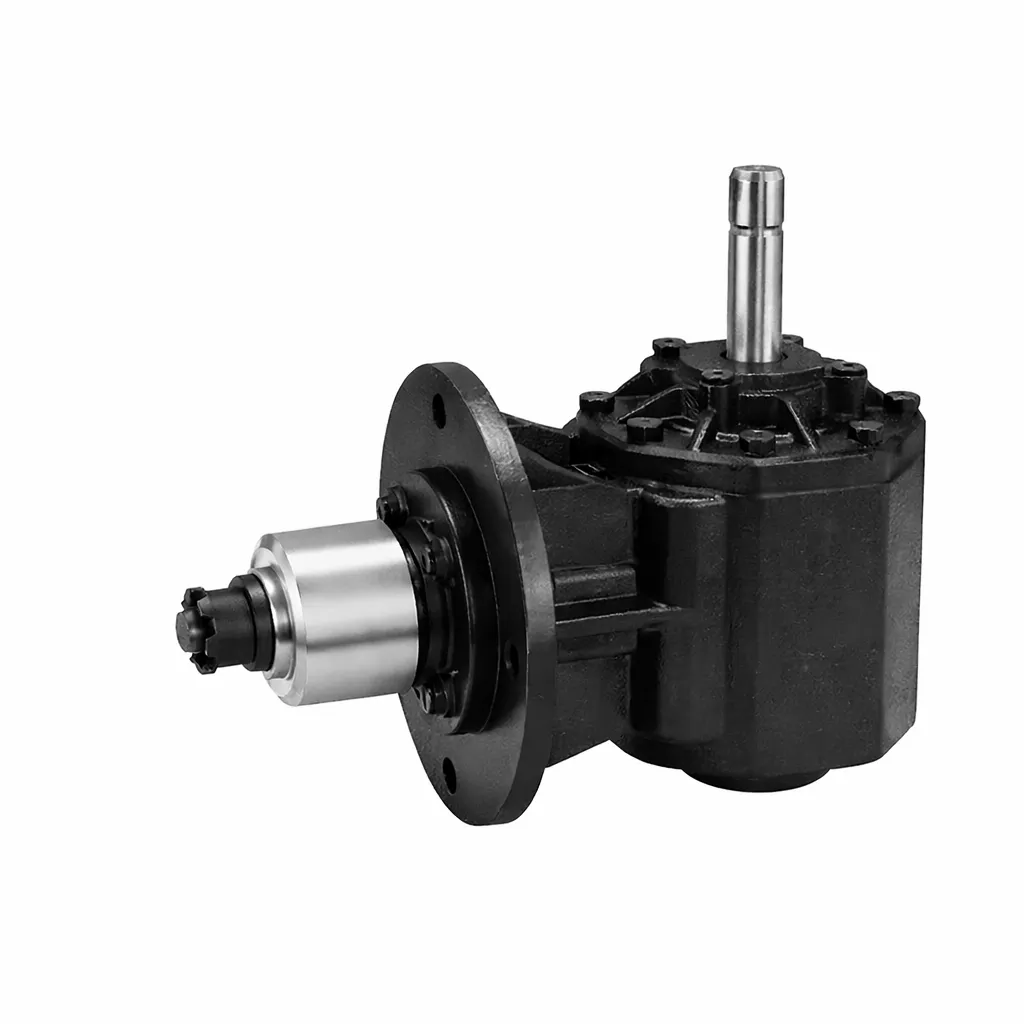
Right-Angle Agricultural Gearbox
Cast iron housings with bevel gears, specifically engineered to receive the PTO shaft input and translate it downward to the mower blade carrier. Engineered for up to 150HP continuous rating.
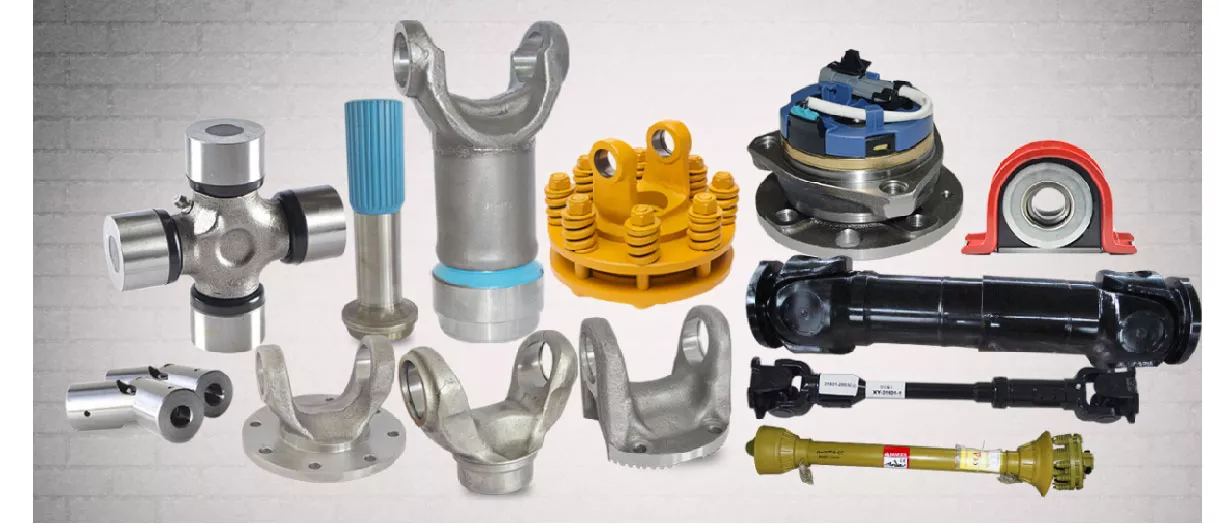
Replacement Parts & Clutches
A full inventory of cross and bearing kits, friction discs, shear bolts, freewheel yokes, and safety guards. Keep your fleet running without waiting for complete assembly replacements.
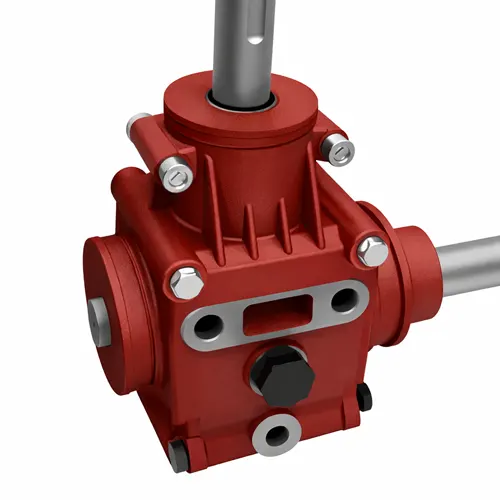
Power Transmission Hardware
Beyond the driveline, we supply precision-machined sprockets, heavy-duty roller chains, pulleys, and V-belts specifically designed for the harsh debris environment of agricultural mowing.
Partner With a World-Class Manufacturing Facility
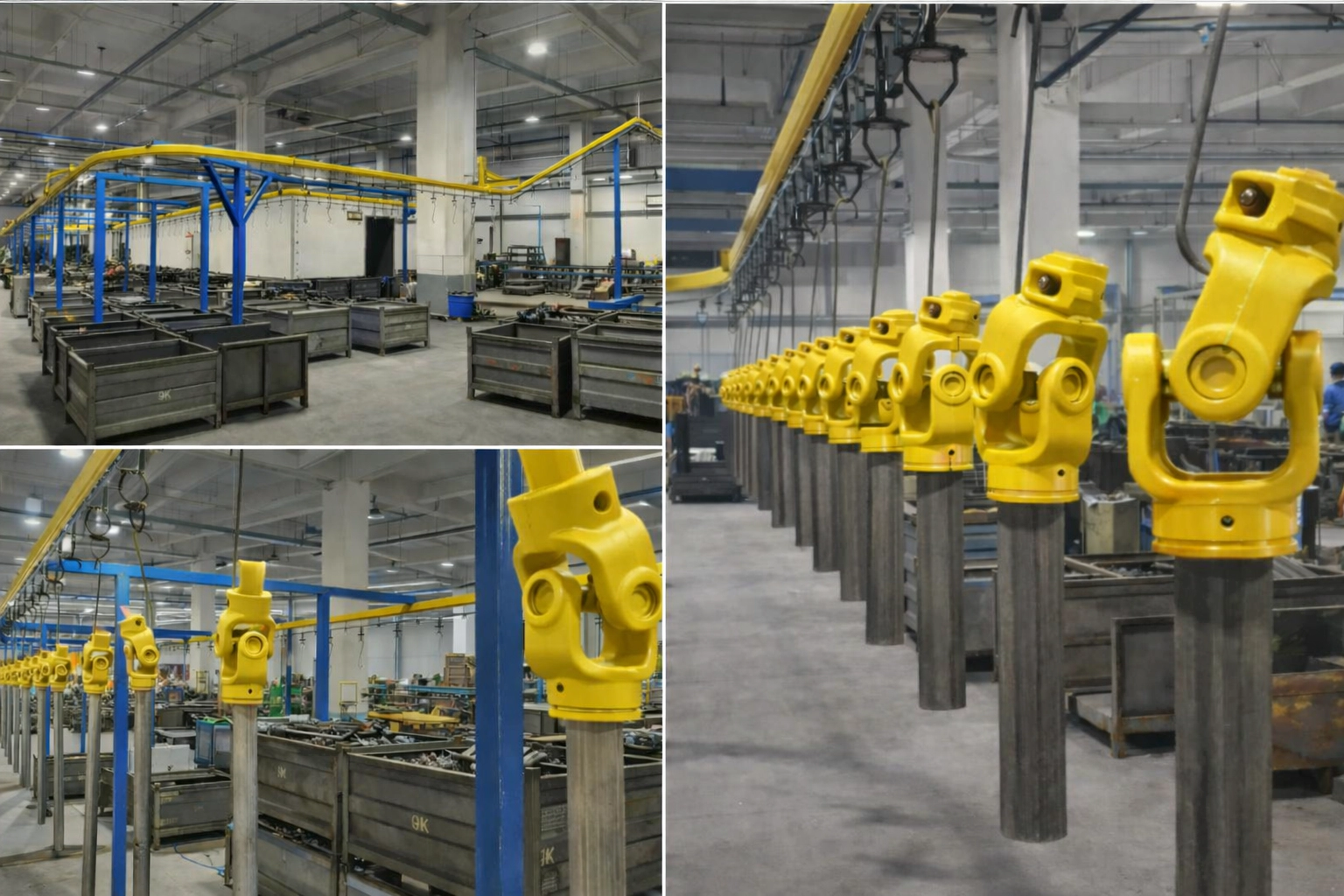
We don’t just assemble; we forge, machine, heat-treat, and balance in-house. Whether you are an agricultural OEM requiring 500 identical units for a new mower line, or a massive farming syndicate in Australia needing heavy-duty upgrades, EVER-POWER delivers. We excel in non-standard, drawing-based custom manufacturing.