
⚙️ Core Technology Quick Read: Field Engineer’s Dispatch
In our 15 years of supporting agricultural powertrain systems across New South Wales and Western Australia, we uncovered a critical failure point in spading machine operations. The vast agricultural landscapes of Australia are notorious for deep hardpan soils and hidden ironstone deposits. When a spading implement strikes these sub-surface obstacles, it generates a massive reverse shock load. Standard tractor pto shafts operating under these alternating torque conditions rapidly experience needle bearing fatigue in the universal joints, while traditional shear bolts fracture incessantly, bringing daily productivity to a grinding halt.
Based on this extensive 15-year field case study, EVER-POWER completely re-engineered the mechanical power flow for heavy-duty spading applications. We increased the profile tube wall thickness by 25% using 20CrMnTi alloy and integrated a 4-plate sintered bronze friction slip clutch. Telemetry data from our field tests demonstrate: when driving a 3-meter wide spading machine with a tractor output stable at 540 RPM or 1000 RPM, this specific eixo de acionamento da tomada de força consistently transmits up to 3500 Nm of dynamic torque. Thermal recovery and transmission efficiency remain stable above 98.5%. Compared to off-the-shelf standard shafts, this configuration reduces downtime by 45% and extends the operational lifespan of the entire drivetrain by at least 3.5 times.
Local Industry Application Cases: Oceania’s Extreme Working Conditions
The Australian agricultural environment imposes unforgiving demands on mechanical components. From the high-humidity, corrosive environments of Queensland sugarcane plantations to the abrasive, dust-laden vineyards of South Australia’s Barossa Valley, a eixo da tomada de força must possess uncompromising dust sealing mechanisms and UV-resistant shielding.
Regional Safety Regulations & Certification Baseline
- ✓
AS 1121.1-2007 Certification Compliance: All our power take-off drivelines strictly adhere to Australian safety standards for agricultural tractors. The master shield and overlapping safety guards provide 360-degree encapsulation, preventing any entanglement risks. - ✓
UV-Stabilized Polymer Shielding: Addressing Australia’s extreme ultraviolet radiation index, the outer guard is constructed from a modified high-molecular nylon compound. It has successfully passed 1,000-hour accelerated weathering tests, ensuring it will not become brittle or shatter under the harsh Outback sun. - ✓
WorkSafe Australia Alignment: Inspected against the rigorous safety audit protocols of WorkSafe Victoria and SafeWork NSW, our quick-release pins and highly visible anti-rotation chains meet the highest tier of occupational health and safety requirements for farm machinery.
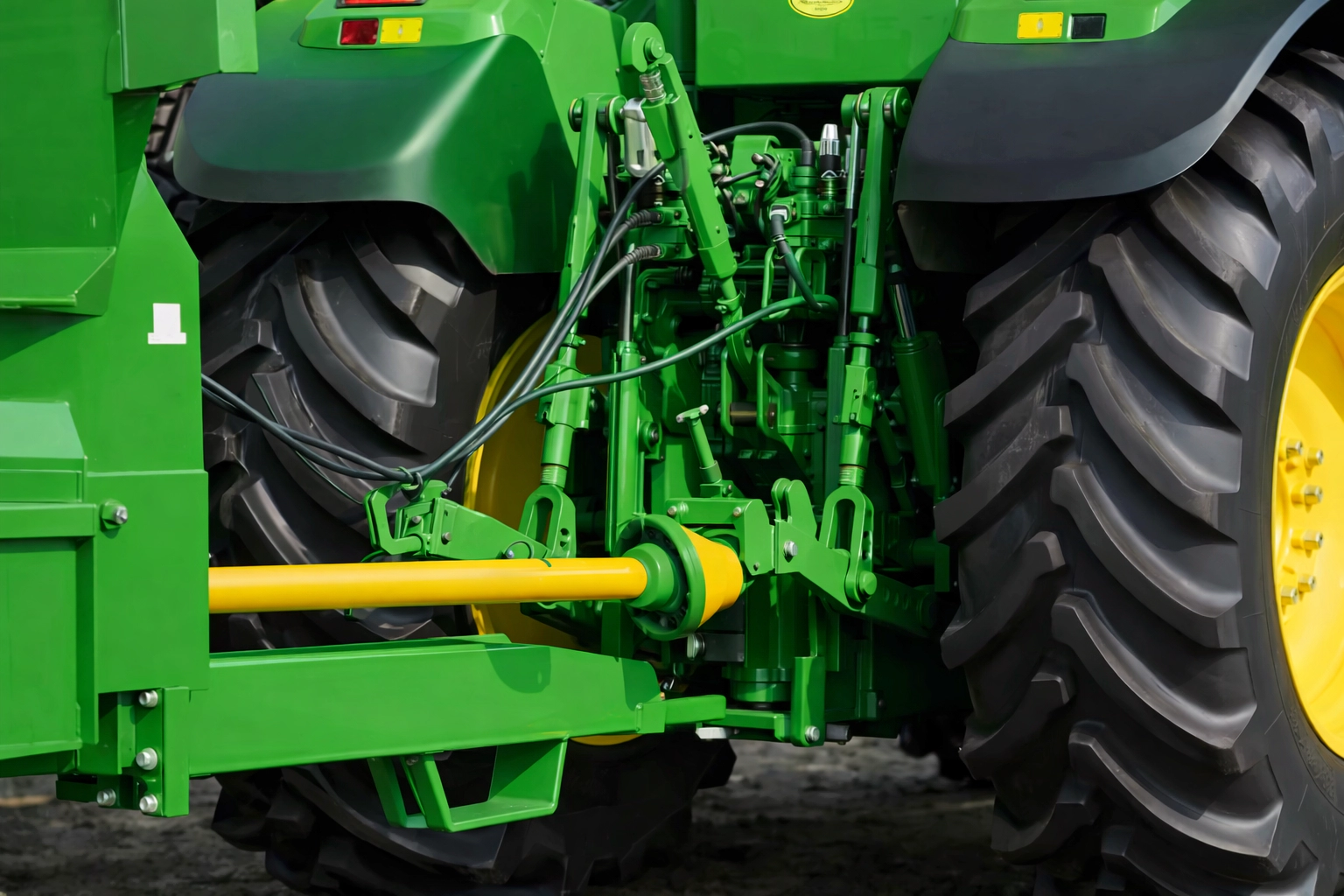
Kinematic Breakdown: Power Flow in Spading Machines
A spading machine is a highly specialized deep-tillage implement heavily reliant on precise torque synchronization. Frequently deployed in vineyard soil decompaction, greenhouse soil preparation, and general organic farming, it differs fundamentally from standard rotary tillers. It simulates the manual action of digging with a spade, utilizing a complex crankshaft and connecting rod mechanism to drive alternating spades deep into the earth.
Within this dynamic mechanical ecosystem, the eixo de acionamento da tomada de força serves as the critical primary artery for power transfer. One end connects securely to the tractor’s PTO stub (commonly a 1-3/8″ 6-spline or 21-spline configuration), while the implement end couples directly to the primary agricultural gearbox of the spading machine. When the tractor engages the PTO at 540 RPM, the driveline transfers rotational kinetic energy to the gearbox. The gearbox then executes a 90-degree directional shift and reduces the speed, multiplying the torque required to drive the horizontal crankshaft.
Engineering Benchmarks: Evidence Density Matrix
When evaluating the manufacturing pedigree of a fabricante de eixos de tomada de força, underlying materials science and machining tolerances dictate the ultimate field performance. Below is a professional-grade technical comparison between our heavy-duty shafts and standard aftermarket alternatives.
| Core Engineering Dimension | EVER-POWER Industrial Standard | Standard Commodity Products |
|---|---|---|
| Universal Joint Metallurgy & Forging | Forged from 20CrMnTi alloy steel, closed-die formed, carburized and quenched. Surface hardness reaches HRC58-62, ensuring superior core toughness against shock loads. | Standard 45# carbon steel or cast iron. Highly susceptible to brittle fracture or plastic deformation under impact. |
| Torsional Tube Rigidity | Star or Lemon profile tubes with wall thickness increased to 4.5mm. Yield strength exceeds 600 MPa, improving torsional resistance by 35%. | Thin-walled triangular or circular tubes. Prone to severe “twisting” or mechanical binding under high horsepower operations. |
| Cross Journal Sealing Architecture | Quad-layer labyrinth fluororubber (FKM) seals designed for Australian red dust. Extends greasing intervals to 50-250 hours depending on exact conditions. | Single-lip nitrile rubber seals. Prone to rapid aging and oil leakage, requiring manual greasing every 8 operating hours. |
| Safety Clutch Response Mechanism | Equipped with a 4-plate high-carbon friction clutch. Overload response time < 0.1 seconds, delivering smooth torque recovery without gearbox damage. | Relies on rudimentary shear bolts. Once sheared, requires complete manual shutdown and replacement, costing valuable farming time. |
| Dynamic Balancing Precision | Calibrated to ISO 1940 G6.3 balancing grade across all RPM ranges. Minimal vibration severity at 1000 RPM, protecting tractor rear axle bearings. | Unbalanced or poorly calibrated. Induces aggressive vibrations at high speeds, leading to systemic resonance and premature bearing failure. |
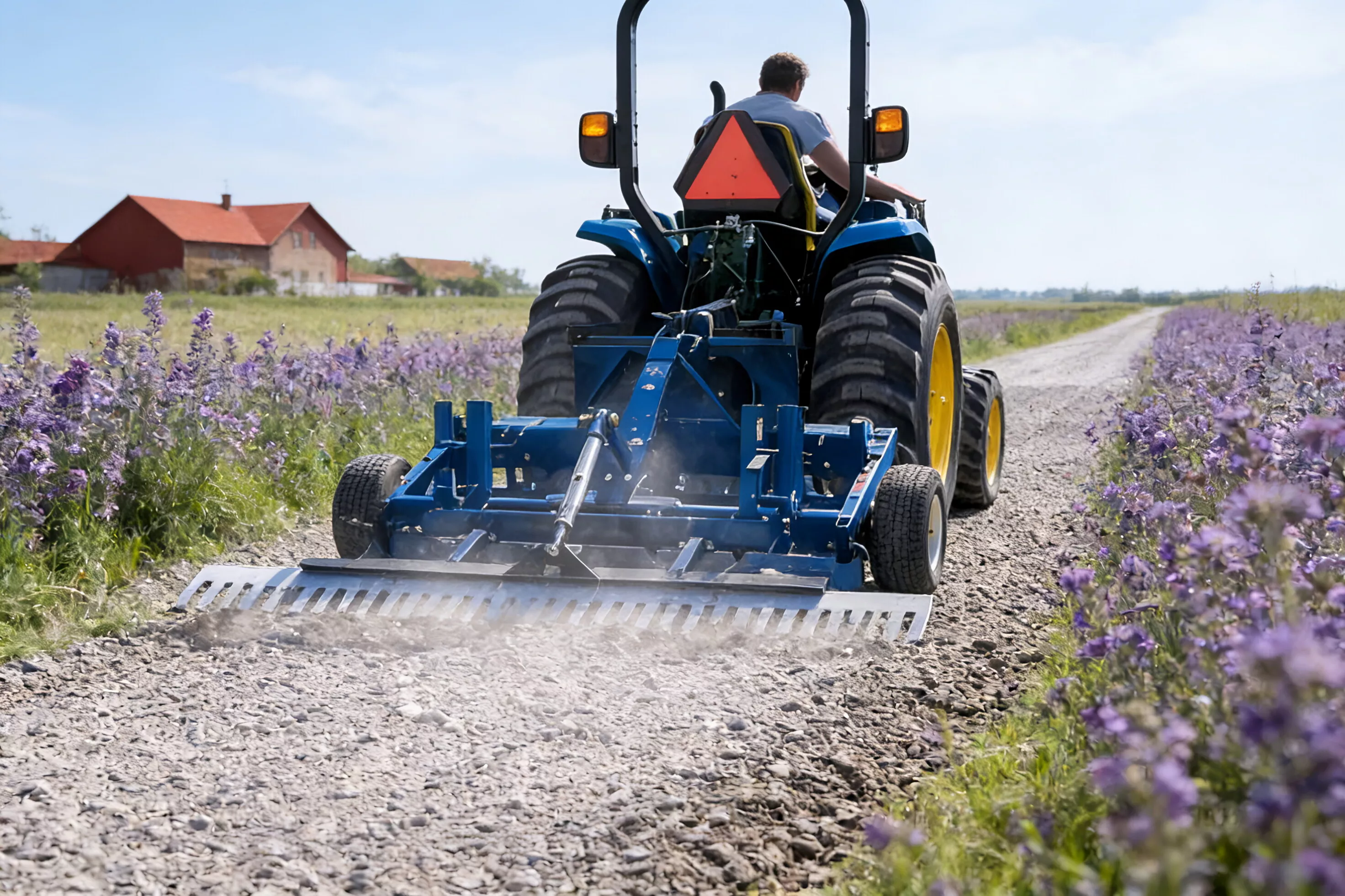
Technical Specification Matrix: Spading Machine PTO Shaft Parameters
To accommodate a vast spectrum of machinery—from compact 40 HP orchard tractors navigating narrow vineyard rows to massive 250 HP broadacre tractors—we offer highly customizable parameter configurations. The following table details the engineering specifications optimized for heavy-duty deep tillage:
| Parâmetro de engenharia | Value / Customizable Range | Application Significance |
|---|---|---|
| 1. Driveline Series Category | Series 4, 5, 6, 7, 8 (S6-S8 recommended for Spaders) | Determines baseline torque capacity and yoke sizing. |
| 2. Rated Power Transfer (540 RPM) | 30 HP – 160 HP (22 kW – 118 kW) | Matches standard tractor engine horsepower output. |
| 3. Rated Power Transfer (1000 RPM) | 45 HP – 240 HP (33 kW – 176 kW) | Supports large-scale, high-velocity soil decompaction. |
| 4. Cross Journal Dimensions | 27×74.6mm to 34.9×106mm | Primary load-bearing joint; dictates articulation and fatigue life. |
| 5. Maximum Dynamic Torque | 800 Nm – 3800 Nm | Critical threshold for surviving underground rock impacts. |
| 6. Tractor Yoke Spline Configuration | 1-3/8″ z=6, 1-3/8″ z=21, 1-3/4″ z=20 | Ensures universal compatibility with global tractor interfaces. |
| 7. Implement Yoke Interface | Plain bore with keyway, Splined | Secures rigid connection to the agricultural gearbox input shaft. |
| 8. Telescopic Tube Profile | Lemon profile, Star profile, Involute spline | Star profiles offer superior surface contact for ultra-high torque. |
| 9. Inner/Outer Tube Wall Thickness | 3.2mm – 5.5mm | Dictates bending stiffness, preventing catastrophic twisting. |
| 10. Closed Center Length (Lc) | 600mm – 2500mm (Fully Custom) | Tailored exactly to the 3-point hitch geometry of the tractor. |
| 11. Maximum Working Extension | 30% – 40% of closed tube length | Prevents driveline separation during headland turns or lifting. |
| 12. Maximum Articulation Angle | Standard Joint: 25°, Wide Angle CV: 80° | Wide angle CV allows continuous power during tight cornering. |
| 13. Overload Safety Device | Friction Slip Clutch (2/4 discs), Shear Bolt | Friction clutch is mandatory for hardpan spading applications. |
| 14. Slip Clutch Torque Setting | 600 Nm – 3500 Nm (Spring Adjustable) | Factory-calibrated to perfectly match implement safety thresholds. |
| 15. Friction Disc Material | Asbestos-free sintered bronze composite | Eco-compliant, highly resistant to thermal degradation and glazing. |
| 16. Yoke Metallurgy | Precision forged 45# / 20Cr Steel | Dense micro-structure, eliminating casting porosity failures. |
| 17. Surface Corrosion Treatment | Epoxy E-coating / Powder Coating | Validated by 500-hour salt spray testing against rust. |
| 18. Guard Design Standards | CE/AS compliant high-density polyethylene | Stationary guarding system prevents fatal entanglement accidents. |
| 19. Lubrication Grade | NLGI 2 Extreme Pressure Lithium Complex | Forms a tenacious boundary film under extreme oscillating loads. |
| 20. Operating Temperature Range | -30°C to +60°C | Adapts seamlessly to Tasmanian frosts or Queensland heatwaves. |
OEM-Grade Brand Replacement & Cross-Compatibility Guide
In the maintenance of complex agricultural machinery, sourcing the exact replacement driveline can be a logistical nightmare. Our systems engineers have conducted deep geometric and kinematic mapping of all major global agricultural powertrain platforms.
Our PTO systems are precisely matched in spline modulus, cross journal span, locking mechanisms, and flange hole patterns. They serve as impeccable drop-in replacements for equivalent product series from industry-recognized brands including: Comer Industries™, GKN Walterscheid™, Bondioli & Pavesi™, Weasler™, and Neapco™, as well as original shafts fitted to spading machines manufactured by Celli™, Falc™, and Tortella™.
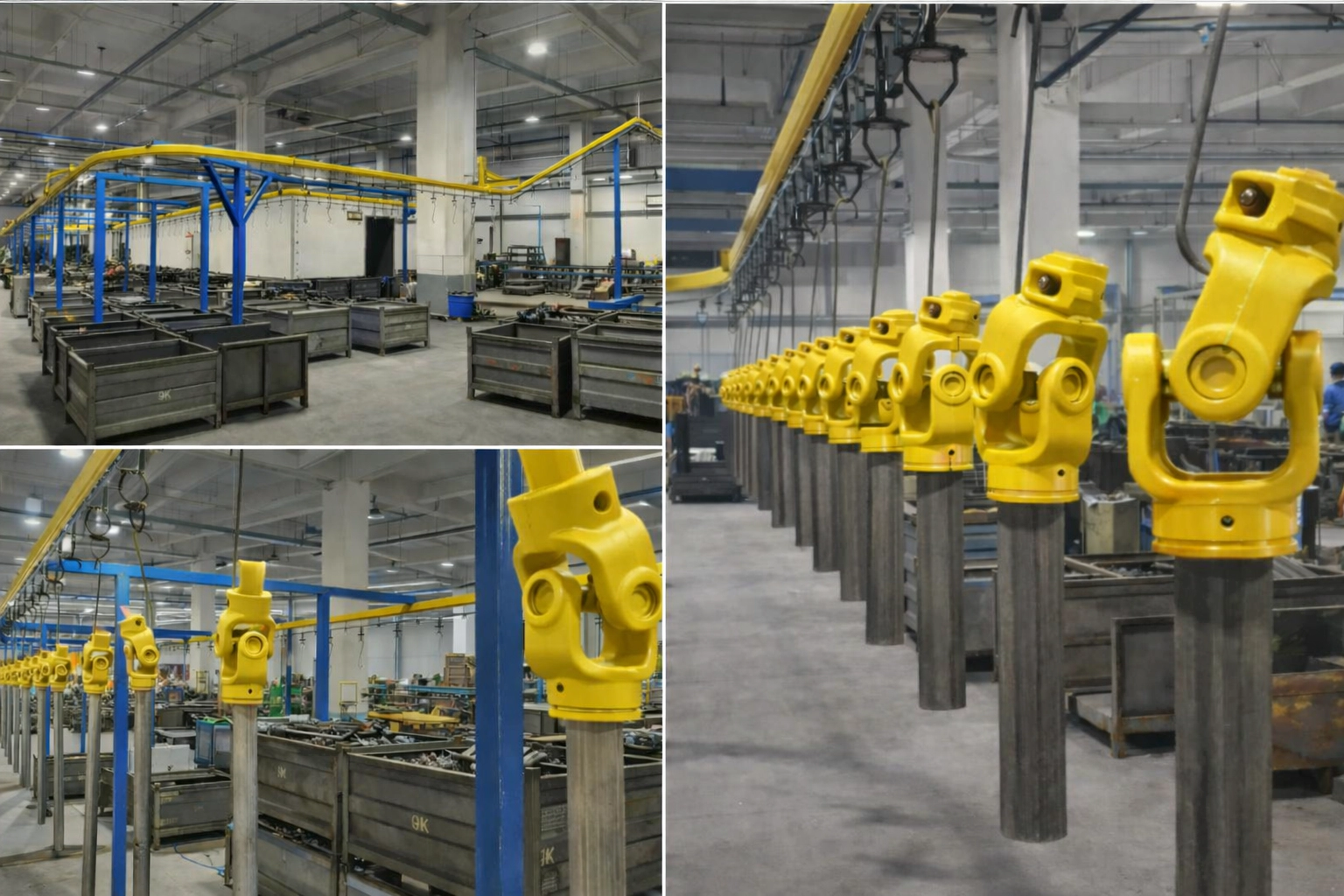
Three-Step Decision Matrix: Rapid Selection Guide
Accurate specification is the primary defense against premature mechanical failure and operator injury. Before purchasing or retrofitting, secure the following core metrics:
Step 1: Ascertain Tractor HP & RPM
Verify the tractor’s power take-off output: is it standard 540 RPM or heavy-duty 1000 RPM? The baseline torque equation is \( Torque = (Horsepower \times 7120) / RPM \). For heavy-duty spading machines, mandate a Service Factor of 1.5 to 2.0. This dictates the appropriate Series class (e.g., Series 6 or Series 8).
Step 2: Measure Closed Length & Yokes
Lower the implement to its maximum working depth using the 3-point hitch. Measure the precise tip-to-tip distance from the tractor’s PTO stub to the implement’s input shaft. Subtract a 50mm safety clearance to determine the required Closed Length (Lc). Validate the spline counts on both ends.
Step 3: Mandate Clutch Protection
For equipment subjecting the driveline to severe, cyclical impact loads—like spading machines and rotary tillers—strictly avoid basic shear bolts. Specify a Friction Slip Clutch or Ratchet Clutch configuration. This ensures that post-overload, torque transmission resumes automatically without manual intervention.
Standardized Installation Protocol for Spading Implements
- Pre-Installation Audit: Turn off the tractor engine, engage the parking brake, and remove the key. Scrape all accumulated mud, rust, and old grease from the tractor’s output spline and the implement’s input shaft. Inspect the splines for critical wear patterns.
- Length Calibration Verification: Assemble the new shaft and adjust the tractor and implement to their closest possible operational geometry (typically perfectly horizontal). In this position, the internal telescopic tubes must retain a minimum of 50mm clearance (they must not bottom out). At maximum extension, at least 1/3 of the tube length must remain overlapped to maintain torsional integrity. If it’s too long, cut equal lengths from both the inner/outer tubes and the plastic guard following the manual.
- Directional Alignment: PTO shafts are highly directional. The heavy end equipped with the safety slip clutch must always be installed on the implement end. The lighter end, marked with a tractor icon or featuring a simple quick-release pin, mounts to the tractor. Reversing this orientation induces a catastrophic bending moment on the tractor’s output bearing.
- Locking & Retention Assurance: Depress the quick-release pin collar, slide the yoke onto the spline until a distinct ‘click’ is heard. Forcefully pull backward on the driveline to visually and physically confirm the locking balls are firmly seated in the spline groove.
- Safety Shield Anchoring: Attach the anti-rotation chains located on the plastic master shield. Secure one chain to a stationary point on the tractor chassis and the other to the implement frame. Leave a slight slack to accommodate lifting angles. The plastic shield must remain completely stationary while the internal shaft rotates at 540/1000 RPM.
- Clutch Burnishing (First Run): For newly installed friction clutches, before initiating heavy tillage, loosen the compression spring nuts by a half-turn. Run the PTO under no-load for several seconds to intentionally slip the clutch, effectively clearing any surface rust or manufacturing oils. Afterward, re-tighten the nuts to the factory-calibrated height using a vernier caliper.
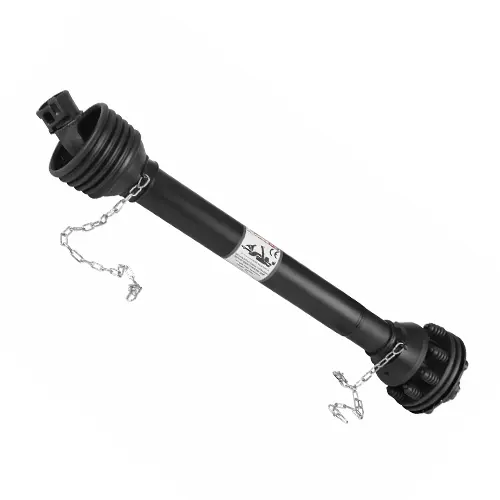
Tactical Field Operations: PTO Troubleshooting & Resolution
⚠️ Symptom 1: Violent vibration and metallic knocking sounds during operation.
Root Cause Diagnosis: The needle bearings within the universal joint (cross journal) have pulverized due to lack of lubrication, creating massive play. Alternatively, the profile tubes are severely bent, or the working angle between the tractor and implement exceeds 25 degrees, inducing unequal angular velocity vibrations.
Resolution Protocol: Halt operations immediately! Use a dial indicator to check tube runout. Replace the worn cross journal with a new rebuild kit. If caused by excessive lifting angles, re-configure the 3-point hitch geometry, or upgrade to a Wide Angle (80° CV joint) driveline.
⚠️ Symptom 2: Tractor provides power, but the implement stalls (Clutch is smoking).
Root Cause Diagnosis: The spading machine is jammed by a subterranean boulder or choked by extreme clay density. The slip clutch is slipping continuously, generating intense thermal friction. Alternatively, the compression springs are set too loosely, causing premature slipping below the rated torque.
Resolution Protocol: Disengage the PTO immediately. Manually clear the obstruction from the implement’s digging mechanism. Disassemble the clutch pack. If the friction discs are worn below 2mm or exhibit severe surface vitrification (glazing), replace the disc set entirely. Re-torque the spring array according to the exact OEM specification manual.
⚠️ Symptom 3: Inner and outer tubes are jammed together; cannot extend or retract.
Root Cause Diagnosis: Severe lack of routine lubrication has caused internal rust bonding and dry friction. More critically, operating under extreme torque without proper slip clutch protection may have caused micro-plastic deformation (twisting) of the profile tubes, mechanically locking them together.
Resolution Protocol: Soak the tube overlap area with penetrating fluid (e.g., WD-40) and use mechanical pullers to separate. If any permanent torsional deformation (twisting) is observed, the entire tubular assembly must be scrapped and replaced. Damaged metallurgy loses its fatigue limit and can violently rupture at 1000 RPM, posing lethal danger.
Local Industry Application Cases: Breaking Bottlenecks in Oceania
Below is the definitive field dossier detailing how our powertrain systems have resolved severe operational pain points for agricultural producers across Australia’s distinct agronomic zones:
📍 Queensland (Brisbane) · Sugarcane Field Ratooning
Client Pain Point: ‘Our previous European-branded PTO shear bolts broke 4 times a day when smashing through dense sugarcane root networks, killing our daily productivity.’
EVER-POWER Solution: ‘By switching to our Series 8 heavy-duty star-profile shaft equipped with a 4-plate friction slip clutch rated at 3500Nm, the farm eliminated shear bolt replacements. Downtime was reduced by 45% in the first quarter, perfectly matching their 180 HP tractors.’
📍 Victoria (Mildura) · Vineyard Inter-Row Deep Tillage
Client Pain Point: ‘The narrow trellis spacing forces our tractors to make extremely tight headland turns. Standard U-joints were causing terrifying vibrations and destroying gearbox seals.’
EVER-POWER Solution: ‘We engineered a custom driveline featuring an 80° Wide Angle Constant Velocity (CV) joint. Operators can now execute tight maneuvers without disengaging the PTO, drastically transforming workflow efficiency.’
📍 Western Australia (Perth) · Sandy Soil Amelioration
Client Pain Point: ‘The hyper-fine, abrasive red dust of WA easily penetrated standard rubber seals, grinding the needle bearings to powder within a single planting season.’
EVER-POWER Solution: ‘Deployed our patented multi-stage labyrinth fluororubber sealing technology. During off-season maintenance after 800 hours of operation, the internal lithium grease remained pristine and free of particulate contamination.’
📍 New South Wales (Wagga Wagga) · Broadacre Seedbed Prep
Client Pain Point: ‘Continuous, high-load operations over massive hectares caused immense thermal buildup and twisting in our standard triangular profile tubes.’
EVER-POWER Solution: ‘Provided an oversized Lemon-profile structural design with 4.5mm wall thickness. It handles 1000 RPM continuous duty effortlessly, providing absolute structural rigidity without a hint of torsional chatter.’
📍 South Australia (Adelaide Hills) · Undulating Orchard Terraces
Client Pain Point: ‘The fluctuating elevation changes caused standard shafts to over-extend and violently separate mid-operation, risking operator lives.’
EVER-POWER Solution: ‘Calculated a specialized maximum-overlap configuration utilizing elongated telescopic tubes and strict retention limits. Separation hazards have been completely eradicated despite the aggressive topography.’
Drivetrain Technical Insights: Frequently Asked Questions
1. My spading machine hit a rock and the PTO clutch started smoking. What is the immediate action?
Smoke indicates the friction plates are dissipating immense kinetic energy. Immediately disengage the tractor’s PTO and lift the implement to clear the rock. Never attempt to “power through” the obstruction by overtightening the springs, as this bypasses the safety mechanism and will shatter your implement’s gearbox.
2. What is the scientifically determined maintenance interval for the universal joints?
Under light to moderate loads, our high-seal cross journals require NLGI-2 lithium complex grease every 50 hours. However, in heavy-dust or muddy environments, we strongly mandate micro-purging the grease fittings every 10 to 15 hours (daily) to physically push out intrusive contaminants.
3. For high-torque spaders, is a Triangular tube or a Lemon tube superior?
Lemon tubes and Star (multi-splined) tubes are vastly superior for heavy-duty spading. They offer a significantly larger surface contact area and higher cross-sectional torsional stiffness compared to standard thin-walled triangular tubes, preventing plastic deformation (twisting) under shock loads.
4. Why must the yokes on both ends of the driveline remain perfectly aligned in the same plane (Phasing)?
If the inner and outer tubes are separated and re-inserted out of phase, it destroys the constant velocity principles of the driveline. This induces severe, destructive high-frequency oscillations. EVER-POWER profile tubes utilize asymmetrical anti-error grooves, making incorrect re-assembly physically impossible.
5. Can I continue operating if the plastic safety guard is cracked or missing?
Absolutely not. A rotating driveline spinning at 540 RPM can entangle clothing in a fraction of a second, causing fatal injuries. In Australia, operating an unguarded shaft is a severe OH&S violation. We stock immediate replacement polymer shield assemblies for all models.
6. The shaft is difficult to slide onto the tractor stub. Can I use a hammer?
Never use impact force. Difficulty is typically caused by burrs, dirt, or a quick-release pin not fully depressed. Striking the yoke damages the end cap and internal spring mechanism. Clean the splines with a wire brush and apply light anti-rust penetrating oil.
7. Do you support 1:1 custom manufacturing based on photographs of my damaged shaft?
Yes. As a primary manufacturing facility, we possess extensive non-standard customization capabilities. Provide high-resolution photos of the damaged components, closed length measurements, spline counts, and application details, and our engineers will calculate a heavy-duty drop-in replacement.
8. What is the operational difference between a Slip Clutch and a Freewheel (Overrunning Clutch)?
A slip clutch limits maximum forward torque peaks during operation. A freewheel is a one-way clutch that prevents high-inertia implements (like large mowers or blowers) from back-driving the tractor’s transmission when the engine decelerates. For high-resistance, low-inertia spading machines, the slip clutch is the critical requirement.
9. Will extreme ambient temperatures in regions like Queensland compromise the grease or seals?
Standard lithium grease liquifies and bleeds out under high temperatures. We utilize an Extreme Pressure Lithium Complex grease with a dropping point exceeding 260°C, paired with heat-resistant FKM seals, ensuring exceptional rheological stability in extreme heat.
10. What are the best practices for winter storage and off-season transport?
Store the shafts horizontally on dry, ventilated racks to prevent gravity-induced bending of the plastic shields. Before winter storage, pump the telescopic profile tubes full of grease and fully collapse them to displace moisture and prevent internal condensation rust.

The Complete Power Matrix: Synergistic Agricultural Gearboxes & Precision Components
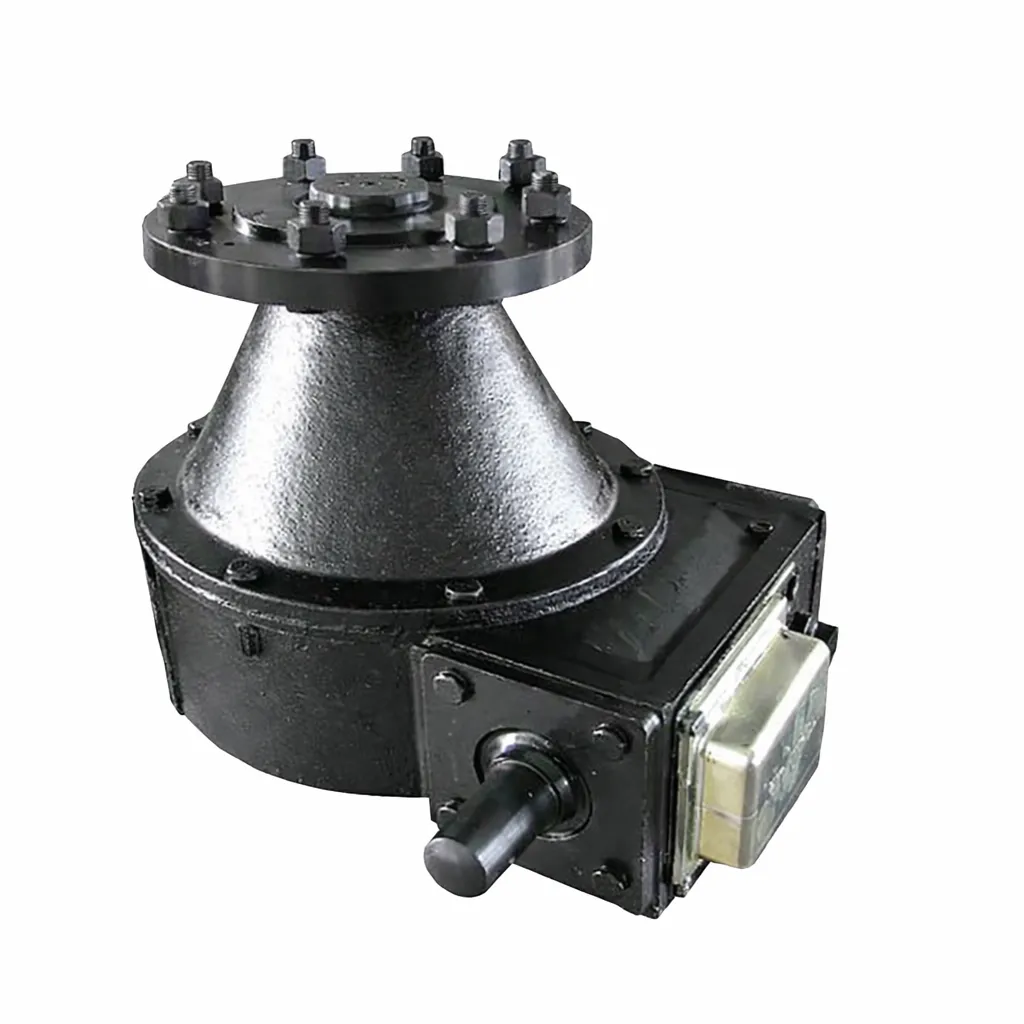
An elite driveline is merely the first phase of mechanical power transmission. To comprehensively resolve end-stage load distribution anomalies, EVER-POWER engineers and manufactures an exclusive series of heavy-duty Caixas de Engrenagens Agrícolas, designed specifically for perfect impedance matching and synchronous operation with our PTO shafts.
Cannot Locate Your Exact Specifications? Experience Engineering-Grade Customization!
Operating as a primary manufacturing facility rather than a mere distributor, EVER-POWER is not restricted by standardized catalogues. From recalculating spline geometry and upgrading clutch plate compositions to developing proprietary anti-corrosion coatings for specific chemical environments, we engineer uncompromising power transmission solutions tailored exactly to your blueprints, worn samples, or conceptual field parameters.
Our rapid-prototyping turnaround and extreme internal lab validations (torsional fatigue, salt fog, dynamic load testing) drastically accelerate your OEM development cycles.

























