Descrição do produto
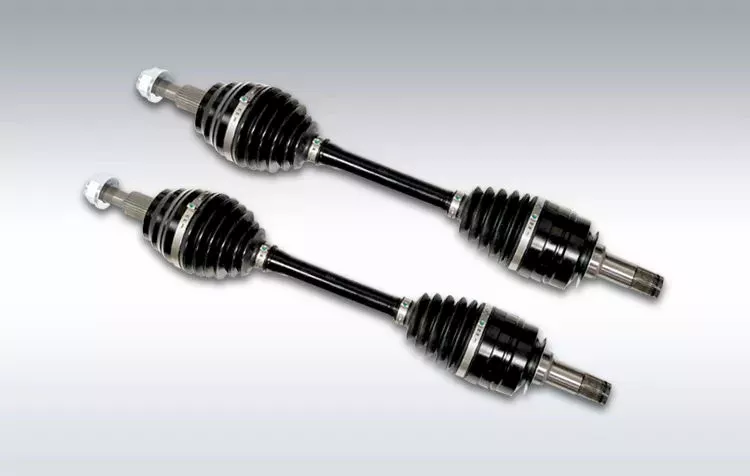
PTO Shaft for Round Balers
Applicable PTO shaft models
CASE calls for CAT4 and CAT5 constant velocity drivelines depending on the model, with friction clutch.
Input shafts are 1.375-6 or 1.375-21. Please click here with your specifications.
Models: RB444, RB454, RB455A, RB464, RB554, RB564
Available for tractors using 1.375-6, 1.375-21, 1.750-20 spline
Input shaft is usually 1.375-6
Other combinations are available.
|
Baler Input Requirements
|
As we all know, at present, everyone attaches great importance to farmland production, especially in planting, harvesting, and maintenance, which is an important part of output improvement. However, we must also find that today’s farmland is no longer a busy life of farmers suffering, but a large area of farmland is only cultivated with machinery and equipment. Individual operators and farmers are present to cooperate in the operation, which shows the importance of agricultural machinery. Then there is the use of universal driveshafts in agricultural machinery. For example, the sprayer, mower, harvester, field returning the machine, and so on will be equipped with the CHINAMFG transmission shaft. However, due to the different structures and uses of various agricultural machinery, the ever power transmission shaft selected is also different. Therefore, there are many categories of ever power transmission shafts. You can select the appropriate ever power transmission shaft according to the model used.
PTO Shaft Application
We Also Supply PTO Shafts
product-group/VqTESwWofuhM/PTO-Shaft-catalog-1.html
PTO Shaft Manufacturer
Ever-power covers an area of more than 12000 square CHINAMFG and employs more than 100 people. We specialize in developing, manufacturing, and selling PTO shafts, industrial universal shafts, automobile drive shafts, universal joint coupling shafts, universal joints, etc. The annual turnover is 60 million yuan and 9 million US dollars, increasing year by year. Our products enjoy a high reputation among customers in Europe, the United States, Asia, Australia, and North America. We are the top 3 professional OEM suppliers of many agricultural tool factories in the domestic market. CHINAMFG transmission shaft adheres to our “QDP” principle: quality first, rapid delivery, and competitive price. We have obtained CE, TS / 16949, and ISO9001 certification, and have systematic production equipment and a QC team to ensure our quality and delivery. We warmly welcome friends from all walks of life to visit and establish mutually beneficial long-term cooperative relations.
Company Information
/* 22 de janeiro de 2571 19:08:37 */!function(){function s(e,r){var a,o={};try{e&&e.split(“”,).forEach(function(e,t){e&&(a=e.match(/(.*?):(.*)$/))&&1
| Tipo: | Agrícola |
|---|---|
| Uso: | Processamento de produtos agrícolas, infraestrutura agrícola, preparo do solo, colheitadeira, plantio e fertilização, debulha de grãos, limpeza e secagem. |
| Material: | Iron |
| Fonte de alimentação: | Electricity |
| Peso: | 21kg |
| Serviço pós-venda: | Installation Guide 3-Year Warranty |
How do PTO shafts handle variations in length and connection methods?
PTO (Power Take-Off) shafts are designed to handle variations in length and connection methods to accommodate different equipment setups and ensure efficient power transfer. PTO shafts need to be adjustable in length to bridge the distance between the power source and the driven machinery. Additionally, they must provide versatile connection methods to connect to a wide range of equipment. Here’s a detailed explanation of how PTO shafts handle variations in length and connection methods:
1. Design telescópico: PTO shafts often feature a telescoping design, allowing them to be adjusted in length to suit different equipment configurations. The telescoping feature enables the shaft to extend or retract, accommodating varying distances between the power source (such as a tractor or engine) and the driven machinery. By adjusting the length of the PTO shaft, it can be properly aligned and connected to ensure optimal power transfer. Telescoping PTO shafts typically consist of multiple tubular sections that slide into one another, providing flexibility in length adjustment.
2. Splined Shafts: PTO shafts commonly employ splined shafts as the primary connection method between the power source and driven machinery. Splines are a series of ridges or grooves along the shaft that interlock with corresponding grooves in the mating component. The splined connection allows for torque transfer while maintaining alignment between the power source and driven machinery. Splined shafts can handle variations in length by extending or retracting the telescoping sections while still maintaining a solid connection between the power source and the driven equipment.
3. Adjustable Sliding Yokes: PTO shafts typically feature adjustable sliding yokes on one or both ends of the shaft. These yokes allow for angular adjustment, accommodating variations in the alignment between the power source and driven machinery. The sliding yokes can be moved along the splined shaft to achieve the desired angle and maintain proper alignment. This flexibility ensures that the PTO shaft can handle length variations while ensuring efficient power transfer without placing excessive strain on the universal joints or other components.
4. Universal Joints: Universal joints are integral components of PTO shafts that allow for angular misalignment between the power source and driven machinery. They consist of a cross-shaped yoke with bearings that transmit torque between connected shafts while accommodating misalignment. Universal joints provide flexibility in connecting PTO shafts to equipment that may not be perfectly aligned. As the PTO shaft length varies, the universal joints compensate for the changes in angle, allowing for smooth power transmission even when there are variations in length or misalignment between the power source and driven machinery.
5. Coupling Mechanisms: PTO shafts utilize various coupling mechanisms to securely connect to the power source and driven machinery. These mechanisms often involve a combination of splines, bolts, locking pins, or quick-release mechanisms. The coupling methods can vary depending on the specific equipment and industry requirements. The versatility of PTO shafts allows for the use of different coupling methods, ensuring a reliable and secure connection regardless of the length variation or equipment configuration.
6. Customization Options: PTO shafts can be customized to handle specific length variations and connection methods. Manufacturers offer options to select different lengths of telescoping sections to match the specific distance between the power source and driven machinery. Additionally, PTO shafts can be tailored to accommodate various connection methods through the selection of splined shaft sizes, yoke designs, and coupling mechanisms. This customization enables PTO shafts to meet the specific requirements of different equipment setups, ensuring optimal power transfer and compatibility.
7. Safety Considerations: When handling variations in length and connection methods, it is essential to consider safety. PTO shafts incorporate protective guards and shields to prevent accidental contact with rotating components. These safety measures must be appropriately adjusted and installed to provide adequate coverage and protection, regardless of the PTO shaft’s length or connection configuration. Safety guidelines and regulations should be followed to ensure the proper installation, adjustment, and use of PTO shafts in order to prevent accidents or injuries.
By incorporating telescoping designs, splined shafts, adjustable sliding yokes, universal joints, and versatile coupling mechanisms, PTO shafts can handle variations in length and connection methods. The flexibility of PTO shafts allows them to adapt to different equipment setups, ensuring efficient power transfer while maintaining alignment and safety.

De que forma os eixos de tomada de força (TDF) contribuem para a eficiência das operações agrícolas?
Os eixos de tomada de força (TDF) desempenham um papel crucial na melhoria da eficiência das operações agrícolas, fornecendo uma fonte de energia versátil e confiável para diversos equipamentos agrícolas. Os eixos de TDF permitem que as máquinas agrícolas acessem a energia de tratores ou outros motores, possibilitando a transferência eficiente de energia para a execução de uma ampla gama de tarefas. A seguir, uma explicação detalhada de como os eixos de TDF contribuem para a eficiência das operações agrícolas:
1. Versatilidade: Os eixos de tomada de força (TDF) oferecem versatilidade, permitindo a conexão de diferentes tipos de implementos e máquinas a tratores ou outras fontes de energia. Essa versatilidade permite que os agricultores usem uma única unidade de potência, como um trator, para operar vários implementos agrícolas, incluindo segadoras, enfardadeiras, cultivadores, semeadoras, pulverizadores e muito mais. A capacidade de alternar rapidamente entre vários implementos usando um eixo de TDF minimiza o tempo de inatividade e maximiza a eficiência nas operações agrícolas.
2. Transferência de energia: Os eixos da tomada de força (TDF) transferem a potência do motor do trator para os implementos agrícolas de forma eficiente. A potência rotacional gerada pelo motor é transmitida através do eixo da TDF para acionar as máquinas a ele conectadas. Essa transferência direta de potência elimina a necessidade de motores separados em cada implemento, reduzindo os custos com equipamentos e os requisitos de manutenção. Os eixos da TDF garantem um fornecimento de energia confiável, permitindo que as operações agrícolas sejam realizadas de forma eficiente e eficaz.
3. Aumento da produtividade: Ao utilizar eixos de tomada de força (TDF), as operações agrícolas podem ser realizadas de forma mais rápida e eficiente do que com métodos manuais ou outras ferramentas motorizadas. As máquinas acionadas por TDF geralmente operam em velocidades mais altas e com maior potência em comparação com ferramentas manuais ou operadas por humanos. Esse aumento de produtividade permite que os agricultores concluam tarefas como arar, semear, colher e movimentar materiais com mais eficiência, reduzindo a necessidade de mão de obra e aumentando a produtividade geral da fazenda.
4. Economia de tempo: Os eixos de tomada de força (TDF) contribuem para a economia de tempo nas operações agrícolas. A capacidade de conectar e desconectar implementos rapidamente usando eixos de TDF padronizados permite que os agricultores alternem entre tarefas com agilidade. Isso economiza tempo durante a preparação do equipamento, bem como na transição entre diferentes operações no campo. A eficiência em termos de tempo é particularmente valiosa durante períodos críticos da agricultura, como o plantio ou a colheita, em que a execução no momento certo é essencial para a obtenção de rendimento e qualidade ideais da safra.
5. Redução do trabalho manual: Os eixos de tomada de força (TDF) minimizam a necessidade de trabalho manual em tarefas árduas ou repetitivas. Ao aproveitar a potência de tratores ou outros motores, os agricultores podem mecanizar diversas operações que, de outra forma, exigiriam um esforço físico considerável. Implementos agrícolas acionados por eixos de TDF podem realizar tarefas como arar, ceifar e enfardar com mínima intervenção humana, reduzindo custos de mão de obra e aumentando a eficiência geral.
6. Precisão e Consistência: Os eixos da tomada de força (TDF) contribuem para a precisão e consistência nas operações agrícolas. O fornecimento constante de energia da TDF garante o funcionamento e o desempenho uniformes das máquinas conectadas. Isso auxilia na colocação consistente de sementes, na distribuição uniforme de fertilizantes ou defensivos agrícolas e no corte ou colheita precisos das culturas. Precisão e consistência levam à melhoria da qualidade das colheitas, ao aumento da produtividade e à redução do desperdício, contribuindo, em última análise, para a eficiência geral das operações agrícolas.
7. Adaptabilidade a diversos terrenos: As máquinas acionadas por tomada de força (TDF) são altamente adaptáveis a diversos tipos de terreno encontrados em operações agrícolas. Tratores equipados com eixos de TDF podem transitar por terrenos irregulares ou desafiadores, permitindo que os implementos operem com eficiência em declives, campos acidentados ou paisagens montanhosas. Essa adaptabilidade garante que os agricultores possam gerenciar suas terras de forma eficiente, independentemente dos desafios topográficos, aumentando a eficiência operacional e a produtividade.
8. Integração com Automação e Tecnologia: Os eixos de tomada de força (TDF) podem ser integrados à automação e aos avanços tecnológicos nas práticas agrícolas modernas. Sistemas de automação, como orientação e controle de precisão, podem ser sincronizados com máquinas acionadas por TDF para otimizar as operações e minimizar o desperdício. Além disso, os avanços na coleta e análise de dados permitem que os agricultores monitorem e otimizem o desempenho da máquina, a eficiência de combustível e a produtividade, aumentando ainda mais a eficiência das operações agrícolas.
Ao proporcionar versatilidade, transferência de potência eficiente, aumento da produtividade, economia de tempo, redução do trabalho manual, precisão, adaptabilidade ao terreno e integração com automação e tecnologia, os eixos de tomada de força (TDF) contribuem significativamente para o aumento da eficiência das operações agrícolas. Eles permitem que os agricultores executem uma ampla gama de tarefas com facilidade, melhorando a produtividade, reduzindo custos e apoiando práticas agrícolas sustentáveis.

What is a PTO shaft and how is it used in agricultural and industrial equipment?
A power take-off (PTO) shaft is a mechanical component used in agricultural and industrial equipment to transfer power from a power source, such as an engine or motor, to another machine or implement. It is a driveline shaft that transmits rotational power and torque, allowing the connected equipment to perform various tasks. PTO shafts are commonly used in agricultural machinery, such as tractors, as well as in industrial equipment, including generators, pumps, and construction machinery. Here’s a detailed explanation of what a PTO shaft is and how it is used:
Structure and Components: A typical PTO shaft consists of a hollow metal tube with universal joints at each end. The hollow tube allows the shaft to rotate freely, while the universal joints accommodate angular misalignments between the power source and the driven equipment. The universal joints consist of a cross-shaped yoke with needle bearings, providing flexibility and allowing the transmission of power at varying angles. Some PTO shafts may also include a telescopic section to adjust the length for different equipment setups or to accommodate varying distances between the power source and the driven machine.
Power Transfer: The primary function of a PTO shaft is to transfer power and torque from the power source to the driven equipment. The power source, typically an engine or motor, drives the PTO shaft through a mechanical connection, such as a gearbox or a clutch. As the power source rotates, it transmits rotational force to the PTO shaft. The PTO shaft, in turn, transfers this rotational power and torque to the driven equipment, enabling it to perform its intended function. The torque and rotational speed transmitted through the PTO shaft depend on the power source’s characteristics and the gear ratio or clutch engagement.
Agricultural Applications: In agriculture, PTO shafts are commonly used in tractors to power various implements and attachments. The PTO shaft is connected to the tractor’s power take-off, a rotating drive shaft located at the rear of the tractor. By engaging the PTO clutch, the tractor’s engine power is transferred through the PTO shaft to the attached implements. Agricultural machinery, such as mowers, balers, tillers, sprayers, and grain augers, often rely on PTO shafts to receive power for their operation. The PTO shaft allows the implements to be powered directly by the tractor’s engine, eliminating the need for separate power sources and increasing the versatility and efficiency of agricultural operations.
Industrial Applications: PTO shafts also find extensive use in various industrial applications. Industrial equipment, such as generators, pumps, compressors, and industrial mixers, often incorporate PTO shafts to receive power from engines or electric motors. The PTO shaft connects the power source to the driven equipment, allowing it to operate and perform its intended function. In construction machinery, PTO shafts can be found in equipment like concrete mixers, hydraulic hammers, and post hole diggers, enabling the transfer of power from the machinery’s engine to the specific attachment or tool being used.
Safety Considerations: It is important to note that PTO shafts can pose safety risks if not handled properly. The rotating shaft can cause serious injuries if operators come into contact with it while it is in operation. To ensure safety, PTO shafts are often equipped with shielding or guards that cover the rotating shaft and universal joints, preventing accidental contact. It is crucial to maintain and inspect these safety features regularly to ensure their effectiveness. Additionally, operators should receive proper training on PTO shaft operation, including safe attachment and detachment procedures, as well as the use of personal protective equipment when working near PTO-driven machinery.
In summary, a PTO shaft is a mechanical component used in agricultural and industrial equipment to transmit power and torque from a power source to a driven machine or implement. It enables the direct power transfer from engines or motors to various equipment, increasing efficiency and versatility in agricultural and industrial operations. While PTO shafts offer significant benefits, operators must be aware of the associated safety considerations and take appropriate precautions to prevent accidents and injuries.


editor by CX 2024-04-19