Productbeschrijving
T4-660-01B-07G-YIIIP Agriculture PTO Drive Shaft for Earth Mover and Potato Harvester
| Product: | PTO-aandrijfas |
| Model: | T4-660-01B-07G-YIIIP |
| Size: | φ27*74.6 Length 660mm |
| Raw Material: | 45# Steel |
| Hardness: | 58-64HRC |
| Delivery Date: | 7-60 Days |
| MOQ: | 100 sets or according to stocks without minimum Qty. |
| Sample: | Acceptable |
| We could produce all kinds of PTO Drive Shaft and Parts according to customers’ requirement. | |
| REF. | UJ | L.mm |
| T4-660-01B-07G-YIIIP | ø27*74.6 | 660 |
About us
We have more than 17 years experience of Spare parts, especially on Drive Line Parts.
We deeply participant in the Auto Spare parts business in HangZhou city which is the most import spare parts production area in China.
We are supply products with good cost performance for different customers of all over the world.
We keep very good relationship with local produces with the WIN-WIN-WIN policy.
Factory supply good and fast products;
We supply good and fast service;
And Customers gain the good products and good service for their customers.
This is a healthy and strong equilateral triangle keep HangZhou Speedway going forward until now.
/* March 10, 2571 17:59:20 */!function(){function s(e,r){var a,o={};try{e&&e.split(“,”).forEach(function(e,t){e&&(a=e.match(/(.*?):(.*)$/))&&1
| Type: | Transmission |
|---|---|
| Usage: | Tillage, Harvester, Planting and Fertilization |
| Materiaal: | 45# Steel |
| Power Source: | Diesel |
| Weight: | 8 |
| After-sales Service: | Online Support |
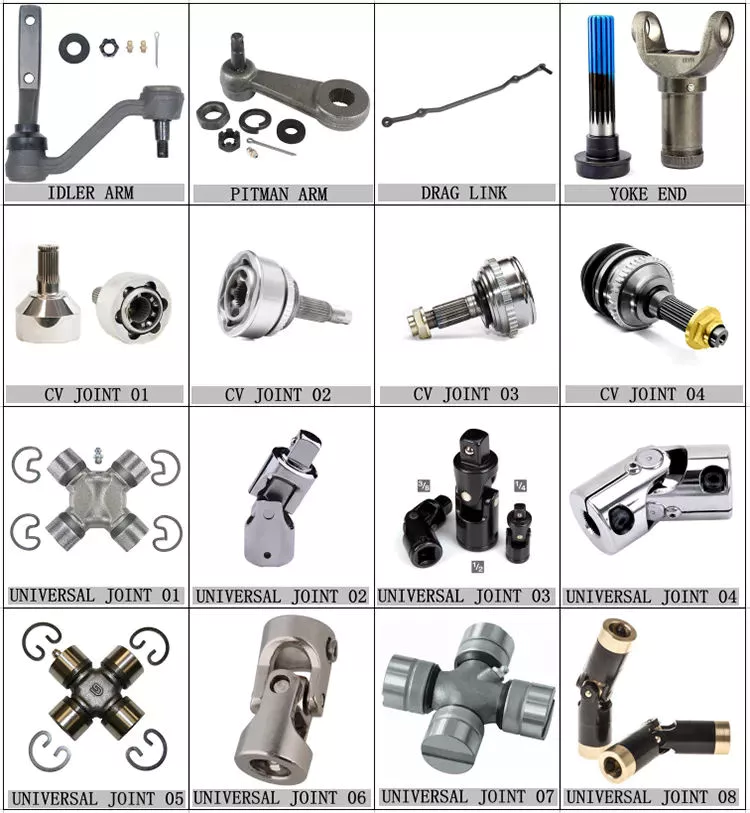
How do manufacturers ensure the compatibility of PTO drive shafts with different equipment?
Manufacturers of PTO (Power Take-Off) drive shafts employ various strategies and considerations to ensure the compatibility of their products with different types of equipment. These measures are implemented during the design, manufacturing, and testing phases, and they include:
1. Standardization:
Manufacturers adhere to industry standards and specifications when designing and producing PTO drive shafts. Standards such as ISO 5676 and ASAE S205.6 provide guidelines for dimensions, safety requirements, and performance characteristics. By following these standards, manufacturers can ensure that their drive shafts are compatible with a wide range of equipment that conforms to the same industry standards.
2. Engineering Design:
Manufacturers employ experienced engineers who design PTO drive shafts with compatibility in mind. They consider factors such as torque requirements, speed ratings, operating conditions, and power transfer efficiency. The engineering design process involves selecting appropriate materials, calculating component dimensions, determining connection methods, and considering factors like misalignment compensation. Attention to these design aspects ensures that the drive shafts can handle the demands of different equipment while maintaining compatibility.
3. Customization Options:
Manufacturers often provide customization options to meet specific equipment requirements. Customers can request PTO drive shafts with customized lengths, connection types, and protective features. By offering customization, manufacturers can tailor the drive shafts to fit specific equipment setups, ensuring compatibility with different machines and applications.
4. Compatibility Guidelines:
Manufacturers provide compatibility guidelines and specifications for their PTO drive shafts. These guidelines outline the recommended application, power limits, connection methods, and other relevant information. Equipment manufacturers and end-users can refer to these guidelines to ensure that the PTO drive shafts they select are compatible with their specific equipment and operating conditions.
5. Testing and Validation:
Manufacturers subject PTO drive shafts to rigorous testing and validation procedures. The testing process includes evaluating various performance parameters such as torque transmission, speed ratings, durability, and vibration resistance. By conducting extensive testing, manufacturers verify the compatibility of their drive shafts with different equipment and ensure that they meet or exceed the necessary standards and specifications.
6. Collaboration with Equipment Manufacturers:
Manufacturers often collaborate with equipment manufacturers to ensure compatibility between their PTO drive shafts and the related machinery. By working closely with equipment manufacturers, drive shaft manufacturers can obtain detailed specifications and requirements for the equipment. This collaboration allows for the development of PTO drive shafts that are specifically designed to integrate seamlessly with the equipment, ensuring optimal compatibility and performance.
7. Ongoing Research and Development:
Manufacturers invest in research and development initiatives to continuously improve the compatibility of PTO drive shafts. They stay abreast of industry trends, technological advancements, and evolving equipment requirements. By staying proactive and innovative, manufacturers can develop drive shaft designs that anticipate the compatibility needs of new and emerging equipment technologies.
8. Technical Support and Documentation:
Manufacturers provide technical support and documentation to assist equipment manufacturers and end-users in selecting and installing PTO drive shafts. This support may include detailed installation instructions, troubleshooting guides, and compatibility charts. By offering comprehensive technical resources, manufacturers ensure that the drive shafts are correctly integrated into different equipment configurations.
In conclusion, manufacturers ensure the compatibility of PTO drive shafts with different equipment through standardization, engineering design, customization options, compatibility guidelines, testing and validation, collaboration with equipment manufacturers, ongoing research and development, and providing technical support and documentation. These efforts ensure that PTO drive shafts can be seamlessly integrated into a wide range of equipment, enabling efficient power transfer and reliable operation.

Kunt u praktijkvoorbeelden geven van machines die gebruikmaken van aftakas-aandrijftechnologie?
De PTO-aandrijfastechnologie (Power Take-Off) wordt veelvuldig gebruikt in diverse machines in verschillende industrieën. Het maakt de overdracht van vermogen mogelijk van een krachtbron, zoals een motor, naar aangedreven apparatuur of werktuigen. Hieronder volgen enkele praktijkvoorbeelden van machines die vaak gebruikmaken van PTO-aandrijfastechnologie:
1. Landbouwmachines:
Aftakas-aandrijfassen worden veelvuldig gebruikt in landbouwmachines. Tractoren hebben bijvoorbeeld vaak een aftakas waarmee de kracht kan worden overgebracht naar diverse werktuigen, zoals ploegen, cultivators, maaiers, balenpersen en graanvijzels. Deze werktuigen zijn verbonden met de aftakas, die de benodigde kracht levert voor hun werking. Aftakas-aandrijfassen spelen een cruciale rol in het verhogen van de efficiëntie en veelzijdigheid van landbouwmachines.
2. Bosbouwapparatuur:
In de bosbouw worden aftakas-aandrijfassen gebruikt in diverse machines voor houtverwerking en -oogst. Apparaten zoals houtversnipperaars, stronkenfrezen, houtkloofmachines en mobiele zaaginstallaties maken vaak gebruik van aftakas-aandrijfassen om de kracht van tractoren of andere krachtbronnen over te brengen. Aftakas-aandrijfassen zorgen voor een efficiënte en betrouwbare werking van deze bosbouwmachines, wat bijdraagt aan de productiviteit en effectiviteit in het veld.
3. Bouwmachines:
PTO-aandrijfassen worden ook gebruikt in bouwmachines, met name in apparatuur die stroom nodig heeft voor hulpfuncties. Voorbeelden hiervan zijn betonmixers, betonpompen, asfaltspreiders en hydraulische aanbouwdelen zoals grondboren en roterende borstels. PTO-aandrijfassen maken de overdracht van vermogen van de hoofdmotor of het hydraulische systeem naar deze hulpcomponenten mogelijk, wat zorgt voor een efficiënte werking en verbeterde functionaliteit op bouwplaatsen.
4. Industriële apparatuur:
In de industriële sector worden aftakas-aandrijfassen gebruikt in diverse soorten apparatuur. Industriële mixers, centrifugaalpompen, luchtcompressoren en generatoren bevatten bijvoorbeeld vaak aftakas-aandrijfassen om energie te verkrijgen van een aandrijfmotor of energiebron. Dit krachtoverbrengingsmechanisme zorgt ervoor dat deze machines effectief kunnen werken en hun beoogde functies kunnen uitvoeren in industrieën zoals de productie, verwerking en energieproductie.
5. Uitrusting voor tuin- en terreinonderhoud:
Aftakasassen worden veel gebruikt in machines voor tuin- en terreinonderhoud. Werktuigen zoals roterende maaiers, klepelmaaiers, bladblazers en strooiers zijn vaak afhankelijk van aftakasassen om de kracht van tractoren of andere werkvoertuigen te ontvangen. Aftakasassen maken efficiënt en nauwkeurig snijden, maaien en het verwijderen van afval mogelijk, wat bijdraagt aan het onderhoud van parken, golfbanen, sportvelden en andere buitenruimtes.
6. Materialenbehandelingsmachines:
Machines die betrokken zijn bij materiaalverwerking, zoals heftrucks, palletwagens en transportsystemen, kunnen gebruikmaken van aftakas-aandrijfastechnologie. Aftakas-aandrijfassen leveren de kracht voor hulpfuncties, zoals het heffen en verplaatsen van lasten, het aandrijven van transportbanden of het aandrijven van hulpstukken zoals klemmen of vorken. Dit maakt efficiënte en gecontroleerde materiaalverwerking mogelijk in magazijnen, distributiecentra en andere industriële omgevingen.
7. Maritieme en bootuitrusting:
PTO-aandrijfassen worden gebruikt in bepaalde maritieme en boottoepassingen. Op grotere schepen, zoals commerciële vissersboten of werkboten, kunnen PTO-aandrijfassen de kracht van de hoofdmotor overbrengen naar hulpapparatuur zoals lieren, pompen of generatoren. Dit vergemakkelijkt diverse werkzaamheden op zee, zoals vissen, het hijsen van zware lasten of het opwekken van elektriciteit voor systemen aan boord.
Deze voorbeelden illustreren de grote verscheidenheid aan machines waarin aftakastechnologie wordt toegepast. Van landbouw- en bosbouwmachines tot bouwmachines, industriële machines, tuinbouwmachines, machines voor materiaalbehandeling en scheepvaartmachines: aftakasaandrijvingen bieden een betrouwbare en efficiënte oplossing voor krachtoverbrenging. Het wijdverbreide gebruik ervan in diverse industrieën onderstreept het belang van aftakasaandrijvingen voor het verbeteren van de functionaliteit en prestaties van verschillende soorten apparatuur.
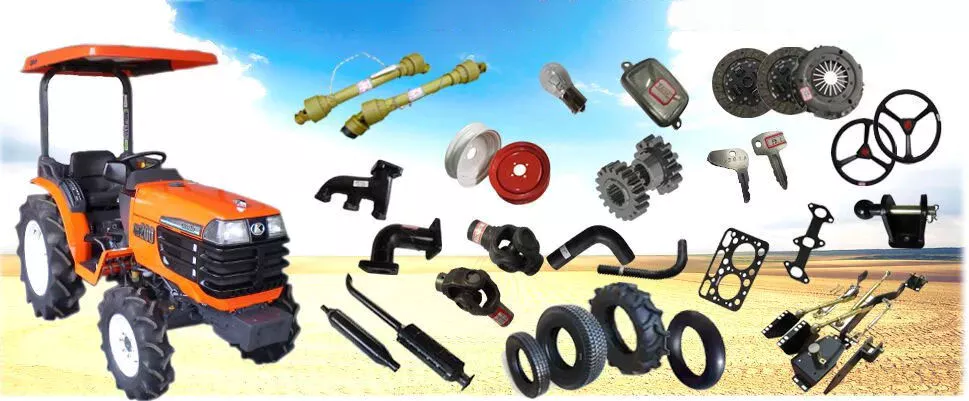
What factors should be considered when selecting the right PTO drive shaft for an application?
When selecting the right PTO (Power Take-Off) drive shaft for an application, several important factors should be considered to ensure optimal performance, safety, and compatibility. Here’s a detailed explanation of the key factors to consider:
1. Power and Torque Requirements:
The power and torque requirements of the application are crucial considerations. It’s essential to determine the maximum power and torque output of the primary power source (e.g., engine, transmission) and match it with the drive shaft’s capacity. Selecting a drive shaft that can handle the required power and torque levels ensures efficient power transmission and prevents overloading or damage to the drive shaft and connected equipment.
2. Speed and RPM Range:
The speed and RPM (Rotations Per Minute) range of the equipment and the primary power source should be taken into account. The drive shaft’s design should be capable of accommodating the desired speed range while maintaining smooth power transmission. It is important to select a drive shaft that can handle the intended operating speeds without excessive vibration, binding, or loss of power.
3. Equipment Size and Configuration:
The size and configuration of the equipment or implement being powered by the PTO drive shaft are crucial factors. The drive shaft’s length should be adjustable or chosen appropriately to ensure proper alignment between the primary power source and the implement input shaft. Additionally, consider any space limitations or clearance requirements within the equipment that may affect the choice of drive shaft configuration.
4. PTO Shaft Connection Type:
The type of connection required between the PTO drive shaft and the primary power source and implement is a significant consideration. Common connection types include splined connections, keyway connections, and quick-detach mechanisms. It is essential to ensure compatibility between the drive shaft’s connection type and the corresponding connections on the power source and implement to achieve a secure and reliable attachment.
5. Safety Features:
Safety features are crucial when selecting a PTO drive shaft. Shear pins, clutches, or other overload protection mechanisms should be considered to prevent damage to the drive shaft and associated equipment in the event of a sudden increase in torque or speed. These safety features help protect against accidents and reduce the risk of injury to operators and bystanders.
6. Environmental Conditions:
The environmental conditions in which the drive shaft will be operating should be taken into account. Consider factors such as temperature extremes, moisture, dust, or corrosive environments. It may be necessary to select a drive shaft with appropriate sealing, coating, or material options to ensure reliable performance and durability in the given conditions.
7. Maintenance and Serviceability:
Consider the accessibility and ease of maintenance for the chosen drive shaft. Ensure that routine maintenance tasks such as lubrication, inspection, and potential repairs can be performed conveniently. Easy serviceability helps minimize downtime and ensures the longevity of the drive shaft.
8. Compliance with Standards and Regulations:
Ensure that the selected PTO drive shaft complies with relevant industry standards and safety regulations. This includes standards for power transmission components, such as ISO 500-1 for PTO drive shafts. Compliance with these standards ensures that the drive shaft meets necessary quality, safety, and performance requirements.
By considering factors such as power and torque requirements, speed range, equipment size and configuration, PTO shaft connection type, safety features, environmental conditions, maintenance and serviceability, and compliance with standards and regulations, one can select the right PTO drive shaft that best suits the specific application’s needs. Proper selection ensures efficient power transmission, safety, and long-term reliability of the equipment.


editor by CX 2024-02-16