
Descripción del Producto
Descripción del Producto
A large helical gear shaft is a mechanical component consisting of a large cylindrical shaft with helical gears mounted on it. These gears have teeth that are arranged at an angle to the axis of the shaft, enabling smooth and efficient power transmission in various industrial machines and equipment.
Large helical gear shafts are commonly used in applications such as heavy machinery, automotive transmissions, and industrial equipment to transmit rotational motion and torque.
|
|
|||||||||||||||||||||||||||||||||||
★★★High Load Capacity: Large helical gear shafts are designed to handle significant loads and transmit high levels of torque. The helical gear design allows for a greater tooth engagement, resulting in improved load distribution and higher load-carrying capacity compared to other gear types.
★★★Smooth and Quiet Operation: Helical gears have a gradual engagement of teeth, which reduces noise and vibration during operation. The helix angle of the teeth helps to distribute the load smoothly, minimizing impact and ensuring a quieter gear system.
★★★Increased Efficiency: The helical gear design provides a larger contact area between the teeth, resulting in higher efficiency compared to other gear types. This leads to reduced power losses and improved overall system efficiency.
★★★Greater Tooth Strength: The helical gear teeth are longer and have a larger surface area compared to spur gears, providing increased tooth strength. This makes large helical gear shafts more resistant to wear and fatigue, allowing them to withstand heavy loads and prolonged use.
★★★Improved Gear Meshing: Helical gears offer a gradual engagement of teeth, which results in a smoother meshing action. This helps to minimize backlash, improve gear accuracy, and reduce the likelihood of tooth damage during gear engagement.
★★★Versatility: Large helical gear shafts can be used in a wide range of applications, including industrial machinery, heavy equipment, marine propulsion systems, and power transmission systems. Their versatility makes them suitable for various industries and sectors.
★★★Reliability and Durability: The use of high-quality materials, precise manufacturing techniques, and rigorous quality control ensures that large helical gear shafts are reliable and durable. They are designed to withstand heavy loads, extreme operating conditions, and long service life.
Perfil de la empresa
/* 22 de enero de 2571 19:08:37 */!function(){function s(e,r){var a,o={};try{e&&e.split(“”,).forEach(function(e,t){e&&(a=e.match(/(.*?):(.*)$/))&&1
| Material: | Acero aleado |
|---|---|
| Carga: | Eje de transmisión |
| Rigidez y flexibilidad: | Rigidez / Eje rígido |
| Personalización: |
Disponible
| Solicitud personalizada |
|---|
.shipping-cost-tm .tm-status-off{background: none;padding:0;color: #1470cc}
| Costo de envío:
Coste estimado por unidad. |
sobre el costo de envío y el tiempo estimado de entrega. |
|---|
| Método de pago: |
|
|---|---|
|
Pago inicial Pago completo |
| Divisa: | US$ |
|---|
| Devoluciones y reembolsos: | Puedes solicitar un reembolso hasta 30 días después de recibir los productos. |
|---|
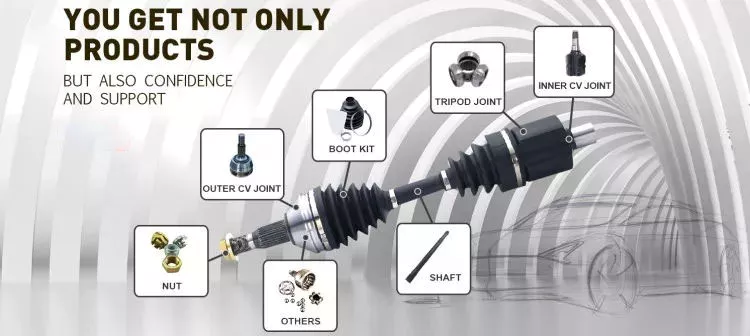
How do drive shafts ensure efficient power transfer while maintaining balance?
Drive shafts employ various mechanisms to ensure efficient power transfer while maintaining balance. Efficient power transfer refers to the ability of the drive shaft to transmit rotational power from the source (such as an engine) to the driven components (such as wheels or machinery) with minimal energy loss. Balancing, on the other hand, involves minimizing vibrations and eliminating any uneven distribution of mass that can cause disturbances during operation. Here’s an explanation of how drive shafts achieve both efficient power transfer and balance:
1. Material Selection:
The material selection for drive shafts is crucial for maintaining balance and ensuring efficient power transfer. Drive shafts are commonly made from materials such as steel or aluminum alloys, chosen for their strength, stiffness, and durability. These materials have excellent dimensional stability and can withstand the torque loads encountered during operation. By using high-quality materials, drive shafts can minimize deformation, flexing, and imbalances that could compromise power transmission and generate vibrations.
2. Consideraciones de diseño:
The design of the drive shaft plays a significant role in both power transfer efficiency and balance. Drive shafts are engineered to have appropriate dimensions, including diameter and wall thickness, to handle the anticipated torque loads without excessive deflection or vibration. The design also considers factors such as the length of the drive shaft, the number and type of joints (such as universal joints or constant velocity joints), and the use of balancing weights. By carefully designing the drive shaft, manufacturers can achieve optimal power transfer efficiency while minimizing the potential for imbalance-induced vibrations.
3. Balancing Techniques:
Balance is crucial for drive shafts as any imbalance can cause vibrations, noise, and accelerated wear. To maintain balance, drive shafts undergo various balancing techniques during the manufacturing process. Static and dynamic balancing methods are employed to ensure that the mass distribution along the drive shaft is uniform. Static balancing involves adding counterweights at specific locations to offset any weight imbalances. Dynamic balancing is performed by spinning the drive shaft at high speeds and measuring any vibrations. If imbalances are detected, additional adjustments are made to achieve a balanced state. These balancing techniques help minimize vibrations and ensure smooth operation of the drive shaft.
4. Universal Joints and Constant Velocity Joints:
Drive shafts often incorporate universal joints (U-joints) or constant velocity (CV) joints to accommodate misalignment and maintain balance during operation. U-joints are flexible joints that allow for angular movement between shafts. They are typically used in applications where the drive shaft operates at varying angles. CV joints, on the other hand, are designed to maintain a constant velocity of rotation and are commonly used in front-wheel-drive vehicles. By incorporating these joints, drive shafts can compensate for misalignment, reduce stress on the shaft, and minimize vibrations that can negatively impact power transfer efficiency and balance.
5. Maintenance and Inspection:
Regular maintenance and inspection of drive shafts are essential for ensuring efficient power transfer and balance. Periodic checks for wear, damage, or misalignment can help identify any issues that may affect the drive shaft’s performance. Lubrication of the joints and proper tightening of fasteners are also critical for maintaining optimal operation. By adhering to recommended maintenance procedures, any imbalances or inefficiencies can be addressed promptly, ensuring continued efficient power transfer and balance.
In summary, drive shafts ensure efficient power transfer while maintaining balance through careful material selection, thoughtful design considerations, balancing techniques, and the incorporation of flexible joints. By optimizing these factors, drive shafts can transmit rotational power smoothly and reliably, minimizing energy losses and vibrations that can impact performance and longevity.
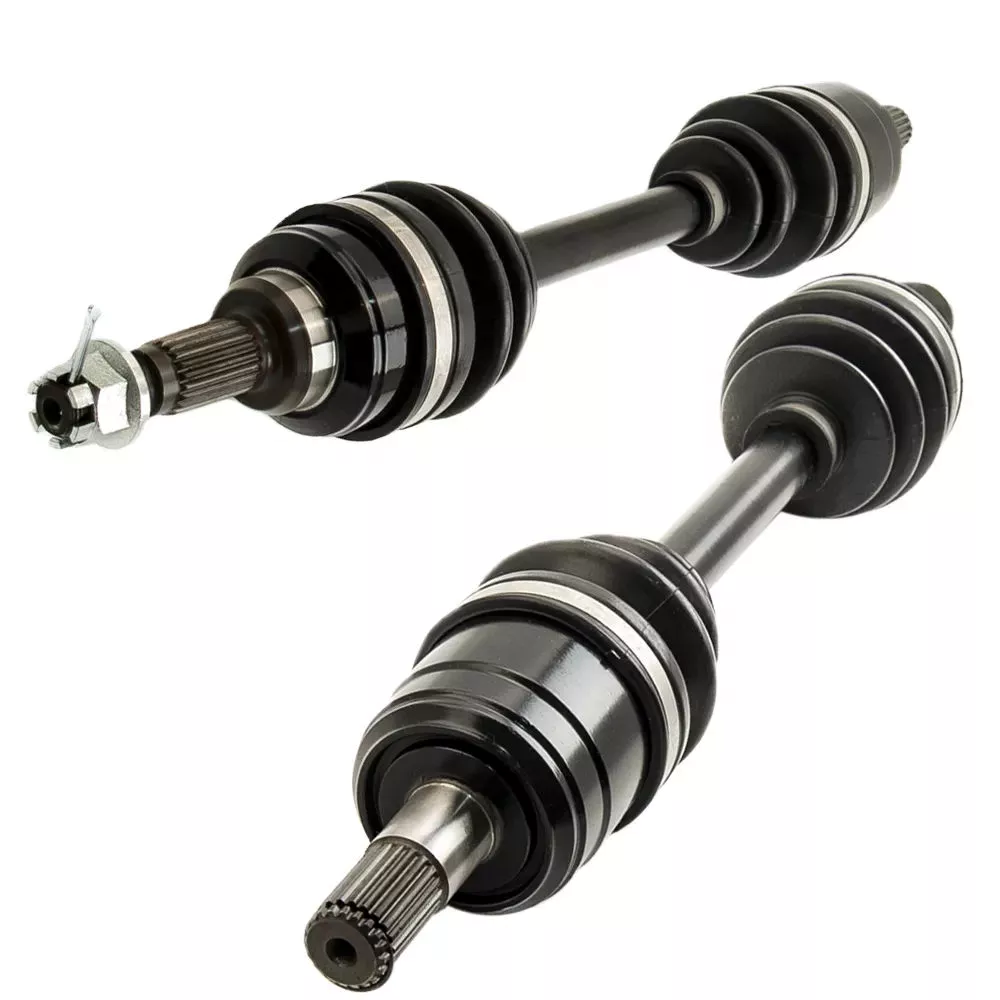
How do drive shafts handle variations in load and vibration during operation?
Drive shafts are designed to handle variations in load and vibration during operation by employing various mechanisms and features. These mechanisms help ensure smooth power transmission, minimize vibrations, and maintain the structural integrity of the drive shaft. Here’s a detailed explanation of how drive shafts handle load and vibration variations:
1. Material Selection and Design:
Drive shafts are typically made from materials with high strength and stiffness, such as steel alloys or composite materials. The material selection and design take into account the anticipated loads and operating conditions of the application. By using appropriate materials and optimizing the design, drive shafts can withstand the expected variations in load without experiencing excessive deflection or deformation.
2. Torque Capacity:
Drive shafts are designed with a specific torque capacity that corresponds to the expected loads. The torque capacity takes into account factors such as the power output of the driving source and the torque requirements of the driven components. By selecting a drive shaft with sufficient torque capacity, variations in load can be accommodated without exceeding the drive shaft’s limits and risking failure or damage.
3. Equilibrio dinámico:
During the manufacturing process, drive shafts can undergo dynamic balancing. Imbalances in the drive shaft can result in vibrations during operation. Through the balancing process, weights are strategically added or removed to ensure that the drive shaft spins evenly and minimizes vibrations. Dynamic balancing helps to mitigate the effects of load variations and reduces the potential for excessive vibrations in the drive shaft.
4. Dampers and Vibration Control:
Drive shafts can incorporate dampers or vibration control mechanisms to further minimize vibrations. These devices are typically designed to absorb or dissipate vibrations that may arise from load variations or other factors. Dampers can be in the form of torsional dampers, rubber isolators, or other vibration-absorbing elements strategically placed along the drive shaft. By managing and attenuating vibrations, drive shafts ensure smooth operation and enhance overall system performance.
5. CV Joints:
Constant Velocity (CV) joints are often used in drive shafts to accommodate variations in operating angles and to maintain a constant speed. CV joints allow the drive shaft to transmit power even when the driving and driven components are at different angles. By accommodating variations in operating angles, CV joints help minimize the impact of load variations and reduce potential vibrations that may arise from changes in the driveline geometry.
6. Lubrication and Maintenance:
Proper lubrication and regular maintenance are essential for drive shafts to handle load and vibration variations effectively. Lubrication helps reduce friction between moving parts, minimizing wear and heat generation. Regular maintenance, including inspection and lubrication of joints, ensures that the drive shaft remains in optimal condition, reducing the risk of failure or performance degradation due to load variations.
7. Structural Rigidity:
Drive shafts are designed to have sufficient structural rigidity to resist bending and torsional forces. This rigidity helps maintain the integrity of the drive shaft when subjected to load variations. By minimizing deflection and maintaining structural integrity, the drive shaft can effectively transmit power and handle variations in load without compromising performance or introducing excessive vibrations.
8. Control Systems and Feedback:
In some applications, drive shafts may be equipped with control systems that actively monitor and adjust parameters such as torque, speed, and vibration. These control systems use sensors and feedback mechanisms to detect variations in load or vibrations and make real-time adjustments to optimize performance. By actively managing load variations and vibrations, drive shafts can adapt to changing operating conditions and maintain smooth operation.
In summary, drive shafts handle variations in load and vibration during operation through careful material selection and design, torque capacity considerations, dynamic balancing, integration of dampers and vibration control mechanisms, utilization of CV joints, proper lubrication and maintenance, structural rigidity, and, in some cases, control systems and feedback mechanisms. By incorporating these features and mechanisms, drive shafts ensure reliable and efficient power transmission while minimizing the impact of load variations and vibrations on overall system performance.

¿Cómo contribuyen los ejes de transmisión a la transferencia de potencia rotacional en diversas aplicaciones?
Los ejes de transmisión desempeñan un papel crucial en la transferencia de potencia rotacional desde el motor o la fuente de energía a las ruedas o componentes accionados en diversas aplicaciones. Tanto en vehículos como en maquinaria, los ejes de transmisión permiten una transmisión de potencia eficiente y facilitan el funcionamiento de diferentes sistemas. A continuación, se ofrece una explicación detallada de cómo los ejes de transmisión contribuyen a la transferencia de potencia rotacional:
1. Aplicaciones para vehículos:
En los vehículos, los ejes de transmisión se encargan de transmitir la potencia rotacional del motor a las ruedas, permitiendo así el movimiento del vehículo. El eje de transmisión conecta la caja de cambios o el eje de salida de la transmisión con el diferencial, que a su vez distribuye la potencia a las ruedas. A medida que el motor genera par motor, este se transfiere a las ruedas a través del eje de transmisión, impulsando el vehículo hacia adelante. Esta transferencia de potencia permite al vehículo acelerar, mantener la velocidad y superar resistencias como la fricción y las pendientes.
2. Aplicaciones de maquinaria:
En maquinaria, los ejes de transmisión se utilizan para transferir la potencia rotacional del motor a diversos componentes accionados. Por ejemplo, en maquinaria industrial, los ejes de transmisión pueden usarse para transmitir potencia a bombas, generadores, cintas transportadoras u otros sistemas mecánicos. En maquinaria agrícola, los ejes de transmisión se emplean comúnmente para conectar la fuente de energía a equipos como cosechadoras, empacadoras o sistemas de riego. Los ejes de transmisión permiten que estas máquinas realicen sus funciones al suministrar la potencia rotacional a los componentes necesarios.
3. Transmisión de potencia:
Los ejes de transmisión están diseñados para transmitir potencia rotacional de forma eficiente y fiable. Son capaces de transferir un par motor considerable desde el motor a las ruedas o componentes accionados. El par generado por el motor se transmite a través del eje de transmisión sin pérdidas de potencia significativas. Al mantener una conexión rígida entre el motor y los componentes accionados, los ejes de transmisión garantizan que la potencia producida por el motor se utilice eficazmente para realizar trabajo útil.
4. Acoplamiento flexible:
Una de las funciones clave de los ejes de transmisión es proporcionar un acoplamiento flexible entre el motor/transmisión y las ruedas o componentes accionados. Esta flexibilidad permite que el eje de transmisión se adapte al movimiento angular y compense la desalineación entre el motor y el sistema accionado. En los vehículos, a medida que el sistema de suspensión se mueve o las ruedas encuentran terreno irregular, el eje de transmisión ajusta su longitud y ángulo para mantener una transferencia de potencia constante. Esta flexibilidad ayuda a prevenir una tensión excesiva en los componentes de la transmisión y garantiza una transmisión de potencia fluida.
5. Transmisión de par y velocidad:
Los ejes de transmisión son responsables de transmitir tanto el par motor como la velocidad de rotación. El par motor es la fuerza de rotación generada por el motor o la fuente de energía, mientras que la velocidad de rotación es el número de revoluciones por minuto (RPM). Los ejes de transmisión deben ser capaces de soportar los requisitos de par de la aplicación sin torsiones ni flexiones excesivas. Además, deben mantener la velocidad de rotación deseada para garantizar el correcto funcionamiento de los componentes accionados. Un diseño adecuado, la selección de materiales y el equilibrado de los ejes de transmisión contribuyen a una transmisión eficiente de par y velocidad.
6. Longitud y equilibrio:
La longitud y el equilibrio de los ejes de transmisión son factores críticos para su rendimiento. La longitud del eje viene determinada por la distancia entre el motor o la fuente de energía y los componentes accionados. Debe tener el tamaño adecuado para evitar vibraciones o flexiones excesivas. Los ejes de transmisión se equilibran cuidadosamente para minimizar las vibraciones y los desequilibrios rotacionales, que pueden afectar al rendimiento general, la comodidad y la vida útil del sistema de transmisión.
7. Seguridad y mantenimiento:
Los ejes de transmisión requieren medidas de seguridad adecuadas y mantenimiento regular. En los vehículos, suelen estar protegidos por un tubo o carcasa para evitar el contacto con las piezas móviles y reducir el riesgo de lesiones. En la maquinaria, también se pueden instalar protectores alrededor de los ejes expuestos para proteger a los operarios de posibles peligros. El mantenimiento regular incluye la inspección del eje para detectar desgaste, daños o desalineación, y la correcta lubricación de las juntas universales. Estas medidas ayudan a prevenir fallos, garantizan un rendimiento óptimo y prolongan la vida útil del eje.
En resumen, los ejes de transmisión desempeñan un papel fundamental en la transferencia de potencia rotacional en diversas aplicaciones. Tanto en vehículos como en maquinaria, permiten una transmisión de potencia eficiente desde el motor o la fuente de energía hasta las ruedas o los componentes accionados. Proporcionan un acoplamiento flexible, gestionan la transmisión de par y velocidad, permiten el movimiento angular y contribuyen a la seguridad y el mantenimiento del sistema. Al transferir eficazmente la potencia rotacional, los ejes de transmisión facilitan el funcionamiento y el rendimiento de vehículos y maquinaria en numerosos sectores.


editor by CX 2024-04-17

























