
High-Performance PTO Drive Shafts for Forage Harvesters
Engineered for Australia’s Most Demanding Agricultural Environments
Exceeding AS/NZS Safety Standards | Unmatched Torsional Rigidity
Core Technology Quick Read: Breaking the Power Transmission Bottleneck
Modern forage harvesters demand absolute reliability. Operating a heavy-duty cutterhead, blower, and feed rollers simultaneously requires a trục truyền động PTO that can withstand massive torque spikes without catastrophic failure. In our 20 years of engineering field solutions for broadacre farms across Australia, we discovered that standard commercial shafts frequently fail due to the intense abrasive dust and extreme operational angles common in regional silage harvesting.
Engineer’s Field Log: The Torsional Stress Paradox
“During a 2018 deployment in the Darling Downs, we analyzed a competitor’s shattered yoke. The failure wasn’t due to constant load, but the micro-impacts of engaging the forage chopper under load. We completely redesigned the EVER-POWER cross and bearing kit utilizing 20CrMnTi alloy steel, carburized to achieve a surface hardness of HRC 58-62 while retaining a ductile core. The result? Operates consistently at 1000 RPM delivering up to 3800 Nm of peak torque, effectively extending component lifespan by 45% compared to standard carbon steel alternatives.”
As a premier pto shaft manufacturer, EVER-POWER implements wide-angle constant velocity (CV) joints capable of an 80-degree articulation. This ensures seamless power delivery during tight headland turns, eliminating the vibration and chatter that typically destroy gearbox input bearings.
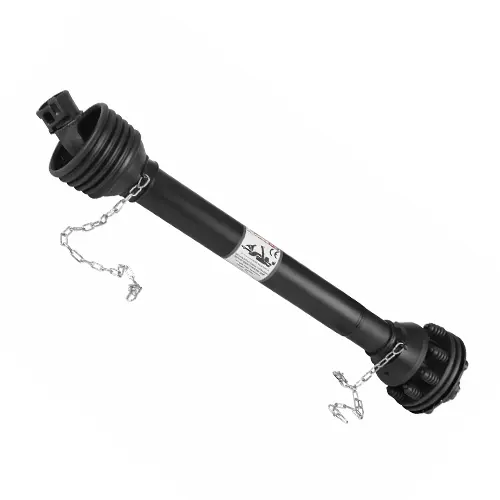
Kinematic Architecture: PTO Shaft Integration in Forage Harvesters
To fully grasp the engineering behind our products, one must examine the precise location and function of the trục PTO của máy kéo within the machinery. The shaft acts as the critical umbilical cord transferring rotational kinetic energy from the tractor’s engine to the harvester’s primary drive mechanism.
1. The Primary Universal Joint (Tractor End)
Connected directly to the tractor’s splined output. This joint accommodates the vertical displacement caused by uneven terrain. By employing precision needle roller bearings, it neutralizes angular velocity fluctuations, ensuring the downstream implements receive a steady torque curve.
2. The Telescopic Profile Tubes
Constructed with heavy-wall star, lemon, or triangular profiles. As the harvester navigates contours or articulates behind the tractor, these internally coated tubes slide seamlessly against each other, absorbing geometric distance variations without binding.
3. Overload Protection Clutch (Implement End)
Positioned immediately before the harvester’s main gearbox. If the chopper drum ingests a foreign object (like a rock or heavy branch), the friction clutch or shear bolt reacts in milliseconds, severing the power flow to prevent total transmission annihilation.
4. Safety Shielding Infrastructure
A stationary outer guard envelops the rotating core. Secured by anti-rotation chains, this UV-resistant polymer barrier ensures operator safety during operation, fully complying with stringent global WHS directives.
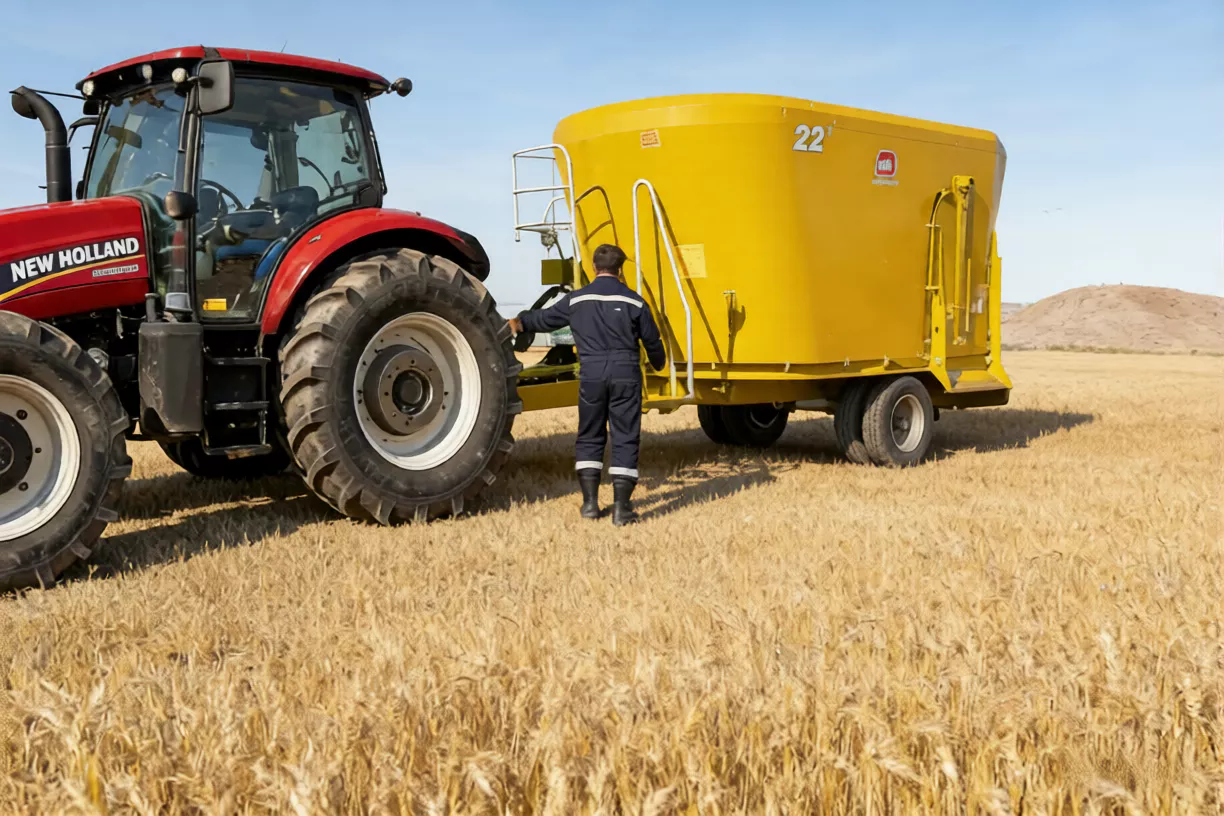
Engineering Specifications: 28-Point Parameter Matrix
Vague descriptions are unacceptable in heavy industrial agriculture. Below is the precise engineering data for our heavy-duty series (Series 6 / Series 8 equivalent) specifically calibrated for high-capacity forage harvesters.
| Technical Parameter | Standard Specification | Customization Range / Notes |
|---|---|---|
| 1. Tractor Horsepower Rating | 150 HP – 250 HP | Heavy-duty upgrades available for 350+ HP |
| 2. Operating Speed (RPM) | 1000 RPM continuous | Compatible with 540 RPM systems |
| 3. Rated Dynamic Torque | 2800 Nm | Dependent on specific tube profiling |
| 4. Maximum Yield Torque | 4200 Nm | Ensures survival during shock loads |
| 5. U-Joint Cross Dimensions | 34.9mm x 106mm (Series 8) | Range: 30.2x92mm to 41x118mm |
| 6. Cross Journal Material | 20CrMnTi Alloy Steel | Carburized heat treatment (HRC 58-62) |
| 7. Tractor End Spline | 1-3/8″ 21-Spline | 1-3/4″ 20-Spline option available |
| 8. Implement End Yoke | Friction Clutch with Flange | Keyway, Shear bolt, or Overrunning clutch |
| 9. Telescopic Tube Profile | Star Profile (Heavy Duty) | Lemon or Triangular tubing upon request |
| 10. Outer Tube Wall Thickness | 4.5 mm | Engineered to prevent torsional buckling |
| 11. Minimum Collapsed Length | 1210 mm (Center to Center) | Custom cut from 800mm to 2000mm |
| 12. Maximum Safe Extension | + 350 mm | Requires minimum 1/3 tube overlap |
| 13. Wide Angle CV Joint | Tractor Side Standard | Dual CV joints for extreme offset conditions |
| 14. Max CV Deflection Angle | 80° (Short duration turns) | Continuous operation should remain < 25° |
| 15. Safety Clutch Mechanism | 4-Disc Friction Clutch | Combined Overrunning & Friction available |
| 16. Clutch Slip Torque Setting | 2400 Nm (Factory Preset) | Adjustable via spring tension bolts |
| 17. Dynamic Balancing Grade | ISO 1940-1 Grade G6.3 | Crucial for 1000 RPM to prevent vibration |
| 18. Shielding Material | High-Density Polyethylene | UV stabilized for Australian sun exposure |
| 19. Operating Temperature Range | -25°C to +85°C | Maintains integrity in extreme climates |
| 20. Bearing Sealing System | Triple-Lip Labyrinth Seal | Blocks fine dust and crop juice ingress |
| 21. Lubrication Interval | Every 50 Operating Hours | Extended maintenance-free options available |
| 22. Connection Locking | Quick Disconnect Pin | Push-pull collar locking optional |
| 23. Surface Treatment | Electrophoretic Deposition (EPD) | Superior rust prevention vs standard paint |
| 24. Compliance & Certification | CE, ISO 5673, AS/NZS 1121.4 | Includes safety retaining chains |
| 25. Total Assembly Weight | Approx. 32 kg | Varies based on clutch and tube length |
Australia Extreme Condition Practical Guide & Compliance Protocols
The Australian agricultural landscape is unforgiving. A component that survives in mild European climates will often disintegrate under the intense heat, abrasive dust, and vast acreages of the Outback. Our engineering team has mapped specific product enhancements to tackle the unique topographical and climatic challenges across the states.
Queensland (QLD) – High Humidity & Corrosion
In the sugarcane and tropical forage regions of Queensland, persistent moisture turns dust into a grinding paste. Standard bare-metal telescoping tubes rust and bind within weeks. We deploy EPD-treated steel and multi-lip nitrile seals that guarantee zero moisture intrusion, maintaining slideability during the humid harvest season.
New South Wales (NSW) & Victoria (VIC) – Topographical Undulation
The vast, rolling hills require constant adjustment of the harvester’s draft angle. Our standard inclusion of an 80-degree Wide Angle CV Joint is specifically tailored for these states. It permits continuous, high-speed forage cutting even while executing sharp headland maneuvers, completely eradicating the PTO chatter that damages gearbox bearings.
Western Australia (WA) – Severe UV Radiation
Under the blistering WA sun, standard plastic guards become brittle and shatter, exposing lethal rotating parts. We utilize a proprietary UV-stabilized high-density polymer for our shielding, which resists degradation and impact damage for years, ensuring ongoing safety compliance on remote stations.
Safety Compliance: AS/NZS 1121.4 Mandates
SafeWork Australia strictly enforces machinery guarding. Every EVER-POWER shaft shipped to Australia exceeds AS/NZS 1121.4 (Agricultural tractor PTO safeguards). This includes fully enclosed, non-rotating master shields with clearly marked ISO safety decals and robust anti-rotation chains tested to withstand severe entanglement forces.
Universal Compatibility Matrix & Brand Interchangeability
True engineering prowess lies not just in original design, but in seamless integration with existing global machinery ecosystems. Our powertrains are dimensionally matched to replace components on major European and American agricultural platforms, minimizing your downtime.
EVER-POWER PTO components are precision-engineered to provide a direct drop-in replacement for leading systems including:
Comer Industries® (V/T Series), GKN Walterscheid® (W/WWE Series), Bondioli & Pavesi® (SFT/Global Series), and Weasler® (AW/Metric Series).
Powertrain Selection Guide: 3 Steps to Assured Fitment
Ordering the incorrect shaft specification is a costly error that delays harvests. Use this rigorous decision matrix to identify the exact configuration for your forage harvester.
| Decision Phase | Crucial Inspection Point | Engineering Advice & Risk Mitigation |
|---|---|---|
| Step 1: Ascertain Closed Length | Measure the exact distance from the tractor output locking groove to the implement input groove while parked in a straight, horizontal line. | Always purchase a size slightly longer than required. The tubes can be safely cut down on-site. Purchasing too short will lead to catastrophic tube separation under extension. |
| Step 2: Spline & RPM Verification | Identify the tractor output: Is it a 6-spline (540 RPM) or a 21-spline / 20-spline (1000 RPM)? | Mismatched splines physically won’t fit. Forcing a 540 RPM implement to run at 1000 RPM will cause the harvester’s cutting drum to over-speed and disintegrate. |
| Step 3: Clutch Protection Type | Evaluate the implement mass. Does the machine have high rotational inertia (like a heavy chopper flywheel)? | High-inertia machines must be equipped with an Overrunning Clutch (freewheel) to prevent the implement from pushing the tractor forward when the PTO is disengaged. Combine this with a Friction Clutch for blockage protection. |
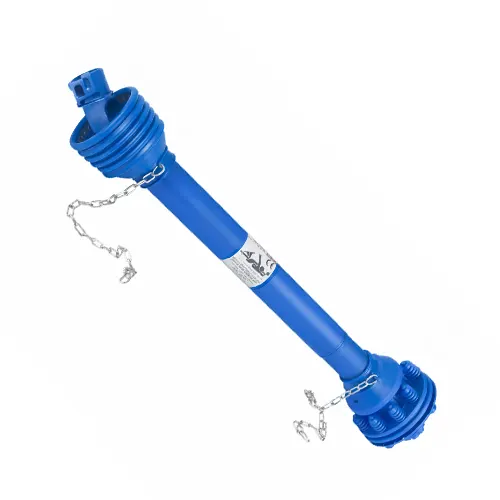
Targeted Installation Protocol for Forage Equipment
- Safety Immobilization: Turn off the tractor engine, remove the ignition key, and engage the parking brake. Ensure the harvester is resting on solid, level ground.
- Spline Preparation: Aggressively clean both the tractor and implement splined shafts with a wire brush to remove rust and compacted dirt. Apply a liberal coat of premium lithium-based extreme pressure (EP) grease.
- Tractor Connection: Depress the quick-release pin on the tractor-side yoke (often the wide-angle joint end). Slide it onto the shaft until the pin snaps audibly into the locking groove. Pull back forcefully to confirm positive engagement.
- Implement & Clutch Attachment: Slide the implement end (typically housing the friction or shear-bolt clutch) onto the harvester’s gearbox input shaft. Secure firmly using the tapered locking bolt or designated locking collar mechanism.
- Overlap Kinematic Check: Carefully raise, lower, and turn the tractor to its maximum limits. Verify that the telescopic tubes retain at least 1/3 overlap at full extension, and possess at least 40mm of clearance at maximum compression to prevent bottoming out.
- Guard Chain Anchorage: Attach the anti-rotation chains located on the plastic shields to stationary points on both the tractor and implement. Allow enough slack to accommodate turning without ripping the chains from their mounts.
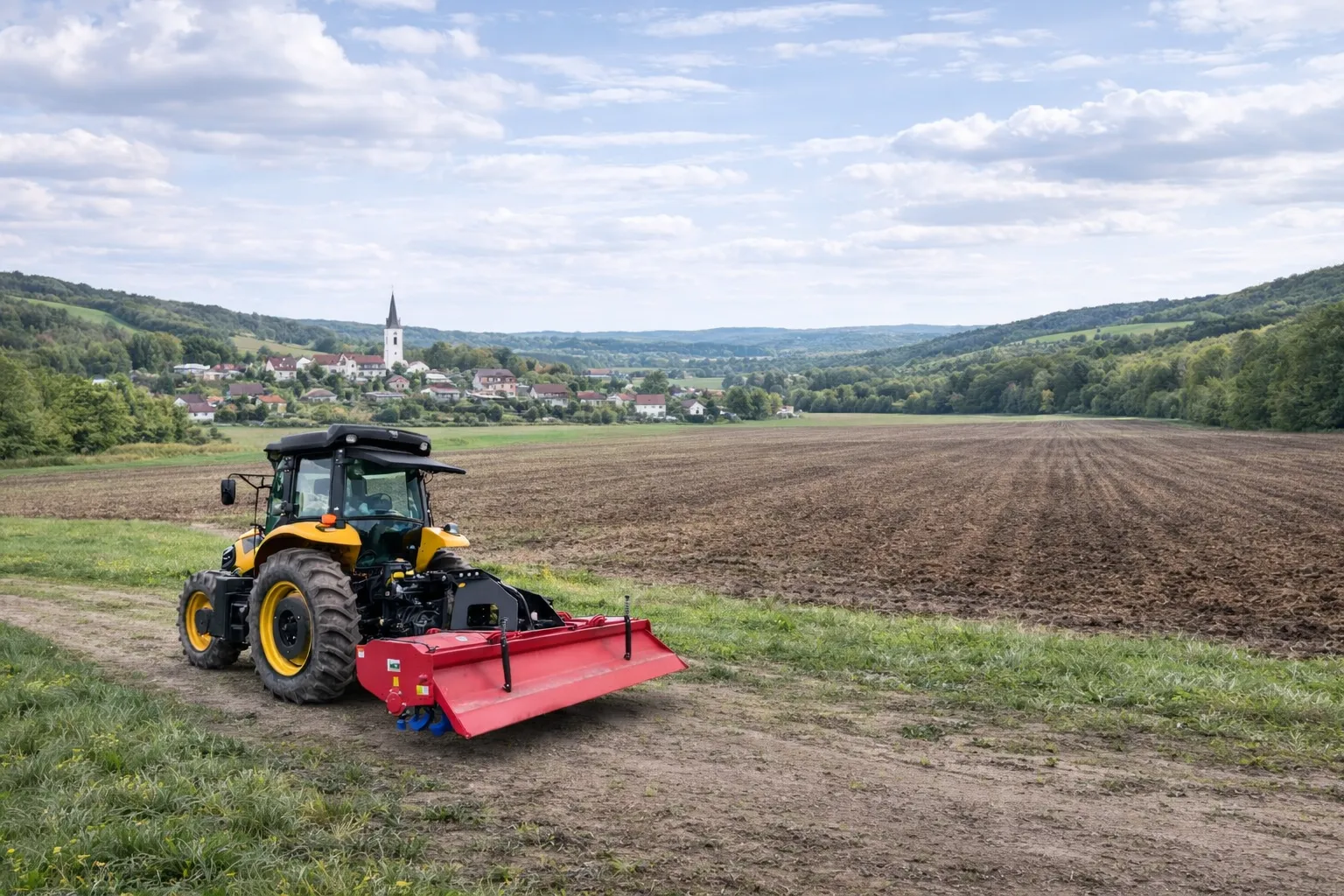
Operational Troubleshooting & Resolution Matrix
When machinery exhibits anomalous behavior in the field, utilize this diagnostic logic to isolate and neutralize the fault quickly.
Engineering Resolution: Immediately shut down. Separate the shaft halves and re-insert them ensuring the yokes align perfectly. If the tube is bent, it cannot be straightened safely; the entire shaft must be replaced to prevent gearbox destruction.
Engineering Resolution: Disengage PTO immediately. Clear the blockage in the harvester. If smoke occurs under normal load, measure the spring length against the manual specifications and tighten accordingly. Replace friction discs if thickness is below minimum tolerances. Always “slip” the clutch intentionally at the start of the season to unseize it.
Engineering Resolution: Forcefully separate the two halves using a winch if necessary. Clean the profiles completely with an industrial solvent. Re-coat generously with a high-quality EP grease before reassembly.
Local Industry Application Cases: Engineer Field Logs
Theoretical specifications mean nothing until proven in the dirt. Here are direct excerpts from EVER-POWER engineering deployments across five key Australian agricultural hubs, detailing humanized problem-solving and real-world ROI.
📍 Sydney Region (NSW) – Large Scale Maize Silage
“Client Pain Point: ‘Our standard PTOs keep shattering at the U-joints during heavy silage cutting, killing our harvest margins with days of downtime.'”
EVER-POWER Solution: By switching to our Series 8 wide-angle PTO with a heavy-duty friction clutch, the client in the greater Sydney basin eliminated U-joint breakage. Result: Zero downtime in the 2024 season, increasing their daily harvest yield by 22%.
📍 Melbourne Surrounds (VIC) – High-Fibre Baling & Chopping
“Client Pain Point: ‘Wet, heavy crops are constantly jamming the chopper, and the sheer force is twisting our tractor output splines.'”
EVER-POWER Solution: We fitted a custom-calibrated 4-plate friction clutch assembly. When a jam occurs, the clutch slips smoothly rather than transferring shock to the tractor. Client Feedback: “It’s the ultimate insurance policy for our $200k tractor.”
📍 Brisbane Hinterland (QLD) – Tropical High-Moisture Farming
“Client Pain Point: ‘The mud and humidity here destroy bearings in a matter of weeks. The grease washes out instantly.'”
EVER-POWER Solution: Deployed our extreme-environment cross kits featuring triple-lip labyrinth seals. Result: The shafts operated for 1500 continuous hours without a single bearing seizing, radically reducing maintenance labor.
📍 Perth Outskirts (WA) – Dry, High-Dust Broadacre
“Client Pain Point: ‘The sun bakes the safety guards until they crack and fall off, meaning we fail our safety audits every year.'”
EVER-POWER Solution: Upgraded the fleet with our UV-stabilized, high-density polyethylene shielding. Result: Passed SafeWork inspections two years running with no guard degradation, even when stored outdoors.
📍 Adelaide Regions (SA) – Mixed Terrain Contracting
“Client Pain Point: ‘Our operators struggle to connect heavy shafts to different tractors multiple times a day. The pin mechanisms are stiff and dangerous.'”
EVER-POWER Solution: Integrated our Quick-Push Pull Collar mechanisms. Result: Operators can now couple the shafts single-handedly in seconds, reducing fatigue and hand injuries significantly.
Expert Knowledge Base: 10 Common Technical Inquiries Answered
1. How frequently should I lubricate the universal joints?
Standard intervals dictate re-greasing every 50 operating hours with NLGI 2 lithium-based grease. However, in extremely dusty or wet conditions, we recommend daily greasing (every 8-10 hours) to purge contaminated grease from the seals.
2. Can I safely cut a PTO shaft if it is too long for my tractor?
Yes. Most replacement shafts are designed to be cut to size. You must ensure that both the inner/outer metal tubes and the plastic shield tubes are cut by exactly the same amount. Deburr the edges thoroughly before reassembly.
3. What is the difference between a shear bolt and a friction clutch?
A shear bolt provides a hard cut-off; it physically breaks under overload and must be replaced to resume work. A friction clutch consists of discs that slip under extreme torque, protecting the system, and then automatically re-engage once the load normalizes. For forage harvesters, friction clutches are highly recommended.
4. Why do I need an overrunning clutch (freewheel)?
High-mass implements like choppers build massive rotational inertia. When you disengage the tractor PTO, that inertia can push the power backward through the shaft, propelling the tractor forward dangerously. A freewheel clutch prevents this back-feeding.
5. What are the small chains on the plastic guard used for?
These are anti-rotation chains. They must be clipped to a stationary part of the tractor and the implement. They prevent the plastic safety shield from spinning with the metal shaft, thereby preventing fatal entanglement accidents.
6. How do I correct PTO “phasing” vibrations?
If severe vibrations occur, the shaft may be out of phase. Separate the two halves and re-insert them so that the yokes (the U-shaped forks) on both the tractor end and the implement end are perfectly parallel to each other.
7. Which tube profile is best: Lemon, Star, or Triangular?
Triangular and lemon profiles are excellent for light to medium duty. For high-torque applications like forage harvesting, the multi-lobed Star tube profile offers superior torsional rigidity and prevents twisting under heavy loads.
8. Do your products meet Australian safety compliance?
Absolutely. All our driveshafts and shielding systems are rigorously tested to comply with AS/NZS 1121.4 standards, ensuring maximum operator safety and allowing you to pass WorkSafe audits without issue.
9. How should the shaft be stored during the off-season?
Clean the shaft thoroughly, apply fresh grease to the tubes and bearings, and store it horizontally in a dry, dark place. Prolonged exposure to direct sunlight will accelerate the UV degradation of the plastic shields.
10. How can I identify if my tractor has a 540 or 1000 RPM output?
The most reliable physical indicator is the spline count on the tractor. A 6-spline shaft (1-3/8″ diameter) typically indicates a 540 RPM system. A 21-spline shaft (1-3/8″ diameter) or a 20-spline shaft (1-3/4″ diameter) indicates a 1000 RPM system.
Complete Powertrain Topology: Agricultural Gearboxes & Peripheral Components
An exceptional trục truyền động PTO is merely the transmission vector. Without a robust, immovably solid gearbox to receive, convert, and distribute that kinetic energy, the entire system collapses. EVER-POWER is not merely a shaft manufacturer; we engineer complete mechanical ecosystems. We supply world-class agricultural gearboxes and a comprehensive suite of power transmission peripherals to hundreds of top-tier OEMs globally.
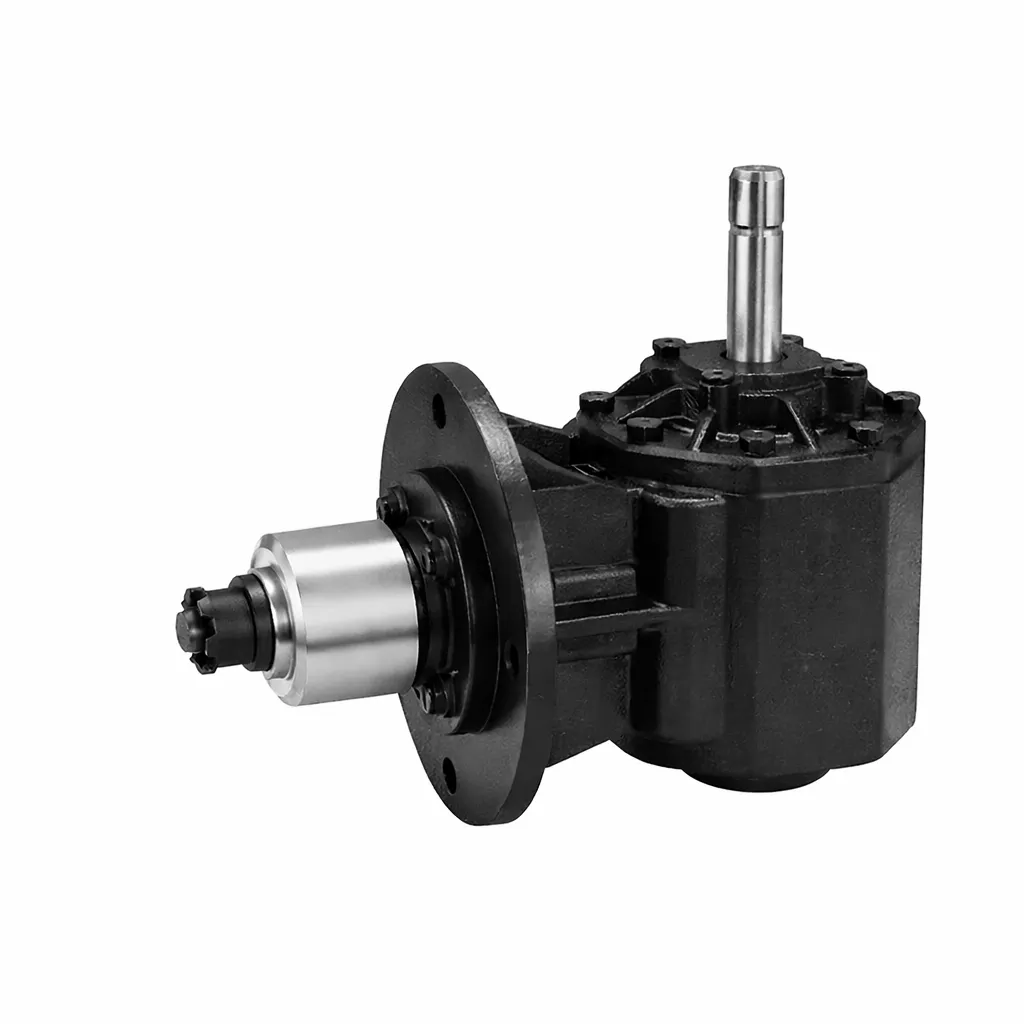
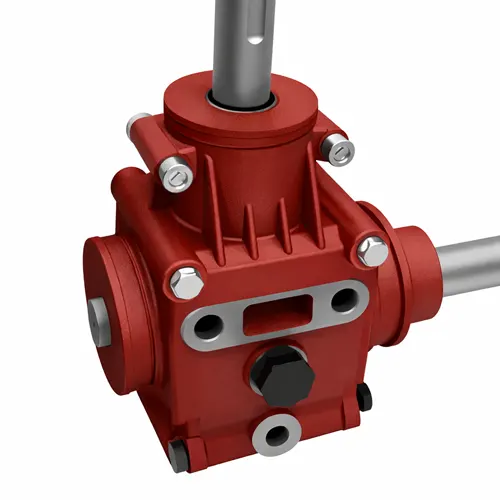
The Heart of the Harvester: Heavy-Duty Agricultural Gearboxes
Within a modern forage harvester, the primary reduction and distribution gearboxes face forces that would shatter standard industrial reducers. When the 1000 RPM power enters the machine, it must be split to drive the massive inertia of the cutting cylinder, the precision speed of the feed rollers, and the high-velocity discharge blower. Our agricultural gearboxes are cast from HT250 or QT450 nodular iron, forming a rigid exoskeleton capable of absorbing frame flex and torsional impacts without allowing internal gear misalignment.
Metallurgical Superiority in Bevel Gears: Inside the casing, the magic happens via our precision-engineered bevel gears. We utilize 20CrMnTi forged alloy steel, subjected to a rigorous carburizing and quenching process. This guarantees a surface hardness of HRC 58-62 for exceptional wear resistance, while maintaining a tough, ductile core to absorb the sudden shock loads of a cutterhead jam. Each gear set is lapped in pairs to ensure perfect contact patches, drastically reducing operating noise and localized heat buildup.
Thermal Management & Lubrication: Australia’s extreme ambient temperatures dictate superior thermal management. Our gearboxes feature expanded oil capacities for superior heat dissipation. We equip them exclusively with FKM (Viton) double-lip oil seals. Unlike standard NBR seals that degrade and leak when gearbox temperatures spike during intense summer harvesting, our FKM seals maintain their integrity, keeping the vital EP gear oil inside and the destructive dust out. We offer a myriad of configurations, including 1:1, 1:1.5, and 1.92:1 ratios, with splined, keyed, or hollow shaft outputs.
Peripheral Power Modules: Sprockets, Gears, and Pulleys
Beyond the main gearbox, the final mile of power delivery often relies on belts and chains. To provide our B2B partners and farm managers with a cohesive, one-stop procurement experience, we manufacture these critical components to the same exacting standards.
High-Carbon Sprockets & Roller Chains
Essential for driving feed rollers and internal conveyors. Our sprockets are CNC machined and induction-hardened at the teeth. Combined with our heavy-duty roller chains, they resist the abrasive elongation and stretching caused by agricultural grit, ensuring timing remains perfect.
Custom Precision Open Gears
For secondary reduction mechanisms exposed to the elements, we manufacture spur and helical gears from 42CrMo materials. They offer unparalleled load-bearing capacity and are optimized to reduce fatigue stress points in high-vibration environments.
Taper-Bored V-Belt Pulleys
Crucial for blower fan drives where belt slip acts as a secondary overload protection. Our cast-iron pulleys utilize quick-release taper bushes for rapid field replacement. Each pulley is dynamically balanced to eliminate high-speed wobble.
In the holistic ecosystem of agricultural machinery, from the raw output of the tractor to the trục PTO của máy kéo bridging the gap, and finally into the agricultural gearbox converting that energy—every millimeter of tolerance matters. We control the entire manufacturing lifecycle to ensure that when you engage the clutch, power flows flawlessly.
Manufacturing Might: Redefining Your Powertrain
EVER-POWER operates state-of-the-art automated forging lines and high-frequency quenching facilities. We understand the physics of torque transfer intimately. Beyond our extensive catalog of standard shafts, our engineering division welcomes bespoke OEM/ODM requests. Provide us with your technical drawings or specific spatial constraints, and we will bridge the gap from concept to mass production.

























