
Опис продукту
Опис продукту
| Model Number | 66-2144-HangZhouXIHU (WEST LAKE) DIS. | ||||
|---|---|---|---|---|---|
| Brand Name | N/A | ||||
| origin | China | ||||
| Small Orders | Accepted | ||||
Key Specifications/ Special Features:
Products Description
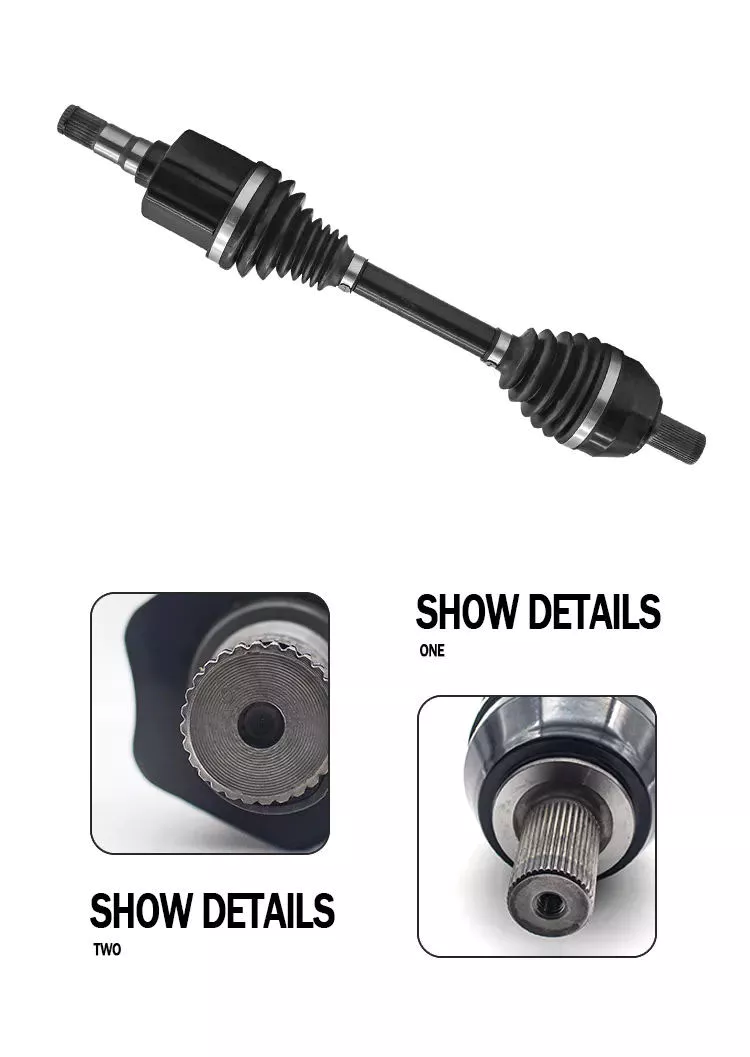
- Product Name: Wholesale Customized All Kind of CV Joint Drive Axle Shaft Assembly Right Front Automotive Parts For Car Truck
- Material: 45# Steel
- Compressed Length: 944 MM
- Place of Origin: ZheJiang Province, China
- Accept: OEM, ODM, OBM.
- Part Type: Automotive Driveshaft,Drive Shaft Assembly.
- Part Name: CV Joint Axle, Constant Velocity Joint, CV-Joint, CV Shaft Axle, CV Joint Assembly,Drive shaft Axles
- Package:
- 1.Parts+plastic bag + pallets/Wooden case
- 2.Parts+white box+ pallets / wooden case ( need each item min qty.: 300 pcs )
Product Parameters
Company Profile
Packaging & Shipping
FAQ
Q1. What is your terms of packing?
A: Generally, we pack our goods in neutral white boxes and brown cartons. If you have legally registered patent,
we can pack the goods in your branded boxes after getting your authorization letters.
Q2. What is your terms of payment?
A: T/T 30% as deposit, and 70% before delivery. We’ll show you the photos of the products and packages
before you pay the balance.
Q3. What is your terms of delivery?
A: EXW, FOB, CFR, CIF, DDU.
Q4. How about your delivery time?
A: Generally, it will take 30 to 60 days after receiving your advance payment. The specific delivery time depends on the items and the quantity of your order.
Q5. Can you produce according to the samples?
A: Yes, we can produce by your samples or technical drawings. We can build the molds and fixtures.
Q6. Do you test all your goods before delivery?
A: Yes, we have 100% test before delivery
Q7: How do you make our business long-term and good relationship?
A:1. We keep good quality and competitive price to ensure our customers benefit ;
2. We respect every customer as our friend and we sincerely do business and make friends with them, no matter where they come from.
/* March 10, 2571 17:59:20 */!function(){function s(e,r){var a,o={};try{e&&e.split(“,”).forEach(function(e,t){e&&(a=e.match(/(.*?):(.*)$/))&&1
| Післяпродажне обслуговування: | One Year |
|---|---|
| Хвороба: | Новий |
| Колір: | Black |
| Зразки: |
US$ 65/Piece
1 штука (мінімальне замовлення) | Зразок замовлення CV Joint Axle, Constant Velocity Joint, CV-Joint,
|
|---|
| Налаштування: |
Доступно
| Індивідуальний запит |
|---|
.shipping-cost-tm .tm-status-off{фон: немає; padding: 0; колір: #1470cc}
|
Вартість доставки:
Орієнтовна вартість перевезення за одиницю. |
щодо вартості доставки та орієнтовного часу доставки. |
|---|
| Спосіб оплати: |
|
|---|---|
|
Початковий платіж Повна оплата |
| Валюта: | US$ |
|---|
| Повернення та відшкодування: | Ви можете подати заявку на повернення коштів протягом 30 днів з моменту отримання товарів. |
|---|
Are there any limitations or disadvantages associated with drive shafts?
While drive shafts are widely used and offer several advantages, they also have certain limitations and disadvantages that should be considered. Here’s a detailed explanation of the limitations and disadvantages associated with drive shafts:
1. Length and Misalignment Constraints:
Drive shafts have a maximum practical length due to factors such as material strength, weight considerations, and the need to maintain rigidity and minimize vibrations. Longer drive shafts can be prone to increased bending and torsional deflection, leading to reduced efficiency and potential driveline vibrations. Additionally, drive shafts require proper alignment between the driving and driven components. Misalignment can cause increased wear, vibrations, and premature failure of the drive shaft or its associated components.
2. Limited Operating Angles:
Drive shafts, especially those using U-joints, have limitations on operating angles. U-joints are typically designed to operate within specific angular ranges, and operating beyond these limits can result in reduced efficiency, increased vibrations, and accelerated wear. In applications requiring large operating angles, constant velocity (CV) joints are often used to maintain a constant speed and accommodate greater angles. However, CV joints may introduce higher complexity and cost compared to U-joints.
3. Maintenance Requirements:
Drive shafts require regular maintenance to ensure optimal performance and reliability. This includes periodic inspection, lubrication of joints, and balancing if necessary. Failure to perform routine maintenance can lead to increased wear, vibrations, and potential driveline issues. Maintenance requirements should be considered in terms of time and resources when using drive shafts in various applications.
4. Noise and Vibration:
Drive shafts can generate noise and vibrations, especially at high speeds or when operating at certain resonant frequencies. Imbalances, misalignment, worn joints, or other factors can contribute to increased noise and vibrations. These vibrations may affect the comfort of vehicle occupants, contribute to component fatigue, and require additional measures such as dampers or vibration isolation systems to mitigate their effects.
5. Weight and Space Constraints:
Drive shafts add weight to the overall system, which can be a consideration in weight-sensitive applications, such as automotive or aerospace industries. Additionally, drive shafts require physical space for installation. In compact or tightly packaged equipment or vehicles, accommodating the necessary drive shaft length and clearances can be challenging, requiring careful design and integration considerations.
6. Cost Considerations:
Drive shafts, depending on their design, materials, and manufacturing processes, can involve significant costs. Customized or specialized drive shafts tailored to specific equipment requirements may incur higher expenses. Additionally, incorporating advanced joint configurations, such as CV joints, can add complexity and cost to the drive shaft system.
7. Inherent Power Loss:
Drive shafts transmit power from the driving source to the driven components, but they also introduce some inherent power loss due to friction, bending, and other factors. This power loss can reduce overall system efficiency, particularly in long drive shafts or applications with high torque requirements. It is important to consider power loss when determining the appropriate drive shaft design and specifications.
8. Limited Torque Capacity:
While drive shafts can handle a wide range of torque loads, there are limits to their torque capacity. Exceeding the maximum torque capacity of a drive shaft can lead to premature failure, resulting in downtime and potential damage to other driveline components. It is crucial to select a drive shaft with sufficient torque capacity for the intended application.
Despite these limitations and disadvantages, drive shafts remain a widely used and effective means of power transmission in various industries. Manufacturers continuously work to address these limitations through advancements in materials, design techniques, joint configurations, and balancing processes. By carefully considering the specific application requirements and potential drawbacks, engineers and designers can mitigate the limitations and maximize the benefits of drive shafts in their respective systems.
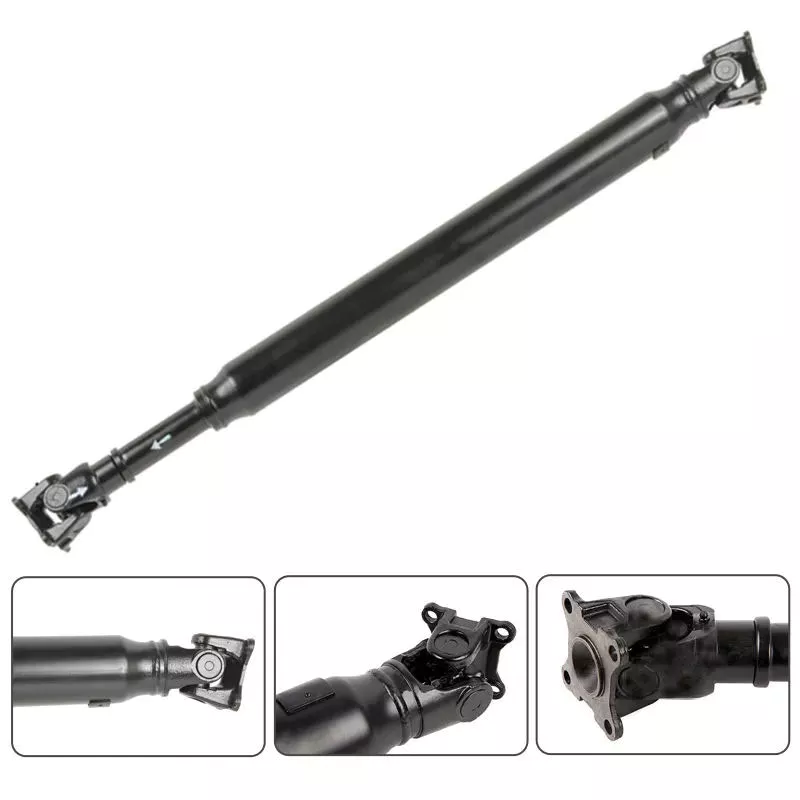
Чи можна налаштувати карданні вали під конкретні вимоги транспортного засобу або обладнання?
Так, карданні вали можна налаштувати відповідно до конкретних вимог транспортного засобу або обладнання. Налаштування дозволяє виробникам адаптувати конструкцію, розміри, матеріали та інші параметри карданного вала, щоб забезпечити сумісність та оптимальну продуктивність у певному транспортному засобі або обладнанні. Ось детальне пояснення того, як можна налаштувати карданні вали:
1. Налаштування розмірів:
Карданні вали можна налаштувати відповідно до розмірних вимог транспортного засобу або обладнання. Це включає регулювання загальної довжини, діаметра та конфігурації шліців для забезпечення належної посадки та зазорів у конкретному застосуванні. Завдяки налаштуванню розмірів карданний вал можна безперешкодно інтегрувати в систему трансмісії без будь-яких перешкод чи обмежень.
2. Вибір матеріалу:
Вибір матеріалів для карданних валів може бути налаштований залежно від конкретних вимог транспортного засобу або обладнання. Різні матеріали, такі як сталеві сплави, алюмінієві сплави або спеціалізовані композити, можуть бути обрані для оптимізації міцності, ваги та довговічності. Вибір матеріалу може бути адаптований до крутного моменту, швидкості та умов експлуатації застосування, забезпечуючи надійність та довговічність карданного вала.
3. Конфігурація суглоба:
Карданні вали можна налаштувати з різними конфігураціями шарнірів для задоволення потреб конкретних транспортних засобів або обладнання. Наприклад, універсальні шарніри (U-подібні шарніри) можуть підходити для застосувань з меншими робочими кутами та помірними вимогами до крутного моменту, тоді як шарніри з постійною швидкістю (CV) часто використовуються в застосуваннях, що вимагають більших робочих кутів та плавнішої передачі потужності. Вибір конфігурації шарнірів залежить від таких факторів, як робочий кут, допустимий крутний момент та бажані характеристики продуктивності.
4. Крутний момент та потужність:
Налаштування дозволяє проектувати карданні вали з відповідним крутним моментом та потужністю для конкретного транспортного засобу або обладнання. Виробники можуть аналізувати вимоги до крутного моменту, умови експлуатації та запаси міцності застосування, щоб визначити оптимальний номінальний крутний момент та потужність карданного валу. Це гарантує, що карданний вал зможе витримувати необхідні навантаження без передчасного виходу з ладу або проблем з продуктивністю.
5. Балансування та контроль вібрації:
Карданні вали можна налаштувати за допомогою прецизійного балансування та заходів контролю вібрації. Дисбаланс у карданному валу може призвести до вібрацій, підвищеного зносу та потенційних проблем із трансмісією. Використовуючи методи динамічного балансування під час виробничого процесу, виробники можуть мінімізувати вібрації та забезпечити плавну роботу. Крім того, в конструкцію карданного валу можна інтегрувати гасителі вібрацій або ізоляційні системи для подальшого зменшення вібрацій та підвищення загальної продуктивності системи.
6. Міркування щодо інтеграції та монтажу:
Налаштування карданних валів враховує вимоги до інтеграції та монтажу конкретного транспортного засобу або обладнання. Виробники тісно співпрацюють з конструкторами транспортних засобів або обладнання, щоб забезпечити бездоганне входження карданного валу в систему трансмісії. Це включає адаптацію точок кріплення, інтерфейсів та зазорів для забезпечення належного вирівнювання та встановлення карданного валу в транспортному засобі або обладнанні.
7. Співпраця та зворотний зв'язок:
Виробники часто співпрацюють з виробниками транспортних засобів, виробниками оригінального обладнання (OEM) або кінцевими користувачами, щоб зібрати відгуки та врахувати їхні конкретні вимоги в процесі налаштування карданного вала. Активно шукаючи інформацію та відгуки, виробники можуть задовольнити конкретні потреби, оптимізувати продуктивність та забезпечити сумісність з транспортним засобом або обладнанням. Такий спільний підхід покращує процес налаштування та призводить до створення карданних валів, які точно відповідають вимогам застосування.
8. Відповідність стандартам:
Карданні вали, виготовлені на замовлення, можуть бути розроблені відповідно до відповідних галузевих стандартів та норм. Відповідність стандартам, таким як ISO (Міжнародна організація зі стандартизації) або спеціальним галузевим стандартам, гарантує, що карданні вали, виготовлені на замовлення, відповідають вимогам якості, безпеки та продуктивності. Дотримання цих стандартів гарантує сумісність карданних валів та їх бездоганну інтеграцію в конкретний транспортний засіб або обладнання.
Підсумовуючи, карданні вали можна налаштувати відповідно до конкретних вимог транспортного засобу або обладнання шляхом налаштування розмірів, вибору матеріалу, конфігурації з'єднань, оптимізації крутного моменту та потужності, балансування та контролю вібрації, врахування інтеграції та монтажу, співпраці із зацікавленими сторонами та дотримання галузевих стандартів. Налаштування дозволяє точно адаптувати карданні вали до потреб застосування, забезпечуючи сумісність, надійність та оптимальну продуктивність.

Can you explain the different types of drive shafts and their specific applications?
Drive shafts come in various types, each designed to suit specific applications and requirements. The choice of drive shaft depends on factors such as the type of vehicle or equipment, power transmission needs, space limitations, and operating conditions. Here’s an explanation of the different types of drive shafts and their specific applications:
1. Solid Shaft:
A solid shaft, also known as a one-piece or solid-steel drive shaft, is a single, uninterrupted shaft that runs from the engine or power source to the driven components. It is a simple and robust design used in many applications. Solid shafts are commonly found in rear-wheel-drive vehicles, where they transmit power from the transmission to the rear axle. They are also used in industrial machinery, such as pumps, generators, and conveyors, where a straight and rigid power transmission is required.
2. Tubular Shaft:
Tubular shafts, also called hollow shafts, are drive shafts with a cylindrical tube-like structure. They are constructed with a hollow core and are typically lighter than solid shafts. Tubular shafts offer benefits such as reduced weight, improved torsional stiffness, and better damping of vibrations. They find applications in various vehicles, including cars, trucks, and motorcycles, as well as in industrial equipment and machinery. Tubular drive shafts are commonly used in front-wheel-drive vehicles, where they connect the transmission to the front wheels.
3. Constant Velocity (CV) Shaft:
Constant Velocity (CV) shafts are specifically designed to handle angular movement and maintain a constant velocity between the engine/transmission and the driven components. They incorporate CV joints at both ends, which allow flexibility and compensation for changes in angle. CV shafts are commonly used in front-wheel-drive and all-wheel-drive vehicles, as well as in off-road vehicles and certain heavy machinery. The CV joints enable smooth power transmission even when the wheels are turned or the suspension moves, reducing vibrations and improving overall performance.
4. Slip Joint Shaft:
Slip joint shafts, also known as telescopic shafts, consist of two or more tubular sections that can slide in and out of each other. This design allows for length adjustment, accommodating changes in distance between the engine/transmission and the driven components. Slip joint shafts are commonly used in vehicles with long wheelbases or adjustable suspension systems, such as some trucks, buses, and recreational vehicles. By providing flexibility in length, slip joint shafts ensure a constant power transfer, even when the vehicle chassis experiences movement or changes in suspension geometry.
5. Double Cardan Shaft:
A double Cardan shaft, also referred to as a double universal joint shaft, is a type of drive shaft that incorporates two universal joints. This configuration helps to reduce vibrations and minimize the operating angles of the joints, resulting in smoother power transmission. Double Cardan shafts are commonly used in heavy-duty applications, such as trucks, off-road vehicles, and agricultural machinery. They are particularly suitable for applications with high torque requirements and large operating angles, providing enhanced durability and performance.
6. Composite Shaft:
Composite shafts are made from composite materials such as carbon fiber or fiberglass, offering advantages such as reduced weight, improved strength, and resistance to corrosion. Composite drive shafts are increasingly being used in high-performance vehicles, sports cars, and racing applications, where weight reduction and enhanced power-to-weight ratio are critical. The composite construction allows for precise tuning of stiffness and damping characteristics, resulting in improved vehicle dynamics and drivetrain efficiency.
7. PTO Shaft:
Power Take-Off (PTO) shafts are specialized drive shafts used in agricultural machinery and certain industrial equipment. They are designed to transfer power from the engine or power source to various attachments, such as mowers, balers, or pumps. PTO shafts typically have a splined connection at one end to connect to the power source and a universal joint at the other end to accommodate angular movement. They are characterized by their ability to transmit high torque levels and their compatibility with a range of driven implements.
8. Marine Shaft:
Marine shafts, also known as propeller shafts or tail shafts, are specifically designed for marine vessels. They transmit power from the engine to the propeller, enabling propulsion. Marine shafts are usually long and operate in a harsh environment, exposed to water, corrosion, and high torque loads. They are typically made of stainless steel or other corrosion-resistant materials and are designed to withstand the challenging conditions encountered in marine applications.
It’simportant to note that the specific applications of drive shafts may vary depending on the vehicle or equipment manufacturer, as well as the specific design and engineering requirements. The examples provided above highlight common applications for each type of drive shaft, but there may be additional variations and specialized designs based on specific industry needs and technological advancements.


editor by CX 2024-02-25

























