Grundläggande val av elsystem
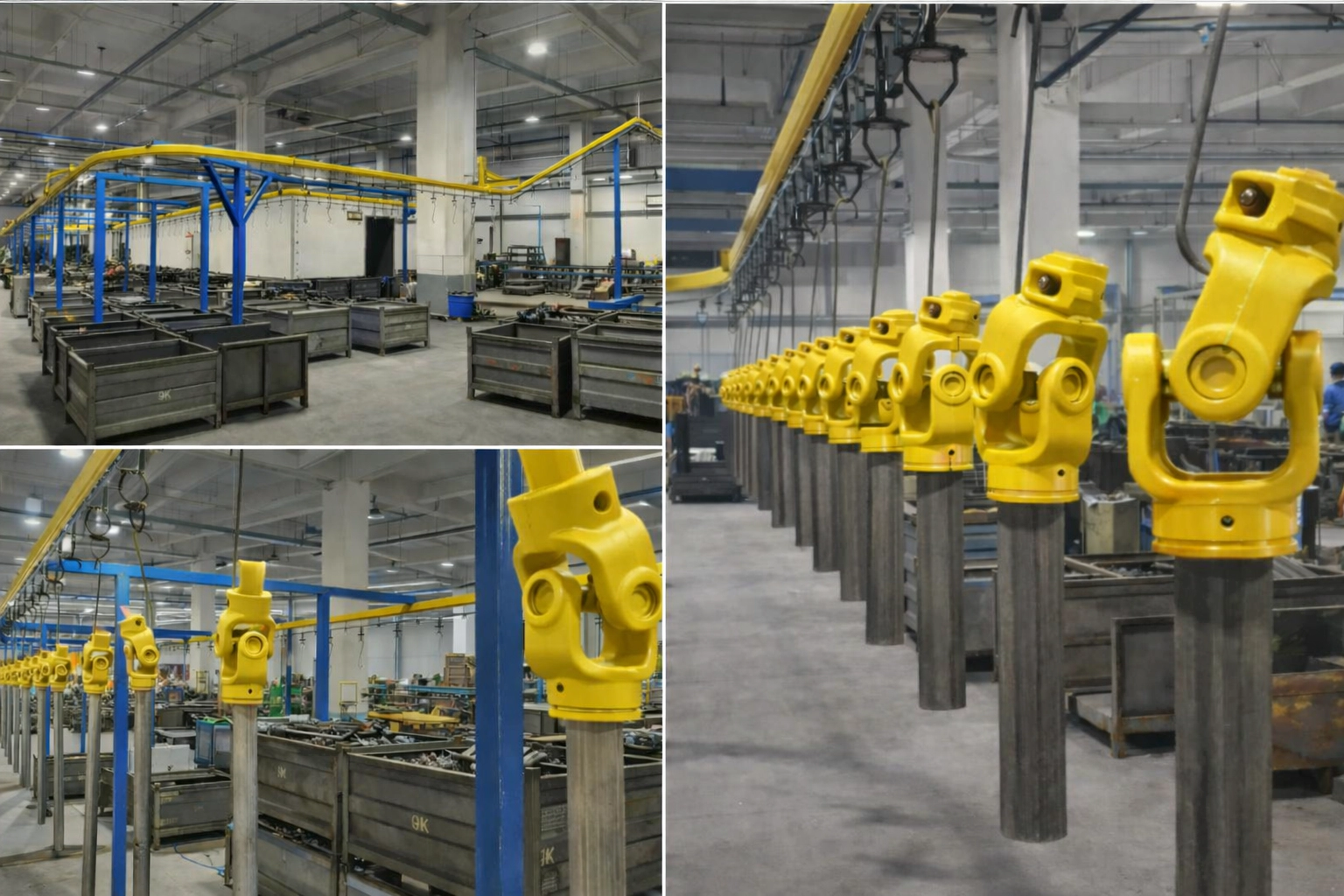
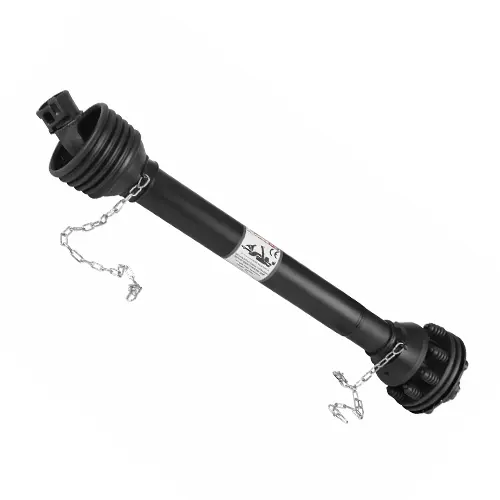
In modern forage and harvesting operations, the performance of a Haybaler is intrinsically tied to the stability of its power input. Acting as the critical mechanical bridge between the tractor and the baler’s internal mechanisms, the kraftuttagsaxel determines the overall throughput efficiency and equipment lifespan. EVER-POWER’s specialized baler drivelines incorporate forged alloy cross journals and 80-degree Wide Angle Constant Velocity (CV) joints, resolving the chronic issue of power interruption during sharp headland turns.
⚡ Instantaneous Torque Absorption
The plunger mechanism in a baler generates massive reverse kinetic shock during every compression stroke. Our systems come standard with wide-format friction slip clutches and overrunning (freewheel) capabilities, instantaneously absorbing up to 4200 Nm of pulse torque to shield your tractor’s gearbox.
🛡️ Extreme Weather Shielding
We utilize UV-stabilized, high-density polyethylene (HDPE) safety guards engineered specifically for high solar irradiance environments. They are scientifically proven to resist embrittlement and shattering even after 5000+ hours of direct sun exposure.
⚖️ Dynamic Balancing Precision
Every driveshaft leaving our facility undergoes rigorous dynamic balancing to ISO 1940 G6.3 standards. This eliminates resonant vibrations at 1000 RPM, extending the fatigue life of universal joint bearings and input shafts by up to 40%.
Australian Local Industry Application & Extreme Condition Practical Research
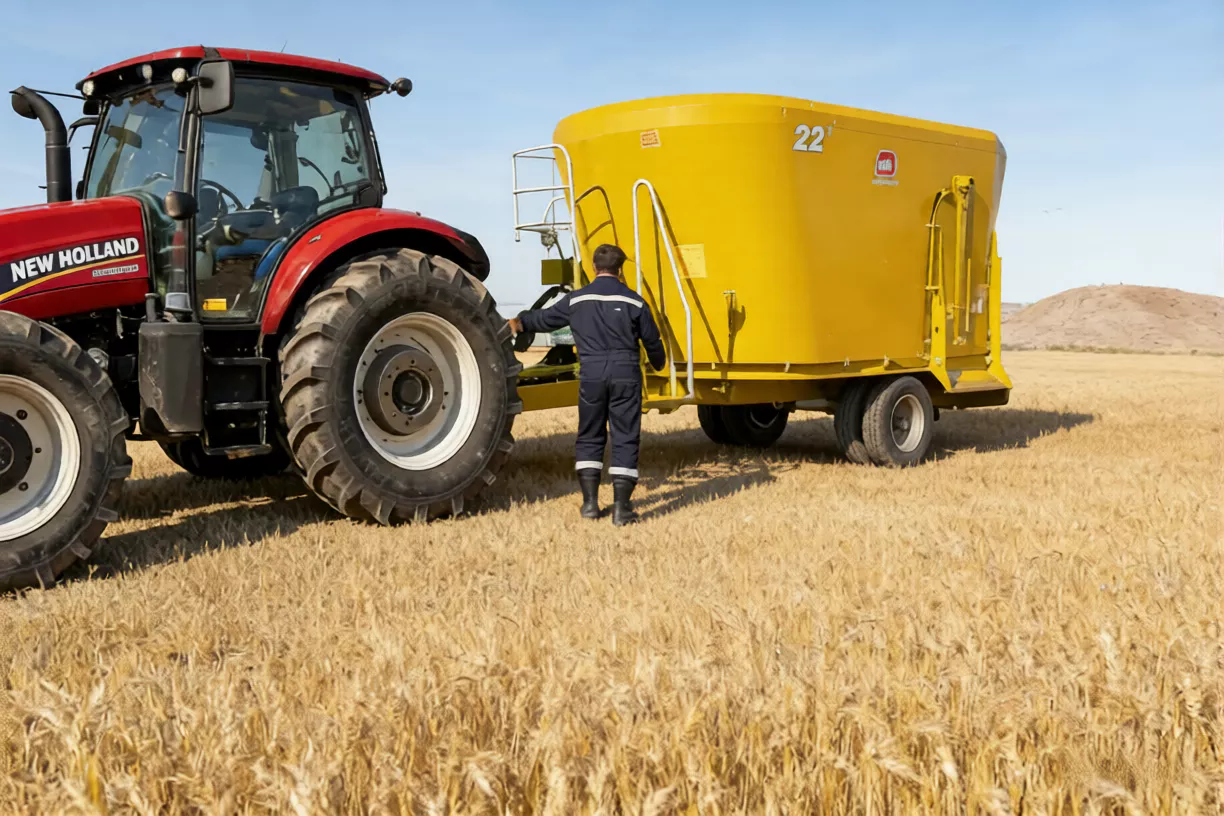
The Australian agricultural landscape is defined by vast acreages, highly concentrated harvesting windows, and unforgiving climatic extremes. During the summer harvest in Queensland, ambient ground temperatures frequently exceed 50°C (122°F), accompanied by severe abrasive dust. In the undulating terrains of New South Wales (NSW), the articulation angle between the tractor and the baler fluctuates constantly, posing a catastrophic threat to the flexibility and thermal management of standard drivelines.
Regulatory Compliance & Safety Mandates: Operating heavy machinery in Australia requires absolute adherence to strict occupational health and safety regulations. Every PTO drive shaft manufactured by EVER-POWER strictly complies with AS 1121.4-2007 (Agricultural tractor PTO safety standards) and the directives established by WorkSafe Australia. Our units feature fully enclosed, self-lubricating isolation guards equipped with CE and AU dual-certified anti-rotation chains, eliminating the fatal risk of clothing entanglement.
Client Pain Point vs. EVER-POWER Solution: The Western Australia Challenge
Client Pain Point: “Our previous commercial-grade PTO guards literally melted and shattered after just three months of heavy round baling in the Perth wheatbelt. When the guard failed, the dust got into the cross bearings, seizing them up and causing our $80,000 baler gearbox to crack under the strain. It killed our margins.”
EVER-POWER Solution: “We deployed our Series 6 heavy-duty shaft with an upgraded UV-resistant nylon/polyurethane hybrid shield and a 6-plate friction slip clutch calibrated to precisely 2800 Nm. The client in WA eliminated driveline-related downtime completely for the next two seasons, reducing their annual maintenance overhead by 65%.”
Engineering Compatibility & Premium Interchange Guidelines
In the global agricultural supply chain, component standardization is the ultimate strategy for reducing end-user maintenance delays. Our baler drivelines have undergone stringent geometric reverse-engineering and metallurgical stress testing. They are designed to seamlessly integrate with mainstream tractor rear splines and baler input shafts across the globe.
Legal & Compatibility Disclaimer
Our drive systems are engineered in strict accordance with international metric and imperial standards to serve as premium aftermarket replacement units. They are designed to perfectly fit and replace original equipment commonly found on John Deere™, New Holland™, Case IH™, and Massey Ferguson™ machinery. Furthermore, our components serve as direct dimensional drop-ins for parts originally manufactured by Comer Industries™, Walterscheid™ (GKN), Bondioli & Pavesi™, and Weasler™.
(Note: All manufacturer names, brand trademarks, and part numbers mentioned herein are strictly for technical reference, specification comparison, and selection compatibility purposes only. EVER-POWER is an entirely independent OEM/ODM manufacturer and holds no direct affiliation, endorsement, or sponsorship with the aforementioned brands.)
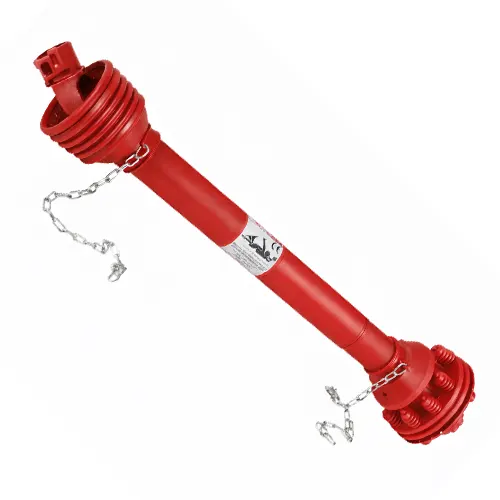
Material Science Showdown: Substandard vs. EVER-POWER Excellence
| Engineering Dimension | Generic / Substandard Market Shafts | EVER-POWER Industrial Grade Shafts |
|---|---|---|
| Cross Journal (U-Joint) Metallurgy | Standard cast steel with shallow induction hardening. Prone to fatigue cracking under peak baler plunger loads. | 20CrMnTi Alloy Steel, carburized and quenched. Surface hardness reaches HRC 58-62 while the core retains maximum ductility to absorb shock. |
| Safety Shielding Integrity | Recycled low-grade plastics. Rapidly degrades, embrittles, and shatters after limited UV exposure. | Virgin UV-stabilized High-Density Polyurethane blend. Fully compliant with AS 1121.4-2007; engineered for extreme desert sun. |
| Telescopic Tube Profile | Thin-walled circular or basic lemon profiles. Susceptible to twisting distortion (torsional yielding) under heavy torque. | Heavy-duty Star / Triangular / Hexagonal profiles. Wall thickness increased by 25% for maximum surface area contact and torsional rigidity. |
| Lubrication & Sealing Architecture | Single-lip rubber seals that easily allow chaff, silica dust, and moisture to penetrate, leading to dry-running bearings. | Multi-lip Labyrinth Seal System. Retains grease internally while actively ejecting microscopic dust, extending maintenance intervals threefold. |
Comprehensive Engineering Specifications
The following matrix details the exacting tolerances and capacities we build into our heavy-duty hay baler drivelines. As a primary manufacturing facility, we provide extensive custom engineering (OEM) to match specific tractor horsepower curves and forage density requirements.
| No. | Technical Attribute | Specification Value / Standard | Engineering Significance for Balers |
|---|---|---|---|
| 1 | Tractor Horsepower Range | 40 HP to 250+ HP | Scalable designs covering everything from small square balers to ultra-dense large round balers. |
| 2 | Rated Operational Speed | 540 RPM / 1000 RPM | Conforms to standard tractor output speeds; precision balanced to prevent destructive harmonics. |
| 3 | Nominal Continuous Torque | 460 Nm to 2800 Nm | The baseline metric ensuring the main driveline remains intact under constant crop feeding. |
| 4 | Maximum Dynamic Peak Torque | Up to 4200 Nm | Crucial for surviving sudden blockages (e.g., wet crop clumps) without structural yielding. |
| 5 | Cross Journal Dimensions | 27×74.6mm up to 42×104.5mm | Directly dictates the load-bearing surface area of the needle bearings in the U-joint. |
| 6 | Tractor Yoke Spline Profiles | 1-3/8″ 6-spline / 21-spline / 1-3/4″ 20-spline | Industry standard interfaces allowing universal connection to almost any tractor model. |
| 7 | Implement (Baler) Connection | Plain bore with keyway & taper pin / Splined | Ensures a vibration-free, semi-permanent lock onto the baler’s primary gearbox input shaft. |
| 8 | Primary Overload Protection | Multi-plate Friction Clutch (Slip Clutch) | Indispensable for balers; allows slippage during plunger impact without catastrophic breakage. |
| 9 | Freewheel (Overrunning) Clutch | Integrated RA/OR mechanism | Allows the massive inertia of the baler flywheel to spin down safely when tractor PTO is disengaged. |
| 10 | Telescopic Tube Profiles | Italian Tri-lobe / German Lemon / Star Tube | Provides smooth telescoping action over uneven terrain while transmitting severe rotational forces. |
| 11 | Inner Tube Wall Thickness | 3.2mm to 5.5mm (Series dependent) | Prevents bending or bowing under high compressive loads during turning. |
| 12 | Outer Tube Wall Thickness | 2.8mm to 4.5mm | Provides the robust external sheath necessary to house the inner profile without expanding. |
| 13 | Closed Length (Lz) | 600mm to 1800mm (Highly Customizable) | Ensures compatibility across various tractor drawbar and linkage distances. |
| 14 | Maximum Safe Extension (Stroke) | Lz + (Max 1/3 of total tube length) | Maintains safe overlap; prevents the shaft halves from separating and whipping dangerously. |
| 15 | Wide Angle Capability (CV Joint) | Up to 80° operational articulation | Allows continuous baling during sharp headland turns; eliminates the need to disengage PTO. |
| 16 | Safety Shield Material | High-Density Polyethylene (HDPE) + UV Inhibitors | Prevents degradation from the intense Australian UV index and physical impacts from debris. |
| 17 | International Safety Approvals | CE, ISO 5673, AS 1121.4-2007 | Guarantees full compliance with stringent global and Australian farm machinery safety laws. |
| 18 | Cross Journal Surface Hardness | HRC 58-62 | Provides extreme wear resistance against the micro-vibrations inherent in baling. |
| 19 | Yoke Spline Heat Treatment | HRC 45-50 | Optimized to prevent spline tooth shearing while avoiding brittle fracture. |
| 20 | Operating Temperature Range | -20°C to +85°C | Unfazed by the scorching inland desert heat or freezing winter mornings. |
| 21 | Grease Zerk Angle Location | 45° offset or direct end-cap access | Allows operators to pump grease quickly without wrestling or removing the plastic safety covers. |
| 22 | Standard Maintenance Interval | Every 50 hours (Extended life optional: 250h) | Minimizes costly downtime during narrow, critical harvesting windows. |
| 23 | Dynamic Balance Grade | ISO 1940 Quality Grade G6.3 | Eliminates rotational whip; protects the tractor PTO bearings and implement gearbox bearings. |
| 24 | Anti-Corrosion Surface Finish | Electrostatic powder coating / Zinc plating | Impervious to morning dew, acidic plant sap, and prolonged outdoor storage rust. |
| 25 | Quick-Release Mechanism | Alloy spring steel collar + anti-jamming pin | Enables rapid, single-person coupling to the tractor, even with greasy hands. |
| 26 | Engineering Service Factor (K) | Calculated at K = 2.0 to 2.5 for Balers | Accounts for the severe, uneven fluctuating load profile unique to the baler plunger action. |
| 27 | Anti-Rotation Chain Tensile Strength | Proof loaded > 400 N pull force | Ensures the plastic guard remains perfectly stationary while the internal shaft spins at 1000 RPM. |
| 28 | Friction Clutch Disc Material | Non-asbestos woven composite | Environmentally safe; provides consistent coefficient of friction even when extremely hot. |
| 29 | Belleville Spring Washer (Clutch) | 65Mn Bainite tempered steel | Maintains a constant clamping force on the friction plates; does not sag over years of use. |
| 30 | Comprehensive Factory Warranty | 12 Months Standard (Extended options available) | Our ironclad guarantee, backed by uncompromising metallurgical science. |
Mechanical Principles: The Lifeline of Your Baler
The PTO (Power Take-Off) drive shaft is the sole mechanical conduit translating the raw horsepower of the tractor’s engine into the rhythmic, powerful actions of the haybaler’s pickup, rotor, and plunger. During active baling:
- Power Acquisition: Rotational kinetic energy transfers from the tractor’s splined output stub, typically spinning at 540 or 1000 RPM.
- Articulated Transmission: As the tractor navigates ruts and contours, the telescopic tubes slide smoothly within each other to adjust length. Simultaneously, the universal joints pivot on their cross bearings, allowing angular displacement without interrupting the torque flow.
- Kinetic Shielding (Overload): When the baler ingests an oversized, damp crop wad, the rotor may suddenly jam. In milliseconds, the Friction Slip Clutch integrated into our shaft slips, safely dissipating the kinetic energy as heat, rather than allowing the twisting force to snap the driveline or detonate the gearbox housing.
Targeted Installation Protocol for Haybalers
- Length Calibration & Cutting: Position the tractor and baler on level ground in the tightest possible turning configuration (minimum distance). Disassemble the shaft halves. Hold them parallel. You must ensure at least 25mm (1 inch) of clearance prevents “bottoming out.” If too long, cut equal lengths from both the inner/outer steel tubes and the plastic shield tubes. Deburr the edges meticulously with a file.
- Directional Orientation (CRITICAL): The yoke equipped with the safety mechanism (such as the Friction Clutch, Overrunning Clutch, or Shear Bolt) must ALWAYS be mounted to the implement side (the Baler gearbox). The standard yoke connects to the tractor. Reversing this orientation renders the safety overload protection completely ineffective!
- Locking & Axial Verification: Depress the quick-release pin, slide the splined yoke onto the PTO stub until you hear a distinct “click.” Vigorously pull the yoke backward to physically verify the pin is seated in the locking groove. Secure the implement end using the provided tapered pin and lock nut.
- Safety Chain Anchoring: Attach the anti-rotation chains to stationary points on both the tractor and baler. Do not pull them taut; leave enough slack to allow the U-joints to articulate fully during sharp turns without tearing the chain from the guard.
PTO Operational Troubleshooting & Resolution Matrix
| Observed Symptom | Deep Diagnostic Cause | Field Resolution Protocol |
|---|---|---|
| Severe High-Frequency Vibration | Phasing error: The inner and outer tubes were reassembled incorrectly (yokes are not in the same plane). Alternatively, the shaft tube is physically bent. | Pull the two halves apart. Align the stamped phase markings on the tubes (ensuring the yokes at both ends are perfectly parallel) and reinsert. If the tube is bent, total replacement is mandatory. |
| Cross Bearing Overheating (Smoking/Turning Blue) | Chronic lack of lubrication, or operating angles exceeding the design limits (standard joints forced past 25 degrees under load). | Allow to cool naturally. Inject high-temp lithium grease until old grease purges from all 4 seals. Instruct operators to disengage PTO on tight turns, or upgrade to a Wide Angle (CV) shaft. |
| Friction Clutch Slips Continuously & Burns | Belleville springs have lost tension due to lack of calibration, or the friction discs have rusted onto the metal drive plates during winter storage. | Tighten compression nuts to restore specified torque. Prior to each season, loosen nuts slightly, slip the clutch intentionally for 10 seconds to grind away rust, then retorque to factory spec. |
| Telescopic Tubes Jamming / Excessive Thrust Load | Lack of grease on the profile tubes, compounded by an accumulation of cemented dust, silica, and pulverized hay residue. | Completely separate the shaft halves. Wash the inner and outer profiles with diesel solvent. Apply a liberal coat of fresh grease, reassemble, and actuate manually to distribute. |
Engineer’s Field Notes: Australian Baler Case Studies
Every drive shaft we manufacture is born from a profound understanding of the mud, dust, and sweat experienced in the field. Below is a curated archive of our practical interventions across the Australian continent:
📍 Queensland (QLD) – Toowoomba
Ansökan: Heavy-duty Round Baler
Challenge: Extreme ambient temperatures and high-frequency operation causing standard shields to melt and deform.
EVER-POWER Dispatch: “In 2024, we retrofitted their fleet with our specially formulated weather-resistant polymer shields and incorporated end-face grease zerk cross journals. The client reported that during continuous 40°C summer harvesting, shield deformation dropped to zero, boosting unbroken operational uptime by 30%.”
📍 New South Wales (NSW) – Wagga Wagga
Ansökan: Large Square Baler behind 180HP Tractor
Challenge: Undulating hilly terrain caused extreme tractor-baler articulation angles, destroying standard U-joints.
EVER-POWER Dispatch: “To solve the severe topography issues, we implemented our 80-degree Wide Angle Constant Velocity (CV) driveline. The farm operators no longer had to kill the PTO power when maneuvering hillside contours, yielding a massive leap in daily bale count.”
📍 Western Australia (WA) – Northam
Ansökan: High-density Straw Recovery Baling
Challenge: Massive wads of straw instantly jamming the pickup, snapping the main drive shafts cleanly in half.
EVER-POWER Dispatch: “We engineered a heavy-duty 6-plate friction clutch system, precisely pre-calibrated to a slip threshold of 2500Nm. Today, when a catastrophic blockage occurs, the clutch merely emits a slipping sound, utterly protecting the forward transmission systems from shock fracture.”
📍 Victoria (VIC) – Ballarat
Ansökan: High-speed Silage Baler Wrapper Combination
Challenge: The machine required exceptionally smooth power delivery at 1000 RPM; previous shafts induced cabin-shaking vibrations.
EVER-POWER Dispatch: “We utilized CNC-machined star-profile tubes, individually balancing the completed assemblies to G6.3 ISO standards. The baler wrapper now runs silky smooth at 1000 RPM, with zero resonant acoustic noise or destructive bearing harmonics.”
📍 South Australia (SA) – Barossa Valley
Ansökan: Compact Inter-row Vineyard Balers
Challenge: Extremely short linkage space requiring a massive telescopic ratio without binding.
EVER-POWER Dispatch: “We custom-built an ultra-short variant for their narrow orchard tractors, featuring a closed length of just 600mm. By employing a robust hexagonal tube profile, we ensured maximum torque transfer even with minimal tube overlap. The vineyard managers rated it a flawless solution.”
Power Transmission Ecosystem: Agricultural Gearboxes & Critical OEM Components
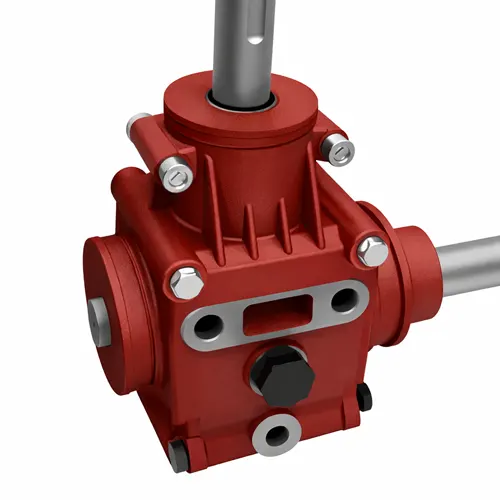
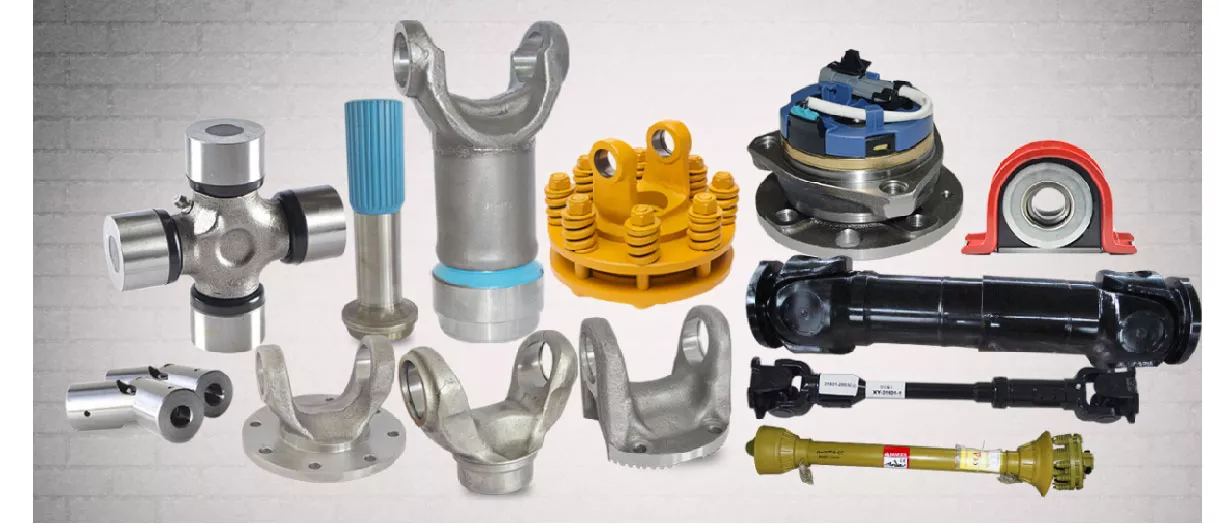
As an apex manufacturing titan providing end-to-end power delivery solutions, EVER-POWER does not merely manufacture high-performance drive shafts. We possess the engineering depth to design, forge, and assemble heavy-duty agricultural gearboxes that perfectly synchronize with our PTO shafts. A baler is only as reliable as its weakest link; by pairing our shafts with our gearboxes, you eliminate mismatched tolerances, spline wear, and the inherent risks of a fragmented supply chain. Below, we introduce our proud peripheral product ecosystem designed specifically for the rigorous demands of global harvesting.

High-Frequency Technical Inquiries for Baler Drivelines
1. Should I specify a Shear Bolt or a Friction Slip Clutch for my Haybaler?
Balers (especially large square and round variants) produce severe, high-frequency pulsating loads. We emphatically recommend a Friction Slip Clutch combined with an overrunning feature. Shear pins are highly susceptible to fatigue fracture under pulsating loads, and constantly replacing sheared bolts will severely delay your time-critical harvesting schedule.
2. What is the purpose of a Wide Angle (CV) Joint, and is it mandatory?
A Constant Velocity (CV) joint allows the drive shaft to operate smoothly at articulation angles up to 80 degrees. If you frequently harvest in irregular fields or small paddocks requiring constant, tight headland turns—and you wish to avoid disengaging the PTO every time—a CV shaft is an essential operational upgrade.
3. How is the required tube length determined? Can I cut the shaft myself?
Factory shafts are supplied with intentional excess length. You must measure the distance between the tractor and baler at their shortest possible alignment. You can, and should, trim the inner/outer steel profiles and the plastic guards proportionately using a hacksaw. Always ensure at least 1/3 of the tube length remains overlapped when fully extended.
4. Will your safety guards pass a WorkSafe Australia site inspection?
Absolutely. EVER-POWER manufactures safety guards in strict accordance with AS 1121.4-2007 and European CE machinery directives. Furthermore, we inject high-grade UV stabilizers into the polymer, ensuring they withstand Australia’s intense occupational safety audits and harsh outdoor conditions without degrading.
5. Why is my baler driveline producing extreme acoustic noise and vibration?
Excessive noise usually indicates that the cross bearings are entirely devoid of grease and have begun to gall, or that the inner and outer telescopic tubes were reassembled out of phase. Stop the machinery immediately and verify that the yokes on both ends are aligned in a straight plane.
6. Are your shafts compatible with older John Deere or New Holland tractors?
Yes, they are fully compatible. Our standard tractor-side interface utilizes 1-3/8″ 6-spline or 21-spline quick-release yokes. These profiles cover over 95% of standard agricultural tractor PTO outputs manufactured globally over the past 50 years.
7. Does the friction slip clutch require maintenance after long-term storage?
Yes. If left idle over winter, atmospheric moisture causes the friction discs to rust and seize against the steel plates. Before the season begins, loosen the compression bolts, intentionally run the PTO to let the clutch slip for 10-15 seconds (to grind off the rust), and then re-tighten the bolts to the prescribed torque setting.
8. What is the difference between Star, Triangular, and Lemon tube profiles?
These represent different regional engineering philosophies (e.g., Italian designs favor Triangular, while German designs favor Lemon/Star). For high-torque applications like balers, multi-faceted Star profiles or heavy-wall Triangular tubes provide superior surface contact, transferring massive torque without torsional yielding.
9. How frequently should the universal joints (cross journals) be greased?
For standard models, we mandate injecting lithium-based grease every 50 operating hours (roughly every 5 days of intense harvesting). If you upgrade to our Extended-Life Series, the lubrication interval expands to 250 hours, virtually eliminating mid-season greasing downtime.
10. Can I purchase individual repair kits or replacement guards separately?
Absolutely. We maintain a comprehensive aftermarket ecosystem. You can readily source specific U-joint cross bearing kits, complete guard assemblies, replacement friction plates, and spring hardware, ensuring your long-term maintenance costs remain phenomenally low.