Australian Extreme Terrain Field Study: Rotary Harrow PTO Shaft Adaptation Guide
Engineered for the unforgiving Outback. Delivering unrelenting torque transfer for heavy-duty power harrows in sun-baked clay and rocky soils.
Core Technology Quick Read: Field Notes from the Outback
Engineer’s Log: In our 20 years of servicing broadacre farms and vineyards across Western Australia and Queensland, we observed a recurring catastrophic failure: standard agricultural PTO shafts shattering when rotary harrows hit submerged limestone or ironstone. The vertical tines of a power harrow create a unique dynamic load. Unlike slashers, when a rotary harrow tine jams, the reverse shockwave travels straight up the driveline.
Based on these decade-long factory cases, EVER-POWER completely redesigned the driveline geometry for the Australian market. We injected a multi-plate slip clutch mechanism capable of dissipating 850°C of thermal energy during extreme slippage, paired with a star-profile forged tube that resists torsional fatigue 40% longer than standard lemon tubes. The result is a tractor PTO shaft that operates continuously at 1000 RPM, maintaining a 98% kinetic recovery rate even in the compacted red soils of the Pilbara region.
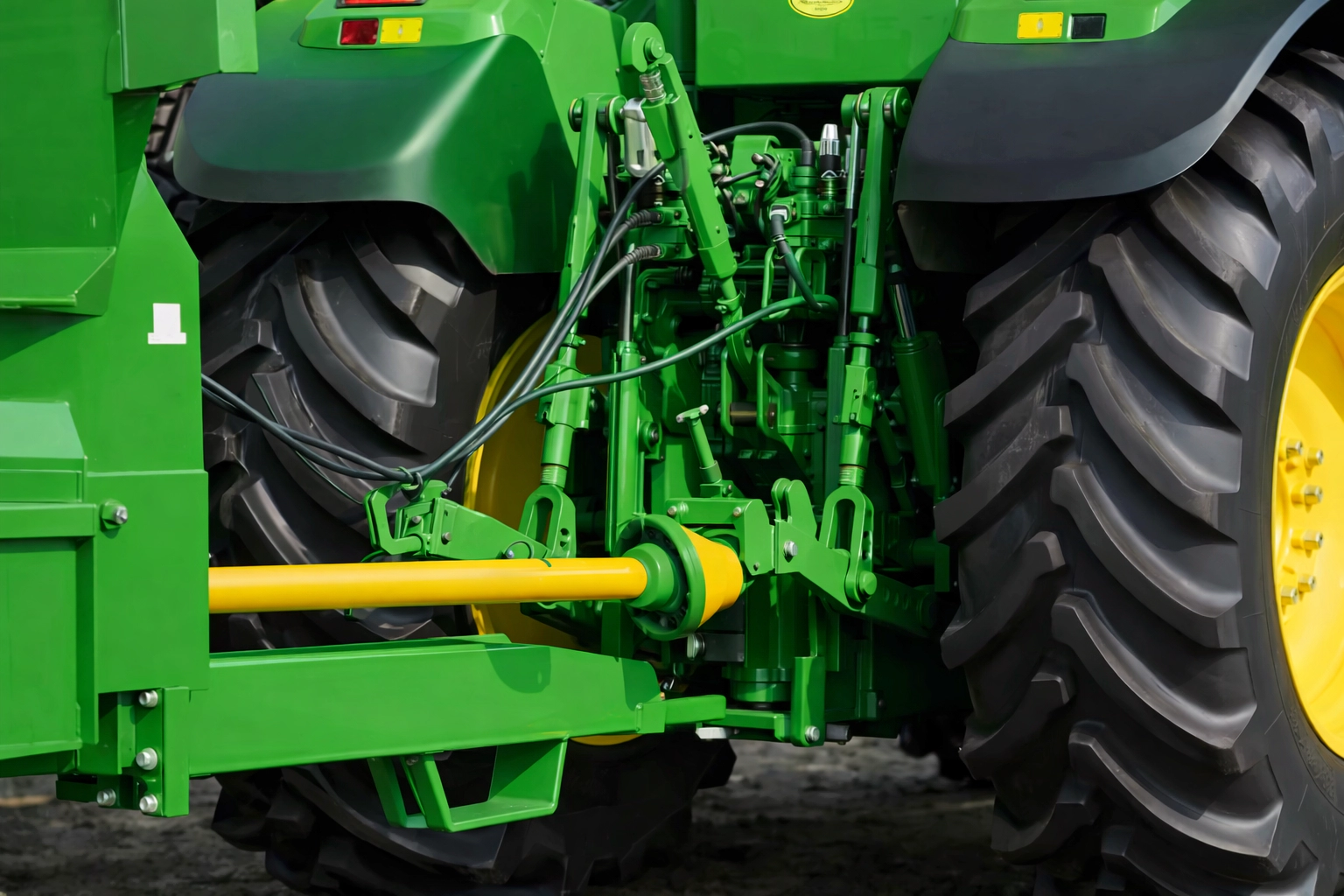
How the Driveline Commands the Harrow
A rotary harrow (or power harrow) relies entirely on active tillage. Unlike passive disc harrows, it requires direct mechanical energy from the tractor’s engine. The PTO (Power Take-Off) shaft acts as the critical bridge, connecting the tractor’s rear splined output to the harrow’s central agricultural gearbox.
- Lokalizacja: Suspended between the tractor and the implement, operating at varying angles as the hydraulic 3-point linkage raises and lowers the harrow.
- Function: It transmits rotational force (usually 540 or 1000 RPM) to the implement’s gearbox, which then distributes the power horizontally to a series of counter-rotating vertical rotors equipped with blades.
- The Challenge: The shaft must dynamically telescope (extend and compress) while transmitting massive torque, simultaneously compensating for vertical misalignment and protecting both the tractor transmission and the implement gearbox from sudden impact stalls.
Engineering Specifications: Rotary Harrow Series
The following 25 critical parameters dictate the survival of a drive shaft in harsh agricultural environments. Every specification is verifiable through our metallurgical testing facilities.
| Parameter ID | Specyfikacja techniczna | Standard Value / Customization Range | Relevance to Power Harrows |
|---|---|---|---|
| EP-01 | Dynamiczna pojemność momentu obrotowego | 830 Nm to 3,800 Nm | Ensures continuous blade rotation in heavy clay. |
| EP-02 | Tractor HP Compatibility | 40 HP up to 250+ HP (Series 4 to 10) | Matches the power output to implement width. |
| EP-03 | Tube Profile Geometry | Triangular, Lemon, or Heavy-Duty Star | Star profiles prevent twisting under sudden rotor stall. |
| EP-04 | Overload Protection | Multi-plate Slip Clutch / Cam Clutch | Vital for rotary harrows to prevent gearbox explosion. |
| EP-05 | Cross Journal Size | 27×74.6mm up to 41x118mm | Dictates the overall load-bearing lifespan. |
| EP-06 | Spline Interface (Tractor) | 1-3/8″ 6-spline, 1-3/8″ 21-spline, 1-3/4″ 20-spline | Universal fit for John Deere, Case IH, New Holland. |
| EP-07 | Operating Speed | 540 RPM or 1000 RPM | Matches the harrow’s internal gear ratio requirements. |
| EP-08 | Maximum Working Angle | 25° Continuous / 80° (With CV Joint) | Allows tight headland turns without disengaging PTO. |
| EP-09 | CV Joint Configuration | Optional: Single 80° or Double 80° Wide Angle | Eliminates vibration during implement lifting. |
| EP-10 | Materiał do kucia jarzma | 20CrMnTi Alloy Steel | High core toughness to resist impact shattering. |
| EP-11 | Surface Hardness | HRC 58-62 (Carburized and Quenched) | Resists abrasive wear from dust and sand. |
| EP-12 | Materiał osłony bezpieczeństwa | Odporny na promieniowanie UV polietylen o wysokiej gęstości (HDPE) | Prevents cracking under harsh Australian sun. |
| EP-13 | Bearing Sealing System | Triple-lip Polyurethane Seals | Blocks microscopic red dirt particles from bearings. |
| EP-14 | Lubrication Specification | EP2 Extreme Pressure High-Temp Grease | Will not liquefy in 45°C ambient temperatures. |
| EP-15 | Maintenance Interval | 50 Hours (Standard) / 250 Hours (Extended) | Reduces downtime during critical planting windows. |
| EP-16 | Anti-Rotation Device | Stainless Steel Quick-release Chains | Keeps guards stationary to comply with WHS laws. |
| EP-17 | Grubość ścianki rury | 3.2mm to 5.5mm (Depending on series) | Provides longitudinal rigidity over 2-meter lengths. |
| EP-18 | Dynamiczne równoważenie | G6.3 / G16 Standard (ISO 1940-1) | Eliminates harmonic resonance at 1000 RPM. |
| EP-19 | Slip Clutch Friction Discs | Asbestos-free Ceramic/Copper Composite | Stable friction coefficient even when slipping. |
| EP-20 | Mechanizm blokady sworznia | Quick-Disconnect Collar / Tapered Pin | Safe and rapid implement hitching in the field. |
| EP-21 | Telescopic Overlap | Minimum 1/3 of total closed length | Prevents shaft separation on uneven ground. |
| EP-22 | Anti-Corrosion Coating | Black Epoxy Electrophoresis | Passes 500-hour salt spray test. |
| EP-23 | Ambient Temp Tolerance | -20°C to +65°C | Built for frosty mornings and scorching afternoons. |
| EP-24 | Clutch Thermal Capacity | Heat dissipation fins rated for 150°C continuous | Prevents grease fires during prolonged clutch slip. |
| EP-25 | Certification Compliance | CE, ISO 5673-1:2005, AS 1121 | Legally compliant for operation in all AU states. |
The EVER-POWER Advantage: Why Cheap Shafts Destroy Gearboxes
Fatal Flaws of Inferior Aftermarket PTOs
- Weak Mild Steel Construction: Using basic A3 steel instead of forged alloys results in tubes twisting like pretzels when the harrow hits a rock.
- Fake Slip Clutches: Cheap friction pads glaze over and lose grip permanently after one slip event, transferring 100% of the shock load to the tractor’s rear end.
- Brittle Plastic Guards: Non-UV stabilized plastics shatter within three months under the Australian sun, creating a lethal entanglement hazard.
The EVER-POWER Engineering Supremacy
- Cold-Drawn Profile Tubes: Our precision-drawn star and triangular tubes feature dense grain structures, offering 300% higher torsional fatigue life than welded seam tubes.
- Thermal-Managed Slip Clutches: Finned clutch housings keep working temperatures below 150°C, ensuring constant spring pressure and repeatable slip torque thresholds.
- Armored Guarding System: Heavy-duty HDPE shields withstand direct rock impacts at -20°C and are immune to UV degradation, securing compliance with strict safety audits.
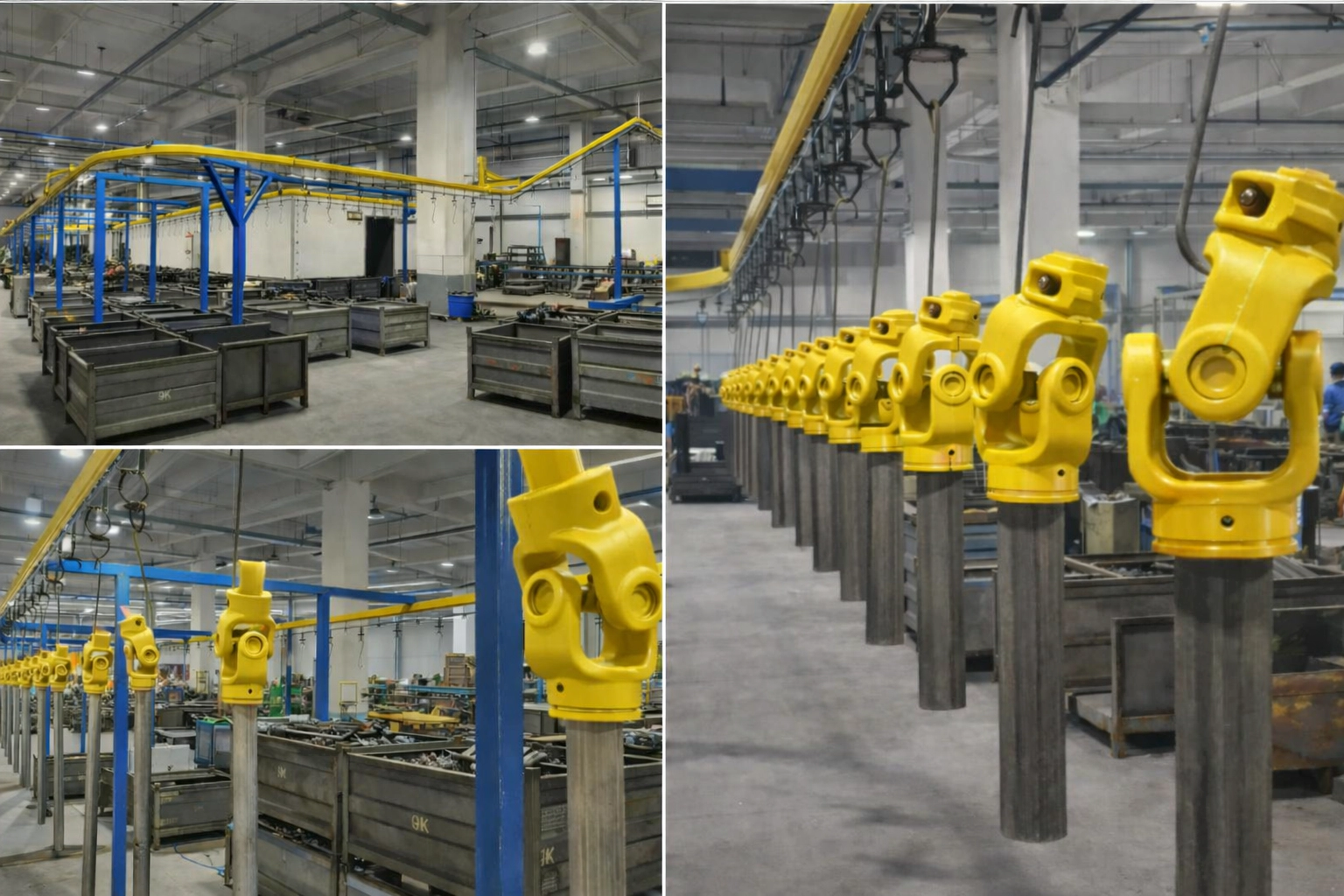
Seamless Integration: Global OEM Replacement Architecture
EVER-POWER drivelines and individual components are precision-engineered to achieve 100% mechanical compatibility with the world’s leading agricultural machinery brands. We provide exact match flanges, splines, and torque ratings for European and domestic implements.
Through rigorous reverse engineering and dimensional tolerance control, our products widely serve as heavy-duty replacements. For instance, our Series 6 and Series 8 multi-plate clutch shafts are proven drop-in replacements for implements equipped with Comer Industries™ power transmission systems. Furthermore, our Wide Angle CV joints offer equivalent or superior torque curves compared to GKN Walterscheid™ assemblies. For Italian-imported rotary harrows utilizing Bondioli & Pavesi™ (SFT and Global series) standards, our components integrate flawlessly without the need for adapter splines.
Oceania Region Safety Protocols: Non-Negotiable Compliance
Operating agricultural machinery in Australia and New Zealand requires strict adherence to safety mandates. According to Safe Work Australia data, unguarded or damaged PTO shafts remain a leading cause of severe entanglement injuries on farms. Compliance is not just about avoiding fines; it’s about protecting lives.
- AS/NZS Standards Alignment: Our safety guard systems strictly comply with the AS 1121 Agricultural Tractor Power Take-off Guards standard, guaranteeing zero exposed rotating components.
- WorkSafe State Regulations: Whether audited by WorkSafe Victoria or SafeWork NSW, our 360° encompassing yokes and heavy-duty retention chains pass the most stringent Workplace Health and Safety (WHS) inspections.
- O-Ring Overlap Design: Prevents loose clothing—such as heavy winter coats commonly worn on Southern Australian farms—from being drawn into shafts spinning at 1000 RPM.
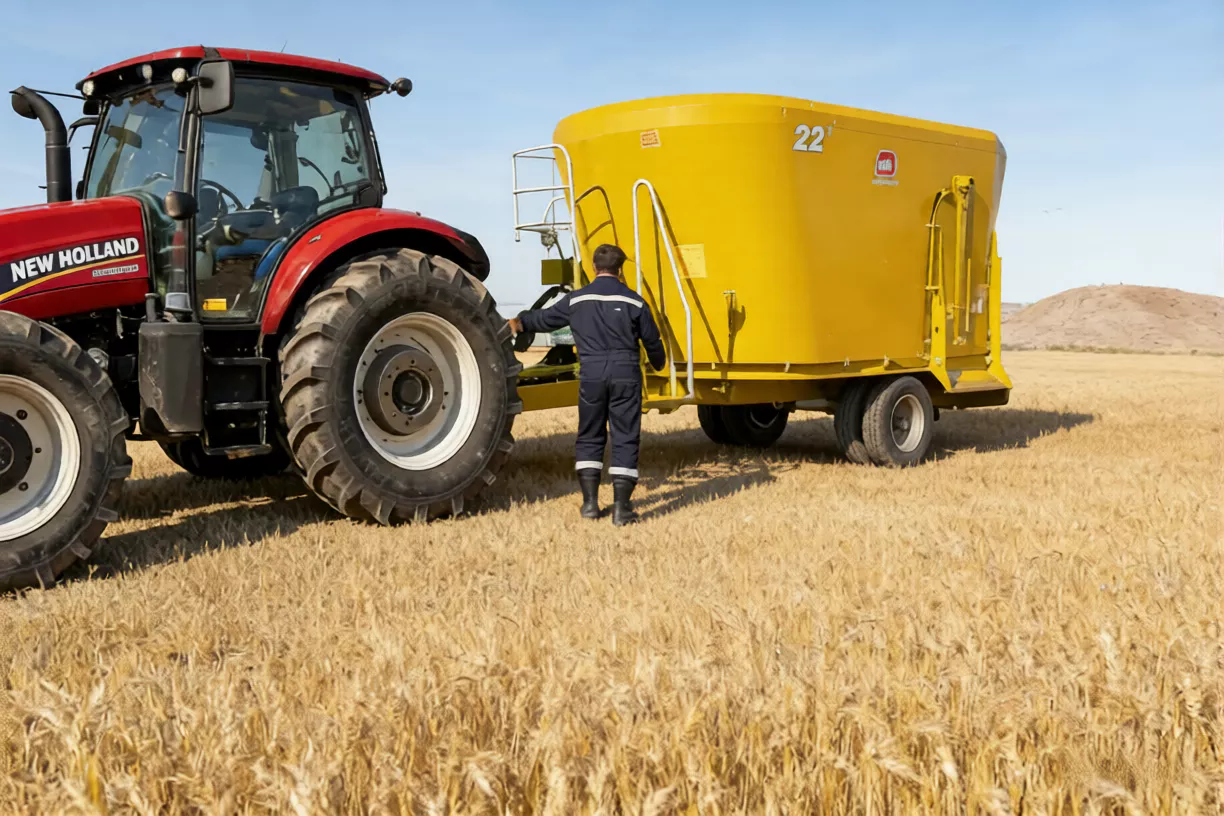
Powertrain Selection Guide: Eradicating Guesswork
Selecting the correct PTO drive shaft for a power harrow is a critical engineering calculation. Undersized shafts will shear; oversized, unyielding shafts will destroy the tractor’s internal gearing. Use our matrix below:
| Tractor Horsepower | Harrow Working Width | Target Soil Condition | Recommended Series | Mandatory Safety Device |
|---|---|---|---|---|
| 40 – 60 HP | 1.5m – 2.0m | Sandy Loam / Light Tillage | Seria 4 | 2-Disc Friction Clutch |
| 60 – 100 HP | 2.0m – 3.0m | Medium Clay / Occasional Rocks | Seria 6 | 4-Disc Heavy Slip Clutch |
| 100 – 160 HP | 3.0m – 4.5m | Hard Red Clay / Rocky Terrain | Seria 8 | Cam Automatic Clutch |
| 160 – 250+ HP | 5.0m+ Folding Frames | Virgin Ground / Extreme Clods | Series 10 (CV Config) | Oversized Slip Clutch + CV Joint |
* Note: When calculating length, ensure the tractor and implement are level (shortest distance between shafts). Always leave at least 25-50mm of compression allowance and ensure the tubes overlap by at least 1/3 of their length when fully extended.
Heavy Machinery Workshop: Precision Hitching Protocol
- Safety Lockout: Shut down the tractor engine, remove the key, and engage the parking brake. Ensure the rotary harrow is resting on solid, flat ground with the hydraulics fully lowered.
- Spline Preparation: Vigorously clean both the tractor’s output shaft and the implement’s input shaft with a wire brush. Apply a liberal coat of anti-seize high-temperature compound to prevent fretting wear.
- Orientacja kierunkowa: Do not install backward! Locate the tractor icon molded into the plastic guard. The end with the slip clutch MUST be attached to the implement (the rotary harrow) to minimize the rotational inertia transferred to the tractor.
- Engagement and Locking: Depress the quick-release pin or collar. Slide the yoke onto the spline until you hear a distinct “click”. Aggressively push and pull the yoke to guarantee the locking mechanism is securely seated in the groove.
- Anti-Rotation Security: Fasten the guard chains to stationary points on both the tractor chassis and implement frame. Leave enough slack for turning, but not enough to wrap around the tube.
- Interference Clearance Test: Slowly raise and lower the 3-point linkage through its full arc. Visually confirm the PTO shaft does not bind, bottom out (compress fully), or separate. Engage the PTO at idle speed to check for vibrations before ramping up to 1000 RPM.
Operational Troubleshooting Map: Preventing Field Downtime
Based on mechanical dynamics, we have mapped out the most common obstacles encountered in abrasive agricultural environments and their direct resolutions:
Fault 1: Violent Vibration Shaking the Tractor Cab
Diagnosis: 1) The yokes on the inner and outer tubes are out of phase (not aligned in the same plane), usually caused by reassembling incorrectly after cutting. 2) The working angle exceeds 25 degrees. 3) Worn or shattered needle bearings in the cross journal.
Rezolucja: Separate the tubes and align the indicator arrows so the inner yokes are perfectly parallel. Lower the implement height to reduce the angle. Replace the U-joint assembly immediately if play is detected.
Fault 2: Slip Clutch Smoking Constantly, Smell of Burning Material
Diagnosis: 1) Spring tension is set too low for the current soil hardness. 2) Friction discs are worn below minimum thickness. 3) Rust has bonded the plates together after winter storage, requiring a pre-season “slip” to free them.
Rezolucja: Tighten all spring nuts evenly according to the manual’s height specification to increase torque capacity. If discs are below 2mm, replace the entire disc set. Always back off springs and slip the clutch for 3 seconds before the first use of the season.
Fault 3: Telescopic Tubes Jammed Solid (Will Not Compress/Extend)
Diagnosis: 1) Lack of lubrication causing galling (metal transfer). 2) Tubes have twisted slightly under massive torque overload. 3) Mud and debris entered through a compromised wiper seal.
Rezolucja: Remove from the tractor and use a physical puller. Inspect for any visible twisting (candy-cane effect); if present, scrap the shaft. If straight, thoroughly clean the profile cavities, apply graphite grease liberally, and replace the seals.
[Australia] Local Industry Application Cases & Defense Logs
📍 Sydney, New South Wales (NSW)
Scenario: Large-scale grain farm with a 4-meter folding rotary harrow.
Terrain: Severely compacted clay caused by prolonged drought, containing hidden flint blocks.
Field Note: Client was shearing 5-8 bolts a day on their OEM shaft. We upgraded them to a Series 8 shaft with a Cam Clutch. Upon hitting rocks, the cam simply disengages with a loud click, then auto-resets when clear. Saved the farm approximately 60 hours of maintenance downtime in a single month.
📍 Melbourne, Victoria (VIC)
Scenario: Wetland pasture renovation project.
Terrain: Muddy, waterlogged, highly acidic and corrosive soils.
Field Note: Original bearing seals failed submerged in mud, causing needle rollers to rust and seize. EVER-POWER deployed U-joints with triple-lip Viton seals and an epoxy anti-corrosion coating. After two wet seasons, internal grease remained pristine with zero corrosion.
📍 Perth, Western Australia (WA)
Scenario: Broadacre Wheatbelt soil preparation.
Terrain: Extremely abrasive, dry sandy soils creating airborne quartz dust.
Field Note: Fine quartz sand acts like sandpaper, destroying cheap plastic guards and wearing down telescopic tubes. Our UV-stabilized HDPE guards and carburized star-profile tubes exhibited incredible wear resistance. After 800 hours, tube wear was less than 30% of the previous brand.
📍 Brisbane, Queensland (QLD)
Scenario: Subtropical high-intensity sugarcane field tillage.
Terrain: 40°C+ ambient temperatures resulting in massive thermal stress on drivelines.
Field Note: Overheating slip clutches were igniting dry sugarcane trash. We introduced our ventilated clutch housing featuring independent heat dissipation fins, packed with Mobil high-temp lithium grease. Thermal imaging showed a 45°C drop in operating temps, eliminating the fire hazard entirely.
📍 Adelaide, South Australia (SA)
Scenario: Barossa Valley vineyard inter-row narrow rotary harrowing.
Terrain: Extremely tight headland turning space requiring continuous power output.
Field Note: Disengaging the PTO during tight turns causes the harrow to bog down. We fitted a Double 80° Wide Angle CV PTO Shaft. This allowed the tractor to make aggressive turns—almost touching the implement—while maintaining smooth, chatter-free power transmission.
Drive Technology Demystified: 10 Common Questions
1. How often should I grease my rotary harrow PTO shaft?
Standard cross journals require premium EP lithium grease every 50 working hours, while telescopic tubes need it every 20 hours. Our EVER-POWER Extended Lubrication series extends this bearing interval up to 250 hours.
2. Can I run a 1000 RPM implement on my 540 RPM tractor output?
Absolutely not. Using spline adapters to force this connection will run the harrow too slowly, causing the tines to drag rather than shatter clods, resulting in massive torque spikes that will destroy your gearbox.
3. Slip Clutch vs. Shear Bolt: Which is better for rotary harrows?
For a power harrow operating in variable soils, a multi-plate slip clutch or cam clutch is mandatory. Shear bolts will snap constantly upon hitting minor rocks, causing unacceptable productivity losses due to constant manual replacement.
4. How should I store the driveline during the off-season?
Remove it from the implement. Clean off mud, pump fresh grease into all zerks until old grease purges. Back off the slip clutch spring tension to prevent plates from rusting together, and store horizontally in a dry, dark shed away from UV light.
5. Why does my shaft clatter loudly when I lift the 3-point linkage?
This indicates the working angle has exceeded its physical limit (usually 25°-35°), causing the yokes to crash into each other. You must limit the lift height or upgrade to a Wide Angle CV joint to prevent catastrophic yoke failure.
6. Are your replacement parts interchangeable with other European brands?
Yes. Our universal joints, lemon/star profile tubes, plastic guards, and clutch friction discs are dimensionally compatible with major European systems, offering immense flexibility for field repairs.
7. What is the golden rule when cutting a PTO shaft to length?
You must cut exactly equal amounts off both the inner and outer tubes. Afterwards, meticulously file away all burrs inside and out, otherwise the telescoping action will jam instantly. Clean all iron filings before greasing.
8. Do I really need a Wide Angle CV Joint?
If you operate trailed power harrows or have very tight headlands requiring you to turn at angles up to 80° without shutting off the PTO, a Constant Velocity joint is an absolute requirement to prevent driveline destruction.
9. What causes rapid wear (fretting) on the tractor’s output spline?
This is caused by microscopic axial movement due to a loose locking pin or a lack of anti-seize lubrication. Continual micro-vibrations wear through the spline’s hardened surface layer. Always grease the splines.
10. The plastic safety guard has a hole; can I just tape it up?
Under Australian WorkSafe regulations, this is highly illegal and incredibly dangerous. A compromised guard loses structural integrity and will be torn apart by wind forces at 1000 RPM. You must replace the entire guard assembly immediately.
Complete Ecosystem: Agricultural Gearboxes & Precision Components
Forged for Extreme Torque: Agricultural Gearboxes for Rotary Harrows
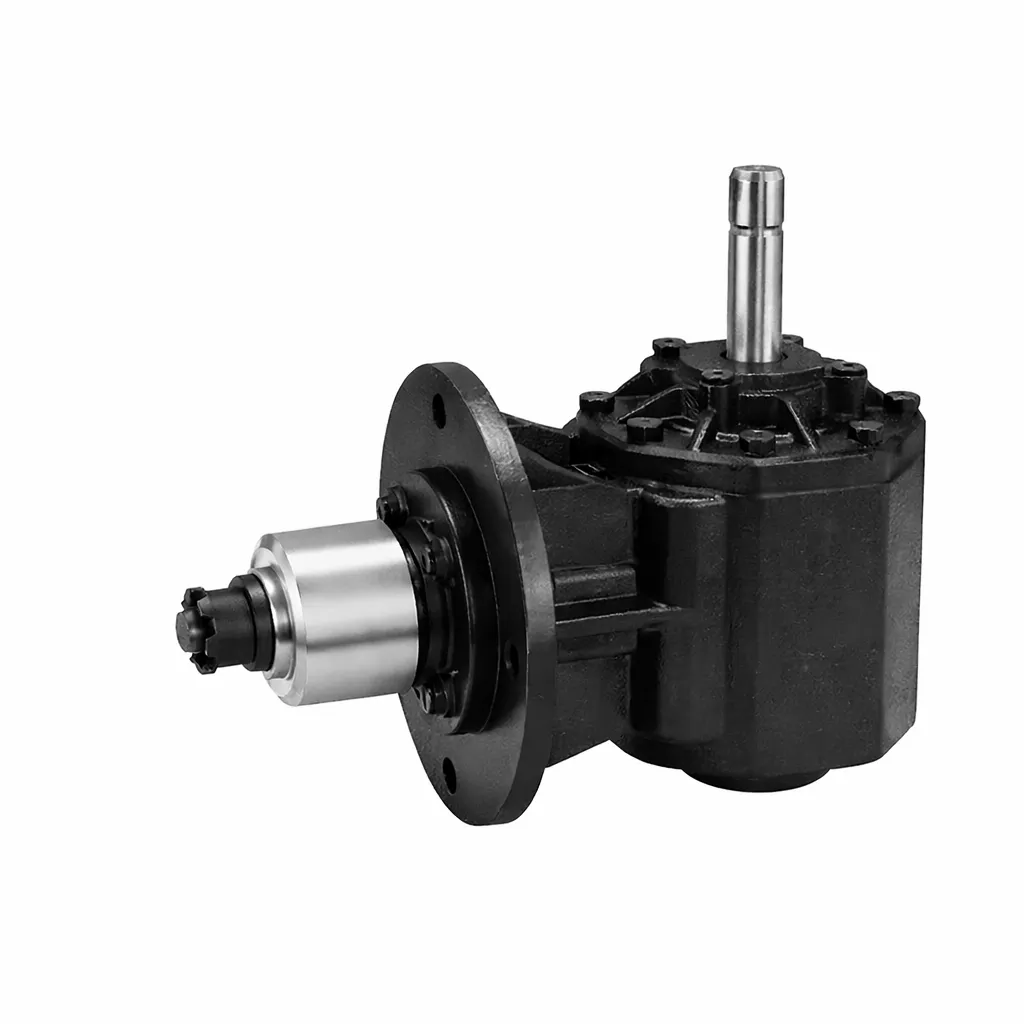
The power transmitted by our drive shafts is only as useful as the equipment receiving it. In a rotary harrow, the central agricultural gearbox changes the power direction (typically via 90-degree bevel gears) and adjusts the speed. EVER-POWER dominates not just in shafts, but in the metallurgical casting and precision machining of high-end agricultural gearboxes.
Material Science & Heat Management: We discard cheap grey cast iron in favor of Nodular Cast Iron (QT450-10) for our housings. This grants the gearbox exceptional tensile strength and shock absorption. Given the extreme heat generated during 1000 RPM operations in the Australian summer, we incorporate biomimetic cooling ribs and expanded oil reservoirs (compatible with ISO VG 220 synthetic oil) to keep temperatures well below the thermal decay threshold.
Precision Grinding & Sealing: Using Klingelnberg CNC machines, our Spiral Bevel Gears are ground and carburized to HRC 58-62, guaranteeing flawless mesh contact patches over millions of cycles. With double-lip Viton seals and labyrinth dust covers, we eradicate the industry’s nightmare of mud ingress and oil leakage. Combine our PTO shafts with our multi-axis output gearboxes for a perfectly calibrated, system-level powertrain solution.
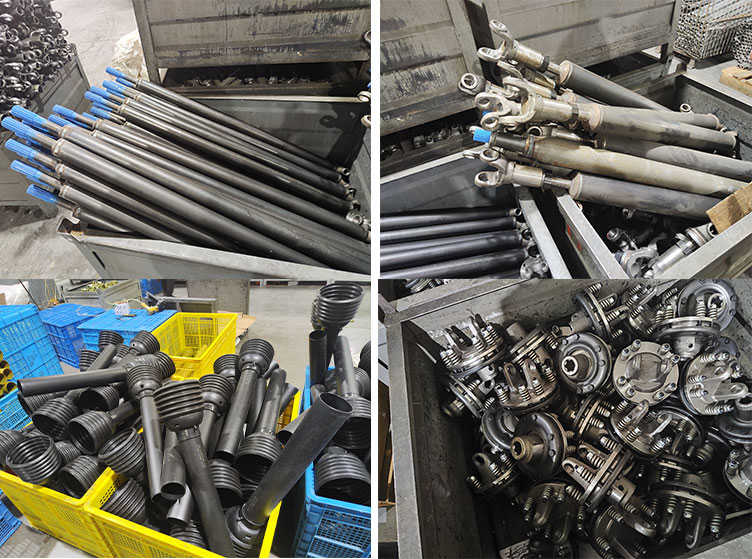
Critical Driveline Components & Accessories
Sprockets & Chains
High-frequency quenched agricultural sprockets and roller chains for auxiliary drives.
U-Joint Assemblies
Extreme-pressure forged cross journals with extended lubrication fittings for global repairs.
Safety Clutches
Shear bolt, ratchet, and friction disc clutches offering ultimate gearbox overload protection.
Safety Guard Kits
UV-resistant HDPE plastic covers and bearing retention collars, safeguarding operators.
Non-Standard Engineering: Bending Power to Your Will
EVER-POWER is not just a catalog distributor. As a fully integrated manufacturing powerhouse equipped with smelting, forging, CNC machining, and dynamic balancing facilities, we possess immense flexible production capabilities. Does your machinery require an unconventional wheelbase? Or a specialized involute spline interface?
Whether you need bespoke tube lengths, reinforced wall thicknesses, custom slip torque calibrations, or specialized coatings for highly corrosive environments, our engineering team can conduct 1:1 deep development based on your blueprints (OEM) or samples (Reverse Engineering). Choosing us means securing the source of the supply chain and the ultimate guarantee of engineering quality.
Contact Engineering for Quote & Blueprint Review
Explore our full range on the homepage: EVER-POWER Official Website