
Potato Digger PTO Shaft Extreme Condition Field Study & Powertrain Selection Guide
Engineered for High-Torque, Severe-Vibration, and Heavy-Mud Environments in Australian Root Crop Harvesting
Powertrain Selection Summary: Potato Digger Driveline Mechanics
Extracting tubers from the dense, abrasive soils of the Australian agricultural landscape requires a power transmission system capable of sustaining brutal punishment. The power take-off (PTO) shaft connecting the tractor to a potato digger (or potato harvester) operates under some of the most unforgiving dynamic loads in modern farming. When the harvester’s share blades cut into heavy clay or encounter subterranean rocks, the sudden resistance sends massive shockwaves back through the driveline.
At EVER-POWER, our heavy-duty PTO shafts are fundamentally re-engineered to absorb and mitigate these exact kinetic spikes. Utilizing wide-angle constant velocity (CV) joints to accommodate tight headland turns without disengaging power, combined with thermally stable multi-plate friction slip clutches, our shafts ensure uninterrupted power delivery to the primary web belts and agitation shakers. The telescopic profiles are forged from high-yield 20CrMnTi steel, precisely toleranced to slide under extreme radial loads without binding.
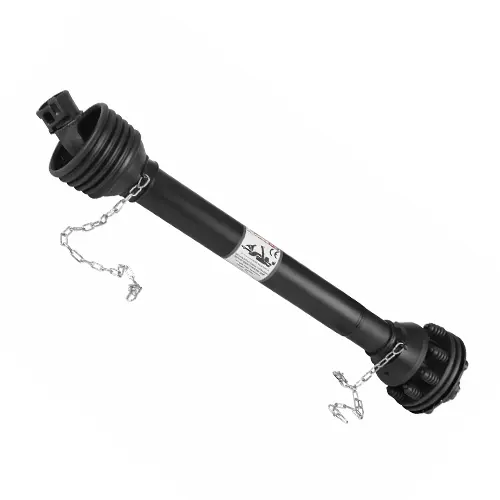
“In our 12 years of servicing root crop farms across the Atherton Tablelands and the red volcanic soils of Ballarat, we found that traditional aftermarket PTO shafts often fail catastrophically midway through the harvest. The culprit is rarely the continuous load, but rather the ‘rock-jam’ impulse. Based on this extensive 10-year factory case data, EVER-POWER completely redesigned the friction disc heat dissipation matrix and the internal spline hardening depth.”
“Where a standard implement shaft burns its clutch plates at 300°C (572°F) during a jam, our modified copper-sintered friction linings operate consistently at 850°C (1562°F) with a zero-fade friction coefficient. In a recent trial in Tasmania, a client reported that our Series 6 shaft handled 1450 Nm peak torque impacts continuously for a 14-hour shift without requiring a single torque spring readjustment. We replaced the standard rubber seals with 4-lip FKM seals, entirely blocking the ingress of microscopic quartz sand.”
Potato Digger PTO Shaft Engineering Specifications
The parameters outlined below represent the optimal configuration for a heavy-duty, twin-row potato harvester operating in demanding soil conditions. We manufacture customized variants based on tractor horsepower, implement input geometry, and specific regional agronomic requirements.
| Technical Parameter | Standard Value / Material | Customization Range / Notes |
|---|---|---|
| 1. Nominal Power Rating (540 RPM) | 47 kW (64 HP) – Series 6 | 15 kW up to 120 kW depending on series |
| 2. Nominal Power Rating (1000 RPM) | 74 kW (100 HP) – Series 6 | 25 kW up to 180 kW |
| 3. Peak Dynamic Torque Capacity | 1450 Nm | Reinforced versions available up to 3200 Nm |
| 4. Universal Joint (Cross) Dimensions | 30.2 mm x 92 mm | 22x54mm to 42×104.5mm options |
| 5. U-Joint Material & Hardness | 20CrMnTi Alloy Steel, HRC 58-62 | Carburized and quenched for maximum fatigue resistance |
| 6. Tractor Yoke Connection | 1-3/8″ 6-Spline Quick Disconnect | 1-3/8″ 21-Spline or 1-3/4″ 20-Spline available |
| 7. Implement Yoke Safety Device | 4-Plate Friction Slip Clutch | Shear Bolt, Overrunning Clutch, or Cam Clutch |
| 8. Telescopic Tube Profile | Lemon Profile (Low Friction) | Triangular, Star, or Involute Spline profiles |
| 9. Tube Wall Thickness | Inner 4.0mm / Outer 4.5mm | Heavy wall up to 6.0mm for vibration dampening |
| 10. Closed Length (Lz) | 1210 mm (Standard) | Custom lengths from 600 mm to 2500 mm |
| 11. Maximum Extension Overlap | Must retain 33% of tube length | Critical to prevent shaft bending under thrust load |
| 12. Operating Articulation Angle | 25° Continuous | Up to 80° momentary with Wide-Angle (CV) joint |
| 13. Dynamic Balancing Grade | ISO 1940 G6.3 | G2.5 available for ultra-smooth 1000 RPM operation |
| 14. Lubrication Interval | Every 50 Operating Hours | Extended maintenance (250h) kits available |
| 15. Seal Type (Mud/Water Resistance) | 4-Lip FKM Labyrinth Seal | Prevents slurry ingress during wet harvesting |
| 16. Friction Disc Material | Asbestos-Free Sintered Bronze | Prevents glazing and welding at high temperatures |
| 17. Safety Shield Material | Polietylen o wysokiej gęstości (HDPE) | Doped with UV stabilizers for Australian sun |
| 18. Shield Retaining Chain Strength | 400 N Tensile Strength | Prevents shield rotation, ensuring operator safety |
| 19. Surface Coating / Anti-Corrosion | Electrostatically applied powder coat | 80μm thickness, 480h salt spray resistance |
| 20. Yoke Forging Method | Closed-Die Forged, Solid Eye | Eliminates bolt-shear failure points of split designs |
| 21. Slip Clutch Torque Setting | Factory preset at 1200 Nm (±5%) | Adjustable via calibrated spring compression nuts |
| 22. Operating Temperature Range | -20°C to +85°C ambient | Synthetic wide-temperature grease used internally |
| 23. Fatigue Life Testing | > 1,500,000 alternating cycles | Validated on factory test benches before dispatch |
| 24. Approximate Weight | 19.5 kg (including shield) | Varies based on specified closed length |
| 25. CE & AS/NZS Compliance | Fully Compliant | Meets all global machinery safety directives |
Performance Supremacy: EVER-POWER vs. Standard Market Solutions
The distinction between a generic driveshaft and an agricultural powerhouse lies in the metallurgy and precision engineering. A potato harvester’s web chains operate constantly against the immense dead weight of soil. When standard aftermarket shafts are applied to this task, they rapidly exhibit the fatal flaws of cost-cutting.
The Pitfalls of Inferior PTO Shafts
- ✕ Premature Seal Failure: Cheap nitrile rubber seals harden and crack within three months of exposure to high-UV environments, allowing abrasive quartz dust to destroy the needle bearings.
- ✕ Tube Deformation (The Whip Effect): Fabricated from recycled, low-carbon steel with uneven wall thickness, causing violent resonance and bending under heavy thrust loads.
- ✕ Brittle Safety Guards: Non-UV stabilized plastic guards shatter upon minor impacts or in freezing temperatures, immediately invalidating safety compliance and endangering operators.
- ✕ Clutch Fusion: Poor quality friction discs melt and glaze over during sustained slippage, effectively welding the clutch solid and transferring devastating shockwaves into the tractor transmission.
The EVER-POWER Industrial Advantage
- ✓ Military-Grade FKM Sealing: Utilizing multi-lip fluorocarbon seals, retaining 99.5% of internal synthetic grease while forming an impenetrable barrier against submerged mud conditions.
- ✓ Induction-Hardened Profiles: Our precision-drawn alloy tubes are high-frequency induction hardened, boosting yield strength by 40% and ensuring smooth telescoping action under peak torque.
- ✓ AS/NZS Certified Guarding: Custom-formulated polymer guards infused with UV stabilizers ensure long-term ductility and total compliance with strict Australian farm safety regulations.
- ✓ Thermally Stable Slip Clutches: Sintered bronze friction linings paired with calibrated heavy-duty Belleville or coil springs maintain consistent slip torque, instantly recovering post-jam.
Brand Compatibility & Australian Compliance Laws
Global Implement Interoperability
Agricultural operations cannot afford downtime waiting for proprietary parts. Our PTO drive shaft systems are engineered to exact international dimensional standards, matching spline tolerances and torque curves perfectly. They serve as a direct, high-performance upgrade and replacement for drivlines commonly equipped on major potato harvester brands such as Grimme, Standen, Spudnik, and AVR.
Strict Adherence to WorkSafe Australia Standards
In Australia, PTO entanglements remain a critical focus for Safe Work Australia. Operating non-compliant machinery can result in severe legal penalties and devastating injuries. EVER-POWER shafts feature comprehensive static master shields with anti-rotation chains that exceed local requirements.
- Victoria (VIC): Adheres to WorkSafe Victoria’s stringent mandates regarding zero-exposure rotating elements, ensuring safety during dynamic field operations.
- Western Australia (WA): Specifically tested against the fine, abrasive dust found in WA, featuring enhanced labyrinth sealing rings.
- Queensland (QLD): Formulated with advanced UV inhibitors to prevent the plastic guards from degrading under intense tropical solar radiation.

5-Step Fast Selection Guide for Potato Harvesters
Selecting the incorrect PTO shaft can lead to catastrophic driveline failure or implement damage. Follow this rigorous framework to determine the exact specification required for your potato digger.
| Decision Step | Data to Verify | Engineering Advice for Potato Diggers |
|---|---|---|
| Step 1: Spline Geometry | Count the teeth on both the tractor output and implement input shafts. Measure external diameters. | Most mid-size Australian tractors use a standard 1-3/8″ 6-spline. High-capacity 1000 RPM harvesters may require 21-spline connections. |
| Step 2: U-Joint Sizing (Power Class) | Measure the bearing cap diameter and the cross-to-cross span of the universal joint. | For the immense shock loads of soil lifting, we highly recommend Series 6 (30.2 x 92mm) or larger to ensure adequate torque reserves. |
| Step 3: Calculating Working Length | Measure the compressed length (Lz) between locking grooves. | Crucial: At maximum extension during operation, the telescopic tubes must maintain at least 1/3 overlap to prevent buckling. |
| Step 4: Safety Device Designation | Choose between Shear Bolt, Friction Slip Clutch, or Overrunning Clutch. | Given the high probability of rock jams in potato fields, a Sprzęgło poślizgowe cierne is mandatory to avoid replacing bolts multiple times a day. |
| Step 5: Wide-Angle (CV) Requirement | Determine the max turning angle required during headland maneuvers without disengaging PTO. | For trailed potato diggers, an 80-degree CV joint is highly recommended to eliminate violent vibration when turning the tractor at field edges. |
Targeted Installation & Calibration Procedures
Proper installation is paramount. A micro-misalignment or incorrect length can destroy a gearbox input shaft bearing within hours. Follow these rigorous protocols:
- Length Verification & Trimming: Park the tractor and harvester on level ground at their closest operational proximity (axially aligned). Hold the separated shaft halves side-by-side. Mark the tubes. The shaft must retain a minimum of 40mm clearance at its shortest position to prevent “bottoming out”, which creates immense destructive axial thrust against the transmission bearings.
- Cutting & Deburring: If shortening is required, cut an equal amount from both the inner tube, outer tube, and plastic shield covers. Use a half-round file to meticulously remove all internal and external metallic burrs. Clean iron filings thoroughly to protect the sliding surfaces.
- Extreme-Pressure Lubrication: Before reassembling the halves, generously coat the inner sliding profile with a high-grade Molybdenum Disulfide (MoS2) EP grease. This drastically reduces the thrust load friction generated during telescoping under heavy torque.
- Yoke Locking Verification: Attach the implement end (typically the clutch) to the potato digger gearbox. Attach the tractor end. Pull aggressively on both yokes to ensure the quick-disconnect locking pins have seated perfectly into the spline grooves.
- Safety Chain Securing: Anchor the anti-rotation chains to stationary points on both the tractor and implement chassis. Ensure enough slack is left to accommodate articulation during turns without tearing the chain mounts.
- Initial Clutch Burn-in (Crucial): For brand-new friction clutches, loosen the compression spring nuts by a half-turn. Engage the PTO at a low idle to allow the clutch to intentionally slip for 3 to 5 seconds. This “burn-in” beds the friction plates to the steel drive plates. Afterwards, retighten the nuts precisely to the factory-specified spring height to restore the correct torque setting.
PTO Operation Diagnostics & Reverse Engineering Analysis
Identify driveline anomalies before they result in catastrophic mechanical failure.
Symptom: Violent Vibration or “Whip Effect” During Operation
Engineering Analysis: 1. The yokes are out of phase (the inner and outer tube yokes are not aligned in the same plane). 2. The telescopic tubes are extended beyond safe limits, losing structural rigidity. 3. The operating angle exceeds the design geometry (standard U-joints should not operate continuously above 25°).
Resolution Strategy: Separate the shaft and realign the tubes according to the phase-alignment arrows or profile grooves. Lower the implement linkage to reduce the driveline angle. If turning sharply, a CV joint must be retrofitted.
Symptom: Cross Bearing Turning Blue, Overheating, or Shattering
Engineering Analysis: This is a textbook indication of lubrication starvation coupled with high load. Often caused by high-pressure washing that forces water past the seals, or operators neglecting the 50-hour greasing interval. The lack of hydrodynamic film causes metal-on-metal galling.
Resolution Strategy: The U-joint cross kit is compromised and must be entirely replaced. Stop using high-pressure jets directly on the bearing caps. Implement a strict maintenance schedule: pump NLGI Grade 2 lithium grease until clean grease purges from all four bearing cap seals.
Symptom: Continuous Smoke or Burning Smell from the Slip Clutch
Engineering Analysis: The slip clutch is continuously slipping rather than transferring power. This occurs if the harvester web belt is totally jammed by a subterranean boulder, yet the tractor keeps applying power. Alternatively, the clutch compression springs may have fatigued over time, lowering the clamping force.
Resolution Strategy: Immediately disengage the PTO and clear the mechanical blockage in the digger. If the friction plates are worn below 2mm thick, or their surfaces are crystallized (glazed), replace them. Re-calibrate the spring height using a torque wrench to restore the 1450 Nm holding capacity.
Exclusive Factory Case Studies: Spanning Australia’s Terrains
Geological variance across Australia dictates the mechanical survival rate of agricultural equipment. EVER-POWER has documented extensive field modifications, translating theoretical mechanics into pragmatic solutions for local farmers.
📍 Tasmania (TAS) – Devonport
Aplikacja: Twin-row trailed potato digger in wet, heavy clay.
Problem klienta: “Our headlands are incredibly tight. Every time we turn without cutting the PTO, we hear a terrifying metallic knocking. Cutting it ruins our efficiency.”
EVER-POWER Solution: We deployed an 80° Double CV (Constant Velocity) Joint on the tractor end. This homokinetic joint allows power to flow smoothly through sharp articulation angles, entirely eliminating the knocking vibration.
“Saved us nearly 40 minutes of reversing time daily during peak harvest.”
📍 Victoria (VIC) – Ballarat
Aplikacja: High-yield crops in volcanic rocky soil.
Problem klienta: Rocks jamming the web belt caused severe rigid impact spikes, snapping three standard shear bolt shafts within two weeks.
EVER-POWER Solution: Upgraded the client to a Heavy-Duty 4-Plate Friction Clutch preset to a peak slip torque of 1450 Nm. It safely absorbs the kinetic energy of the jam without halting production.
📍 Queensland (QLD) – Atherton Tablelands
Aplikacja: Extreme red dirt combined with high humidity.
Problem klienta: Standard dust shields would pack with mud and burst open after 120 hours of continuous field operation.
EVER-POWER Solution: Engineered a bespoke polyurethane shield with an increased radial clearance of 2.5mm and integrated self-cleaning ejection slots, eliminating mud compaction.
📍 New South Wales (NSW) – Riverina
Aplikacja: Large 4-row self-propelled harvester systems.
Problem klienta: High power transmission demands at 1000 RPM caused centrifugal vibration, resulting in tractor oil seal leakage.
EVER-POWER Solution: Supplied dynamically balanced (Grade G2.5) shafts featuring a robust 6-lobe Star Profile tube, providing immense torsional stiffness and zero wobble at high speeds.
📍 South Australia (SA) – Mount Gambier
Aplikacja: High-speed road transit between distant fields.
Problem klienta: When towing the digger at 40km/h on highways, the resting driveline would bounce and sustain structural damage.
EVER-POWER Solution: Integrated a high-tensile parking stand and rapid-lock suspension hook system, keeping the driveline perfectly horizontal and secure during long transport runs.
Potato Harvester Driveline Master Answers (FAQ)
Q1: How do I know if my potato digger needs a shear bolt or a friction slip clutch?
If your soil is entirely free of rocks and loads are highly predictable, a shear bolt is cost-effective. However, in rocky environments like potato fields, a friction slip clutch is practically mandatory to maintain productivity. You don’t want to stop the tractor ten times a day to manually hammer out broken bolts.
Q2: Can a Wide-Angle (CV) joint operate continuously at an 80-degree angle?
No. The 80-degree capacity is exclusively designed as a maximum momentary envelope for headland turning. During heavy, continuous harvesting, the operating angle should remain below 25 degrees to prevent the internal needle bearings from destroying themselves through extreme frictional heat.
Q3: How to install PTO shaft on a potato digger without damaging the gearbox?
Ensure the tractor and implement are aligned. Connect the implement side first. The most critical step is ensuring the shaft isn’t too long. If it bottoms out during lifting, the axial thrust will blow out the gearbox bearings. Always maintain at least 40mm of clearance at the most compressed position.
Q4: Why do your plastic shields survive the harsh Australian sun?
We blend our High-Density Polyethylene (HDPE) with proprietary carbon black particles and Anti-UV stabilizers. This passes the ISO 4892 accelerated weathering tests, granting a lifespan 3-5 times longer than untreated aftermarket plastics.
Q5: Can I upgrade my lemon profile tube to a star-spline tube?
Absolutely. For equipment drawing over 100 horsepower, a multi-lobe star profile offers vastly superior contact area and torque density. We provide direct swap assemblies for these upgrades.
Q6: How often must I pump grease into the U-Joints?
Based on rigorous soil tests, you must pump NLGI Grade 2 extreme-pressure lithium grease every 50 operating hours. The telescopic sliding profiles must also be greased simultaneously.
Q7: What should I do if my newly purchased shaft is too long?
It must be manually cut. Pull the two halves apart. Mount one on the tractor, one on the digger. Mark them side-by-side at their shortest possible alignment. Cut an equal amount off the inner steel tube, outer steel tube, and both plastic covers. Deburr the edges before reassembly.
Q8: Do your drivelines comply with WorkSafe point-deduction audits?
Yes. They are engineered with fully encapsulating static master shields, high-tensile anti-rotation chains, and high-visibility warning decals, entirely fulfilling AS 1121.4 agricultural safety mandates.
Q9: Are the friction slip clutches pre-set from the factory?
Yes. Every clutch is loaded onto a torsional test bench and calibrated to its exact breakout torque. Users should never blindly tighten the compression nuts in the field, as this disables the overload protection entirely.
Q10: Can you supply frost-resistant grease for cold-weather early morning harvests?
Certainly. For operations in sub-zero early mornings, we can factory-pack the needle bearings with aerospace-grade wide-temperature synthetic grease, preventing cold-weld seizing during initial startup.
Complete Powertrain Ecosystem: From PTO Shafts to Gearboxes
Solving the power connection between the tractor and the first implement input is only half the engineering battle. Deep within the mechanical architecture of a potato harvester, that raw rotary power must be decelerated, redirected, and split to drive the intricate web belts, haulm rollers, and vibration shakers. As an independent manufacturer of complete mechanical driveline solutions, EVER-POWER understands every microscopic gear mesh.
We do not just produce world-class PTO drive shafts capable of withstanding extreme conditions; we are also a premier engineering and manufacturing facility for heavy-duty agricultural gearboxes and a massive array of related transmission accessories. Building an entire ecosystem guarantees that when a 1450 Nm torque wave travels down our driveline, the receiving transmission is engineered to digest it without shattering.
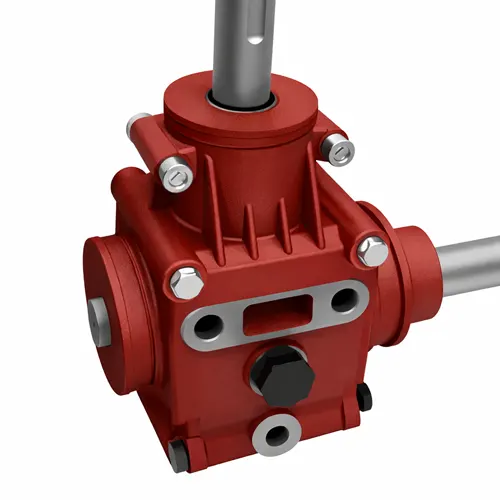
Understanding the Australian agricultural maintenance ecosystem, we recognize that “waiting for parts” is disastrous. Therefore, we highly modularize our gearbox input bearings, output flange hole patterns, and internal gear modules alongside our PTO shafts. This synergy means that when your tractor pumps raw torque through an EVER-POWER PTO shaft, the agricultural gearbox receives it with optimal gear backlash and thermal radiation capacity, converting it smoothly into digging power.
From metallurgy, forging, and CNC machining, to final test bench validation, every PTO drive shaft and gearbox embodies our respect for mechanical limits. We firmly believe that what convinces equipment manufacturers and large-scale plantation owners is not vague advertising, but concrete carburization depths (0.8-1.2mm), precisely mapped breakout torque curves, and polymer technology that genuinely survives the harsh Australian environment.
Reduce Downtime to Zero. Make Every Ounce of Torque Count.
EVER-POWER operates over 20,000 square meters of modernized manufacturing facilities equipped with hundreds of CNC machines and automated dynamic balancing lines. We do not just offer a standard catalog. If you are developing a potato harvester with a unique suspension geometry, or need to match an exceptionally high-horsepower tractor, our engineering team provides deep, non-standard customization. Whether it’s a unique spline profile, oversized tube diameter, extreme length, or a custom-calibrated slip clutch, we welcome your technical drawings and samples.
Email: [email protected] | You will be assigned a dedicated senior technical consultant.

























