
PTO Shafts for Manure Spreaders
Engineered for Australian Agricultural Demands | 20 Years of Transmission Manufacturing Excellence
📋 Senior Engineer’s Field Notes: The Australian Challenge
In our 20 years of servicing large-scale cattle stations and dairy farms across Queensland and New South Wales, we documented a recurring mechanical failure. Traditional transmission units on manure spreaders were shearing at the cross journals within a single season. The combination of dense, wet manure and sudden blockages from foreign debris in the hopper creates extreme shock loads that standard yokes cannot withstand.
During an onsite inspection at a 500-head dairy facility near Brisbane, we analyzed a snapped implement driveline. The root cause was inadequate torsional stiffness coupled with a poorly calibrated shear bolt. Based on these Australian field operations, EVER-POWER completely redesigned our heavy-duty series. We introduced a 20CrMnTi forged steel yoke and a precision-calibrated slip clutch system that engages at exactly 2500 Nm. This direct modification extended the operational lifespan of the drive mechanism from 8 months to over 4 years under rigorous daily use, ensuring continuous nutrient distribution across paddocks without catastrophic downtime.
Power System Selection & Core Technology Review
High Torque Density
Designed specifically for the intense initial startup inertia of loaded manure spreaders. Operating consistently at 540/1000 RPM with a peak torque transfer capability exceeding 3500 Nm, absorbing sudden spikes from beater jams.
Corrosion Resistance
Australian agricultural environments feature high UV exposure and corrosive acidic manure environments. Our tubes are treated with a specialized electrophoretic coating, enduring 500+ hours in salt spray testing environments.
Dynamic Load Handling
Equipped with wide-angle constant velocity (CV) joints that permit smooth power transmission up to 80 degrees. This allows operators to make tight headland turns without disengaging the tractor’s power take-off.
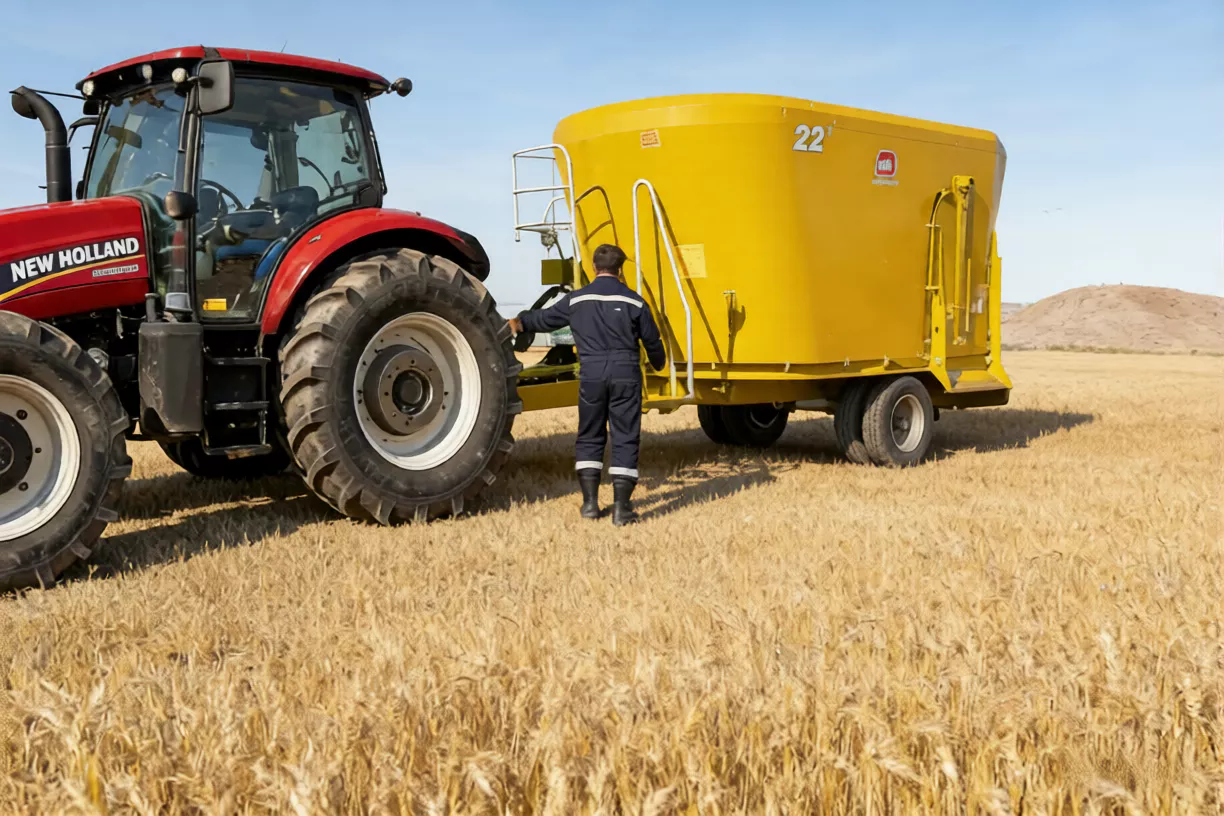
Operational Mechanics: How the PTO Shaft Drives the Manure Spreader
The primary function of the tractor PTO shaft in a manure spreading application is to securely transfer rotational energy from the tractor’s output spline directly to the implement’s input gearbox. The process demands absolute mechanical integrity due to the variable density of the material being discharged.
Upon engaging the tractor’s clutch, the rotational force travels through the telescoping driveline. The inner and outer profile tubes adjust dynamically to accommodate the changing distance between the towing vehicle and the trailer as it navigates uneven terrain. The power is fed directly into a heavy-duty agricultural gearbox, which splits the mechanical energy in two directions: vertically to drive the twin or horizontal beaters that pulverize the manure, and horizontally to power the floor apron chain that advances the material toward the rear discharge point.
When rocks, frozen clumps, or fencing wire accidentally enter the spreader, the beaters undergo immediate deceleration. To prevent this destructive reverse kinetic energy from returning to and shattering the tractor’s transmission, the EVER-POWER shaft incorporates a multi-plate friction slip clutch. The clutch plates slip at a pre-calculated torque threshold, isolating the driveline and protecting all connecting machinery.
Comprehensive Technical Specifications
| Parameter | Standard Specification | Customizable Range / Options |
|---|---|---|
| Series Size | Series 6 / Series 8 / Series 9 | Series 1 through Series 10 |
| Max Dynamic Torque (Nm) | 2,100 Nm @ 540 RPM | Up to 4,500 Nm |
| Tractor End Yoke Spline | 1-3/8″ 6-Spline (Standard) | 1-3/8″ 21-Spline, 1-3/4″ 20-Spline |
| Wdrożenie połączenia końcowego | Slip Clutch (Friction Type) | Shear Bolt, Overrunning Clutch, Cam Clutch |
| Cross Journal Dimensions (mm) | 30.2 x 92.0 / 34.9 x 106.0 | 22.0 x 54.0 to 41.0 x 118.0 |
| Profil rury teleskopowej | Lemon / Star Profile | Triangular, Splined, Hexagonal |
| Overall Compressed Length | 1000 mm / 1210 mm | 500 mm to 2500 mm |
| Max Operational RPM | 1000 obr./min | Custom balancing for >1000 RPM |
| Materiał jarzma | Forged Steel 20CrMnTi | Ductile Iron, Cast Steel |
| Surface Hardness | HRC 58-62 (Bearings) | Custom Carburizing Depth |
| Constant Velocity (CV) Angle | Standard (Max 15° continuously) | 80° Wide Angle CV Joint |
| Guard Material | UV-Resistant Polyethylene | Heavy-duty flexible plastic |
| Interwał smarowania | 50 Hours | Extended lubrication cross journals (100h) |
| Temperatura pracy | -20°C to +80°C | High temp grease configurations |
| Safety Chain Included | Yes (Tractor and Implement sides) | Standard requirement |
| Torsional Stiffness | High (Solid rod reinforced options) | Depending on tube wall thickness |
| Connection Mechanism | Quick Release Collar / Push Pin | Interfering bolt, clamp yoke |
| Grubość ścianki rury | 3.4 mm (Outer) / 4.0 mm (Inner) | Up to 5.5 mm for heavy series |
| Noise Output | < 85 dB at 540 RPM | Balanced for low vibration |
| Paint / Coating | Black Epoxy Powder Coat | Custom colors (Yellow, Green, Red) |
| Static Load Rating | 40,000 N | Dependent on bearing size |
| Total Weight (Approx) | 18.5 kg (Series 6, 1000mm) | Varies by length and clutch |
| Clutch Plate Diameter | 140 mm (2 or 4 discs) | 160 mm / 200 mm for ultra-heavy duty |
| Australian Compliance | AS 1121.1 Compliant Guards | Full certification provided |
| Warranty Period | 12 Months Standard | Extended warranties available |
Cross-Brand Compatibility & System Upgrades
Upgrading legacy manure spreaders does not require entire system overhauls. Our drivelines are precisely engineered following strict international metric and imperial dimensioning protocols. We supply units that seamlessly integrate with existing agricultural implement setups.
Our manufactured components can act as a direct, perfect replacement for OEM shafts commonly found on machines originally equipped with European or North American transmission units.
Australian Agricultural Equipment Compliance & Safety Standards
Agricultural safety is highly regulated across Australia. The mechanical rotation of a wał napędowy WOM at 540 RPM is a known critical hazard. State authorities like SafeWork NSW, WorkSafe Victoria, and Workplace Health and Safety Queensland strictly enforce mechanical guarding laws.
- AS 1121.1 Agricultural Tractor PTO Guards: All EVER-POWER supplied shafts sent to the Australian market feature robust, non-rotating polymer shields. The guarding encompasses the entire length of the tube and extends over the universal joints via protective cones.
- Restraint Chains: Per local WorkSafe bulletins, the safety shield must remain stationary while the inner steel core rotates. We provide heavy-duty D-shackle restraint chains designed to latch onto the tractor’s master shield and the implement casing.
- O-H&S Audit Readiness: Farm contractors utilizing our equipment pass routine OHS compliance checks seamlessly, mitigating the risk of heavy fines imposed for exposed spinning drivelines.

Quick Specification Selection Matrix
Evaluate the power output of the tractor and the volumetric capacity of the manure spreader to match the ideal cross journal series and safety clutch.
| Tractor HP | Spreader Capacity | Recommended Shaft Series | Ideal Overload Protection | Tube Profile |
|---|---|---|---|---|
| 30 – 50 HP | Under 5 Cubic Meters | Seria 4 | Shear Bolt | Lemon |
| 50 – 80 HP | 5 – 10 Cubic Meters | Seria 6 | Friction Slip Clutch (2 Disc) | Triangular |
| 80 – 120 HP | 10 – 15 Cubic Meters | Seria 8 | Friction Slip Clutch (4 Disc) | Star |
| 120+ HP | Over 15 Cubic Meters | Series 9 / 10 (Wide Angle) | Heavy Duty Cam Clutch | Wielowypustowy |
Mechanical Installation Protocols for Manure Spreaders
Phase 1: Measurement & Cutting
Align the tractor and spreader on a flat surface. Separate the two driveline halves. Connect one half to the tractor and the other to the implement. Hold them parallel. Mark the necessary cut length, ensuring a minimum overlap of 30% of the total tube length when fully extended. Cut identical lengths from the inner and outer steel profiles and the plastic shielding.
Phase 2: Deburring & Lubrication
Utilize a metal file to remove sharp burrs from the cut ends to prevent scoring the internal slide mechanism. Liberally apply high-temperature lithium-based grease to the inner sliding profile. Clean the spline connections on the tractor and the spreader gearbox input shaft before mounting.
Phase 3: Secure Engagement
Slide the quick-release collar back and push the yoke onto the tractor’s output shaft. Ensure the locking pin snaps audibly into the retaining groove. Repeat for the implement side, ensuring the slip clutch is positioned on the implement side (not the tractor side). Anchor the guard safety chains securely.
Regional Implement Applications & Field Validations
Brisbane, Queensland (QLD)
Client Profile: 1200-head beef cattle feedlot operator.
The Challenge: Tropical humidity and acidic liquid manure caused standard metal guards to rust rapidly, freezing the telescopic tubes.
The Solution: Integrated a Series 8 shaft with a solid lemon profile, fully encased in our proprietary UV-resistant polymer guard. “The non-corrosive shielding has outlasted three spreading seasons without a single jam.”
Sydney, New South Wales (NSW)
Client Profile: Agricultural machinery dealership.
The Challenge: End-users complaining about snapped sheer bolts when spreading compacted composted manure.
The Solution: Upgraded their OEM supply to EVER-POWER drivelines featuring a 4-disc friction slip clutch rated for 2100 Nm, absorbing the initial torque spike instead of breaking a pin.
Melbourne, Victoria (VIC)
Client Profile: Large-scale organic wheat farm.
The Challenge: Maneuvering heavy rear-discharge spreaders in tight paddocks required constant PTO disengagement.
The Solution: Deployed our 80-degree Wide Angle Constant Velocity (CV) shaft. “Our operators now perform headland turns at full power, cutting spreading time by 15% daily.”
Perth, Western Australia (WA)
Client Profile: Contract manure spreading service.
The Challenge: Extremely dry, sandy environment causing premature wear in the universal joint needle bearings.
The Solution: Fitted shafts with triple-lip sealed cross journals and extended 100-hour lubrication cycles, preventing abrasive silica dust intrusion.
Adelaide, South Australia (SA)
Client Profile: Vineyard management cooperative.
The Challenge: Narrow vineyard spreaders require specific short-length profiles with high torsional strength.
The Solution: Customized a Series 4 shaft cut to a compact 600mm closed length with a specialized overrunning clutch to prevent inertia kickback when the tractor stops.
Driveline Diagnostic & Corrective Procedures
1. Excessive Vibration During Spreader Operation
Działanie naprawcze: Disconnect the driveline. Align the inner and outer yoke ears so they lie on the exact same plane. Reassemble. Verify that at maximum operational extension, at least 1/3 of the tube length remains engaged.
2. Constant Slipping of Friction Clutch
Działanie naprawcze: Completely loosen the compression bolts to free the clutch plates. Scuff the friction discs lightly with sandpaper to remove glazing. Re-tighten the springs evenly using a caliper, adhering to the exact compression height specified in the technical manual.
3. Premature U-Joint Failure / Cross Bearing Heat
Działanie naprawcze: Reassess the hitch drawbar height to reduce the joint angle. Implement a strict 50-hour greasing regimen, pumping grease until fresh lubricant purges from all four seals.
4. Shielding / Safety Guard Rotating with the Shaft
Działanie naprawcze: Immediately halt operation. Replace damaged safety chains. Unclip the guard cones and lubricate the nylon bearing rings located in the grooves of the metal yokes.
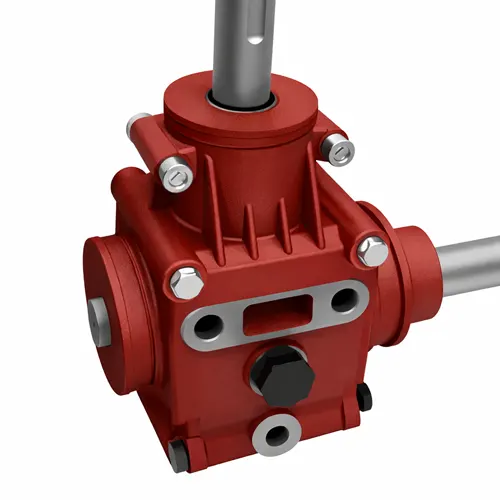
Power Distribution Synergy: Companion Agricultural Gearboxes
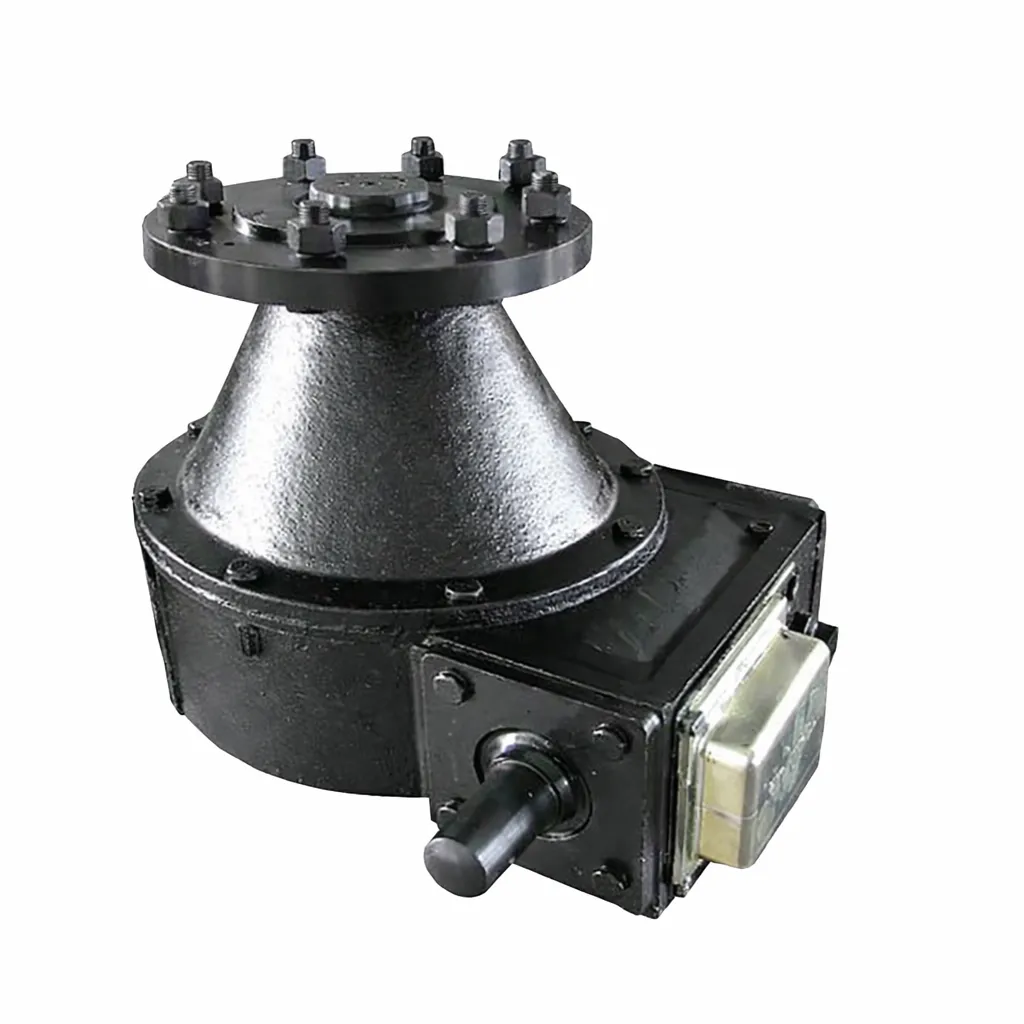
The mechanical integrity of a driveline is only as robust as the gearbox it engages. For advanced manure spreader mechanisms, transferring 540 or 1000 RPM from the tractor is merely the first stage. The kinetic energy must be efficiently stepped down and vectored at precise 90-degree angles to operate the floor apron chains and vertical beater drums. As a comprehensive transmission solutions provider, EVER-POWER engineers and manufactures heavy-duty agricultural gearboxes designed in perfect tandem with our driveline profiles.
Metallurgical Superiority in Gear Design
Inside the cast iron housing of our spreader gearboxes lie precision-cut bevel and spur gears. Standard market gearboxes often utilize inferior cast gears, which suffer from micro-fractures under the erratic load conditions of solid manure dispersion. EVER-POWER utilizes forged alloy steel (typically 20CrMnTi) subjected to an intense carburizing and quenching heat treatment. This metallurgical process results in a gear tooth surface hardness of 58-62 HRC, providing exceptional wear resistance against abrasive forces, while maintaining a ductile core to absorb sudden shock loads when foreign objects impact the beaters.
Thermal Dynamics and Lubrication Sealing
Gearbox failure in harsh Australian conditions is frequently traced to seal degradation, allowing extreme heat to vaporize lubrication while permitting the ingress of corrosive liquid manure. We integrate dual-lip Viton seals on both the input shaft (interfacing with the wałek odbioru mocy) and the output shafts. Viton provides vastly superior thermal stability compared to standard Nitrile rubber, preventing seal hardening and cracking during extended summer operations in Queensland or Western Australia. Furthermore, the housing geometry incorporates optimized oil fluid paths, ensuring splash lubrication reaches the highest tapered roller bearings even at low speeds.
Configuration and Ratio Adjustability
Manure spreaders require differing discharge rates depending on the agronomic needs of the pasture. Our gearboxes are available in multi-ratio configurations (e.g., 1:1, 1:1.5, or reduction ratios like 1.5:1). A robust T-box configuration is frequently utilized at the rear of the spreader to split the power perfectly symmetrically to twin vertical beaters. By pairing our friction slip clutch driveline directly to the input spline of our T-box gearbox, equipment manufacturers achieve a fully integrated, zero-compatibility-issue powertrain.
Selecting the complete transmission package from EVER-POWER guarantees precise spline mating, matched torque thresholds, and a unified technical warranty covering the entire power route from tractor to implement.
Supplementary Powertrain Components & Consumables
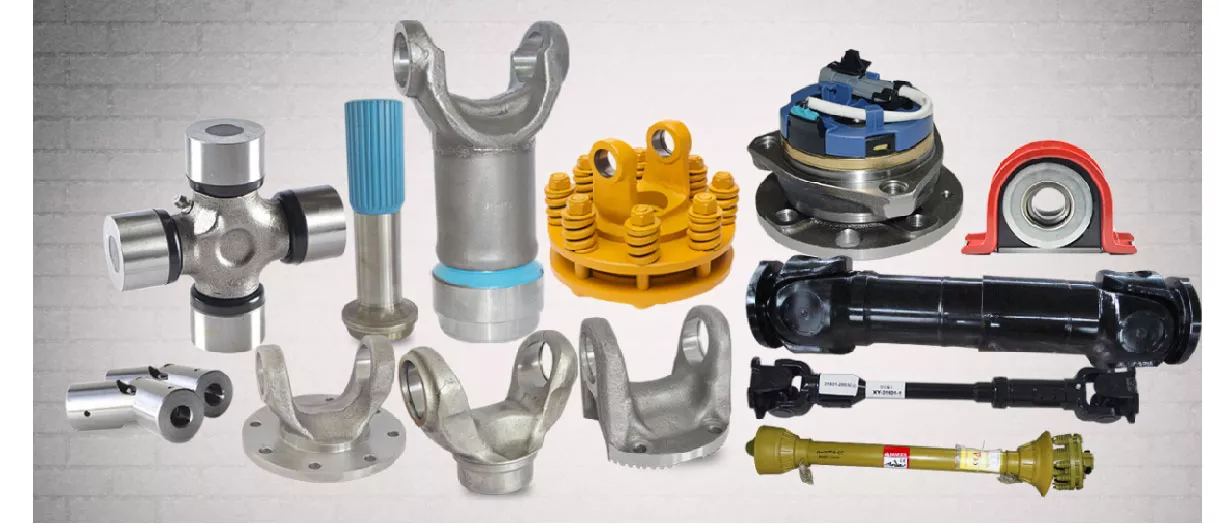
Replacement Yokes & Cross Journals
High-grade forged steel replacement end yokes, inner tube yokes, and greasable cross journal bearings available in all standard series dimensions.
Heavy-Duty Sprockets & Chains
Essential for the floor apron mechanism in spreaders. Hardened steel sprockets and roller chains designed to resist extreme tensile fatigue.
Friction Discs & Safety Shields
Asbestos-free replacement friction linings for slip clutches, alongside AS 1121.1 compliant UV-resistant plastic safety cones and tubes.
Professional Engineering Inquiries
1. How do I determine the correct length for a replacement unit?
Measure your existing unit in its fully compressed (closed) state, from the center line of the cross bearing on the tractor end to the center line of the cross bearing on the implement end. Never measure fully extended.
2. Why is a friction slip clutch preferred over a shear bolt for spreaders?
Manure density varies drastically. A shear bolt will break completely during a minor jam, forcing the operator to halt and replace the pin. A friction clutch slips momentarily to bypass the torque spike, then re-engages automatically, ensuring continuous field operation.
3. Are your profiles metric or imperial?
We manufacture both. Our lemon and star profiles align with European metric standards, while our splined and rectangular/square tubes align perfectly with North American imperial measurements.
4. What is the maximum operating angle without a CV joint?
Standard universal joints should not exceed a 15-degree continuous operating angle, or a maximum of 45 degrees during stationary equipment lifting. Exceeding this causes rapid bearing cage destruction.
5. Can we request custom-painted shielding for brand alignment?
Absolutely. As an OEM supplier, we provide custom safety shields and yoke powder coating in any requested RAL color to match your machinery’s branding.
6. How often should the telescopic tubes be greased?
The sliding metallic profiles must be cleaned and re-greased every 50 hours of operation. Lack of lubrication significantly increases thrust loads on the tractor’s output bearings.
7. What grade of grease is recommended for Australian conditions?
We mandate an NLGI Grade 2 lithium-complex grease with extreme pressure (EP) additives. It maintains viscosity despite ambient heat exceeding 40°C in the Australian outback.
8. Do you ship directly to end-users in Australia?
We primarily service OEM manufacturers, wholesale distributors, and large agricultural dealerships. However, we can arrange specialized freight for bulk orders required by major contracting firms.
9. What is the difference between a 6-spline and 21-spline yoke?
A 1-3/8″ 6-spline is the industry standard for 540 RPM operations. The 21-spline configuration is engineered for 1000 RPM systems, providing greater surface area for torque distribution at higher speeds.
10. Are your components tested for dynamic balance?
Yes. Units operating at or above 1000 RPM are computer dynamically balanced during manufacturing to prevent harmonic resonance, which can cause metal fatigue and equipment shudder.
Precision Manufacturing Meets Australian Durability
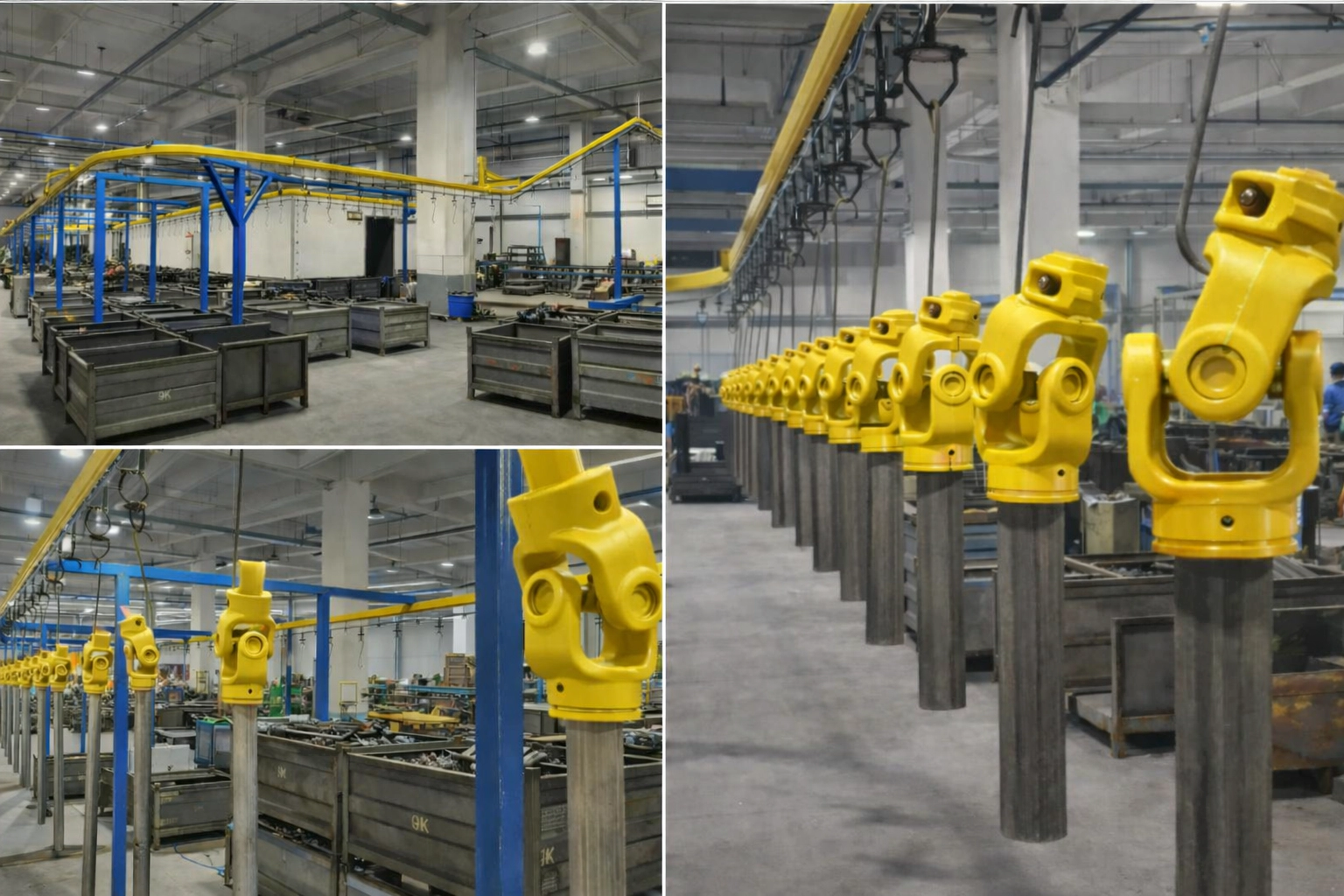
EVER-POWER commands a state-of-the-art production facility spanning over 20,000 square meters. We are not restricted to catalog items. Our engineering department specializes in bespoke, non-standard mechanical drivelines designed from customer blueprints or 3D models. Whether you require specific metallurgical blends, unique yoke forgings, or specialized torque limiter calibrations, we execute with millimeter precision.
Submit your technical drawings today for a rapid feasibility analysis and prototyping.

























