High-Performance PTO Shafts for Broadcast Seeders: Australian Field Application Guide
Engineered for precise power transmission in extreme agricultural environments. Delivering reliable torque for broadacre farming, pasture improvement, and fertilizer distribution across Australia.
Core Technology & Field Performance
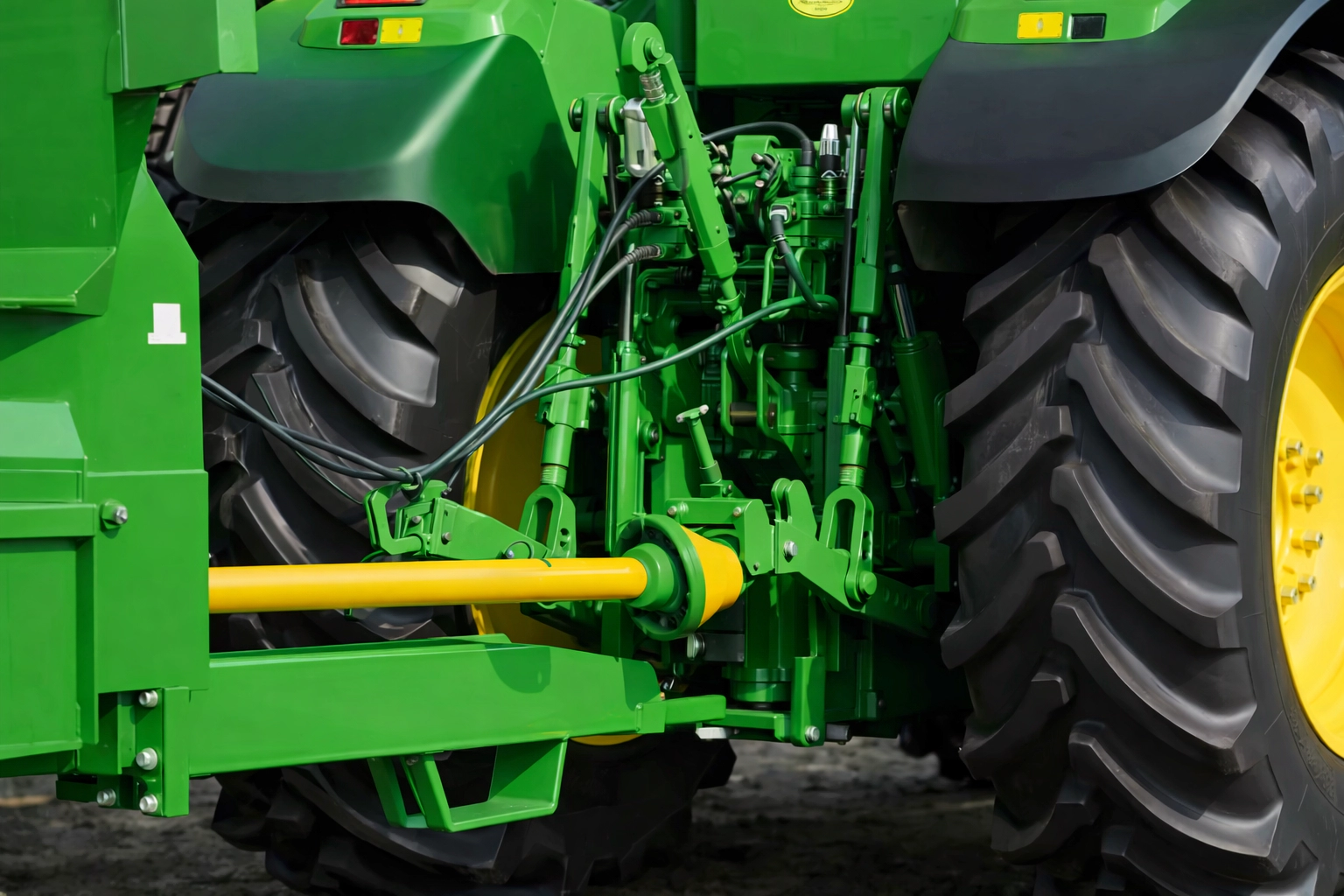
The operational integrity of a broadcast seeder relies heavily on the constant, uninterrupted rotational force delivered from the tractor’s power take-off. In the demanding landscapes of the Australian outback—ranging from the abrasive, dust-heavy conditions of the Western Australian Wheatbelt to the highly corrosive environments of coastal fertilizer spreading—standard drivelines face accelerated wear. A meticulously engineered Wał napędowy WOM serves as the critical mechanical artery, translating engine horsepower into precise disc rotation and agitator movement.
Engineer’s Field Notes: Overcoming Corrosive Contamination
“In our 15 years of servicing broadacre equipment across regional New South Wales and Victoria, we systematically observed that traditional power transmission units on broadcast seeders fail at the 300-hour mark. The primary culprit is not torque overload, but the microscopic infiltration of granulated superphosphate and urea dust into the universal joint bearings. These chemicals are highly hygroscopic and corrosive. Based on this field data, EVER-POWER re-engineered the seal architecture. We integrated multi-lip nitrile rubber seals and upgraded the cross journal metallurgy, effectively extending the maintenance-free operational window to 850 hours under identical corrosive conditions.”
Power System Configuration Parameters
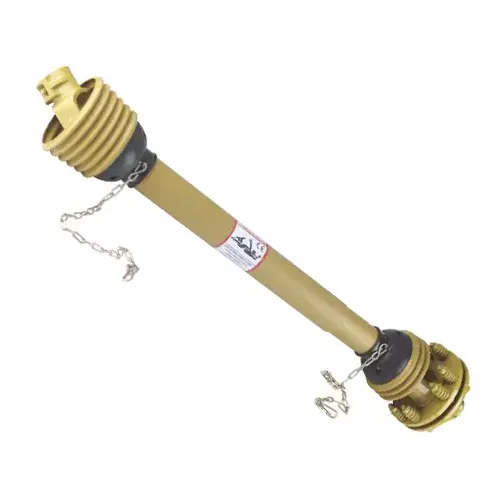
Selecting the correct driveline for a broadcast seeder requires exact alignment of mechanical specifications with the implement’s load profile. Broadcast seeders typically operate at 540 RPM, necessitating a transmission unit capable of dampening torsional vibration while maintaining 98.5% mechanical efficiency. Below is the strict engineering parameter matrix for our heavy-duty agricultural shafts.
| Kategoria parametrów | Specification Description | EVER-POWER Standard Value / Option |
|---|---|---|
| Tractor Connection Spline | Standard Implement Profile | 1-3/8″ 6-Spline (Standard) / 21-Spline (Optional) |
| Wdrożenie połączenia | Input Shaft Interface | 1-3/8″ 6-Spline or Plain Bore with Keyway |
| Wymiary czopu poprzecznego | Bearing Cap Diameter x Length | Series 4: 27.0mm x 74.6mm | Series 5: 30.2mm x 80.0mm |
| Dynamic Torque Rating | Maximum Operating Torque @ 540 RPM | 830 Nm (Series 4) / 1050 Nm (Series 5) |
| Static Torque Rating | Yield Point Torque | 1300 Nm (Series 4) / 1650 Nm (Series 5) |
| Telescopic Profile | Inner/Outer Tube Geometry | Lemon Profile / Triangular Profile / Star Profile |
| Grubość ścianki rury | Structural Integrity Factor | 3.2mm (Inner) / 3.4mm (Outer) |
| Yoke Metallurgy | Material Composition | Forged 45# Carbon Steel or 42CrMo Alloy |
| Overload Protection | Torque Limiting Mechanism | Shear Bolt Clutch / Friction Slip Clutch (Adjustable) |
| Wide Angle CV Joint | Constant Velocity Option | Available (80° Max Articulation for headland turns) |
| Operating RPM Range | Rotational Speed Tolerance | Standard 540 RPM (Max peak 1000 RPM) |
| Guard Shield Type | Safety Barrier | CE/AS Compliant UV-Resistant Polyethylene |
| Guard Bearing Material | Friction Reduction | High-Density Nylon (Self-Lubricating) |
| Grease Fitting Location | Maintenance Accessibility | Centralized Cross Journal & Guard Bearings |
| Surface Treatment | Corrosion Resistance | Black Oxide / Zinc Plating / Powder Coating |
| Temperatura pracy | Thermal Endurance | -30°C to +85°C |
| Długość po złożeniu (Lz) | Closed Measurement | Customizable: 600mm – 1210mm |
| Extended Length (Lmax) | Safe Operating Extension | Up to 1.5x Retracted Length (1/3 overlap maintained) |
| Connection Mechanism | Tractor Side Yoke | Quick Release Pin / Ball Collar |
| Dynamiczne równoważenie | Vibration Control | ISO 1940 Grade G6.3 |
Mechanical Dynamics: How It Powers the Seeder
In the context of a broadcast seeder (also known as a fertilizer spreader), the PTO shaft forms the primary driveline between the tractor’s power output and the implement’s gearbox. The mechanical sequence operates as follows:
- Input Stage: The quick-release yoke secures to the tractor’s splined stub, capturing the rotational kinetic energy (usually 540 RPM).
- Articulation & Transmission: The universal joints allow for the angular misalignment between the tractor and the suspended or trailed seeder. As the tractor traverses uneven paddocks, the telescopic inner and outer tubes slide axially, accommodating distance variations without binding.
- Overload Mitigation: Before power enters the seeder’s skrzynia biegów rolnicza, it passes through a clutch mechanism (shear bolt or friction disc). If the agitator jams on compacted fertilizer, the clutch disengages or slips, preventing catastrophic gearbox failure.
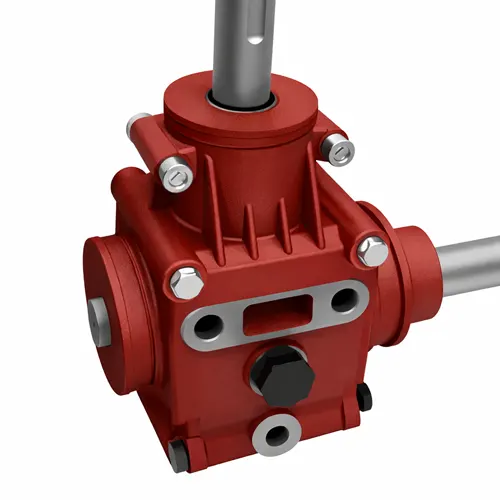
- Final Drive: The rotational energy enters the bevel gearbox, altering the drive angle by 90 degrees to spin the horizontal broadcasting discs, throwing seeds or granules in a calibrated spread pattern.
Component Compatibility & Brand Matrix
Our engineering tolerances guarantee seamless integration with existing global agricultural machinery standards.
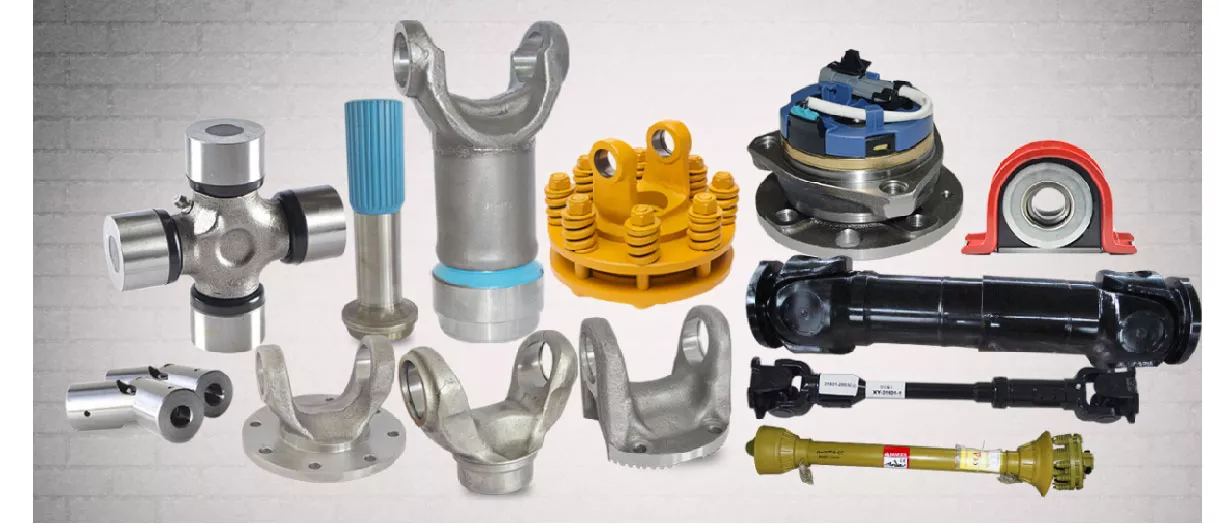
The EVER-POWER agricultural driveline series is engineered with precise dimensional parity to major European and North American profiles. Our components serve as direct drop-in replacements for machinery originally equipped with OEM drivelines. Whether you are maintaining a trailing seeder or a heavy-duty three-point linkage spreader, our yokes, cross journals, and telescopic tubes match standard industry codes.
(Note: All manufacturer names, trademarks, and part numbers mentioned are for technical reference and compatibility identification purposes only. EVER-POWER is an independent manufacturer and is not affiliated with, endorsed by, or sponsored by these trademark holders.)
Australian Machinery Safety Compliance & State Policies
📜 National Standard: AS 1121.4
In Australia, agricultural workplace safety is heavily monitored by Safe Work Australia. The design, shielding, and operational safety of tractor power take-offs are governed by AS 1121.4 (Agricultural tractor PTO driveshafts and their guards). EVER-POWER driveshafts are manufactured to exceed these safety requirements, featuring fully enclosing robust UV-resistant polymeric guards that do not rotate with the shaft, provided the restraining chains are correctly anchored.
🚜 New South Wales (SafeWork NSW)
Under the NSW Work Health and Safety (WHS) Act, farm operators face severe penalties for operating equipment with exposed drivelines. SafeWork NSW frequently conducts rural campaigns targeting unguarded PTOs. Our replacement shafts feature highly visible warning decals and integrated locking collars that comply directly with NSW safety inspector checklists, ensuring continuous farm compliance during planting seasons.
🌾 Victoria (WorkSafe Victoria) Rebates
WorkSafe Victoria periodically offers rebates for farmers upgrading their machinery safety. Upgrading an old, cracked broadcast seeder shaft to a new, fully shielded EVER-POWER unit often qualifies for agricultural safety incentive programs. The robust design of our guards prevents entanglement risks, aligning perfectly with Victoria’s ‘Quad Bike and Tractor Safety’ initiatives.
Technical Selection Guide: Broadcast Seeder Application
Matching the exact mechanical requirements prevents premature bearing collapse and clutch failure.
Step 1: Determine HP & Torque Requirements
Verify the tractor’s PTO horsepower. A standard 3-point linkage broadcast seeder holding 500kg of urea generally requires a Seria 4 shaft (up to 35 HP). Larger trailed spreaders carrying 3+ tonnes require a Series 5 or Series 6 shaft to handle the startup inertia of the agitator.
Step 2: Measure Retracted Length (Lz)
Measure from the locking groove of the tractor’s PTO stub to the locking groove of the implement’s input shaft when the equipment is level and at its shortest distance. The shaft must retain at least 1/3 of its tube length in overlap when fully extended.
Step 3: Identify Implement Interface
Check the seeder’s gearbox input shaft. While the tractor side is almost universally 1-3/8″ 6-spline, the implement side may feature a 25mm or 30mm smooth bore with an 8mm keyway and cross-pin, or a standard splined connection.
Step 4: Select Overload Protection
For broadcast seeders, fertilizer often clumps due to moisture, causing the agitator to jam instantly. A Shear Bolt Yoke is the most economical protection. However, for high-frequency use, a Sprzęgło poślizgowe cierne is recommended to prevent continuous bolt replacement downtime.
Installation Protocol for Broadcast Seeders
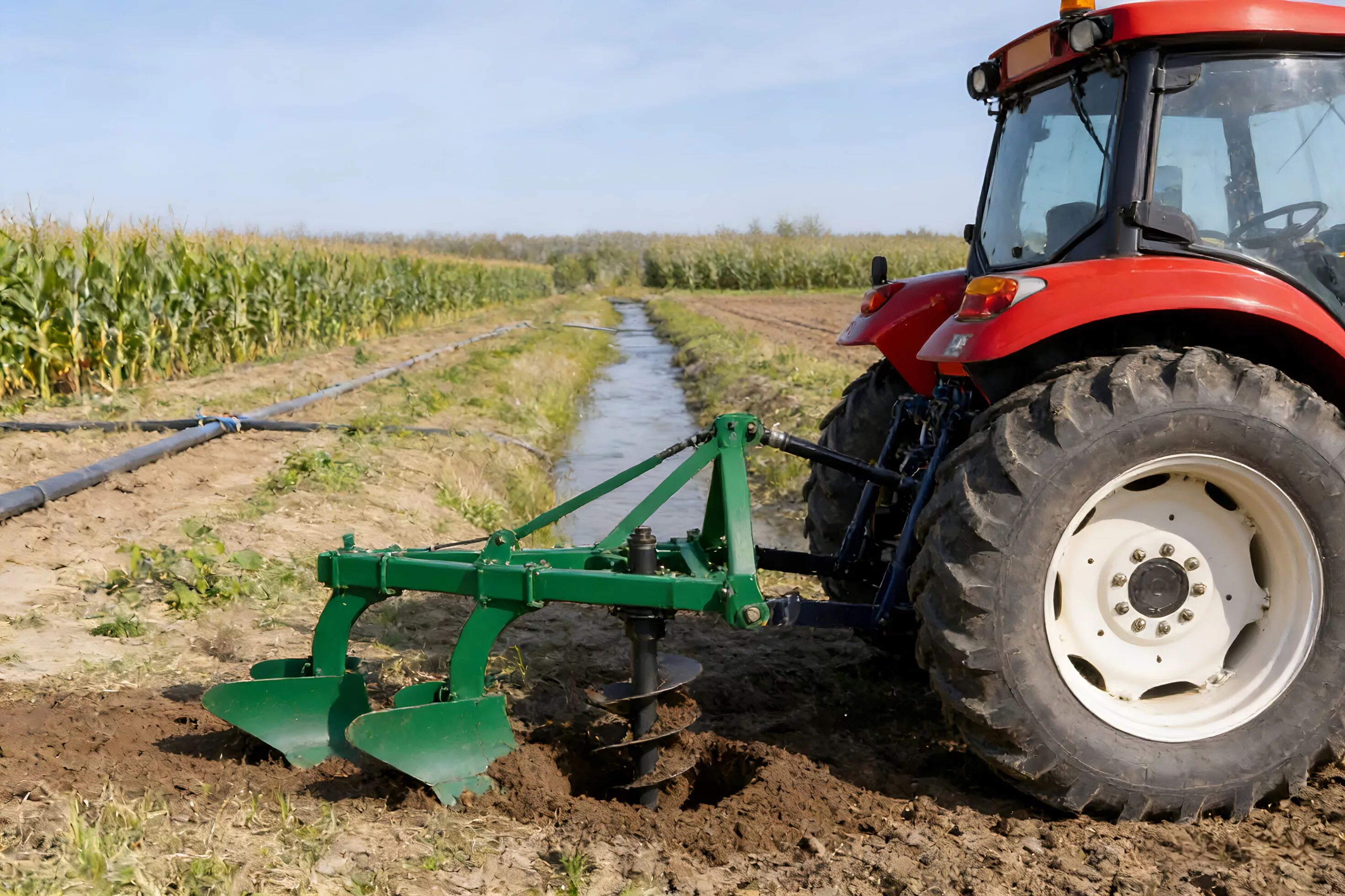
- Safety Preparation: Ensure the tractor engine is entirely shut down, the key is removed, and the parking brake is engaged before approaching the rear linkage.
- Clean the Splines: Thoroughly wipe the tractor’s PTO stub and the seeder’s input shaft. Apply a thin film of premium lithium grease to prevent seizing.
- Mount the Implement End: Slide the implement yoke (often containing the shear bolt or clutch) onto the seeder gearbox shaft. Align the keyway or splines. Secure the shear bolt or set screws firmly to the specified torque setting.
- Mount the Tractor End: Depress the quick-release pin (or pull back the locking collar) on the tractor yoke. Slide it onto the tractor stub until the pin audibly clicks into the locking groove. Pull back on the yoke to verify a secure lock.
- Verify Overlap & Clearance: Carefully raise and lower the 3-point linkage (if applicable) slowly through its full arc. Confirm that the shaft does not bottom out (minimum 25mm clearance at shortest point) and does not over-extend (minimum 1/3 tube overlap maintained).
- Secure Safety Chains: Attach the anti-rotation chains from the plastic guard to secure mounting points on both the tractor and the implement. Crucial: Allow enough slack in the chain to permit articulation, but not so much that the chain wraps around the shaft.
Operational Diagnostics & Troubleshooting
1. Shear Bolt Breaks Frequently upon Engagement
Cause: The tractor PTO is being engaged at high RPM, causing massive inertia shock to the seeder’s gearbox and agitator, or there is a physical blockage (clumped fertilizer) in the hopper.
Solution: Always engage the PTO at engine idle speed (approx. 800-1000 engine RPM) before throttling up to the 540 PTO RPM operating speed. Inspect the hopper for hardened chemical rocks.
2. Excessive Vibration During Operation
Cause: The operating angles of the universal joints are unequal, the shaft is bent from bottoming out, or the cross journal bearings are severely worn due to lack of lubrication.
Solution: Check the 3-point linkage geometry to ensure the tractor stub and implement shaft are parallel. Inspect the profile tubes for dents or bowing. Grease all zerk fittings; if play exists in the U-joint, replace the cross journal immediately.
3. Safety Guard Spins with the Shaft
Cause: The internal nylon guard bearings have seized due to dirt infiltration, or the restraining chains are broken/unattached.
Solution: Cease operation immediately. Reattach the chains. If the guard still binds to the tube, disassemble the guard, clean the nylon bearing ring tracks, lubricate with dry graphite (not grease, which attracts dust), and reassemble.
4. Telescopic Tubes Binding / Not Sliding
Cause: Lack of lubrication between the inner and outer profile tubes, or torsional twisting of the tubes due to massive overload without clutch protection.
Solution: Separate the two halves of the shaft. Clean the profiles thoroughly. Apply liberal amounts of grease to the inner tube and reassemble. Ensure the phase of the yokes is correct (in-line). If the tubes are visibly twisted, the shaft must be entirely replaced.
Australian Field Application Case Studies
Direct observations and performance data from field engineers operating across diverse Australian agricultural zones.
📍 Perth (Western Australia Wheatbelt) – Broadacre Seeding
Operational Challenge: Massive acreages require constant operation in extreme dust environments. Standard bearings were failing at 250 hours.
EVER-POWER Solution: Deployed a Series 6 shaft with custom multi-lip seals and a high-capacity grease reservoir in the cross journals. Client Data: Maintained continuous operation through two full planting seasons (over 900 hours) with zero bearing degradation.
📍 Brisbane (Queensland) – Coastal Sugar Cane Fertilizer Spreading
Operational Challenge: High humidity combined with aggressive granular fertilizers caused severe oxidation and seizing of the telescopic tubes.
EVER-POWER Solution: Upgraded the surface treatment to heavy black oxide coating and utilized Rilsan-coated inner tubes for self-lubrication. Client Data: Reduced daily maintenance greasing time by 60%, eliminating tube binding issues entirely.
📍 Adelaide (South Australia) – Vineyard Cover Crop Sowing
Operational Challenge: Extremely tight turning circles at the end of vineyard rows caused standard U-joints to chatter and fail under high angles.
EVER-POWER Solution: Implemented a single Wide-Angle Constant Velocity (CV) joint on the tractor side, allowing 80-degree articulation without power disengagement. Client Data: Increased headland turning speed, improving overall daily acreage coverage by 15%.
📍 Melbourne (Gippsland, Victoria) – Pasture Renovation
Operational Challenge: Wet, muddy conditions and varying tractor fleet meant frequent shaft swapping, leading to damaged splines and lost locking pins.
EVER-POWER Solution: Standardized the fleet with our heavy-duty ball-collar quick disconnect yokes, forged from 42CrMo steel. Client Data: Achieved perfectly secure locking mechanisms even when splines were coated in mud, zero reported disconnections in the field.
📍 Sydney (NSW Regional) – Market Garden Organic Spreading
Operational Challenge: Clumpy organic compost caused sudden severe jams, snapping standard shear bolts multiple times an hour.
EVER-POWER Solution: Upgraded the implement end to a 2-disc friction slip clutch, calibrated specifically to the seeder gearbox’s max torque rating. Client Data: Eradicated downtime from bolt replacement; the clutch slipped during jams and resumed drive once the blockage cleared.
Technical Inquiries & Expert Answers
1. How frequently should I grease the cross journals on my seeder shaft?
For standard units under normal conditions, grease every 8-10 operating hours. In heavy dust or corrosive fertilizer conditions, grease every 4-6 hours to purge contaminants. Extended lubrication series can push this to 50 hours.
2. Can I cut the shaft tubes if they are too long for my tractor?
Yes. Disconnect the shaft, measure the excess length, and cut an equal amount off both the inner and outer profile tubes, as well as the plastic guard tubes. Deburr the edges thoroughly before reassembly.
3. What type of oil or grease is best for the telescopic tubes?
We recommend a premium lithium-based extreme pressure (EP2) grease. Smear a light coat on the inner tube. Avoid over-greasing as it can trap dirt and cause binding.
4. Why do you use triangular profiles instead of splined tubes?
Triangular and lemon profiles offer exceptional torsional strength while maintaining a smooth sliding surface under load, making them ideal for the varying lengths encountered during 3-point linkage operations.
5. Does my broadcast seeder need an overrunning clutch?
Generally, no. Overrunning clutches (freewheels) are vital for high-mass implements like slashers or balers that carry massive rotational inertia. Broadcast seeder discs have low mass and stop quickly, so a standard shear bolt is sufficient.
6. Are your guards compliant with Australian WorkCover?
Absolutely. All EVER-POWER agricultural guards meet or exceed CE, ISO, and AS 1121.4 standards, ensuring full workplace health and safety compliance on Australian farms.
7. How do I adjust the friction slip clutch?
The clutch is adjusted by tightening or loosening the compression springs around the perimeter. This must be done evenly, and calibrated according to the torque chart provided in the manual to match your seeder’s gearbox limit.
8. My tractor has a 21-spline 1000 RPM PTO. Can I use a seeder?
Most seeders are geared for 540 RPM. Running them at 1000 RPM will shatter the gearbox or throw fertilizer too far. You must adjust your tractor to 540 RPM mode. We can supply a 21-spline yoke if required.
9. What is the difference between a forged yoke and a cast yoke?
Forged yokes have a continuous grain structure, offering significantly higher tensile strength and resistance to shock loads compared to cast yokes, which can be brittle and snap under extreme torque.
10. Do you provide custom dimensions for non-standard equipment?
Yes. With our robust manufacturing capabilities, we offer comprehensive non-standard customization for unique machinery setups, including specific tube lengths, specialized yokes, and specific torque limiters.
Complete Drivetrain Solutions & Accessories
Beyond the driveline, mechanical power must be efficiently converted. EVER-POWER manufactures a comprehensive ecosystem of agricultural transmission components designed to work in perfect synchronization.
Global Engineering, Direct to Your Farm
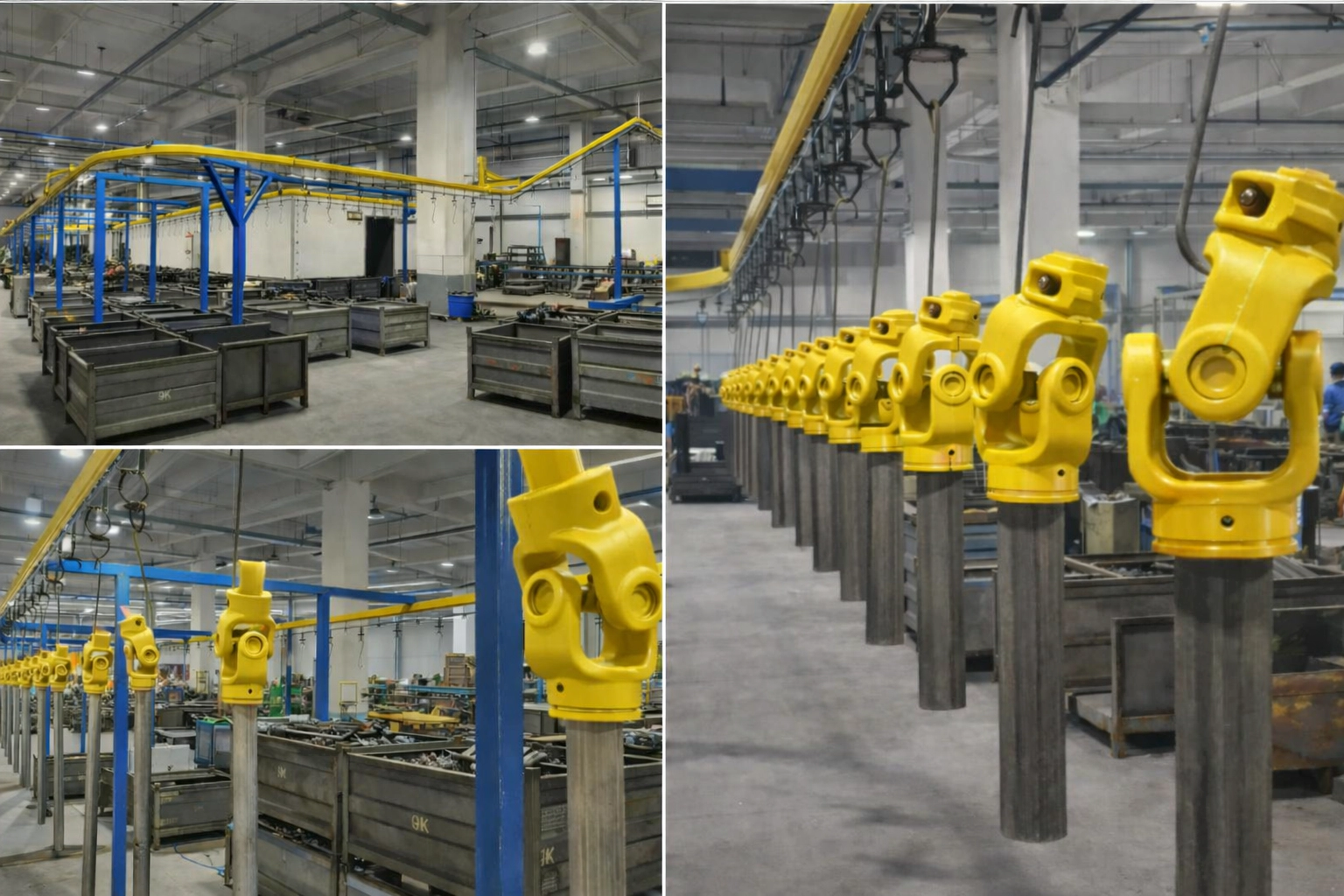
As a premier independent manufacturer, EVER-POWER integrates rigorous metallurgical testing, precise dynamic balancing, and stringent quality control protocols. We don’t just supply standard PTO shafts; our advanced production facilities are equipped to provide full non-standard customization based on your technical drawings or OEM samples.
Upgrade your agricultural machinery’s reliability today. Partner with a supplier that understands the brutal realities of the field.