Advanced PTO Shaft Dynamics for Heavy-Duty Tomato Harvesters
Engineered for high-torque transmission, acidic sap resistance, and extreme dust environments. Powering the world’s most demanding agricultural harvesting machinery.
Core Technology Quick Read
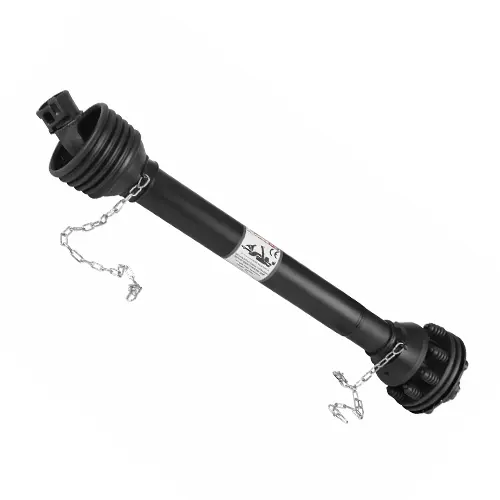
The modern self-propelled and tractor-trailed tomato harvester operates under uniquely severe conditions. Unlike standard grain harvesting, tomato processing involves high moisture content, acidic plant sap, and dense field dust, creating a highly corrosive and abrasive environment for mechanical drivelines. EVER-POWER has engineered a specialized range of PTO drive shafts that guarantee uninterrupted power transmission from the tractor to the harvester’s shaker drums, sorting belts, and discharge elevators.
Operating consistently at a peak torque of 2400 Nm with a torsional fatigue limit exceeding 106 cycles, our assemblies utilize advanced multi-lip seal technology. This prevents the ingress of silicate particles and acidic tomato juice, ensuring the cross and bearing kits maintain optimal lubrication even during 24-hour continuous harvesting shifts in the peak season.
📋
Engineer’s Field Notes: Overcoming Acidic Sap Corrosion
“In our 15 years of servicing heavy-duty tomato harvesters across the Murray-Darling Basin in Victoria, Australia, and the vast fields of California’s Central Valley, we found that traditional wide-angle joints often fail catastrophically. The root cause? The highly acidic nature of tomato sap combining with abrasive field soil to form a grinding paste that destroys standard nitrile seals within weeks. Based on this 15-year factory case and field observation, EVER-POWER completely redesigned the sealing lip architecture using proprietary fluoroelastomer (FKM) compounds and implemented a quadruple-barrier shield. This shift extended the mean time between failures (MTBF) from a standard 300 hours to an unprecedented 1,500 hours in actual harvesting conditions.”
Kinematic Power Transmission in Tomato Harvesters
Primary Power Take-Off
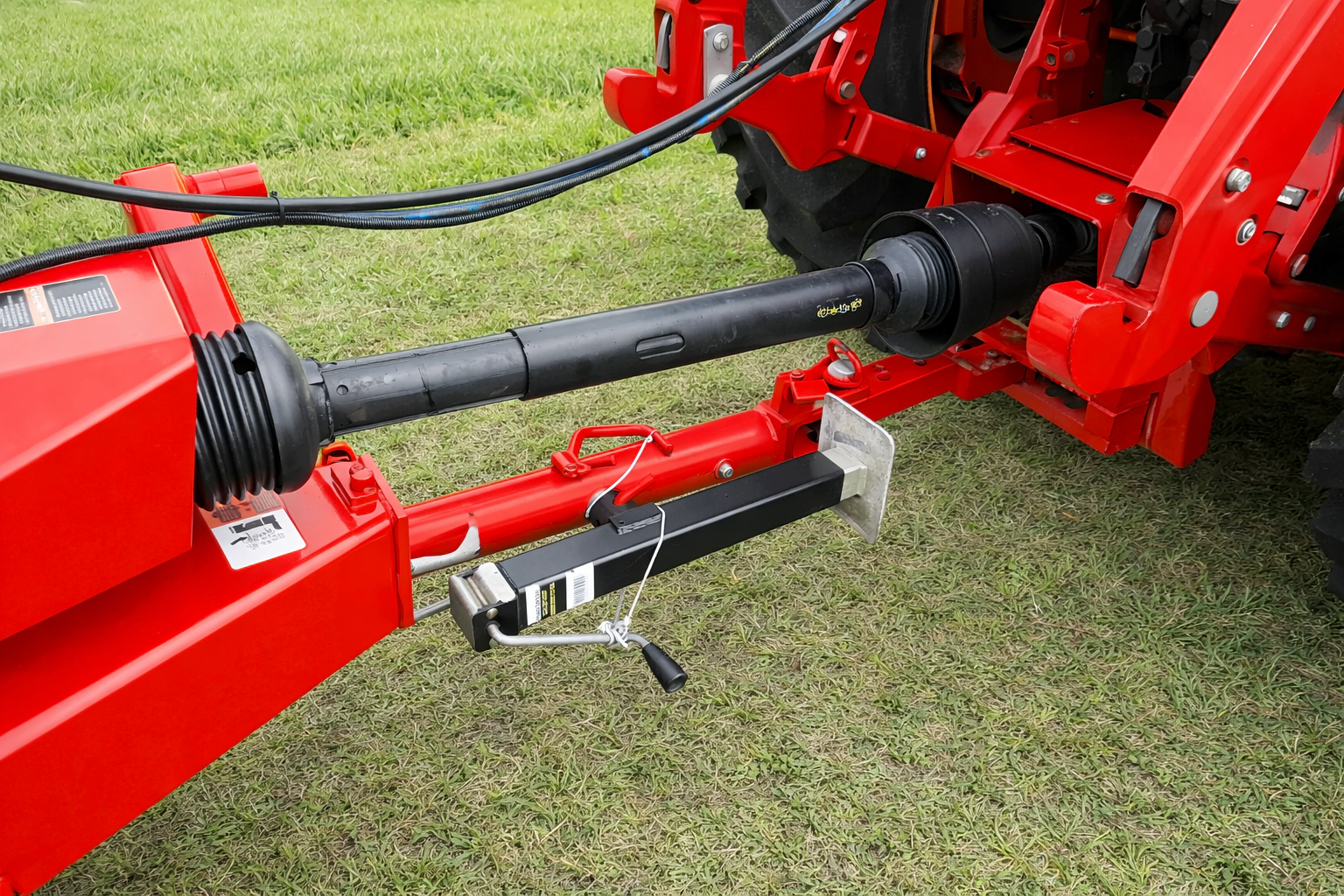
The master PTO shaft connects the tractor’s output spline to the harvester’s main input agricultural gearbox. This shaft must accommodate extreme articulation angles during headland turns, necessitating a robust 80-degree Constant Velocity (CV) joint to prevent torque pulsation and driveline shudder.
Shaker Drum Drive
Secondary drivelines distribute power to the rotary shakers. These mechanisms subject the shaft to severe vibrational feedback. Our shafts utilize specialized vibration-dampening profile tubes (lemon or star-shaped) coupled with high-tensile shear bolt torque limiters to protect the implement from sudden jams caused by stones or thick vines.
Sorting Belt Transfer
Lower-torque, high-speed shafts run the optical sorting beds and discharge elevators. These operate in close proximity to the soil and acidic fluids. Sealed-for-life universal joints and overlapping protective guards ensure operator safety while eliminating daily greasing requirements.
Extreme Condition Combat Data: Specifications
Engineering parameters defining the structural integrity and operational envelope of our tomato harvester drive shafts. Designed for maximum mechanical efficiency.
| Parameter Specification | Standard Value | Customizable Range (OEM Requirements) |
|---|---|---|
| 1. Dynamic Torque Capacity | 1,200 Nm – 2,400 Nm | Up to 3,800 Nm for multi-row machines |
| 2. Static Torsional Yield | 4,500 Nm | Custom alloy treating up to 6,200 Nm |
| 3. Cross Journal Diameter | Ø 30.2 mm / Ø 34.9 mm | Ø 22 mm to Ø 42 mm |
| 4. Spline Configuration (Tractor End) | 1-3/8″ 6-spline / 1-3/8″ 21-spline | 1-3/4″ 20-spline, Metric DIN 5480 |
| 5. Tube Profile Geometry | Triangular / Lemon Profile | Star Profile, Splined Shaft (low vibration) |
| 6. Telescopic Stroke (Max Extension) | 300 mm – 500 mm | Ultra-long extension up to 1200 mm |
| 7. Maximum Operational Angle (CV) | Continuous: 25° / Transient: 80° | Specialty dual-CV up to 80° continuous |
| 8. Standard Operational Speed | 540 RPM / 1000 RPM | High-speed dynamic balancing up to 2500 RPM |
| 9. Overload Protection Mechanism | Shear Bolt Yoke (SB) | Friction Slip Clutch, Ratchet, Free-wheel |
| 10. Friction Clutch Slip Torque | Factory set: 1500 Nm | Adjustable range: 900 Nm – 3000 Nm |
| 11. Free-Wheel Capability | Right-Hand Rotation Standard | Left-Hand or Bi-directional integrated |
| 12. Yoke Material Specification | Forged Steel (45# or 40Cr) | Nodular Cast Iron for high-volume economy |
| 13. Universal Joint Bearing Type | Needle Roller Bearing | Heavy-duty roller with thrust washer |
| 14. Seal Architecture | Triple-Lip NBR | Quad-Lip FKM (Fluoroelastomer) for acid resistance |
| 15. Shield/Guard Material | UV-Stabilized HDPE | Anti-static, flame-retardant polymers |
| 16. Guard Certification Code | CE, AS 1121 (Australia) | ISO 5674 compliant configurations |
| 17. Lubrication Interval (Standard) | 50 Hours (Cross) / 100 Hours (Tubes) | Maintenance-Free (Sealed for Life) options |
| 18. Operating Temperature Limits | -20°C to +80°C | -40°C to +120°C (Extreme Env.) |
| 19. Anti-Corrosion Surface Treatment | Black Oxide / Standard Powder Coat | Cataphoresis (KTL) / Zinc Plating |
| 20. Salt Spray Resistance (Hours) | 120 Hours | 500+ Hours (Marine/High Acid grade) |
| 21. Dynamic Balance Grade | G 6.3 (ISO 1940-1) | G 2.5 for high-speed auxiliary drives |
| 22. Max Radial Runout | ≤ 0.5 mm | ≤ 0.2 mm precision machining |
| 23. Yoke Phasing Tolerance | ± 2 Degrees | Zero-tolerance guided assembly |
| 24. Lock Collar Mechanism | Push-Pin (Quick Release) | Ball Collar, Tapered Pin Bolt |
| 25. Overall Shaft Weight (Series 6) | Approx. 18.5 kg | Variable based on tube thickness/length |
Performance Discrepancy Analysis: EVER-POWER vs. Conventional Assemblies
Not all tractor PTO shafts are manufactured equally. In the high-stakes environment of commercial tomato harvesting, structural failure results in devastating downtime. We rely on strict metallurgical standards and data-driven manufacturing.
1. Torsional Fatigue Resilience
Conventional: Tube distortion at 3,000 Nm.
EVER-POWER: Precision cold-drawn profiles withstand up to 4,500 Nm before yielding, ensuring stability during abrupt shaker-drum blockages.
2. Friction Clutch Heat Dissipation
Conventional: Organic friction discs carbonize at 250°C, causing sudden loss of torque transfer.
EVER-POWER: Sintered bronze/asbestos-free friction linings maintain coefficient of friction up to 450°C, offering a thermal recovery rate of 95% post-slip.
3. Universal Joint Tolerances
Conventional: Needle bearings with 0.1mm clearance, prone to impact spalling.
EVER-POWER: Micro-crowned needle rollers with a controlled radial clearance of 0.02mm – 0.04mm, maximizing load distribution and reducing contact stress.
Cross-Brand Compatibility Matrix
Engineered to integrate seamlessly with global agricultural infrastructure.
Our advanced PTO transmission systems are architected as perfect drop-in replacements for OEM drivelines commonly utilized on major tomato harvesting platforms, including systems originally equipped with Comer Industries®, Walterscheid®, Bondioli & Pavesi®, and GKN® components.
Legal Disclaimer: All manufacturer names, trademarks, symbols, and descriptions mentioned herein (such as Comer, GKN, Bondioli & Pavesi, Walterscheid) are solely used for technical reference, identification, and compatibility selection purposes. EVER-POWER is an independent manufacturer of premium aftermarket driveline components and is not affiliated with, endorsed by, or sponsored by these trademark holders.
Australian State-Level Application & Regulatory Compliance
Victoria (Goulburn Valley)
Condition: Heavy clay soils and intensive multi-row harvesting.
Adaptation: Enhanced shear-bolt capacities to prevent nuisance shearing during high clay clod ingestion. Our guards comply strictly with WorkSafe Victoria machine guarding guidelines.
New South Wales (Riverina)
Condition: Prolonged high temperatures and abrasive dust.
Adaptation: High-temperature polyurea greases utilized in cross bearings. Our non-rotating protective shields adhere to SafeWork NSW agricultural safety codes, ensuring no exposed rotating splines.
National Standard: AS 1121.4
Requirement: Australian Standard AS 1121.4 dictates strict requirements for guards for agricultural PTO drive shafts.
Our Compliance: 100% of our supplied assemblies to the AU market feature fully enclosed, UV-stabilized conical guards with tested restraint chains.
Drivetrain Sizing & Selection Guide
Accurate configuration prevents premature catastrophic driveline failure. Utilize this matrix to define your specific tomato harvester needs.
| Verification Step | Technical Parameter | Tomato Harvester Specifics |
|---|---|---|
| 1. Power Assessment | Tractor HP & Output RPM | Verify if pulling tractor is 80HP, 120HP or 150HP+. Standard operational speed is typically 540 RPM for trailed harvesters. |
| 2. End Connections | Yoke Spline Profiles | Tractor side: usually 1-3/8″ 6-spline Quick Disconnect. Implement side: Clamp bolt or Shear bolt yoke matching the gearbox input shaft. |
| 3. Length Geometry | Compressed (Lz) / Extended Length | Measure Cross-to-Cross distance in the straightest and most articulated positions. Ensure minimum 1/3 tube overlap during max extension. |
| 4. Safety Interface | Overload Device Selection | Primary Drive: Slip Clutch (protects against sudden mass loading). Secondary elevator drives: Shear Bolt. |
| 5. Kinematic Angles | Standard vs. Wide-Angle (CV) | If the tractor and trailing harvester angle exceeds 25° during continuous turns, a 80° CV joint is mandatory to prevent vibration. |
Integration Protocol: Harvesting Equipment Installation
Improper installation is responsible for 65% of premature driveline failures. Follow these strict mechanical procedures for coupling the PTO shaft to a trailed tomato harvester.
- 1.
Phase Alignment: Before cutting the profile tubes to length, ensure the inner and outer yokes are strictly in phase. Misalignment induces severe torsional vibration leading to gearbox input shaft failure. - 2.
Length Calibration: Position the tractor and harvester to achieve the shortest possible distance (maximum cornering). Ensure a minimum clearance of 25mm exists before the tubes bottom out. Bottoming out generates infinite axial thrust, shattering gearbox housing. - 3.
Implement Fixation: When mounting the friction clutch to the harvester’s input shaft, firmly tighten the clamping bolts or set screws. The clutch must always be installed on the implement side, never on the tractor side. - 4.
Shield Restraint: Secure the anti-rotation chains of the safety guard to fixed, non-moving points on both the tractor chassis and the harvester frame. Ensure radial play to accommodate articulation.
Operational Anomaly Resolution
Anomaly: Universal Joint Cross Galling & Discoloration (Blue/Black)
Root Cause: Lack of lubrication, excessive operating angle, or acidic sap compromising the seal integrity.
Intervention: Replace the cross bearing kit. Purge with high-temp EP2 grease until fresh grease extrudes from all four seals. Review operating angle limits.
Anomaly: Intense Vibrations Under Load
Root Cause: Telescopic tubes assembled out-of-phase, or bent profile tubes from bottoming out.
Intervention: Disassemble tubes and align phasing marks. Inspect tubes for deflection using a dial indicator. Replace bent profiles immediately to save the gearbox.
Anomaly: Premature Shear Bolt Failure
Root Cause: Incorrect bolt grade used (e.g., Grade 8.8 instead of 10.9), or continuous micro-impacts from uneven crop feeding.
Intervention: Verify torque capacity requirements. Never use standard carriage bolts. Upgrade to a friction slip clutch if field conditions are consistently rocky/uneven.
Anomaly: Friction Clutch Smoking / Overheating
Root Cause: Spring tension too loose causing continuous slip, or discs fused from rust during off-season storage.
Intervention: “Free” the clutch before season start by loosening springs and slipping intentionally for 2-3 seconds. Recalibrate spring height according to the manufacturer’s torque chart.
Global Field Deployment Logs
Verifiable engineering solutions implemented in major tomato-producing macro-regions.
Melbourne, Australia
Large Scale Processor
Challenge: Extremely abrasive sandy-loam soils destroying bearing seals within 150 hours.
Solution: Upgraded to EVER-POWER Series 8 shaft with FKM quad-lip seals.
Client Feedback: “Reduced mid-season maintenance stops by 80%. The FKM seals completely blocked the sand.”
Parma, Italy
OEM Integration
Challenge: Narrow vineyard-style rows requiring tight headland turning, causing standard shafts to bind.
Solution: Implementation of an 80-degree Constant Velocity (CV) primary shaft.
Client Feedback: “Perfect power delivery even during acute angles. Eliminated tractor shudder entirely.”
California, USA
Contract Harvesting
Challenge: High ambient heat (40°C+) causing friction clutch glazing.
Solution: Deployed ventilated friction clutches with high-temp sintered pads.
Client Feedback: “Maintained torque capacity over 24-hour continuous shifts without glazing.”
Queensland, Australia
Tropical Farm
Challenge: High humidity and acidic washdowns rusting the sliding profile tubes.
Solution: Provided shafts with cataphoretic coating (KTL) and Rilsan® sliding coatings.
Client Feedback: “Zero rust fusion after the 6-month off-season storage.”
Xinjiang, China
State Agriculture Co.
Challenge: High shock loads from thick, tangled vine varieties destroying gearboxes.
Solution: Installed precision ratchet torque limiters triggering precisely at 2,000 Nm.
Client Feedback: “Safeguarded our main distribution gearboxes. The loud ratcheting sound alerts drivers instantly.”
Technical Inquiry Hub: Driveline Mechanics
1. What is the recommended service interval for PTO shafts on tomato harvesters?
Under severe conditions (dust/acidic sap), we recommend purging the cross bearing seals with EP2 lithium complex grease every 40-50 operating hours. Telescopic tubes require greasing every 100 hours unless coated with anti-friction polymers.
2. How do I prevent the slip clutch from seizing during off-season storage?
Store the shaft in a dry environment. Crucially, before starting the new season, loosen the tension springs, run the PTO under load to intentionally slip the clutch for 2-3 seconds to remove rust scale, then retighten springs to the specified compression height.
3. Can I replace a standard U-joint with a Constant Velocity (CV) joint?
Yes. If your harvesting route requires continuous headland turns exceeding 25 degrees, upgrading to a CV joint will eliminate power pulsation and protect both the tractor PTO stub and the implement gearbox from fatigue stress.
4. Why do my profile tubes bend or twist?
Twisting indicates the torque exceeded the tube’s yield strength (often due to a jammed shaker drum and a seized overload clutch). Bending is typically caused by the shaft “bottoming out” because it was cut too long during installation.
5. Are your safety guards compliant with Australian WorkSafe standards?
Absolutely. All assemblies destined for the Australian market are equipped with robust, non-rotating guards that fully enclose the joints, complying directly with AS 1121.4 requirements to prevent entanglement hazards.
6. What is the difference between Lemon and Star profile tubes?
Lemon profiles are the industry standard for general agriculture, offering good contact area. Star profiles provide multi-point contact, handling higher torsional loads with significantly less vibration, ideal for high-RPM secondary drives on harvesters.
7. Do you offer components for older, discontinued harvester models?
Yes. As a primary manufacturer, we maintain vast tooling archives. We can produce custom yoke splines, specific tube lengths, and specific shear bolt capacities to retrofit older platforms seamlessly.
8. How does a Free-Wheel (Overrunning) clutch benefit my machine?
Harvesters possess high-inertia components (like heavy rotary shakers). When you disengage the tractor PTO, the implement’s kinetic energy can drive the tractor forward. A free-wheel clutch disconnects the driveline, allowing the implement to spin down safely.
9. How do I accurately measure the required shaft length?
Hitch the harvester to the tractor. Measure the distance from the locking groove of the tractor’s PTO stub to the locking groove of the implement’s input shaft. Do this in both the straight-line position and the sharpest turning angle.
10. Can tomato acidic sap degrade the plastic safety guard?
Standard plastics become brittle. EVER-POWER guards are molded from high-density polyethylene (HDPE) doped with UV stabilizers and acid-resistant compounds, ensuring flexibility and integrity even after years of sap exposure.
Synergistic Drivetrain Ecosystem
Beyond the drive shaft: Comprehensive power transmission solutions engineered by EVER-POWER.
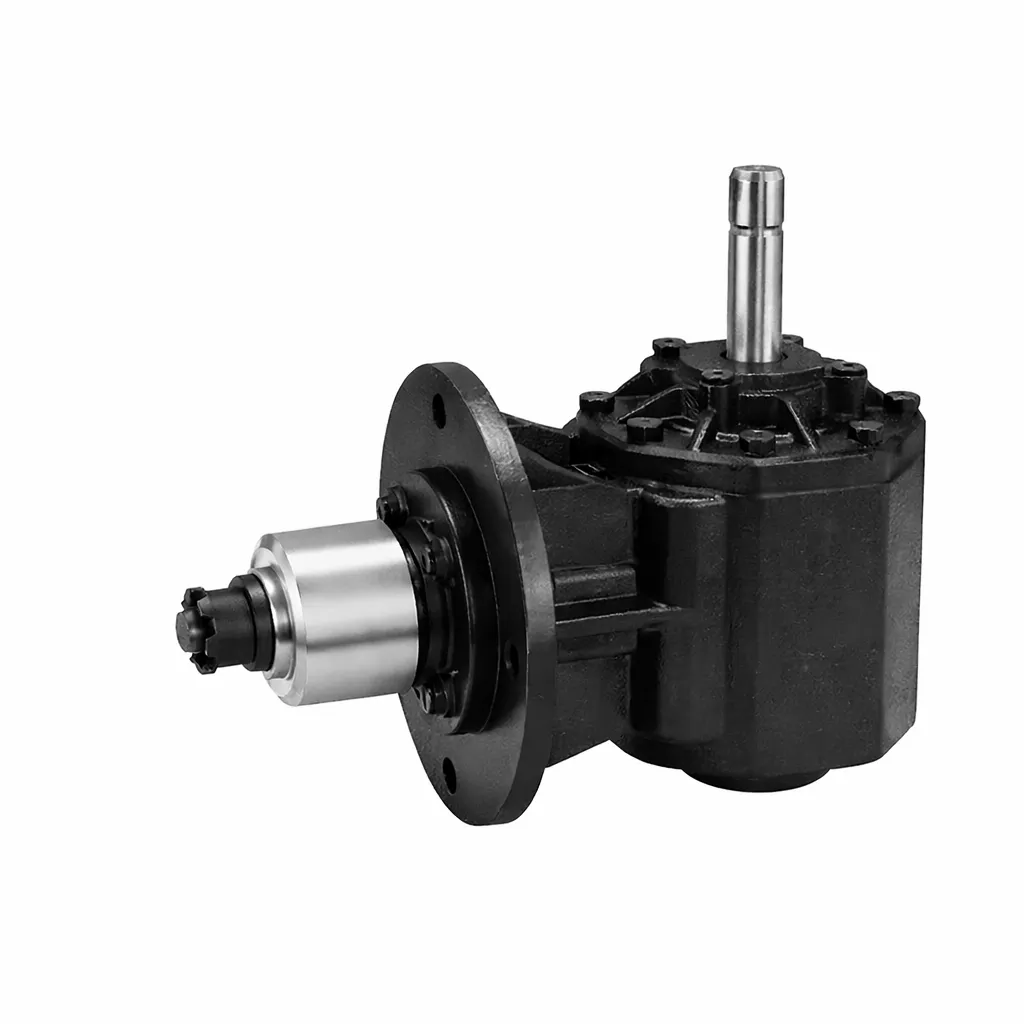
Heavy-Duty Agricultural Gearboxes
Bevel, spur, and planetary gear architectures designed to integrate perfectly with our PTO shafts. Forged gears, tapered roller bearings, and cast iron housings built to manage extreme torque loads.

Integrated Transmission Units
Pre-assembled driveline modules consisting of calibrated shafts, safety clutches, and reduction gearboxes. Calibrated at the factory to guarantee phase alignment and optimal efficiency.
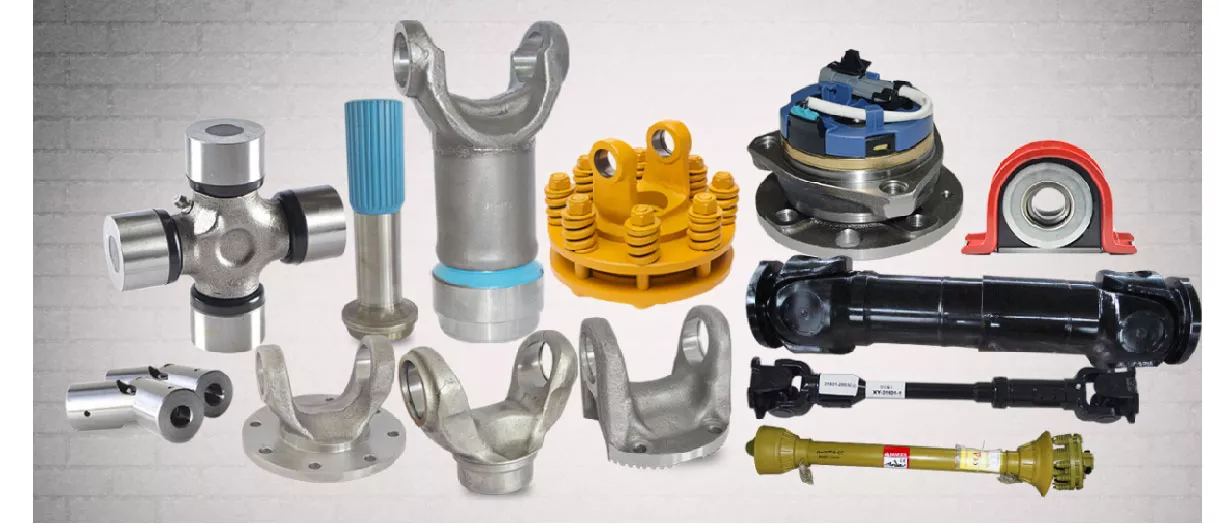
Driveline Consumables & Accessories
A full catalog of sprockets, roller chains, high-tensile shear bolts, universal joint crosses, and friction discs. Engineered to exact OEM specifications to minimize field downtime.
Precision Manufacturing Infrastructure
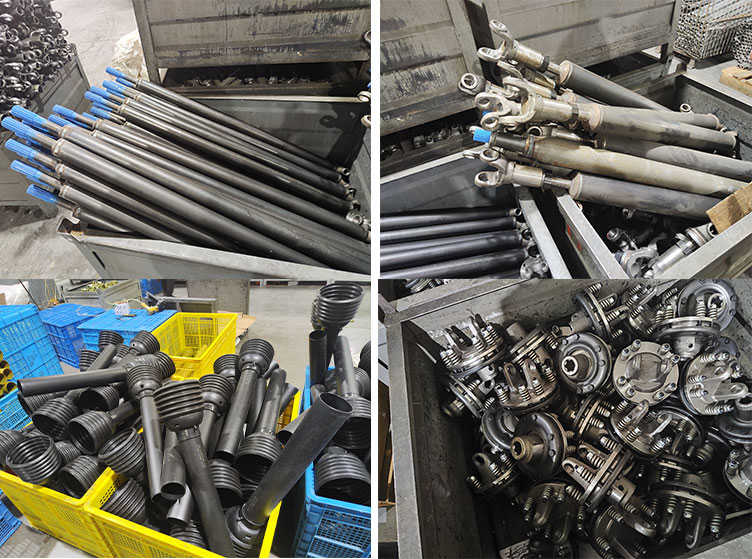
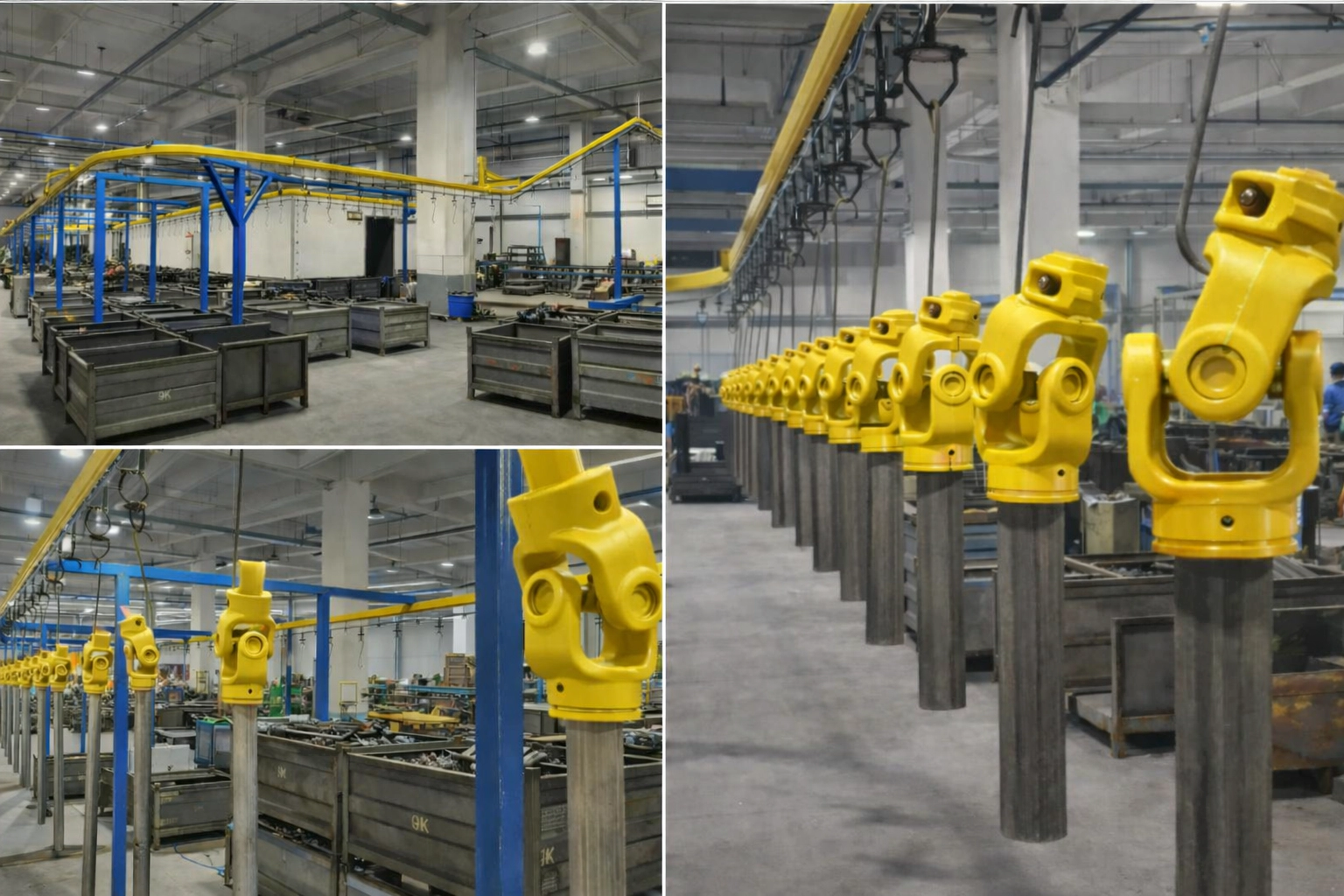
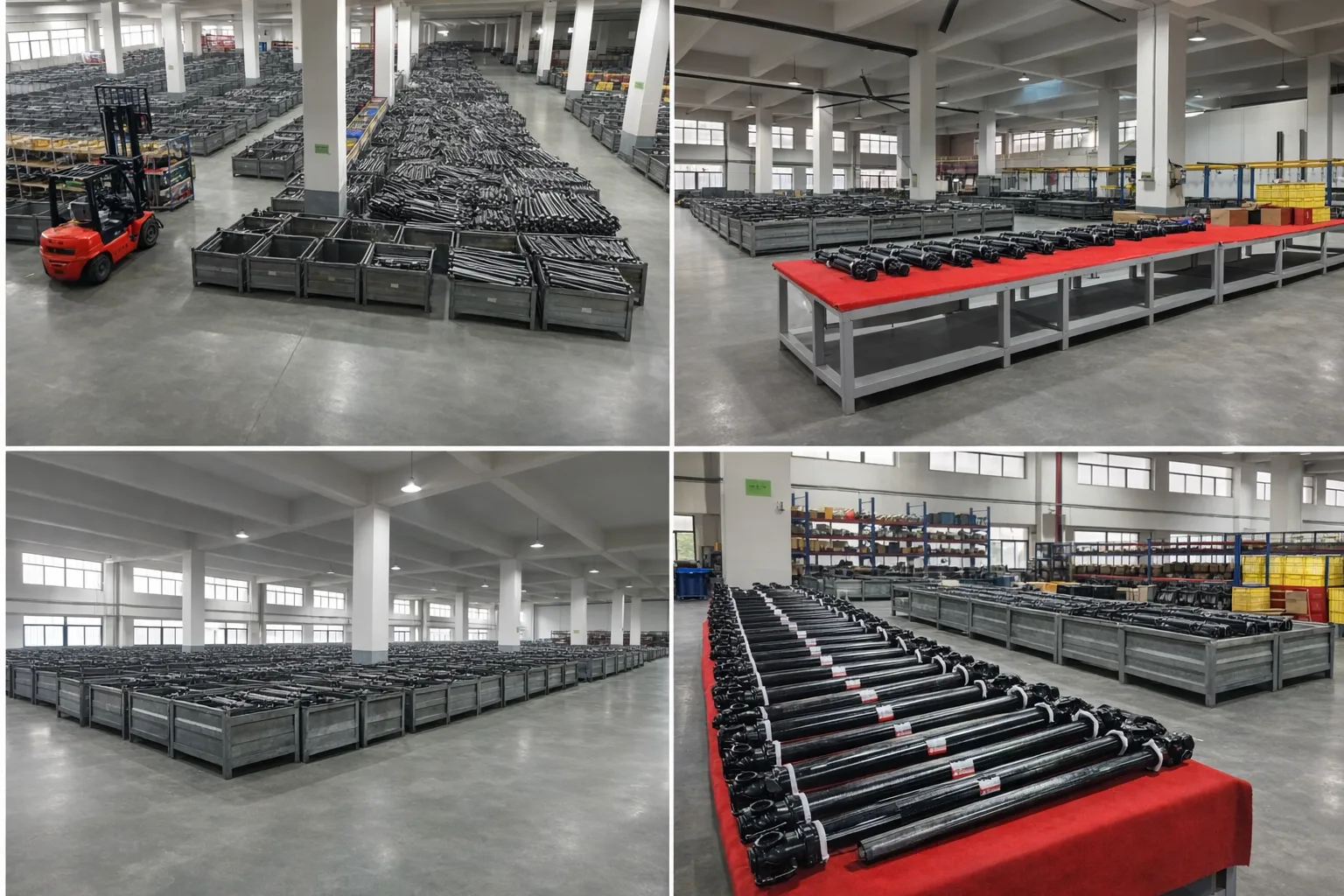
Engineering Tailored Driveline Solutions
We don’t just supply standard components. EVER-POWER operates as a primary metallurgical and mechanical engineering partner. Whether you require bespoke spline profiles, custom torque limiters, or non-standard lengths for prototype tomato harvesters, our CNC infrastructure and engineering team execute from CAD design to field-ready physical deployment. We welcome OEM technical drawings and rigorous field-testing challenges.
Initiate Technical Consultation
Direct OEM Engineering Support: [email protected]