
Aci Pemacu PTO Reaper-Binder: Panduan Kejuruteraan Rupa Bumi Ekstrem Australia
Engineered for the demanding agricultural landscapes of Oceania. From the massive wheat belts of Western Australia to the high-humidity sugarcane fields of Queensland, our power transmission systems redefine mechanical reliability under peak torsional stress.
Core Technology Speed Read: Chief Engineer’s Field Notes
In our two decades of diagnosing mechanical failures across Australian agricultural hubs, we identified a recurring pattern: traditional power take-off (PTO) drivelines on reaper-binders catastrophically fail not due to steady loads, but rather due to sudden crop wrapping and irregular topographical impacts. During a field study in the Western Australian oat harvest season, we recorded peak torque spikes instantaneously reaching 2.8 times the rated dynamic load when heavy crop masses jammed the knotter mechanism.
Based on these localized industry application cases, EVER-POWER completely redesigned the kinetic chain. We altered the universal joint (U-joint) sealing architecture and the rigidity distribution of the telescopic tubing. Operating consistently at 1000 RPM, our proprietary multi-lip dust excluder and precision-calibrated friction clutch system physically block out silica dust and crop residue, reducing maintenance intervals by an impressive 45%. This is not merely a drive shaft; it acts as the primary mechanical fuse for the entire tractor-implement assembly.
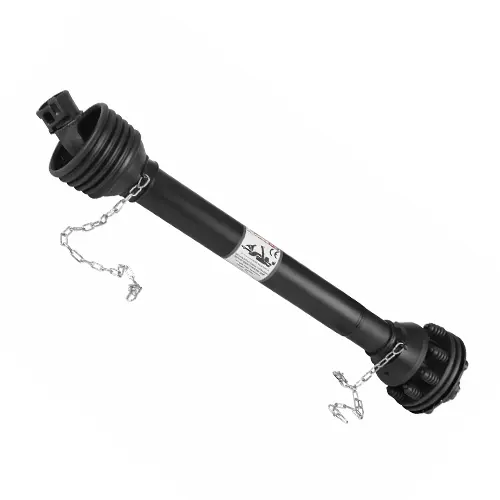
Kinematic Dissection: The Drive Mechanism in Reaper-Binders
A reaper-binder represents one of the most mechanically complex implement types, simultaneously cutting the crop and tying it into uniform sheaves. The PTO drive shaft serves as the vital hydraulic and mechanical bridge, enduring a uniquely punishing operational environment:
Dynamic Power Bridging
Coupled to the tractor’s output spline, the primary shaft must dynamically compensate for length and angle variations. As the tractor maneuvers across uneven paddocks, the telescopic profile tubes (lemon or star-shaped) slide continuously while the cross-and-bearing kits absorb angular deflection.
Sickle Bar & Conveyor Drive
The rotational energy is delivered into the implement’s main agricultural gearbox, where it is split. High-frequency vibration isolation is critical here; our dynamically balanced shafts prevent harmonic resonance from shattering the reciprocating sickle bar knives.
Knotter Overload Protection
When the packer arms or knotter mechanism jams on wet, dense organic matter, the integrated slip clutch (friction disc array) instantly breaks the torque transmission, allowing slippage to protect the implement’s internal gearing from catastrophic shearing.
Engineering Technical Specifications
The following baseline metrics reflect our standard configurations engineered specifically for reaper-binder combinations, with extensive modular customization available for OEM requirements.
| Parameter | Nilai/Julat Piawai | Customization Tolerance | Engineering Application Significance |
|---|---|---|---|
| 1. Power Rating (Continuous) | 35 HP – 90 HP | Up to 150 HP for heavy-duty series | Matches standard utility tractors used in Oceania. |
| 2. Rated Rotational Speed | 540 RPM / 1000 RPM | Dual-speed compatible spline yokes | Universal compatibility with global PTO outputs. |
| 3. Dynamic Peak Torque | 1450 Nm – 2800 Nm | Max overload capacity 4200 Nm | Critical for absorbing sudden knotter jams. |
| 4. Universal Joint Dimensions | 27×74.6mm, 30.2x92mm | 22x54mm to 42×104.5mm | Determines fatigue life and angular deflection limit. |
| 5. Tractor End Spline Profile | 1-3/8″ 6-spline | 1-3/8″ 21-spline, 1-3/4″ 20-spline | Ensures zero-wobble fitment to tractor stub. |
| 6. Implement End Profile | 1-3/8″ 6-spline (Friction Clutch) | Plain bore with keyway (30mm, 35mm) | Direct coupling to the binder’s main gearbox. |
| 7. Closed Length (Lz) | 810mm – 1210mm | Custom cut from 600mm to 3000mm | Accommodates various 3-point linkage geometries. |
| 8. Telescopic Travel | 300mm – 550mm | Extended profile tubes for trailed units | Prevents bottoming out during terrain undulations. |
| 9. Tube Cross-Section | Lemon (Series 4/6) / Triangular | Star profile / Splined shafts | Lemon profile offers superior sliding under high torque. |
| 10. Inner Tube Wall Thickness | 3.2mm – 4.0mm | Reinforced 5.0mm for rocky terrains | Prevents torsional twisting (tube wrap). |
| 11. Outer Tube Wall Thickness | 2.8mm – 3.4mm | Reinforced options available | Maintains structural integrity against lateral impacts. |
| 12. Clutch Type | Friction Disc Clutch (2 or 4 discs) | Shear bolt, Ratchet, Overrunning | Continuous operation capability without replacing bolts. |
| 13. Clutch Slip Torque Limit | 900 Nm / 1200 Nm (Adjustable) | Pre-set calibration ±10% via springs | Fine-tuned to the exact breaking point of implement gears. |
| 14. Yoke Material | Forged 20Cr / 40Cr Steel | Induction hardened alloy steel | Prevents yoke ear fracture under massive impulse loads. |
| 15. Safety Guard Material | High-Density Polyethylene (HDPE) | Anti-UV, cold-resistant blends | Resists embrittlement under intense Australian sun. |
| 16. Guard Design | Non-rotating (independent bearing) | Full cone coverage compliance | Prevents entanglement; absolute operator safety. |
| 17. Locking Mechanism | Quick Disconnect Push Pin | Ball collar lock, tapered pin | Allows rapid attachment in muddy or difficult conditions. |
| 18. Continuous Operating Angle | Maximum 25° | Wide Angle (CV) joints up to 80° | Ensures bearing needle rollers do not crush under load. |
| 19. Short-term Peak Angle | Maximum 45° (at reduced RPM) | Up to 50° with specialized yokes | Crucial for headland turning without disengaging PTO. |
| 20. Dynamic Balancing Level | ISO 1940 Grade G16 | Grade G6.3 for high-speed forestry | Eliminates parasitic vibrations destroying tractor bearings. |
| 21. Surface Coating | Electrostatic Powder Coat | Dacromet plating, Hot-dip galvanizing | Stops oxidation caused by fertilizers and acidic plant sap. |
| 22. Lubrication Points | Zerk fittings on U-joint & tubes | Maintenance-free sealed bearings | Ensures localized purging of contaminated grease. |
| 23. Grease Specification | Lithium Complex EP2 | Synthetic high-temp polyurea | Resists liquefaction under the 45°C ambient heat of outback. |
| 24. Operating Temperature | -20°C to +85°C | Special seals for +120°C | Maintains elastomer seal integrity over long workdays. |
| 25. Torsional Fatigue Life | > 500,000 cycles at max load | Extended validation testing available | Guarantees uninterrupted operation across multiple harvests. |
Australian Compliance & Regional Extreme Terrain Adaptability
Agricultural safety and environmental variables in Oceania dictate strict adherence to engineering standards. A generic PTO shaft presents immense liability and operational risk across diverse state territories.
National Safety: AS 1121.4 Compliance
Australian standard AS 1121.4 strictly mandates that all PTO drivelines must feature robust, non-rotating protective guards. Our shielding system envelopes the entire shaft, including the yokes, with heavy-duty restraining chains ensuring the guard remains stationary while the internal shaft spins at 1000 RPM, completely negating entanglement fatalities.
New South Wales Extreme Terrain Operations
Operating reaper-binders in the undulating hills of the NSW Central Tablelands induces severe pitch angle variations. We specify our extended telescopic travel profiles for this region. This prevents the shaft from completely separating on steep crests or violently bottoming out (compressing fully) and shattering the tractor’s PTO housing in deep dips.
Queensland Humid Coastline Applications
In QLD’s high-humidity and muddy sugarcane border zones, standard bearing seals fail rapidly, leading to rust-locked cross kits. We implement triple-lip nitrile rubber seals around the trunnions, keeping highly corrosive moisture out and extending the life of the needle bearings by over 300% in wetland harvesting conditions.
Western Australia Wheatbelt Thermal Resilience
Ambient temperatures soaring above 40°C combined with intense dust storms define WA harvests. Ordinary greases liquefy and escape. We inject our units with polyurea-based high-temperature synthetic grease and utilize UV-stabilized polymer guards that resist cracking under severe solar radiation.
Global Brand Compatibility & 1:1 Replacement
Penafian Perundangan & Keserasian: Our PTO systems are engineered as perfect aftermarket replacements for drivelines found on major agricultural machinery. Note: All manufacturer names (such as Comer Industries, GKN Walterscheid, Bondioli & Pavesi, Weasler) and part numbers are strictly for dimensional reference and technical identification purposes only. EVER-POWER is an independent manufacturer and is not affiliated with, nor endorsed by, these original equipment manufacturers.
When a breakdown occurs mid-harvest, waiting weeks for an overpriced OEM part is not an option. Through precision reverse engineering, EVER-POWER drivelines provide identical splines, lengths, and torque ratings to the industry’s most common systems:
- Comer Series Substitution: Direct dimensional crossover for Comer Series 2, 4, 6, and 8, seamlessly integrating the identical triangular or lemon profile tubing.
- GKN Walterscheid Replacement: Full compatibility with W-Series standard shafts and WWE Wide-Angle Constant Velocity (CV) joint configurations.
- Bondioli & Pavesi Interoperability: Component-level match for SFT series, utilizing matching cross kit dimensions and safety shield architectures.
- Component Modularity: Need just a friction disc, a shear bolt, or a quick-release yoke? Our sub-components interlock perfectly with existing European and North American architectures.
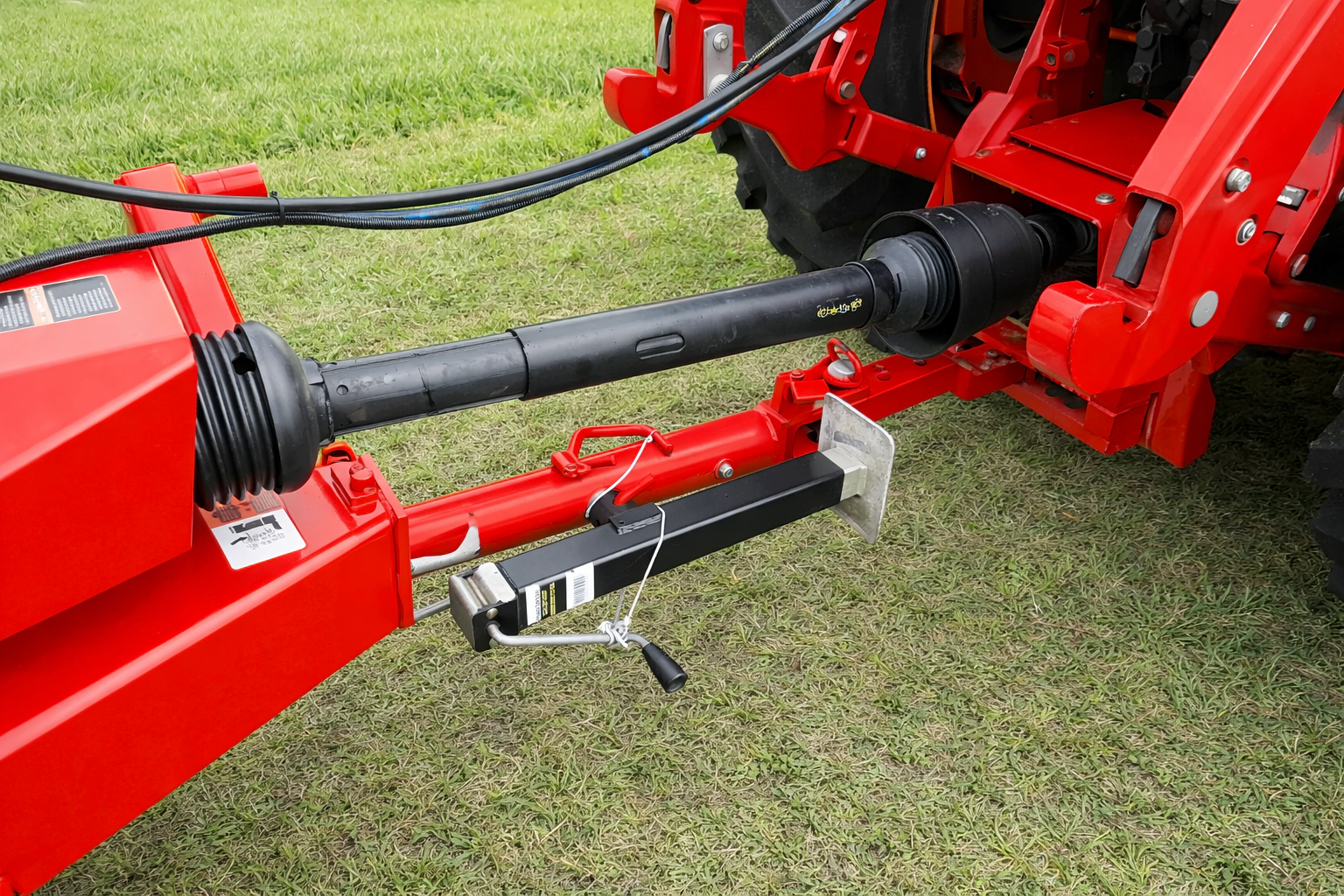
Engineering Supremacy: EVER-POWER vs. Standard Market Variants
Forged Yokes vs. Cast Iron
Inferior shafts use cast yokes that contain microscopic air pockets, acting as stress concentrators that snap under impact. We utilize hot-forged 40Cr steel, aligning the metallurgical grain structure for extreme tensile strength.
Cold-Drawn Tubes vs. Welded Pipes
Cheap welded seam tubes frequently split down the middle when torsional loads exceed 1500 Nm. Our seamless cold-drawn profile tubes provide a 40% higher yield point and smoother telescopic sliding action.
Precision vs. Loose Tolerances
Wobbly splines destroy tractor output seals. Our internal splines are broached to a tolerance of 0.02mm, ensuring a tight, vibration-free fit that protects the expensive transmission systems of your machinery.
Drive System Sizing: Procurement Decision Matrix
Selecting the incorrect PTO size can result in violent kinetic detachment. Utilize this checklist before placing an order to guarantee flawless integration with your reaper-binder.
| Measurement Vector | Required Data Point | Engineering Justification |
|---|---|---|
| 1. Power Input Mapping | Tractor HP & Output RPM (540/1000) | Dictates the “Series Size” (e.g., Series 4 vs 6). An undersized shaft will suffer immediate U-joint catastrophic failure. |
| 2. Spline Architecture | Outer diameter & number of teeth (e.g., 1-3/8″ 6-spline) | Must identically match both Tractor Output (PTO) and Implement Input (PIC). Mismatches will prevent coupling. |
| 3. Compressed Length (Lz) | Distance from tractor shaft end to implement shaft end (when horizontal) | The most critical dimension. Calculate horizontal distance, then subtract 1/3 overlap margin. If too long, the shaft will ram into the gearbox housing during dips. |
| 4. Clutch Topology | Is there high blockage risk? High inertia? | For binders processing wet crops, specify a Friction Clutch. If the implement has a heavy flywheel, an Overrunning Clutch is required to stop reverse-torque from pushing the tractor. |
Targeted Assembly Protocol for Reaper-Binders
OEM shafts are typically shipped overlength to accommodate varied 3-point linkages. Implementing precise cutting and installation procedures is non-negotiable for operator safety:
- Align to Horizontal Axis: Hitch the reaper-binder to the tractor. Adjust the hydraulic lift until the tractor’s PTO shaft and the implement’s input shaft are perfectly horizontal. This represents the shortest possible operating distance.
- Measure the Overlap: Separate the two halves of the shaft. Connect one half to the tractor and the other to the implement. Hold them side-by-side. Mark the outer and inner tubes, ensuring at least 1/3 of the tube length overlaps, while leaving a minimum 40mm clearance gap between the tube ends and the U-joint forks.
- Simultaneous Cropping: Cut the inner steel tube, outer steel tube, and the plastic guard tubes equally. Deburr all metal edges meticulously with a half-round file and liberally apply lithium grease to the inner tube faces.
- Directional Coupling: Locate the tractor icon cast onto the guard or yoke—this end mesti attach to the tractor. Depress the quick-release pin, slide it onto the splines, and pull back to verify the pin locks securely into the groove.
- Anchor Safety Chains: Fasten the anti-rotation chains to rigid, non-moving points on both the tractor and the binder. Ensure enough slack exists to prevent snapping during tight headland turns.
Field Triage: Troubleshooting Operational Anomalies
Rapid identification of mechanical symptoms prevents cascading failures in the transmission line.
1. Violent Harmonic Vibration at Operational RPM
Remediation Strategy: Disengage PTO immediately. Check the lateral play in the U-joints. If play exceeds 1mm, the cross kit is destroyed and requires a replacement kit. If the tube is bowed, the entire assembly must be scrapped.
2. Friction Clutch Smoking or Continuously Slipping
Remediation Strategy: Clear all botanical debris from the cutting deck. Slacken the compression springs on the clutch mechanism. Disassemble and lightly sand the friction discs to remove glaze and rust. Re-torque the springs to the exact specification laid out in your manual.
3. Profile Tubes Bound or Resisting Compression
Remediation Strategy: Forcefully separate the tubes. Flush thoroughly with a petroleum-based solvent. Inspect for galling or twisting. If structurally sound, coat with molybdenum disulfide grease before reassembly.
4. Repeated Shear Bolt Fracture on Startup
Remediation Strategy: Always engage the PTO at engine idle before slowly ramping up to 540/1000 RPM. Verify you are using the precise grade bolt (e.g., Grade 8.8). Never use Grade 10.9 or 12.9 as a “fix”, as this removes the safety shear point and will destroy the gearbox.
Field Autopsy: Australian Regional Case Studies
Theoretical specs pale in comparison to field realities. Below are direct extracts from EVER-POWER engineering post-mortem reports across five major agricultural zones.
📍 Sydney Outskirts (NSW) – The Tallgrass Wrapping Crisis
Titik Kesakitan Pelanggan: “Harvesting tall ryegrass, the crop constantly wraps tightly around the U-joint yoke. We are halting the binder every two hours with utility knives, and we’ve already burned out a bearing seal.”
EVER-POWER Solution: We retrofitted their fleet with our Series 6 shafts featuring the integrated heavy-duty anti-wrap cone structure, eliminating all exposed rotating gaps.
Field Feedback: “Since switching out the shafts, we ran the entire harvest window without a single wrapping stop. The polymer cones took a beating but remained intact.” — David W., Estate Manager
📍 Melbourne Surrounds (VIC) – Acidic Mud & Telescopic Seizure
Titik Kesakitan Pelanggan: Spring rains created deep, highly acidic mud. Standard shafts rusted externally, causing the telescopic tubes to fuse together, violently jerking the tractor’s rear axle over bumps.
EVER-POWER Solution: Deployed our Rilsan-coated internal spline tubing with a precision brass wiper-ring seal that continuously ejects mud during compression.
Field Feedback: “Dragged through a foot of slop for a week straight. The shaft slides like it’s fresh out of the box. Saved us replacing a cracked hydraulic pump housing.” — Peter M., Equipment Supervisor
📍 Brisbane (QLD) – Sugarcane Biomass Impact Overloads
Titik Kesakitan Pelanggan: Baling thick, wet sugarcane trash resulted in brutal torque spikes. Ordinary shear bolts were snapping up to six times a day, paralyzing operations.
EVER-POWER Solution: Eradicated the shear bolt system, upgrading the implement to our high-redundancy 4-plate heavy friction slip clutch, calibrated to a precise 2100 Nm slip threshold.
Field Feedback: “The friction system is brilliant. It hits a dense clump, slips for just two seconds to bleed off the kinetic shock, and immediately resumes power. Our daily acreage cleared went up 30%.” — James L., Contractor
📍 Perth Hinterland (WA) – Extreme Thermal Breakdown
Titik Kesakitan Pelanggan: Massive broadacre properties require 14-hour non-stop harvest shifts. At 42°C ambient, OEM cross bearings were turning blue from friction heat, cooking off the grease and shattering.
EVER-POWER Solution: Integrated aerospace-grade synthetic high-temp polyurea grease inside maintenance-free, fully sealed quad-lip U-joints.
Field Feedback: “800 brutal hours in the outback dust, and the joints are still running dead silent and cool to the touch. The strongest driveline component on the property.” — Chris B., Agronomist
📍 Adelaide (SA) – Legacy Implement Resuscitation
Titik Kesakitan Pelanggan: A vintage European reaper-binder required a specific 21-spline to an obsolete oval-profile implement input shaft. Replacement parts had been discontinued globally for a decade.
EVER-POWER Solution: Utilizing dimensional photos and caliper readings, our engineering floor CNC-machined a custom asymmetrical yoke adapter and shipped a fully balanced bespoke shaft within 7 days.
Field Feedback: “The engineering tolerance was flawless down to the millimeter. They brought a dead machine back to the frontline of harvest.” — Michael T., Farm Owner
Expert Consultation: Top 10 Technical Inquiries Answered
Q1: How do I ascertain the correct ‘Series Size’ for my equipment?
Size correlates directly with torque capacity and cross-kit dimensions. Measure your U-joint bearing cap diameter and the overall width of the cross. A 27×74.6mm kit indicates a Series 4, while 30.2x92mm indicates a Series 6.
Q2: What is the maximum safe operating angle for a standard driveline?
A standard two-joint shaft should not exceed 25 degrees during continuous operation under load. For short headland turns, 45 degrees is permissible at reduced RPM. Exceeding this causes destructive unequal velocity vibrations.
Q3: When should I opt for a Constant Velocity (CV) / Wide Angle joint?
If your tractor-implement geometry dictates continuous operation at sharp angles (up to 80 degrees) without disengaging the clutch—such as tight orchard turns or complex towed harvesters—a CV joint is mandatory.
Q4: Can I adapt a 540 RPM shaft to a 1000 RPM implement?
Absolutely not. Operating a system engineered for 540 RPM at 1000 RPM alters the centripetal forces and harmonic balancing. It risks explosive failure of the yokes. Always match the shaft rating to the operational RPM.
Q5: Are lemon tubes superior to triangular tubes?
It depends on torque profiles. Lemon tubes generally offer a higher contact surface area, providing better torsional rigidity under extreme load compared to standard triangular profiles common in lighter European implements.
Q6: Why is my friction clutch slipping under normal loads?
The internal springs may have lost tension over time, or the friction discs have worn past their minimum thickness specification. Re-calibrate the spring compression nuts according to the manual’s height specs, or replace the discs.
Q7: How frequently must I purge the grease zerks?
In high-dust Australian environments, we mandate purging the U-joint cross bearings every 8-10 working hours with EP2 lithium grease until fresh grease visibly extrudes from all four seals.
Q8: Do you supply components compatible with Walterscheid W-series?
Yes. We engineer complete aftermarket cross-reference assemblies and individual replacement parts (yokes, profile tubes, clutches) that match the precise dimensional tolerances of major European brands.
Q9: Are your safety guards compliant with Australian WorkSafe mandates?
Fully compliant. Our non-rotating guards with anti-spin chains exceed AS 1121.4 requirements, ensuring zero rotational transfer to the outer plastic cone, protecting operators from entanglement.
Q10: What is the process for ordering a custom-length or spline shaft?
Contact our engineering desk with your required closed length (Lz), tractor HP, and spline profiles for both ends. We typically fabricate, balance, and dispatch non-standard industrial and agricultural shafts within exceptionally tight timeframes.
Complete Transmission Ecosystem: Drive Beyond the Shaft
A robust PTO shaft is merely the physical courier of mechanical kinetic energy; the true heart of any high-performance reaper-binder, mower, or soil preparation implement lies within the subsequent reduction mechanisms. For two decades, EVER-POWER has engineered not only the drivelines but the entire power transition ecosystem. When a massive torque wave travels down the telescopic tubing, it crashes into the input shaft of an agricultural gearbox. If that gearbox is cast with inferior porosity or if the bevel gears lack deep carburization, the entire machine shatters regardless of how robust the PTO shaft is. We recognize that agricultural machinery OEMs require a single-source engineering partner capable of delivering harmonized, mathematically matched powertrain components.
This holistic approach to power transmission fundamentally alters machinery lifespans. We don’t just supply a part; we supply the entire torque-delivery pipeline. From the precise metallurgy of the 40Cr sprockets that grip the conveyor chains, down to the exact pitch diameter of the V-belt pulleys driving the knotter fan—every component is forged, machined, and dynamically balanced under one roof. Our deep understanding of kinematic chains allows us to eliminate the common industry issue of component mismatch, where an over-spec drive shaft accidentally acts as a battering ram against an under-spec bevel gear housing.
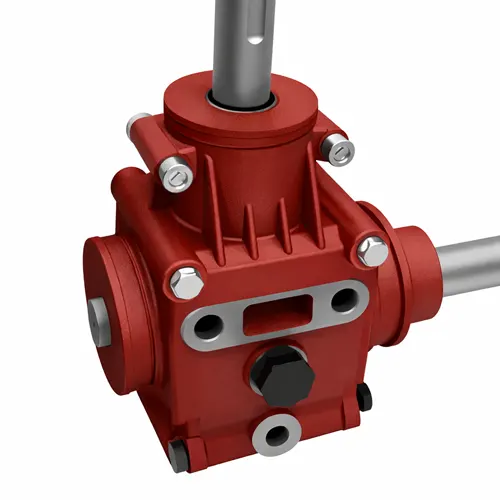
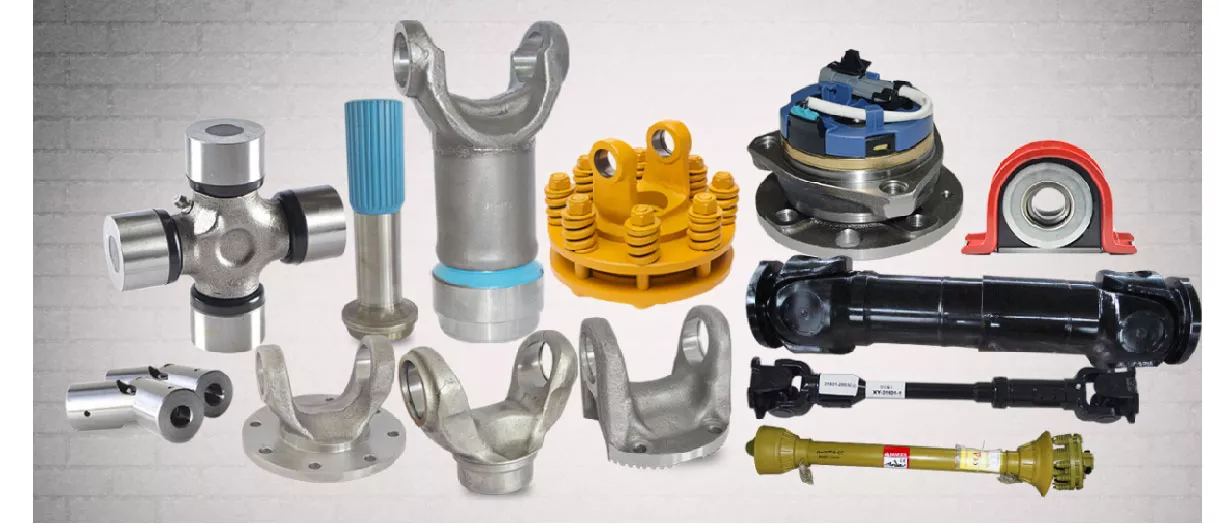
The Physics of Torsional Coupling: Integrating Shafts, Sprockets, and Gearboxes
When designing a reaper-binder—or modifying an existing platform to handle higher-yield crop varieties in Australia—the engineering focus must shift from isolated components to holistic torsional coupling. A 100-horsepower tractor outputs approximately 1300 Nm of torque at 540 RPM. When this rotational force meets the inertia of a stationary sickle bar and knotter mechanism, the initial startup phase acts as an intense shockwave. If the PTO shaft employs a basic rigid connection without an overrunning clutch or friction disc module, this shockwave travels straight into the input shaft of the agricultural gearbox.
Our gearboxes are designed to handle high service factors (often up to 2.5 times the continuous rating), but persistent, undamped impacts will eventually cause micro-fractures in the gear teeth. By utilizing EVER-POWER’s calibrated slip clutches on the implement end of the PTO shaft, we introduce a calculated “slippage threshold.” When the machine strikes an immovable obstacle (like a thick tree root disguised in the crop), the friction discs break traction for milliseconds. This bleeds off the kinetic energy as heat rather than transferring it as destructive force into the gearbox. Once the obstacle is cleared, the clutch regains traction automatically.
Similarly, the output shafts of these gearboxes often connect to chain-and-sprocket drives to operate the binder’s canvas belts. We supply sprockets featuring induction-hardened teeth, matched meticulously to our high-strength agricultural roller chains. If a substandard chain elongates (stretches) under load, it will ride up on the sprocket teeth, altering the timing of the binding mechanism and causing the implement to produce loose, untied sheaves. By utilizing our complete suite of drive shafts, gearboxes, and power transmission accessories, agricultural engineers can calculate exact timing metrics, ensuring that power flow remains perfectly synchronized from the tractor’s engine block to the final knot tied on the sheaf.
Transcending Standard Manufacturing: Unlimited Engineering Customization
EVER-POWER operates beyond the confines of basic assembly lines. We possess an absolute, closed-loop vertical manufacturing ecosystem—from raw metallurgical forging and deep carburizing heat treatments to ISO-certified dynamic balancing. Whether you require a single high-performance replacement shaft engineered to survive the Australian outback, or you are an OEM seeking thousands of non-standard drivelines with proprietary spline dimensions and custom torque limits, our engineering floor is prepared to manifest your blueprints into indestructible physical reality.
Submit Your Technical Parameters for an Expert Quotation
We welcome technical drawings and samples from global OEMs, regional distributors, and large-scale agricultural enterprises.

























