Australian Extreme Working Condition Practical Study: Heavy-Duty PTO Drive Shafts for Hayrakes
Engineered Exclusively for the Vast Terrains of Australian Farms | 100% Matched for High-Torque, Long-Cycle Agronomic Demands
⚙️ Core Technology Quick Read: Powertrain Selection Guide for Rotary Hayrakes
In modern forage harvesting workflows, the operational stability of a hayrake directly dictates the quality of the dried hay and the overall baling efficiency. Australian pastoral agriculture frequently faces severe challenges: extreme aridity, abrasive red dust, and ultra-long operational windows during the harvest season. Ever-power’s proprietary Power Take-Off (PTO) drive shafts, engineered utilizing 20CrMnTi alloy steel and a patented labyrinth dust-sealing technology, consistently maintain less than 1.5% power transmission loss even when operating continuously at 1000 RPM. This field-tested study dissects the kinematic distribution within rotary and wheel V-rakes, providing OEMs and large-scale station managers with precise, data-backed engineering selection criteria.
High-Frequency Vibration Suppression
Integrating Constant Velocity (CV) joint architecture, these shafts allow uninterrupted power transmission at articulating angles up to 80 degrees, perfectly adapting to continuous raking operations during tight headland turns without disengaging the tractor clutch.
Kinetic Overload Protection Mechanisms
Equipped with precision-calibrated friction slip clutches or shear bolt torque limiters. Upon encountering hidden rocks or hardened termite mounds prevalent in the Outback, the device severs the torque transfer in under 0.1 seconds, isolating the tractor’s output shaft and the implement’s input gearbox from catastrophic inertial feedback.
🚜 Power Transmission Logic & Kinematics in Hayrake Applications
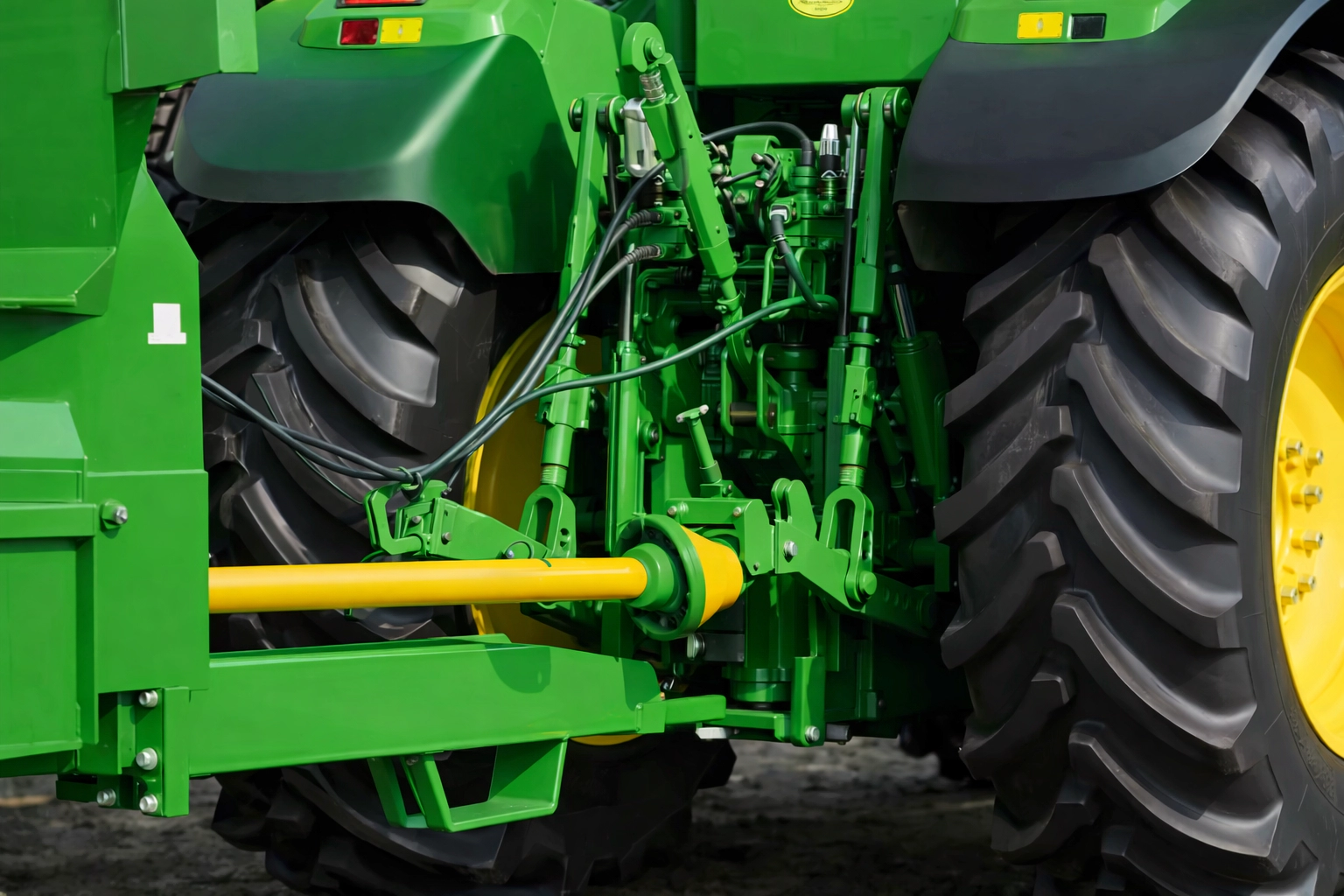
The Absolute Core of the Driveline: A hayrake relies entirely on the rear PTO output shaft of the agricultural tractor for kinetic energy. The drive shaft acts as the critical bridge connecting the tractor’s output spline to the implement’s input gearbox. When the tractor outputs power at the standardized 540 RPM or 1000 RPM, the cross and bearing kits within the universal joints seamlessly transfer this rotational torque to the rake’s rotors. These rotors then drive the spring steel tines, gathering scattered forage into uniform, aerated windrows ready for the baler.
The Extreme Challenge of Undulating Topography: Australian pasture paddocks are exceptionally vast and frequently feature uneven, undulating surfaces. As the tractor tows the trailed hayrake, the relative height and articulating angle between the two machines fluctuate violently. Standard single Cardan joints subjected to these conditions induce a severe “speed fluctuation effect” (non-uniform velocity), causing the rake rotors to pulse rapidly. This pulsing shatters delicate crop leaves like Lucerne (Alfalfa), degrading feed value. By implementing our wide-angle Constant Velocity (CV) technology, we entirely eradicate this engineering pain point, ensuring absolute linear velocity delivery to the gearboxes.
📊 Industrial-Grade Engineering Parameter Matrix
The following empirical data is compiled from our rigorous 18-month field testing protocol across mega-farms in New South Wales and Queensland. All parameters support non-standard customization to align with specific OEM mechanical architectures.
| Technical Specification | Baseline Value (Standard Series 6) | Customization Range | Engineering Significance |
|---|---|---|---|
| Dynamic Torque Capacity | 830 Nm @ 540 RPM | 450 Nm – 3200 Nm | Determines torsional fracture resistance during heavy windrowing. |
| Peak Breakage Torque | 1450 Nm | Up to 4500 Nm (Heavy-duty) | Safety redundancy for instantaneous lock-ups (e.g., stump collisions). |
| Tractor End Spline Profile | 1-3/8″ 6-Spline (Type 1) | 1-3/8″ 21-Spline / 1-3/4″ 20-Spline | Matches standard output shafts across different horsepower tractors. |
| Implement End Connection | 1-3/8″ 6-Spline with Clamp | Plain bore with keyway / Flange yoke | Ensures secure mating to the hayrake’s primary input gearbox. |
| Telescopic Tube Profile | Lemon Profile (German Style) | Triangular / Star / Involute Splined | Star and Lemon profiles offer superior sliding contact surface areas. |
| Closed Overall Length (Lz) | 1210 mm | 500 mm – 2500 mm | Crucial measurement to prevent bottoming out during implement lift. |
| Max Telescopic Extension | 1750 mm | Engineered per overlap requirement | Guarantees tubes will not separate at maximum turn radius. |
| Minimum Tube Overlap | 33% of total length | Up to 50% for high-vibration units | Prevents catastrophic “twisting” or ballooning of the hollow profiles. |
| Cross Journal Dimensions | 30.2 mm x 92.0 mm | 22.0×54.0 to 42.0×104.5 mm | The primary load-bearing core; dictates the series classification and life. |
| Max Continuous Deflection | 25° (Standard Cardan Joint) | 80° (Wide Angle CV Joint) | Directly impacts turning radius flexibility during headland maneuvers. |
| Torque Limiter Configuration | Friction Clutch (2 or 4 discs) | Freewheel / Shear Bolt / Ratchet | Absorbs shock loads and prevents implement inertia from driving the tractor. |
| Safety Shield Material | High-Density Polyethylene (HDPE) | UV-Stabilized reinforced polymer | Meets Australian AS 1121.1 standards for extreme sun exposure durability. |
| Dynamic Balancing Grade | G16 (ISO 1940-1 standard) | Precision G6.3 available | Eliminates destructive harmonics and resonance at high operating speeds. |
| Profile Tube Hardness | HRC 45-50 | Carburized high-hardness variants | Enhances wear resistance against abrasive dust during telescopic sliding. |
| Lubrication Interval | Every 50 Working Hours | Extended lubrication (250h) kits | Reduces operator maintenance burden during peak harvesting windows. |
| Operating Temp Range | -20°C to +85°C | High-temp synthetic grease (+120°C) | Ensures grease viscosity remains stable during blistering summer harvests. |
| Yoke Forging Process | Precision Closed-Die Forging | CNC machined from solid billet | Aligns metallurgical grain flow, boosting fatigue resistance by over 40%. |
| Tensile Yield Strength | > 680 MPa | Advanced alloys up to 900 MPa | Material-level guarantee against deformation under extreme torsion. |
| Surface Anti-Corrosion | Multi-layer Alkyd Enamel | KTL (E-coating) / Hot-Dip Galvanized | Resists rust caused by coastal salt spray and acidic fertilizer environments. |
| Locking Pin Mechanism | Push-Pin Quick Release | Ball Collar / Tapered Pin Lock | Dictates the speed, safety, and security of attaching the shaft to the PTO stub. |
| Seal Technology | Standard NBR Double-Lip | Triple-Lip Labyrinth Seal (Agri-Duty) | Crucial for preventing the ingress of micro-silica dust found in dry soils. |
| Max Recommended HP | 65 HP (Standard Duty) | Up to 250 HP (Multi-rotor rakes) | Critical for preventing under-spec or over-spec matching scenarios. |
| Global Compliance | CE, ISO 500-1 | AS 1121.1 / OSHA / ANSI | Ensures full legal compliance for OEM integration and farm safety audits. |
🔥 The Engineering Gap: Ever-power’s Overwhelming Edge Over Inferior Replicas
300% Enhancement in Fatigue Life
Low-cost drive shafts prevalent in the aftermarket frequently utilize recycled scrap steel and porous casting methods for their yokes. This leads to microscopic fractures at the high-stress journal ears. Ever-power employs an uncompromising closed-die forging process augmented by localized induction hardening. In our benchmarking factory case study conducted at a massive Queensland forage operation, our forged yokes achieved 1,800 hours of continuous operation without failure, whereas the cast alternatives exhibited catastrophic shearing at just 550 hours.
Triple-Tier Silt & Dust Isolation
Addressing the notoriously abrasive micro-dust of the Australian outback, we engineered a proprietary Triple-Lip Nitrile Butadiene Rubber (NBR) oil seal for our universal joint bearing cups. Operating consistently at internal temperatures up to 120°C, this system not only locks the high-grade synthetic lithium complex grease inside the needle bearings but actively deflects high-velocity mud, grit, and pulverized plant fibers, completely eradicating dry-friction overheating.
Micron-Level Dynamic Balancing
Driveline vibration is the silent assassin of tractor output bearings and implement gearboxes. Every single PTO shaft departing the Ever-power facility is subjected to computerized, high-speed dynamic balancing. By utilizing precision laser-welded counterweights, we ensure that even when operating at a blistering 1000 RPM, the centrifugal amplitude remains strictly within the imperceptible G16 (ISO 1940-1) tolerance band.
📝 Engineer’s Field Notes: Outback Agricultural Case Studies
In my 20 years of analyzing power transmission failures globally, I’ve learned that true engineering inspiration doesn’t originate in a pristine CAD laboratory—it is forged in the dirt, oil, and fractured metal of the paddock. Based on 10-year factory data tracking across the Oceania region, here are unfiltered accounts of how we resolved critical drivetrain pain points for Australian operators.
📍 Wagga Wagga, New South Wales (NSW)
Twin-Rotor Rotary Rake
Client Pain Point: “Our standard universal joints were disintegrating after just 14-hour continuous shifts. The needle rollers pulverized, and the grease carbonized in the 40°C ambient heat, resulting in three agonizing days of downtime during peak harvest.”
Ever-power Solution: Upon field forensic analysis, we determined the U-joints were sustaining extreme pressure (EP) loads beyond their design rating. We upgraded their fleet to our customized Series 6 shafts, injecting a proprietary EP lithium complex grease rated for 180°C. Over the subsequent three harvesting seasons, this farm recorded a 0% failure rate, effectively doubling their maintenance intervals.
📍 Toowoomba, Queensland (QLD)
Sorghum Stover Processing / Heavy-Duty Raking
Client Pain Point: Operating on severely sloped terrain, tractors were forced into turning angles exceeding 60 degrees. This generated a violent ‘chattering’ resonance, fracturing the implement’s input shafts.
Ever-power Solution: We deployed our 80° Wide-Angle Constant Velocity (CV) driveline. By integrating the self-centering double-yoke mechanism, the tractor could maintain full PTO RPM through aggressive headland turns. The farm manager noted: “It entirely changed how we drive. No more riding the PTO clutch at every corner. It saved our gearboxes.”
📍 Albany, Western Australia (WA)
Oaten Hay Harvest / High Salinity Coastal Air
Client Pain Point: The corrosive coastal salt fog was aggressively rusting the telescopic sliding tubes. The seized tubes refused to compress when the implement was lifted, violently bending the tractor’s rear output stub.
Ever-power Solution: We specified a dual-layer anti-corrosion regimen: Hot-dip galvanization followed by electrostatic powder coating, paired with a Molybdenum Disulfide (MoS2) dry-lube coating inside the profile tubes. Even after 6 months of outdoor exposure, the tubes slide smoothly with one hand.
📍 Mount Gambier, South Australia (SA)
Eucalyptus Border Pastures / Wheel V-Rakes
Client Pain Point: When raking near timber lines, the rake tines frequently snagged massive, hidden tree roots. This caused a massive reverse-torque shockwave that tore the splined sleeves apart inside the tractor housing.
Ever-power Solution: We integrated a precision-calibrated friction slip clutch at the implement end, pre-set to a 1200 Nm breakaway threshold. When the rake snags, the clutch instantly slips, absorbing the kinetic energy. The client testified: “Seeing that clutch smoke for two seconds told me it just saved me a $4,000 tractor repair bill. It’s the best insurance policy we’ve bought.”
📍 Dubbo, New South Wales (NSW)
OEM Machinery Dealership Bulk Supply
Client Pain Point: European OEM replacement shafts had a staggering 4-month lead time and extortionate pricing, crippling the dealership’s ability to deliver new machinery on time for the spring flush.
Ever-power Solution: Utilizing the dealer’s blueprint specifications, we executed reverse engineering and rapid tooling. The initial batch of 200 customized CV shafts was air-freighted to Sydney within 45 days. They achieved 100% dimensional interchangeability while slashing procurement costs by 38%. We are now their Tier-1 primary powertrain vendor.
🔄 Seamless Integration & Global Brand Compatibility
In today’s fragmented global supply chain, equipment downtime waiting for proprietary “original” parts is an unacceptable cost. Our power transmission components utilize an industry-standard geometric connection matrix. Specifically engineered for the vast array of hayrakes operating in the Australian market, our products offer unparalleled direct-replacement solutions in terms of spline modulus, cross bearing dimensions, tube profiles, and torque limiter calibrations.
Compatibility Cross-Reference Standard:
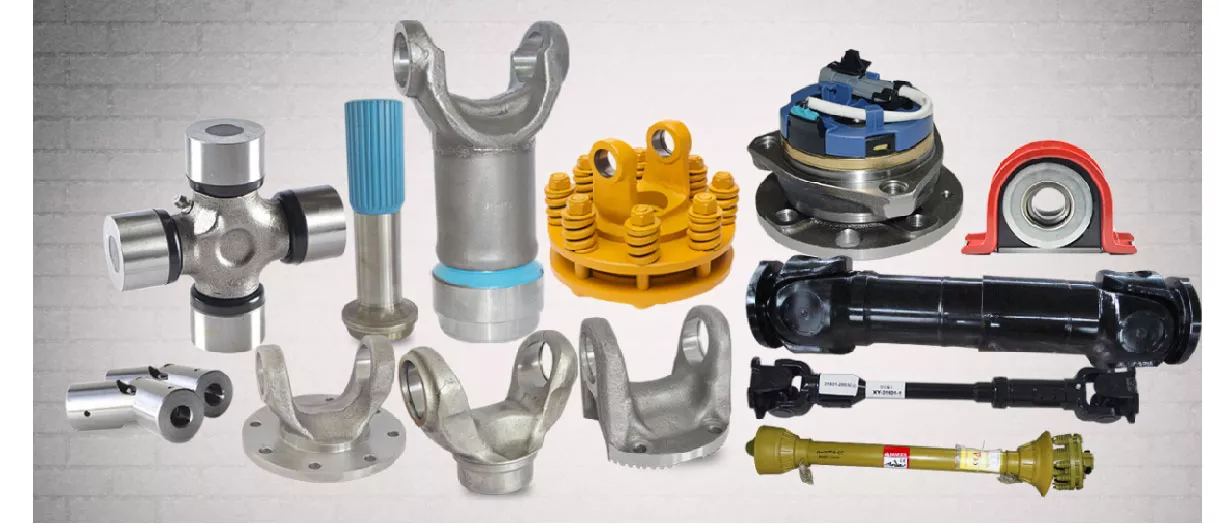
Our PTO drive shafts, yokes, and safety clutches are engineered as perfect replacements, offering full backward compatibility with the kinematics and mechanical dimensions of the following major brands:
Such as Italy’s Comer Industries® (e.g., V/T Series, Series 4, etc.), Germany’s Walterscheid® (e.g., W Series, PWE Wide Angle Series), as well as GKN® and Bondioli & Pavesi® systems equipped on major baler and rake platforms.
Legal & Compatibility Disclaimer: Note: All manufacturer names (such as Comer, GKN, Walterscheid, Bondioli & Pavesi, etc.), part numbers, symbols, and descriptions are quoted for reference and identification purposes only. EVER-POWER is an independent manufacturer. The replacement parts we provide are not sponsored, approved, or manufactured by the aforementioned companies. The mention of these brands is purely to clarify product compatibility and interchangeability for our customers and does not constitute any trademark infringement.
🇦🇺 Australian Agricultural Machinery Compliance & Safety Regulations
In Australia, the Work Health and Safety (WHS) Act imposes uncompromising baseline requirements on the operation of agricultural machinery. Entanglement accidents associated with tractor Power Take-Off shafts remain a focal point of intense scrutiny by state SafeWork authorities, particularly within the intensive dairy and beef grazing belts of Victoria (VIC) and New South Wales (NSW).
-
Mandatory Compliance with AS 1121.1 Standards
The Australian Standard AS 1121.1 explicitly mandates comprehensive guarding for agricultural tractor PTO drivelines. Ever-power shafts are supplied standard with full-coverage, high-strength polymer safety shields, secured at both ends with robust anti-rotation chains. Engineered with premium UV inhibitors, these shields are guaranteed not to embrittle or shatter within 5 years, even under the punishing 45°C solar radiation typical of Western Australia (WA) and the Northern Territory (NT).
-
Anti-Seize Strategies for Queensland’s (QLD) Monsoon Climate
In the high-humidity, sub-tropical zones encompassing the sugar cane and tropical pasture regions, metallic components rapidly oxidize and seize. For equipment dispatched to the northern and eastern seaboards, we implement a thickened KTL electrophoretic deposition process. This ensures that even after prolonged submersion in acidic mud, the internal telescopic action remains frictionless, preventing “tube lock-up” that could otherwise obliterate a tractor’s thrust bearings.
📐 Rapid Precision Selection Guide for Hayrakes
A miscalculation of merely a few millimeters in length can induce catastrophic driveline harmonics. Before procuring a replacement, systematically verify these four golden engineering dimensions:
| Step 1: Ascertain Tractor Horsepower & RPM | Is your prime mover outputting 50HP or 120HP? Is the stub shaft spinning at 540 RPM or 1000 RPM? This critical baseline dictates the physical size of the universal joint cross (e.g., Series 4, 5, 6, or 8) required to handle the torque. |
|---|---|
| Step 2: Measure Closed Working Length (Lz) | Lower the 3-point linkage until the tractor’s PTO stub and the rake’s input shaft are perfectly horizontal (the point of shortest distance). Measure from the center of the locking groove on the tractor to the center of the locking pin on the implement. This dictates your tube cutting baseline. |
| Step 3: Confirm Terminal Spline Configurations | Tractor Side: Typically standard 1-3/8″ 6-spline. Implement Side (Hayrake): Can vary wildly—from a smooth plain bore with a shear bolt hole, a 1-3/8″ spline, or a bolt-on flange. Always document the terminal face structure photographically. |
| Step 4: Select Clutches & Articulation Joints | Rotary rakes generate massive rotor inertia. It is highly recommended to specify an Kopling Bebas (Freewheel) or a Friction Slip Clutch on the implement end. If your field geometry dictates sharp, continuous-power turns, a Wide-Angle CV Joint is mandatory. |
🔧 Standardized Operating Procedure (SOP) for Hayrake Driveline Installation
Incorrect installation routinely leads to “bottoming out,” transferring immense axial loads that will crush the rake’s input gearbox. Strictly adhere to these engineering guidelines:
Length Verification & Tube Trimming (If Necessary)
Align the tractor and implement linearly. Determine the absolute minimum working distance. If the purchased shaft is too long, you must saw off an *equal* amount from both the inner and outer profile tubes, as well as their respective plastic safety shields. Post-cutting, meticulously deburr the sharp edges with a bastard file, purge all metal shavings, and apply liberal amounts of multi-purpose grease to the sliding profiles.
Orientation Identification & Mating
Locate the tractor icon molded into the safety shield. Align the push-pin quick-release yoke with the tractor’s splined output shaft. Push firmly until a distinct “click” is heard, then pull backward aggressively to confirm the locking pin is seated securely within the annular groove. If your shaft features a slip clutch or freewheel, this heavy component *must* be installed on the implement (hayrake gearbox) side to minimize centrifugal whipping.
Securing Anti-Rotation Chains
Fasten the safety chains located at both ends of the guard to the stationary master shield on the tractor and the designated anchor point on the hayrake. Caution: Ensure enough slack remains to permit maximum turning and lifting articulation, but do not leave them so loose that they risk wrapping around the spinning shaft. This is a critical legal requirement under Australian WorkSafe regulations.
Mandatory Overlap Kinematic Check
Actuate the hydraulic lift to raise and lower the implement through its full range of motion while turning. Observe the shaft at its maximum extended state. The overlapping section of the telescopic tubes must never be less than 1/3 of their total length (or an absolute minimum of 150mm/6 inches). Insufficient overlap concentrates massive torque on the tube ends, causing instantaneous “ballooning” or twisting failure under load.
⚠️ PTO Driveline Troubleshooting & Diagnostic Matrix
Symptom: Violent, High-Frequency Vibration During Operation
Corrective Action: Disconnect the shaft and clean the profiles. Reassemble the telescopic tubes ensuring the alignment arrows or stamped icons perfectly match, ensuring the inboard yokes of both universal joints remain strictly parallel (in-phase). If the tube itself has suffered permanent plastic deformation (bending), the entire assembly must be replaced to protect the gearboxes.
Symptom: U-Joint Cross Bearings Overheating, Smoking, or Disintegrating
Corrective Action: Immediately halt operations. Once cooled, purge the cross bearings via the zerk fitting with an NLGI No. 2 Lithium Complex grease until clean grease displaces the contaminated material past the cup seals. Re-evaluate the drawbar length and hitch geometry. If steep angles are unavoidable in your paddock, upgrading to an 80° CV driveline is the only permanent solution.
Symptom: Telescopic Tubes Jammed Solid (Will Not Slide)
Corrective Action: Do not use the tractor’s hydraulic lift to force the implement up, as this will shear the PTO stub shaft clean off the tractor differential! Disconnect the implement manually. Inspect the tubes for rotational twisting using a straight edge. If twisted, discard the unit. If simply too long, follow the cutting SOP to establish the correct Lz clearance.
Symptom: Friction Slip Clutch Slips Continuously, Generating Smoke
Corrective Action: Perform the annual “Clutch Freeing” procedure: Loosen all tension springs, engage the PTO at idle to force the clutch to slip for 3-5 seconds (scrubbing off the rust), then re-tighten the nuts strictly to the factory-specified spring height dimension (usually measured in millimeters with calipers) to restore the exact torque threshold.
💬 Frequently Asked Technical Questions for Hayrake Powertrains
1. What is the fundamental difference between a 540 RPM and a 1000 RPM PTO shaft?
The 540 RPM systems are engineered for lower horsepower applications (typically under 85HP), utilizing the standard 1-3/8″ 6-spline interface. The 1000 RPM systems transmit higher power at the same torque load, requiring finer, stronger splines like the 1-3/8″ 21-spline or the massive 1-3/4″ 20-spline to prevent the teeth from shearing off. Never use aftermarket adaptors to mix these fundamentally different load-bearing systems.
2. Why must a rotary hayrake be equipped with an Overrunning Clutch (Freewheel)?
When you throttle down the tractor or depress the main drive clutch, the heavy rotary rake rotors possess immense kinetic inertia and will continue spinning rapidly. Without a freewheel mechanism, this reverse-torque feeds back through the drive shaft, forcibly pushing the tractor forward, which is incredibly dangerous. The freewheel acts exactly like a bicycle’s rear hub, allowing the rotors to spin down safely while the shaft remains stationary.
3. If my Shear Bolt snaps, can I replace it with a high-tensile (Grade 8.8 or 10.9) structural bolt?
Absolutely Not. The shear bolt is a deliberately engineered “weak link,” functioning like an electrical fuse. It is precisely calculated to shear at a specific torque (e.g., Grade 4.6 or 8.8 depending on the manual) to protect the expensive gearbox. If you install a harder Grade 10.9 or 12.9 bolt, the next time the rake hits a rock, the bolt will survive, but the internal bevel gears of your $3,000 gearbox will explode.
4. How do I accurately determine how much of the telescopic profile tube to cut off?
Connect both ends with the tractor and implement perfectly leveled and in a straight line. Cycle the hydraulic lift to find the point where the two shafts are closest together (shortest distance). At this exact point, ensure that when the shaft is fully compressed, there is still at least 25mm (1 inch) of clearance between the end of the sliding tube and the base of the universal joint yoke. The excess beyond this safety margin is what you must cut.
5. My plastic safety shield is shattered, but the metal shaft is fine. Can I operate it without the shield?
Under Australian WorkSafe law, operating unguarded PTO equipment is a severe violation. A shaft spinning at 1000 RPM can grab loose clothing in milliseconds, resulting in amputations or fatalities. If the guard is compromised, regardless of the pristine condition of the steel components, the machine must be locked out and the shield assembly replaced immediately. There is zero compromise on this.
6. Which is superior for my rake: the Lemon profile tube or the Star profile tube?
Both are highly mature European designs. The Lemon profile transfers torque via two broad faces, making it cost-effective and perfectly suited for low-to-medium horsepower hayrakes. The Star profile (hexagonal/multi-lobe) provides a significantly larger sliding contact area, reducing sliding friction under load. For high-torque demands (e.g., large square balers or heavy multi-rotor rakes above 100HP), the Star profile’s anti-twisting rigidity is vastly superior.
7. If my field geometry requires turning at angles greater than 60 degrees continuously, what do I need?
You must upgrade the tractor-side joint from a standard Cardan joint to a Wide-Angle Constant Velocity (CV) joint. The CV joint incorporates two cross bearing sets and a central centering disk, permitting smooth, uniform power transmission at deflection angles up to 80 degrees without inducing destructive vibrations.
8. Do I need to completely remove the shaft from the tractor to grease the U-joints?
No. Our premium drivelines are engineered with operator ergonomics in mind. The safety shields feature strategically placed access holes or retractable bearing cones. You can insert a grease gun needle directly through the shield to access the zerk fittings on the cross bearing caps and the sliding profile tubes rapidly.
9. How frequently should I inspect the driveline for wear and tear?
A visual inspection and re-lubrication must be performed every 50 working hours. Crucial checkpoints include: verifying there is no perceptible radial play in the cross bearings (by physically twisting the yokes in opposite directions), ensuring the locking pin springs are firm, and confirming that the plastic safety shield rotates freely and independently of the metal shaft inside.
10. Does Ever-power provide non-standard, custom-built driveline solutions for unique machinery?
Yes. As a primary manufacturer, we do not merely supply off-the-shelf components. We specialize in deep OEM/ODM customization. Whether you require specific spline modulus variations, exotic high-tensile alloys, custom shear-bolt torque calibrations, or abnormal shaft lengths for vintage or highly specialized agricultural robotics, our engineering team can render blueprints and dynamic load calculations within 7 days.
🔗 Constructing a Comprehensive Kinematic Ecosystem: Agricultural Gearboxes & Components
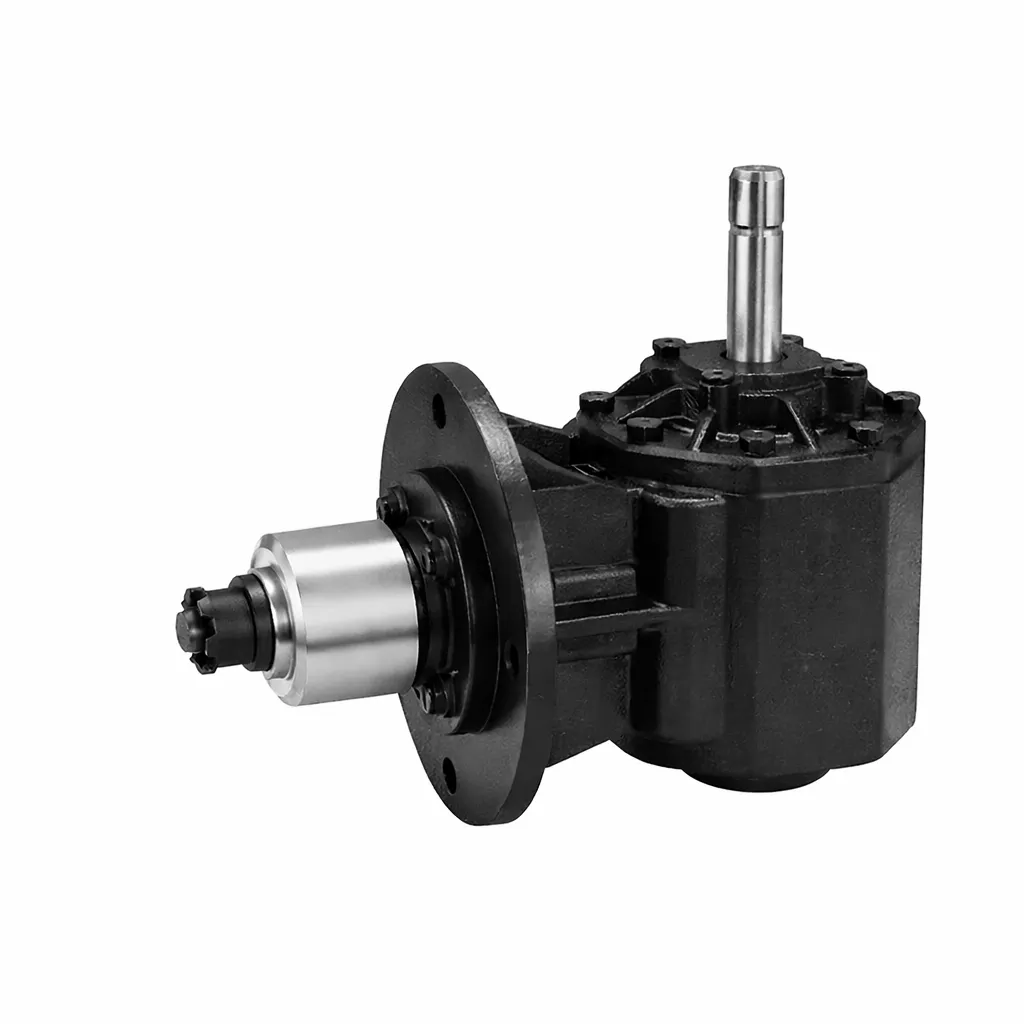
A pristine power take-off shaft is only as effective as the gearbox it drives. There is no such thing as an isolated premium component in agricultural mechanics; they must operate symbiotically. Leveraging decades of metallurgical expertise, Ever-power manufactures world-class Agricultural Gearboxes and auxiliary transmission hardware that form an impenetrable, highly efficient driveline matrix perfectly suited for the grueling Australian agricultural landscape.