Description du produit
Tractor Pto Driveshaft Driveline Factory Hollow Spline Cardan Adapter Universal Joint Yoke Flexible Front Prop Rear CV Axle Propeller Automobile Drive Shaft
Description du produit
Agricultural truck universal joint steering
PTO Shaft
| Function of PTO Shaft | Drive Shaft Parts & Power Transmission |
| Usage of PTO Shaft | Kinds of Tractors & Farm Implements |
| Yoke Types for PTO Shaft | Double push pin, Bolt pins, Split pins, Pushpin, Quick release, Ball attachment, Collar….. |
| Processing Of Yoke | Forging |
| PTO Shaft Plastic Cover | YW; BW; YS; BS; Etc |
| Colors of PTO Shaft | Green; Orange; Yellow; Black Ect. |
| PTO Shaft Series | T1-T10; L1-L6;S6-S10;10HP-150HP with SA,RA,SB,SFF,WA,CV Etc |
| Tube Types for PTO Shaft | Lemon, Triangular, Star, Square, Hexangular, Spline, Special Ect |
| Processing Of Tube | Cold drawn |
| Spline Types for PTO Shaft | 1 1/8″ Z6;1 3/8″ Z6; 1 3/8″ Z21 ;1 3/4″ Z20; 1 3/4″ Z6; 8-38*32*6 8-42*36*7; 8-48*42*8; |
We also sell accessories for the pto shaft, including :
Yoke: CV socket yoke, CV weld yoke, flange yoke, end yoke, weld yoke, slip yoke
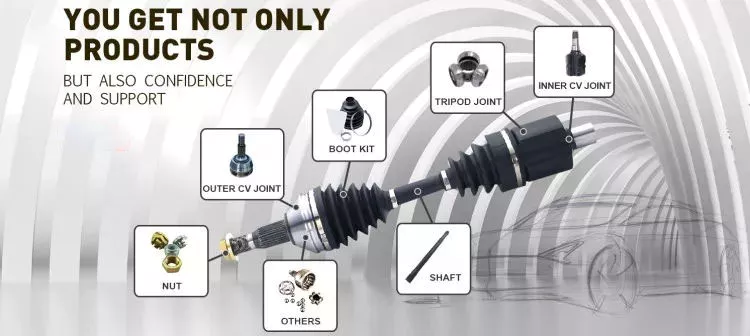
CV center housing, tube, spline, CV socket flange, u-joint, dust cap
Light vehicle drive line
Our products can be used for transmission shafts of the following brands
Toyota, Mitsubishi, Nissan, Isu zu, Suzuki, Dafa, Honda, Hyundai, Mazda, Fiat, Re nault, Kia, Dacia, Ford. Dodge, Land Rover, Peu geot, Volkswagen Audi, BMW Benz Volvo, Russian models
Gear shaft
Profil de l'entreprise
Related Products
Application:
Company information:
/* January 22, 2571 19:08:37 */!function(){function s(e,r){var a,o={};try{e&&e.split(“,”).forEach(function(e,t){e&&(a=e.match(/(.*?):(.*)$/))&&1
| Matériel: | Acier au carbone |
|---|---|
| Charger: | Arbre de transmission |
| Rigidité et flexibilité : | Stiffness / Rigid Axle |
| Journal Diameter Dimensional Accuracy: | IT6-IT9 |
| Forme de l'axe : | Arbre droit |
| Forme de la tige : | Axe réel |
| Exemples : |
US$ 38/Piece
1 pièce (commande minimale) | |
|---|
What maintenance practices are essential for prolonging the lifespan of PTO drive shafts?
To prolong the lifespan and ensure the optimal performance of PTO (Power Take-Off) drive shafts, regular maintenance practices are essential. By following these maintenance practices, operators can prevent premature wear, identify potential issues early on, and maximize the longevity of the drive shaft. Here are some key maintenance practices to consider:
1. Lubrication:
Proper lubrication is crucial for the smooth operation and longevity of PTO drive shafts. Regularly lubricate the drive shaft’s universal joints, splines, and other moving parts as per the manufacturer’s recommendations. Choose a high-quality lubricant suitable for the specific application and environmental conditions. Lubrication helps reduce friction, prevent excessive wear, and protect against corrosion.
2. Inspection:
Regular visual inspections are important for identifying any signs of wear, damage, or misalignment in the PTO drive shaft. Inspect the drive shaft and its components for cracks, dents, loose bolts, or signs of excessive wear. Pay attention to the universal joints, splines, shielding, and safety features. If any issues are detected, take prompt action to rectify them to prevent further damage and ensure safe operation.
3. Torque Checks:
Periodically check the torque on fasteners, such as bolts and nuts, that secure the PTO drive shaft and its components. Vibrations and normal operation can cause these fasteners to loosen over time, potentially leading to misalignment or damage. Use a torque wrench to ensure that the fasteners are properly tightened according to the manufacturer’s specifications. Regular torque checks help maintain the integrity and stability of the drive shaft assembly.
4. Alignment:
Maintaining proper alignment between the PTO drive shaft, the primary power source, and the implement is essential for efficient power transfer and preventing excessive wear. Check the alignment of the drive shaft regularly, ensuring that it is straight and properly seated in its connections. Misalignment can cause vibration, increased stress, and premature failure. Make adjustments as necessary to achieve proper alignment.
5. Shear Pin or Torque Limiter Replacement:
If the PTO drive shaft is equipped with a shear pin or torque limiter as a safety feature, it is important to replace these components when they have been activated or damaged. Shear pins are sacrificial components that break under excessive torque, protecting the drive shaft and connected equipment. Replace the shear pin or torque limiter with the correct type and specifications recommended by the manufacturer to ensure continued safety and proper function.
6. Shielding and Guarding:
Inspect the shielding and guarding of the PTO drive shaft regularly to ensure they are intact and in good condition. These protective covers are designed to prevent contact with moving parts and reduce the risk of entanglement or injury. Replace any damaged or missing shielding promptly to maintain operator safety and prevent debris from entering the drive shaft assembly.
7. Environmental Protection:
Consider the environmental conditions in which the PTO drive shaft operates and take appropriate measures to protect it. If the drive shaft is exposed to moisture, dirt, or corrosive substances, clean it regularly and apply appropriate coatings or protective measures to prevent rust and corrosion. Additionally, ensure that the drive shaft is stored in a dry and clean environment when not in use.
8. Manufacturer’s Guidelines:
Follow the maintenance guidelines provided by the manufacturer of the PTO drive shaft. These guidelines may include specific maintenance intervals, recommended lubricants, torque specifications, and other important instructions. Adhering to the manufacturer’s guidelines ensures that the drive shaft is maintained in accordance with its design and engineering specifications, maximizing its lifespan and performance.
By implementing these essential maintenance practices, operators can significantly prolong the lifespan of PTO drive shafts. Regular lubrication, inspections, torque checks, alignment checks, timely replacement of safety features, proper shielding and guarding, environmental protection, and adherence to manufacturer’s guidelines all contribute to the drive shaft’s longevity, reliability, and safe operation.

Comment les arbres de transmission à prise de force améliorent-ils les performances des tracteurs et des machines agricoles ?
Les arbres de transmission à prise de force (PDF) jouent un rôle essentiel dans l'amélioration des performances des tracteurs et des machines agricoles. Ils constituent un mécanisme de transmission de puissance fiable et efficace, permettant diverses fonctions et améliorant la productivité globale. Voici comment les arbres de transmission à prise de force améliorent les performances des tracteurs et des machines agricoles :
1. Polyvalence et compatibilité :
Les arbres de transmission à prise de force (PDF) sont conçus pour être polyvalents et compatibles avec une large gamme d'outils et de machines agricoles. Disponibles en tailles et configurations standardisées, ils permettent un raccordement et un débranchement faciles des outils. Cette compatibilité permet aux agriculteurs et aux opérateurs de passer rapidement d'un outil à l'autre, tels que charrues, faucheuses, presses à balles et semoirs, sans nécessiter de modifications importantes de l'équipement. La polyvalence des arbres de transmission à prise de force améliore la flexibilité et l'efficacité des machines agricoles, leur permettant d'effectuer de multiples tâches avec aisance.
2. Transfert de puissance :
L'une des principales fonctions des arbres de transmission à prise de force (PDF) est de transmettre la puissance du moteur du tracteur aux différents outils agricoles. Ils transmettent la puissance de rotation à une vitesse constante, permettant ainsi aux outils d'accomplir efficacement leurs tâches. Cette transmission directe de puissance élimine le besoin de moteurs électriques sur chaque outil, ce qui représente un gain de temps et de ressources. Les arbres de transmission à prise de force constituent un moyen fiable et efficace de transmission de puissance, garantissant des performances optimales du matériel agricole.
3. Productivité accrue :
En permettant le raccordement de différents outils, les prises de force contribuent significativement à l'augmentation de la productivité. Les tracteurs équipés de prises de force peuvent passer rapidement d'une tâche à l'autre, comme le labour, le semis et la récolte, sans interruption prolongée ni changement d'équipement. Les agriculteurs peuvent ainsi optimiser l'utilisation de leur matériel et réaliser leurs travaux dans les délais impartis. La facilité de raccordement et de débranchement des outils grâce aux prises de force améliore la productivité globale des opérations agricoles.
4. Gain de temps :
Les prises de force (PDF) jouent un rôle crucial dans le gain de temps lors des travaux agricoles. Elles éliminent le besoin de main-d'œuvre manuelle ou animale, permettant ainsi des opérations plus rapides et plus efficaces. Grâce aux prises de force, les machines agricoles peuvent effectuer des tâches telles que le labour, le binage et la tonte à un rythme constant et performant. Ce gain de temps accroît la productivité globale de l'exploitation et permet aux agriculteurs de couvrir de plus grandes surfaces en moins de temps.
5. Contrôle précis de la puissance :
Les arbres de transmission à prise de force (PDF) offrent un contrôle précis de la puissance, permettant aux opérateurs d'ajuster la vitesse de rotation des outils en fonction des exigences de la tâche. Ce contrôle est particulièrement précieux pour des travaux tels que la tonte ou la pulvérisation, où différents types de végétation ou de cultures peuvent nécessiter des réglages de puissance spécifiques. Grâce aux arbres de transmission à prise de force, les opérateurs peuvent optimiser la puissance délivrée pour obtenir des résultats optimaux, garantissant ainsi le bon fonctionnement et l'efficacité des machines agricoles.
6. Réduction de la fatigue de l'opérateur :
L'utilisation de la prise de force (PDF) réduit la pénibilité physique des opérateurs. Au lieu de s'appuyer sur la force manuelle ou la traction animale pour actionner les outils, les opérateurs peuvent exploiter la puissance transmise par la PDF. Cela réduit la fatigue et leur permet de travailler plus longtemps sans épuisement excessif. La réduction de la fatigue des opérateurs contribue à une productivité accrue et à une meilleure performance globale des travaux agricoles.
7. Intégration aux technologies modernes :
Les arbres de transmission de la prise de force (PDF) s'intègrent aux technologies et systèmes de commande des tracteurs modernes. Cette intégration permet un contrôle précis et aisé de l'engagement et du désengagement de la PDF, de la vitesse de rotation et d'autres paramètres. Les tracteurs équipés d'arbres de transmission de PDF peuvent être intégrés aux systèmes de guidage GPS, aux technologies d'agriculture de précision et aux systèmes de gestion des données, optimisant ainsi les performances et l'efficacité des opérations agricoles.
8. Facilité d'entretien :
Les arbres de transmission de la prise de force sont généralement conçus pour faciliter l'entretien. Ils comportent souvent des points de lubrification accessibles, des orifices d'inspection et des composants remplaçables, ce qui simplifie leur maintien en bon état de fonctionnement. Un entretien régulier garantit des performances optimales, réduit les risques de pannes inattendues et maximise l'efficacité des tracteurs et des machines agricoles.
En résumé, les arbres de transmission à prise de force (PDF) améliorent les performances des tracteurs et des machines agricoles en leur offrant une grande polyvalence, en permettant la transmission de la puissance, en augmentant la productivité, en faisant gagner du temps, en assurant un contrôle précis de la puissance, en réduisant la fatigue de l'opérateur, en s'intégrant aux technologies modernes et en facilitant la maintenance. Grâce aux capacités offertes par les arbres de transmission à prise de force, les agriculteurs et les opérateurs peuvent optimiser l'utilisation de leurs machines, ce qui se traduit par une amélioration de la productivité et de la rentabilité agricoles.

What factors should be considered when selecting the right PTO drive shaft for an application?
When selecting the right PTO (Power Take-Off) drive shaft for an application, several important factors should be considered to ensure optimal performance, safety, and compatibility. Here’s a detailed explanation of the key factors to consider:
1. Power and Torque Requirements:
The power and torque requirements of the application are crucial considerations. It’s essential to determine the maximum power and torque output of the primary power source (e.g., engine, transmission) and match it with the drive shaft’s capacity. Selecting a drive shaft that can handle the required power and torque levels ensures efficient power transmission and prevents overloading or damage to the drive shaft and connected equipment.
2. Speed and RPM Range:
The speed and RPM (Rotations Per Minute) range of the equipment and the primary power source should be taken into account. The drive shaft’s design should be capable of accommodating the desired speed range while maintaining smooth power transmission. It is important to select a drive shaft that can handle the intended operating speeds without excessive vibration, binding, or loss of power.
3. Equipment Size and Configuration:
The size and configuration of the equipment or implement being powered by the PTO drive shaft are crucial factors. The drive shaft’s length should be adjustable or chosen appropriately to ensure proper alignment between the primary power source and the implement input shaft. Additionally, consider any space limitations or clearance requirements within the equipment that may affect the choice of drive shaft configuration.
4. PTO Shaft Connection Type:
The type of connection required between the PTO drive shaft and the primary power source and implement is a significant consideration. Common connection types include splined connections, keyway connections, and quick-detach mechanisms. It is essential to ensure compatibility between the drive shaft’s connection type and the corresponding connections on the power source and implement to achieve a secure and reliable attachment.
5. Safety Features:
Safety features are crucial when selecting a PTO drive shaft. Shear pins, clutches, or other overload protection mechanisms should be considered to prevent damage to the drive shaft and associated equipment in the event of a sudden increase in torque or speed. These safety features help protect against accidents and reduce the risk of injury to operators and bystanders.
6. Environmental Conditions:
The environmental conditions in which the drive shaft will be operating should be taken into account. Consider factors such as temperature extremes, moisture, dust, or corrosive environments. It may be necessary to select a drive shaft with appropriate sealing, coating, or material options to ensure reliable performance and durability in the given conditions.
7. Maintenance and Serviceability:
Consider the accessibility and ease of maintenance for the chosen drive shaft. Ensure that routine maintenance tasks such as lubrication, inspection, and potential repairs can be performed conveniently. Easy serviceability helps minimize downtime and ensures the longevity of the drive shaft.
8. Compliance with Standards and Regulations:
Ensure that the selected PTO drive shaft complies with relevant industry standards and safety regulations. This includes standards for power transmission components, such as ISO 500-1 for PTO drive shafts. Compliance with these standards ensures that the drive shaft meets necessary quality, safety, and performance requirements.
By considering factors such as power and torque requirements, speed range, equipment size and configuration, PTO shaft connection type, safety features, environmental conditions, maintenance and serviceability, and compliance with standards and regulations, one can select the right PTO drive shaft that best suits the specific application’s needs. Proper selection ensures efficient power transmission, safety, and long-term reliability of the equipment.


editor by CX 2024-03-18