Description du produit
Precision Shaft by CNC Turning Machining
Our advantage:
*Specialization in CNC formulations of high precision and quality
*Independent quality control department
*Control plan and process flow sheet for each batch
*Quality control in all whole production
*Meeting demands even for very small quantities or single units
*Short delivery times
*Online orders and production progress monitoring
*Excellent price-quality ratio
*Absolute confidentiality
*Various materials (stainless steel, iron, brass, aluminum, titanium, special steels, industrial plastics)
*Manufacturing of complex components of 1 – 1000mm.
Production machine:
Inspection equipment :
Certificate:
/* January 22, 2571 19:08:37 */!function(){function s(e,r){var a,o={};try{e&&e.split(“,”).forEach(function(e,t){e&&(a=e.match(/(.*?):(.*)$/))&&1
| Matériel: | Acier au carbone |
|---|---|
| Charger: | Arbre de transmission |
| Rigidité et flexibilité : | Stiffness / Rigid Axle |
| Journal Diameter Dimensional Accuracy: | IT01-IT5 |
| Forme de l'axe : | Arbre droit |
| Forme de la tige : | Axe réel |
| Personnalisation : |
Disponible
| Demande personnalisée |
|---|
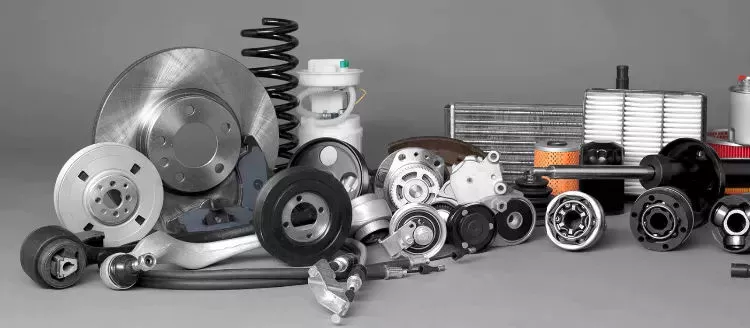
Les arbres de transmission peuvent-ils être adaptés à une utilisation dans les secteurs automobile et industriel ?
Oui, les arbres de transmission peuvent être adaptés aux secteurs automobile et industriel. Bien que leur conception et leurs spécifications puissent varier selon les exigences de l'application, les principes et fonctions fondamentaux des arbres de transmission restent les mêmes. Voici une explication détaillée :
1. Transmission de puissance :
Les arbres de transmission ont pour fonction principale de transmettre la puissance de rotation d'une source d'énergie, comme un moteur électrique, aux composants entraînés, tels que des roues, des machines ou d'autres systèmes mécaniques. Cette fonction fondamentale s'applique aussi bien aux applications automobiles qu'industrielles. Qu'il s'agisse de transmettre la puissance aux roues d'un véhicule ou le couple à des machines industrielles, le principe de base de la transmission de puissance reste le même pour les arbres de transmission dans les deux cas.
2. Considérations de conception :
Bien que la conception puisse varier selon les applications, les principes fondamentaux de conception des arbres de transmission restent similaires dans les secteurs automobile et industriel. Des facteurs tels que le couple requis, les vitesses de fonctionnement, la longueur et le choix des matériaux sont pris en compte dans les deux cas. Les arbres de transmission automobiles sont généralement conçus pour s'adapter à la dynamique du véhicule, notamment aux variations de vitesse, d'angles et de mouvements de suspension. Les arbres de transmission industriels, quant à eux, peuvent être conçus pour des machines et équipements spécifiques, en tenant compte de facteurs tels que la capacité de charge, les conditions de fonctionnement et les exigences d'alignement. Cependant, les principes de base relatifs aux dimensions, à la résistance et à l'équilibrage sont essentiels pour la conception des arbres de transmission, tant pour les applications automobiles qu'industrielles.
3. Sélection des matériaux :
Le choix des matériaux pour les arbres de transmission est influencé par les exigences spécifiques de l'application, qu'elle soit automobile ou industrielle. Dans le secteur automobile, les arbres de transmission sont généralement fabriqués à partir de matériaux tels que l'acier ou les alliages d'aluminium, choisis pour leur résistance, leur durabilité et leur capacité à supporter des conditions de fonctionnement variables. Dans le secteur industriel, les arbres de transmission peuvent être fabriqués à partir d'une gamme plus étendue de matériaux, notamment l'acier, l'acier inoxydable, voire des alliages spéciaux, en fonction de facteurs tels que la capacité de charge, la résistance à la corrosion ou la tolérance aux températures extrêmes. Le choix des matériaux est adapté aux besoins spécifiques de l'application tout en garantissant un transfert de puissance efficace et une grande durabilité.
4. Configurations des articulations :
Les arbres de transmission, qu'ils soient automobiles ou industriels, peuvent intégrer différentes configurations d'articulations afin de répondre aux exigences spécifiques de l'application. Les joints universels sont couramment utilisés dans les deux contextes pour permettre les mouvements angulaires et compenser les défauts d'alignement entre l'arbre de transmission et les composants entraînés. Les joints homocinétiques sont également utilisés, notamment dans les arbres de transmission automobiles, pour maintenir une vitesse de rotation constante et s'adapter aux différents angles de fonctionnement. Ces configurations d'articulations sont adaptées et optimisées en fonction des besoins spécifiques des applications automobiles ou industrielles.
5. Maintenance et entretien :
Bien que les pratiques d'entretien puissent varier entre les secteurs automobile et industriel, l'importance d'une inspection, d'une lubrification et d'un équilibrage réguliers demeure cruciale dans les deux cas. Les arbres de transmission, qu'ils soient automobiles ou industriels, bénéficient d'un entretien périodique pour garantir des performances optimales, identifier les problèmes potentiels et prolonger leur durée de vie. La lubrification des joints, l'inspection de l'usure et des dommages, ainsi que les procédures d'équilibrage constituent des opérations d'entretien courantes pour les arbres de transmission, tant dans le secteur automobile que dans l'industrie.
6. Personnalisation et adaptation :
Les arbres de transmission peuvent être personnalisés et adaptés aux exigences spécifiques de diverses applications automobiles et industrielles. Les fabricants proposent souvent des arbres de transmission de différentes longueurs, diamètres et configurations d'assemblage afin de s'adapter à une large gamme de véhicules ou de machines. Cette flexibilité permet d'adapter les arbres de transmission aux exigences spécifiques de couple, de vitesse et de dimensions des différentes applications, que ce soit dans le secteur automobile ou industriel.
En résumé, les arbres de transmission peuvent être adaptés aux applications automobiles et industrielles en tenant compte des exigences spécifiques de chaque secteur. Malgré d'éventuelles variations de conception, de matériaux, de configuration des joints et de pratiques d'entretien, les principes fondamentaux de la transmission de puissance, les critères de conception et les options de personnalisation restent applicables dans les deux contextes. Les arbres de transmission jouent un rôle crucial dans les applications automobiles et industrielles, assurant un transfert de puissance efficace et un fonctionnement fiable dans une large gamme de systèmes mécaniques.

How do drive shafts enhance the performance of automobiles and trucks?
Drive shafts play a significant role in enhancing the performance of automobiles and trucks. They contribute to various aspects of vehicle performance, including power delivery, traction, handling, and overall efficiency. Here’s a detailed explanation of how drive shafts enhance the performance of automobiles and trucks:
1. Power Delivery:
Drive shafts are responsible for transferring power from the engine to the wheels, enabling the vehicle to move forward. By efficiently transmitting power without significant losses, drive shafts ensure that the engine’s power is effectively utilized, resulting in improved acceleration and overall performance. Well-designed drive shafts with minimal power loss contribute to the vehicle’s ability to deliver power to the wheels efficiently.
2. Torque Transfer:
Drive shafts facilitate the transfer of torque from the engine to the wheels. Torque is the rotational force that drives the vehicle forward. High-quality drive shafts with proper torque conversion capabilities ensure that the torque generated by the engine is effectively transmitted to the wheels. This enhances the vehicle’s ability to accelerate quickly, tow heavy loads, and climb steep gradients, thereby improving overall performance.
3. Traction and Stability:
Drive shafts contribute to the traction and stability of automobiles and trucks. They transmit power to the wheels, allowing them to exert force on the road surface. This enables the vehicle to maintain traction, especially during acceleration or when driving on slippery or uneven terrain. The efficient power delivery through the drive shafts enhances the vehicle’s stability by ensuring balanced power distribution to all wheels, improving control and handling.
4. Handling and Maneuverability:
Drive shafts have an impact on the handling and maneuverability of vehicles. They help establish a direct connection between the engine and the wheels, allowing for precise control and responsive handling. Well-designed drive shafts with minimal play or backlash contribute to a more direct and immediate response to driver inputs, enhancing the vehicle’s agility and maneuverability.
5. Weight Reduction:
Drive shafts can contribute to weight reduction in automobiles and trucks. Lightweight drive shafts made from materials such as aluminum or carbon fiber-reinforced composites reduce the overall weight of the vehicle. The reduced weight improves the power-to-weight ratio, resulting in better acceleration, handling, and fuel efficiency. Additionally, lightweight drive shafts reduce the rotational mass, allowing the engine to rev up more quickly, further enhancing performance.
6. Mechanical Efficiency:
Efficient drive shafts minimize energy losses during power transmission. By incorporating features such as high-quality bearings, low-friction seals, and optimized lubrication, drive shafts reduce friction and minimize power losses due to internal resistance. This enhances the mechanical efficiency of the drivetrain system, allowing more power to reach the wheels and improving overall vehicle performance.
7. Performance Upgrades:
Drive shaft upgrades can be a popular performance enhancement for enthusiasts. Upgraded drive shafts, such as those made from stronger materials or with enhanced torque capacity, can handle higher power outputs from modified engines. These upgrades allow for increased performance, such as improved acceleration, higher top speeds, and better overall driving dynamics.
8. Compatibility with Performance Modifications:
Performance modifications, such as engine upgrades, increased power output, or changes to the drivetrain system, often require compatible drive shafts. Drive shafts designed to handle higher torque loads or adapt to modified drivetrain configurations ensure optimal performance and reliability. They enable the vehicle to effectively harness the increased power and torque, resulting in improved performance and responsiveness.
9. Durability and Reliability:
Robust and well-maintained drive shafts contribute to the durability and reliability of automobiles and trucks. They are designed to withstand the stresses and loads associated with power transmission. High-quality materials, appropriate balancing, and regular maintenance help ensure that drive shafts operate smoothly, minimizing the risk of failures or performance issues. Reliable drive shafts enhance the overall performance by providing consistent power delivery and minimizing downtime.
10. Compatibility with Advanced Technologies:
Drive shafts are evolving in tandem with advancements in vehicle technologies. They are increasingly being integrated with advanced systems such as hybrid powertrains, electric motors, and regenerative braking. Drive shafts designed to work seamlessly with these technologies maximize their efficiency and performance benefits, contributing to improved overall vehicle performance.
In summary, drive shafts enhance the performance of automobiles and trucks by optimizing power delivery, facilitating torque transfer, improving traction and stability, enhancing handling and maneuverability, reducing weight, increasing mechanical efficiency,and enabling compatibility with performance upgrades and advanced technologies. They play a crucial role in ensuring efficient power transmission, responsive acceleration, precise handling, and overall improved performance of vehicles.
What benefits do drive shafts offer for different types of vehicles and equipment?
Drive shafts offer several benefits for different types of vehicles and equipment. They play a crucial role in power transmission and contribute to the overall performance, efficiency, and functionality of various systems. Here’s a detailed explanation of the benefits that drive shafts provide:
1. Efficient Power Transmission:
Drive shafts enable efficient power transmission from the engine or power source to the wheels or driven components. By connecting the engine or motor to the driven system, drive shafts efficiently transfer rotational power, allowing vehicles and equipment to perform their intended functions. This efficient power transmission ensures that the power generated by the engine is effectively utilized, optimizing the overall performance and productivity of the system.
2. Versatility:
Drive shafts offer versatility in their applications. They are used in various types of vehicles, including cars, trucks, motorcycles, and off-road vehicles. Additionally, drive shafts are employed in a wide range of equipment and machinery, such as agricultural machinery, construction equipment, industrial machinery, and marine vessels. The ability to adapt to different types of vehicles and equipment makes drive shafts a versatile component for power transmission.
3. Torque Handling:
Drive shafts are designed to handle high levels of torque. Torque is the rotational force generated by the engine or power source. Drive shafts are engineered to efficiently transmit this torque without excessive twisting or bending. By effectively handling torque, drive shafts ensure that the power generated by the engine is reliably transferred to the wheels or driven components, enabling vehicles and equipment to overcome resistance, such as heavy loads or challenging terrains.
4. Flexibility and Compensation:
Drive shafts provide flexibility and compensation for angular movement and misalignment. In vehicles, drive shafts accommodate the movement of the suspension system, allowing the wheels to move up and down independently. This flexibility ensures a constant power transfer even when the vehicle encounters uneven terrain. Similarly, in machinery, drive shafts compensate for misalignment between the engine or motor and the driven components, ensuring smooth power transmission and preventing excessive stress on the drivetrain.
5. Weight Reduction:
Drive shafts contribute to weight reduction in vehicles and equipment. Compared to other forms of power transmission, such as belt drives or chain drives, drive shafts are typically lighter in weight. This reduction in weight helps improve fuel efficiency in vehicles and reduces the overall weight of equipment, leading to enhanced maneuverability and increased payload capacity. Additionally, lighter drive shafts contribute to a better power-to-weight ratio, resulting in improved performance and acceleration.
6. Durability and Longevity:
Drive shafts are designed to be durable and long-lasting. They are constructed using materials such as steel or aluminum, which offer high strength and resistance to wear and fatigue. Drive shafts undergo rigorous testing and quality control measures to ensure their reliability and longevity. Proper maintenance, including lubrication and regular inspections, further enhances their durability. The robust construction and long lifespan of drive shafts contribute to the overall reliability and cost-effectiveness of vehicles and equipment.
7. Safety:
Drive shafts incorporate safety features to protect operators and bystanders. In vehicles, drive shafts are often enclosed within a protective tube or housing, preventing contact with moving parts and reducing the risk of injury in the event of a failure. Similarly, in machinery, safety shields or guards are commonly installed around exposed drive shafts to minimize the potential hazards associated with rotating components. These safety measures ensure the well-being of individuals operating or working in proximity to vehicles and equipment.
In summary, drive shafts offer several benefits for different types of vehicles and equipment. They enable efficient power transmission, provide versatility in various applications, handle torque effectively, offer flexibility and compensation, contribute to weight reduction, ensure durability and longevity, and incorporate safety features. By providing these advantages, drive shafts enhance the performance, efficiency, reliability, and safety of vehicles and equipment across a wide range of industries.


editor by CX 2024-03-27