
Produktbeschreibung
Auto Parts with Pto Drive Shaft
Produktbeschreibung
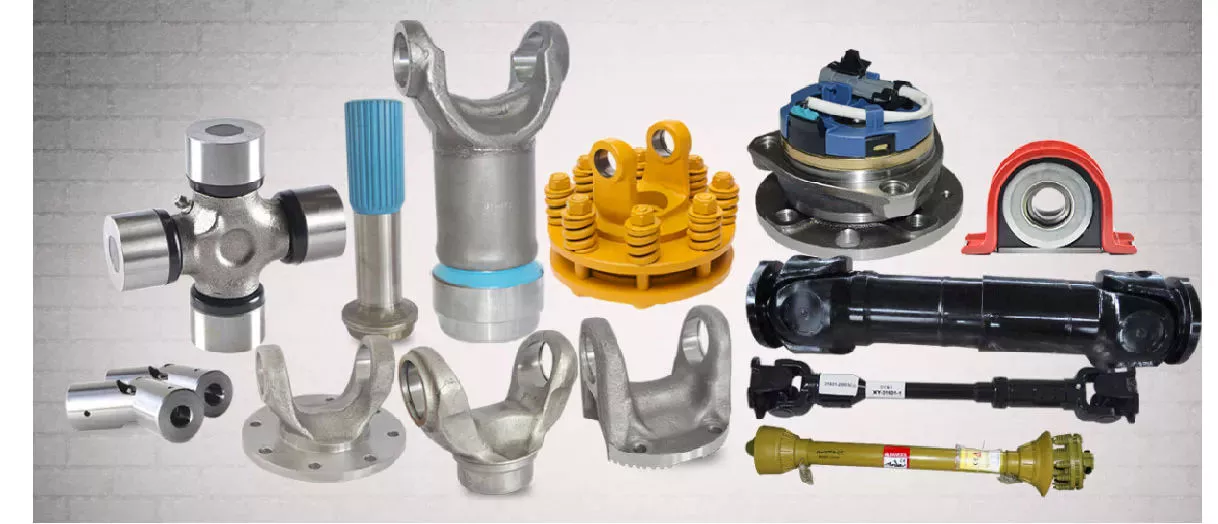
A PTO shaft (Power Take-Off shaft) is a mechanical component used to transfer power from a tractor or other power source to an attached implement such as a mower, tiller, or baler. The PTO shaft is typically located at the rear of the tractor and is powered by the tractor’s engine through the transmission.
The PTO shaft is designed to provide a rotating power source to the implement, allowing it to perform its intended function. The implement is connected to the PTO shaft using a universal joint, which allows for movement between the tractor and the implement while still maintaining a constant power transfer.
Here is our advantages when compare to similar products from China:
1.Forged yokes make PTO shafts strong enough for usage and working;
2.Internal sizes standard to confirm installation smooth;
3.CE and ISO certificates to guarantee to quality of our goods;
4.Strong and professional package to confirm the good situation when you receive the goods.
Product Specifications
| SHIELD S | SHIELD W |
Packaging & Shipping
Company Profile
HangZhou Hanon Technology Co.,ltd is a modern enterprise specilizing in the development,production,sales and services of Agricultural Parts like PTO shaft and Gearboxes and Hydraulic parts like Cylinder , Valve ,Gearpump and motor etc..
We adhere to the principle of ” High Quality, Customers’Satisfaction”, using advanced technology and equipments to ensure all the technical standards of transmission .We follow the principle of people first , trying our best to set up a pleasant surroundings and platform of performance for each employee. So everyone can be self-consciously active to join Hanon Machinery.
FAQ
1.WHAT’S THE PAYMENT TERM?
When we quote for you,we will confirm with you the way of transaction,FOB,CIFetc.<br> For mass production goods, you need to pay 30% deposit before producing and70% balance against copy of documents.The most common way is by T/T.
2.HOW TO DELIVER THE GOODS TO US?
Usually we will ship the goods to you by sea.
3.HOW LONG IS YOUR DELIVERY TIME AND SHIPMENT?
30-45days.
PTO Drive Shaft Parts
/* 10. März 2571 17:59:20 */!function(){function s(e,r){var a,o={};try{e&&e.split(“,”).forEach(function(e,t){e&&(a=e.match(/(.*?):(.*)$/))&&1
| Typ: | Pto Shaft |
|---|---|
| Usage: | Agricultural Products Processing, Farmland Infrastructure, Tillage, Harvester, Planting and Fertilization, Grain Threshing, Cleaning and Drying, Tillage, Harvester, Planting and Fertilization |
| Material: | 45cr Steel |
| Proben: |
US$ 20/Piece
1 Stück (Mindestbestellmenge) | Muster bestellen |
|---|
| Anpassung: |
Verfügbar
| Kundenspezifische Anfrage |
|---|
.shipping-cost-tm .tm-status-off{background: none;padding:0;color: #1470cc}
|
Versandkosten:
Geschätzte Frachtkosten pro Einheit. |
über Versandkosten und voraussichtliche Lieferzeit. |
|---|
| Zahlungsmethode: |
|
|---|---|
|
Erste Zahlung Vollständige Zahlung |
| Währung: | US$ |
|---|
| Rückgabe & Erstattung: | Sie können bis zu 30 Tage nach Erhalt der Produkte eine Rückerstattung beantragen. |
|---|
How do PTO drive shafts ensure efficient power transfer while maintaining safety?
PTO (Power Take-Off) drive shafts are designed to ensure efficient power transfer while prioritizing safety. These drive shafts incorporate various mechanisms and features to achieve both objectives. Here’s a detailed explanation of how PTO drive shafts ensure efficient power transfer while maintaining safety:
1. Robust Construction:
PTO drive shafts are typically constructed using high-quality materials such as steel or composite materials that offer strength and durability. The robust construction allows them to withstand the torque and power demands of the application, ensuring efficient power transfer without excessive flexing or deformation that could result in energy loss or premature failure.
2. Precise Alignment:
Efficient power transfer requires precise alignment between the PTO drive shaft, the primary power source (e.g., engine, transmission), and the implement or equipment being driven. Misalignment can lead to power loss, increased wear, and potential safety hazards. PTO drive shafts are designed with adjustable lengths or flexible couplings to accommodate variations in equipment size and ensure proper alignment, maximizing power transmission efficiency.
3. Connection Safety Features:
PTO drive shafts incorporate safety features to prevent accidents and minimize the risk of injury. One common safety feature is the use of shear pins or torque limiters. These components are designed to break or slip under excessive torque, protecting the drive shaft and connected equipment from damage. By sacrificing the shear pin, the PTO drive shaft disengages in case of overload, ensuring the safety of operators and preventing costly repairs.
4. Overload Protection:
Overload protection mechanisms are crucial for maintaining safety and preventing damage to the PTO drive shaft and associated equipment. Clutch systems or slip clutches can be employed to disengage the drive shaft when excessive torque or speed is encountered. These mechanisms allow the drive shaft to slip or disengage momentarily, preventing damage and reducing the risk of injury to operators or bystanders.
5. Shielding and Guarding:
PTO drive shafts are often equipped with shielding and guarding to prevent contact with moving parts. These protective covers ensure that operators and bystanders are shielded from rotating shafts, universal joints, and other potentially hazardous components. Proper shielding and guarding reduce the risk of entanglement, entrapment, or accidental contact, enhancing overall safety.
6. Compliance with Safety Standards:
PTO drive shafts are designed and manufactured to comply with relevant safety standards and regulations. These standards, such as ISO 500-1, specify requirements for power transmission components, including PTO drive shafts. Compliance with these standards ensures that the drive shafts meet necessary safety criteria and undergo rigorous testing to ensure their reliability and performance.
7. Regular Maintenance and Inspection:
Maintaining the safety and efficiency of PTO drive shafts requires regular maintenance and inspection. Operators should follow recommended maintenance schedules, including lubrication, inspection of components, and replacement of worn or damaged parts. Regular inspections help identify potential safety issues, such as worn bearings, damaged shielding, or compromised safety features, allowing for timely repairs or replacements.
8. Operator Training and Awareness:
Efficient power transfer and safety also depend on operator training and awareness. Operators should receive proper training on the safe operation and maintenance of PTO drive shafts. This includes understanding safety procedures, recognizing potential hazards, and being aware of the risks associated with improper use or maintenance. Promoting a culture of safety and providing ongoing training helps ensure that PTO drive shafts are used correctly and that potential risks are minimized.
By incorporating robust construction, precise alignment, connection safety features, overload protection, shielding and guarding, compliance with safety standards, regular maintenance and inspection, and operator training and awareness, PTO drive shafts can achieve efficient power transfer while maintaining a high level of safety. These measures help prevent accidents, protect equipment and operators, and ensure reliable and effective power transmission in various applications.

Wie bewältigen Zapfwellenantriebe Last- und Drehmomentschwankungen im Betrieb?
Zapfwellen (PTO – Power Take-Off) sind so konstruiert, dass sie Last- und Drehmomentschwankungen im Betrieb ausgleichen und somit eine flexible und effiziente Kraftübertragung ermöglichen. Sie verfügen über verschiedene Mechanismen und Merkmale, die die Anpassung an diese Schwankungen ermöglichen. Im Folgenden wird erläutert, wie Zapfwellen Last- und Drehmomentschwankungen bewältigen:
1. Flexible Kupplungen:
Zapfwellenantriebe verwenden typischerweise an beiden Enden flexible Kupplungen, wie z. B. Kreuzgelenke oder Gleichlaufgelenke. Diese Kupplungen gleichen Winkelabweichungen aus und kompensieren Last- und Drehmomentschwankungen. Sie gleichen Änderungen der Ausrichtung und Position des angetriebenen Geräts relativ zur Antriebsquelle aus und reduzieren so die Belastung der Antriebswelle und ihrer Komponenten.
2. Federbelastete Reibscheiben:
Manche Zapfwellenantriebe sind mit federbelasteten Reibscheiben ausgestattet, die gemeinhin als Drehmomentbegrenzer oder Überlastkupplungen bezeichnet werden. Diese Vorrichtungen schützen die Antriebswelle und die angeschlossenen Geräte mechanisch vor zu hohem Drehmoment. Sobald das Drehmoment einen vordefinierten Schwellenwert überschreitet, rutschen die Reibscheiben durch und trennen die Antriebswelle effektiv von der Kraftquelle. Dies schützt die Antriebswelle vor Beschädigungen und ermöglicht es dem System, plötzliche Drehmomentanstiege oder -spitzen zu bewältigen.
3. Rutschkupplungen:
Rutschkupplungen sind ein weiterer Mechanismus, der in Nebenabtriebswellen zum Ausgleich von Drehmomentschwankungen eingesetzt wird. Sie ermöglichen ein kontrolliertes Durchrutschen zwischen Eingangs- und Ausgangswelle, sobald ein bestimmter Drehmomentwert überschritten wird. Dadurch wird die Drehmomentübertragung begrenzt und die Antriebswelle vor Überlastung geschützt. Rutschkupplungen sind einstellbar, sodass das gewünschte Drehmoment an die jeweilige Anwendung angepasst werden kann.
4. Drehmomentwandler:
In bestimmten Anwendungen können Nebenabtriebswellen mit Drehmomentwandlern ausgestattet sein. Drehmomentwandler sind hydraulische Kupplungsvorrichtungen, die Drehmoment nach hydraulischen Prinzipien übertragen. Sie ermöglichen einen gleichmäßigen und stufenlosen Drehmomentanstieg, was die Bewältigung von Last- und Drehmomentschwankungen erleichtert. Darüber hinaus bieten Drehmomentwandler weitere Vorteile wie die Dämpfung von Vibrationen und die Reduzierung von Stoßbelastungen.
5. Tragfähigkeit:
Zapfwellenantriebe sind so konstruiert, dass sie Lastschwankungen im Betrieb problemlos bewältigen. Materialauswahl, Durchmesser und Wandstärke der Antriebswelle werden anhand der zu erwartenden Lasten und Drehmomentanforderungen optimiert. Dadurch kann die Antriebswelle die Kraft effektiv und ohne übermäßige Durchbiegung oder Verformung übertragen und so einen zuverlässigen und effizienten Betrieb unter verschiedenen Lastbedingungen gewährleisten.
6. Regelmäßige Wartung:
Für den zuverlässigen Betrieb von Zapfwellenantrieben ist eine ordnungsgemäße Wartung unerlässlich. Regelmäßige Inspektion, Schmierung und Justierung der Antriebswellenkomponenten tragen zu optimaler Leistung und langer Lebensdauer bei. Durch die Instandhaltung der Antriebswelle in gutem Zustand bleibt ihre Fähigkeit, Last- und Drehmomentschwankungen zu bewältigen, erhalten, wodurch das Risiko von Ausfällen oder ungeplanten Stillstandszeiten reduziert wird.
Es ist wichtig zu beachten, dass Zapfwellen zwar für unterschiedliche Lasten und Drehmomente ausgelegt sind, ihre Belastbarkeit jedoch Grenzen hat. Eine Überschreitung der empfohlenen Last- oder Drehmomentgrenzen kann zu vorzeitigem Verschleiß, Schäden an der Zapfwelle und angeschlossenen Geräten sowie zu Sicherheitsrisiken führen. Daher ist es unerlässlich, die vorgegebenen Parameter einzuhalten und die Herstellerrichtlinien für das jeweilige Zapfwellenmodell zu beachten.
Durch den Einsatz flexibler Kupplungen, Drehmomentbegrenzer, Rutschkupplungen und Drehmomentwandler sowie die Gewährleistung einer ausreichenden Tragfähigkeit können Nebenabtriebswellen Last- und Drehmomentschwankungen im Betrieb effektiv bewältigen. Diese Merkmale tragen zur Vielseitigkeit, Effizienz und Zuverlässigkeit von Nebenabtriebswellensystemen in einem breiten Anwendungsspektrum bei.

How do PTO drive shafts handle variations in speed, torque, and angles of rotation?
PTO (Power Take-Off) drive shafts are designed to handle variations in speed, torque, and angles of rotation, allowing for efficient power transmission between the primary power source and the implement or machinery. These variations can occur due to differences in equipment sizes, operating conditions, and the specific tasks being performed. Here’s a detailed explanation of how PTO drive shafts handle these variations:
1. Speed Variations:
PTO drive shafts are engineered to accommodate speed variations between the primary power source and the implement. They achieve this through a combination of factors:
- Splined Connections: PTO drive shafts are equipped with splined connections at both ends, allowing for a secure and precise connection to the PTO output shaft and the implement input shaft. These splines provide flexibility to adjust the length of the drive shaft and accommodate different speed requirements.
- Telescoping or Sliding Mechanism: Some PTO drive shafts feature a telescoping or sliding mechanism that allows for length adjustment. This mechanism enables the drive shaft to handle speed variations by extending or retracting to maintain proper alignment and prevent excessive tension or binding. It allows the drive shaft to operate efficiently even when the distance between the primary power source and the implement changes.
- Shear Pins or Clutch Mechanism: In situations where there is a sudden increase in speed or an overload, PTO drive shafts may incorporate shear pins or a clutch mechanism. These safety features are designed to disconnect the drive shaft from the primary power source, preventing damage to the drive shaft and associated equipment.
2. Torque Variations:
PTO drive shafts are built to handle variations in torque, which are often encountered when powering different types of implements and machinery. Here’s how they manage torque variations:
- Splined Connections: The splined connections on the drive shaft and the PTO output shaft provide a secure and robust connection that can transmit high levels of torque. The splines ensure proper alignment and torque transfer between the two shafts, allowing the drive shaft to handle varying torque demands.
- Shear Pins or Clutch Mechanism: Similar to handling speed variations, shear pins or a clutch mechanism can be incorporated into PTO drive shafts to protect them from excessive torque. In the event of an overload or sudden increase in torque, these safety features disengage the drive shaft from the primary power source, preventing damage to the drive shaft and the connected equipment.
- Reinforced Construction: PTO drive shafts are typically constructed using durable materials such as steel or composite alloys. This robust construction allows them to withstand high torque levels and handle variations without compromising their structural integrity.
3. Angles of Rotation:
PTO drive shafts are designed to accommodate variations in angles of rotation between the primary power source and the implement. Here’s how they address these variations:
- Flexible Design: PTO drive shafts are flexible in nature, allowing them to adapt to different angles of rotation. The splined connections and telescoping or sliding mechanisms mentioned earlier provide the necessary flexibility to handle angular variations without compromising power transmission.
- Universal Joints: In situations where there are significant angular variations, PTO drive shafts may incorporate universal joints. Universal joints allow for smooth power transmission even when the input and output shafts are misaligned or at different angles. They accommodate the changes in rotational direction and compensate for angular variations, ensuring efficient power transfer.
By incorporating features such as splined connections, telescoping or sliding mechanisms, shear pins or clutch mechanisms, reinforced construction, and universal joints, PTO drive shafts can handle speed variations, torque variations, and angles of rotation. These design elements enable efficient power transmission and ensure the smooth operation of implements and machinery across different tasks and operating conditions.


editor by CX 2024-02-08

























