
وصف المنتج
You can kindly find the specification details below:
HangZhou Mastery Machinery Technology Co., LTD helps manufacturers and brands fulfill their machinery parts by precision manufacturing. High precision machinery products like the shaft, worm screw, bushing, couplings, joints……Our products are used widely in electronic motors, the main shaft of the engine, the transmission shaft in the gearbox, couplers, printers, pumps, drones, and so on. They cater to different industries, including automotive, industrial, power tools, garden tools, healthcare, smart home, etc.
Mastery caters to the industrial industry by offering high-level Cardan shafts, pump shafts, and a bushing that come in different sizes ranging from diameter 3mm-50mm. Our products are specifically formulated for transmissions, robots, gearboxes, industrial fans, and drones, etc.
Mastery factory currently has more than 100 main production equipment such as CNC lathe, CNC machining center, CAM Automatic Lathe, grinding machine, hobbing machine, etc. The production capacity can be up to 5-micron mechanical tolerance accuracy, automatic wiring machine processing range covering 3mm-50mm diameter bar.
Key Specifications:
| Name | Shaft/Motor Shaft/Drive Shaft/Gear Shaft/Pump Shaft/Worm Screw/Worm Gear/Bushing/Ring/Joint/Pin |
| مادة | 40Cr/35C/GB45/70Cr/40CrMo |
| عملية | Machining/Lathing/Milling/Drilling/Grinding/Polishing |
| Size | 2-400mm(Customized) |
| Diameter | φ12.7(Customized) |
| Diameter Tolerance | 0.008mm |
| Roundness | 0.01mm |
| خشونة | Ra0.4 |
| Straightness | 0.01mm |
| Hardness | مخصص |
| Length | 127mm(Customized) |
| المعالجة الحرارية | مخصص |
| Surface treatment | Coating/Ni plating/Zn plating/QPQ/Carbonization/Quenching/Black Treatment/Steaming Treatment/Nitrocarburizing/Carbonitriding |
Quality Management:
- Raw Material Quality Control: Chemical Composition Analysis, Mechanical Performance Test, ROHS, and Mechanical Dimension Check
- Production Process Quality Control: Full-size inspection for the 1st part, Critical size process inspection, SPC process monitoring
- Lab ability: CMM, OGP, XRF, Roughness meter, Profiler, Automatic optical inspector
- Quality system: ISO9001, IATF 16949, ISO14001
- Eco-Friendly: ROHS, Reach.
Packaging and Shipping:
Throughout the entire process of our supply chain management, consistent on-time delivery is vital and very important for the success of our business.
Mastery utilizes several different shipping methods that are detailed below:
For Samples/Small Q’ty: By Express Services or Air Fright.
For Formal Order: By Sea or by air according to your requirement.
Mastery Services:
- One-Stop solution from idea to product/ODM&OEM acceptable
- Individual research and sourcing/purchasing tasks
- Individual supplier management/development, on-site quality check projects
- Muti-varieties/small batch/customization/trial orders are acceptable
- Flexibility on quantity/Quick samples
- Forecast and raw material preparation in advance are negotiable
- Quick quotes and quick responses
General Parameters:
If you are looking for a reliable machinery product partner, you can rely on Mastery. Work with us and let us help you grow your business using our customizable and affordable products. /* 22 يناير 2571 19:08:37 */!function(){function s(e,r){var a,o={};try{e&&e.split(“,").forEach(function(e,t){e&&(a=e.match(/(.*?):(.*)$/))&&1
| مادة: | الفولاذ الكربوني |
|---|---|
| حمولة: | عمود الدوران |
| الصلابة والمرونة: | الصلابة / المحور الصلب |
| دقة أبعاد قطر المحور: | IT6-IT9 |
| شكل المحور: | عمود مستقيم |
| شكل العمود: | المحور الحقيقي |
| التخصيص: |
متاح
| طلب مخصص |
|---|
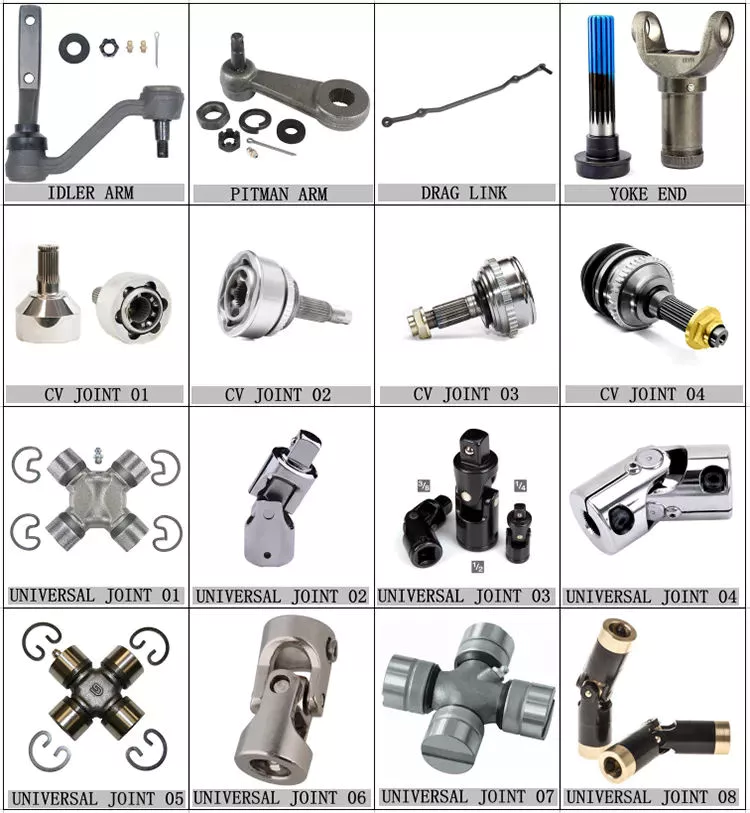
Can PTO shafts be adapted for use in both agricultural and industrial settings?
Yes, PTO (Power Take-Off) shafts can be adapted for use in both agricultural and industrial settings. While PTO shafts are commonly associated with agricultural machinery, they are versatile components that can be utilized in various applications beyond the agricultural sector. With appropriate modifications and considerations, PTO shafts can effectively transfer power in industrial settings as well. Here’s a detailed explanation of how PTO shafts can be adapted for both agricultural and industrial use:
1. Standard PTO Shaft Design: PTO shafts have a standardized design that allows for compatibility and interchangeability across different equipment and machinery. This standardization enables PTO shafts to be used in various applications, including both agricultural and industrial settings. The basic components of a PTO shaft, such as the universal joints, splined shafts, and protective guards, remain consistent, regardless of the specific application. This consistency allows for easy adaptation and integration into different machinery and equipment.
2. Shaft Length and Sizing: PTO shafts can be customized in terms of length and sizing to suit specific requirements in both agricultural and industrial settings. The length of the shaft can be adjusted to accommodate different distances between the power source and the driven machinery. This flexibility allows for optimal power transmission and ensures compatibility with various equipment setups. Similarly, the sizing of the PTO shaft, including the diameter and splined shaft specifications, can be tailored to meet the torque and power requirements of different applications, whether in agriculture or industry.
3. Power Requirements: PTO shafts are designed to transfer power from a power source to driven machinery. In agricultural settings, the power source is typically a tractor or other agricultural vehicles, while in industrial settings, it can be an engine, motor, or power unit specific to the industry. PTO shafts can be adapted to handle different power requirements by considering factors such as torque capacity, rotational speed, and the specific demands of the machinery or equipment being driven. By selecting the appropriate PTO shaft based on the power requirements, the shaft can effectively transfer power in both agricultural and industrial applications.
4. اعتبارات السلامة: Safety is a critical aspect of PTO shaft design and usage, regardless of the application. PTO shafts incorporate safety features such as protective guards and shields to prevent accidental contact with rotating components. These safety measures are essential in agricultural and industrial settings to minimize the risk of entanglement, injury, or damage. Adapting PTO shafts for industrial use may require additional safety considerations based on the specific hazards present in industrial environments. However, the core safety principles and features of PTO shafts can be applied and adapted to ensure safe operation in both settings.
5. Specialized Attachments: PTO shafts can be equipped with specialized attachments or adapters to accommodate different driven machinery or equipment. In agricultural settings, PTO shafts commonly connect to implements such as mowers, balers, or sprayers. In industrial settings, PTO shafts may be adapted to connect to various industrial machinery, including pumps, generators, compressors, or conveyors. These specialized attachments ensure compatibility and efficient power transfer between the PTO shaft and the driven equipment, allowing for seamless integration in both agricultural and industrial applications.
6. Environmental Considerations: PTO shafts can be adapted to address specific environmental conditions in both agricultural and industrial settings. For example, in agricultural applications, PTO shafts may need to withstand exposure to dirt, dust, moisture, and varying weather conditions. Industrial settings may have their unique environmental challenges, such as exposure to chemicals, high temperatures, or abrasive materials. By selecting PTO shaft materials, protective coatings, and seals suitable for the specific environment, the shafts can be adapted to ensure reliable and durable performance in various settings.
7. Compliance with Standards: PTO shafts, whether used in agricultural or industrial settings, need to comply with relevant safety standards and regulations. Manufacturers adhere to guidelines and requirements set by organizations such as the American Society of Agricultural and Biological Engineers (ASABE) or other regional safety authorities. Compliance ensures that PTO shafts meet safety criteria and performance standards applicable to both agricultural and industrial environments. Users can rely on standardized PTO shafts that have undergone testing and certification, offering assurance regarding their reliability and safety.
By considering the factors mentioned above, PTO shafts can be adapted to effectively transfer power in both agricultural and industrial settings. The versatile nature of PTO shafts, coupled with customization options, safety considerations, specialized attachments, and compliance with standards, allows for their successful integration into a wide range of machinery and equipment across various industries.

How do PTO shafts handle variations in load and torque during operation?
PTO (Power Take-Off) shafts are designed to handle variations in load and torque during operation by employing specific mechanisms and features that ensure efficient power transfer and protection against overload conditions. Here’s a detailed explanation of how PTO shafts handle variations in load and torque:
1. Mechanical Design: PTO shafts are engineered with robust mechanical design principles that enable them to handle variations in load and torque. They are typically constructed using high-strength materials such as steel, which provides durability and resistance to bending or twisting forces. The shaft’s diameter, wall thickness, and overall dimensions are carefully calculated to withstand the expected torque levels and load variations. The mechanical design of the PTO shaft ensures that it can transmit power reliably and accommodate the dynamic forces encountered during operation.
2. Universal Joints: Universal joints are a key component of PTO shafts that allow for flexibility and compensation of misalignment between the power source and driven machinery. These joints can accommodate variations in angular alignment, which may occur due to changes in load or movement of the machinery. Universal joints consist of a cross-shaped yoke with needle bearings that allow for smooth rotation and transfer of torque, even when the shafts are not perfectly aligned. The design of universal joints enables PTO shafts to handle variations in load and torque while maintaining consistent power transmission.
3. Slip Clutches: Slip clutches are often incorporated into PTO shafts to provide overload protection. These clutches allow the PTO shaft to slip or disengage momentarily when excessive torque or resistance is encountered. Slip clutches typically consist of friction plates that can be adjusted to a specific torque setting. When the torque surpasses the predetermined limit, the clutch slips, preventing damage to the PTO shaft and connected equipment. Slip clutches are particularly useful when sudden changes in load or torque occur, providing a safety mechanism to protect the PTO shaft and associated machinery.
4. Torque Limiters: Torque limiters are another protective feature found in some PTO shafts. These devices are designed to automatically disengage the power transmission when a predetermined torque threshold is exceeded. Torque limiters can be mechanical, such as shear pin couplings or friction clutches, or electronic, utilizing sensors and control systems. When the torque exceeds the set limit, the torque limiter disengages, preventing further power transfer and protecting the PTO shaft from overload conditions. Torque limiters are effective in handling sudden spikes in torque and safeguarding the PTO shaft and associated equipment.
5. Maintenance and Inspection: Regular maintenance and inspection of PTO shafts are essential to ensure their proper functioning and ability to handle variations in load and torque. Routine maintenance includes lubrication of universal joints, inspection of shaft integrity, and tightening of fasteners. Regular inspections allow for early detection of wear, misalignment, or other issues that may affect the PTO shaft’s performance. By addressing maintenance and inspection requirements, operators can identify and address any concerns that may arise due to variations in load and torque, ensuring the continued safe and efficient operation of the PTO shaft.
6. Operator Awareness and Control: Operators play a crucial role in managing variations in load and torque during PTO shaft operation. They should be aware of the machinery’s operational limits, including the recommended torque ratings and load capacities of the PTO shaft. Proper training and understanding of the equipment’s capabilities enable operators to make informed decisions and adjust the operation when encountering significant load or torque changes. Operators should also be vigilant in monitoring the equipment’s performance, watching for any signs of excessive vibration, noise, or other indications of potential issues related to load and torque variations.
By incorporating robust mechanical design, utilizing universal joints, slip clutches, torque limiters, and implementing proper maintenance practices, PTO shafts are equipped to handle variations in load and torque during operation. These features ensure reliable power transmission, protect against overload conditions, and contribute to the safe and efficient functioning of the PTO shaft and the machinery it drives.

كيف تساهم أعمدة نقل الطاقة في نقل الطاقة من الجرارات إلى المعدات الزراعية؟
تلعب أعمدة نقل الحركة (PTO) دورًا محوريًا في نقل الطاقة من الجرارات إلى المعدات الزراعية والصناعية. فهي توفر وسيلة موثوقة وفعالة لنقل الطاقة، مما يُمكّن الجرارات من تشغيل مختلف المعدات وأداء مجموعة واسعة من المهام. إليكم شرحًا مفصلًا لكيفية مساهمة أعمدة نقل الحركة في نقل الطاقة من الجرارات إلى المعدات:
مصدر الطاقة: تُجهز الجرارات بمحركات قوية مصممة لتوليد كميات كبيرة من الطاقة الميكانيكية. تُستغل هذه الطاقة لتشغيل عجلات الجرار وأنظمة الهيدروليك، بالإضافة إلى توفير الطاقة اللازمة لتركيب المعدات عبر عمود نقل الحركة (PTO). يتصل عمود نقل الحركة عادةً بالجزء الخلفي أو الجانبي من الجرار، حيث توجد آلية نقل الطاقة. تستمد آلية نقل الطاقة الطاقة مباشرةً من محرك الجرار أو ناقل الحركة، مما يسمح بنقل الطاقة بكفاءة إلى عمود نقل الحركة.
تصميم عمود نقل الحركة: صُممت أعمدة نقل الحركة (PTO) كمكونات أساسية في نظام نقل الحركة، حيث تنقل الطاقة الدورانية وعزم الدوران من مأخذ الطاقة في الجرار إلى الآلة الزراعية. تتكون هذه الأعمدة من أنبوب معدني مجوف مزود بوصلات عالمية في كل طرف. تعمل هذه الوصلات على استيعاب أي انحرافات زاوية، مما يسمح لعمود نقل الحركة بنقل الطاقة حتى في حال عدم محاذاة الجرار والآلة الزراعية بشكل مثالي. كما زُوّد عمود نقل الحركة بواقٍ أو غطاء أمان لمنع أي تلامس عرضي مع العمود الدوار، مما يضمن سلامة المشغل أثناء التشغيل.
مشاركة الموظفين في الإجازات المدفوعة: لنقل الطاقة من الجرار إلى الآلة، يجب تشغيل عمود نقل الحركة (PTO). تُجهز الجرارات بآلية قابض PTO التي تسمح للمشغلين بتشغيل أو فصل عمود PTO حسب الحاجة. عند تشغيل قابض PTO، تتدفق الطاقة من محرك الجرار عبر آلية نقل الحركة إلى عمود PTO. ثم تُنقل هذه الطاقة الدورانية عبر عمود PTO إلى الآلة، لتشغيل أجزائها العاملة.
نقل الطاقة الدوراني: تُنقل الطاقة الدورانية الناتجة عن محرك الجرار إلى عمود نقل الحركة (PTO) عبر آلية نقل الطاقة. يدور عمود نقل الحركة، المتصل مباشرةً بآلية نقل الطاقة، بنفس سرعة دوران المحرك. ثم تُنقل هذه الطاقة الدورانية من عمود نقل الحركة إلى نظام نقل الحركة أو علبة التروس الخاصة بالآلة. يقوم نظام نقل الحركة بدوره بتوزيع الطاقة على مكونات الآلة العاملة، مثل الشفرات والمثاقب والمضخات، مما يُمكّنها من أداء وظائفها.
مواءمة السرعة والقوة: صُممت أعمدة نقل الحركة (PTO) لتتوافق مع سرعة الدوران ومتطلبات الطاقة لمختلف الأدوات. غالبًا ما تحتوي الجرارات على إعدادات سرعة متعددة لعمود نقل الحركة، مما يسمح للمشغلين باختيار السرعة المناسبة للأداة المستخدمة. قد تتطلب الأدوات المختلفة سرعات دوران مختلفة للعمل بكفاءة، ويتيح عمود نقل الحركة سهولة التعديل لتلبية هذه المتطلبات. بالإضافة إلى ذلك، تُنقل الطاقة المولدة من محرك الجرار عبر عمود نقل الحركة، مما يوفر عزم الدوران اللازم لتشغيل مكونات الأداة بكفاءة.
التنوع والكفاءة: توفر أعمدة نقل الحركة (PTO) مرونة وكفاءة عاليتين في العمليات الزراعية والصناعية. فهي تُمكّن الجرارات من تشغيل مجموعة واسعة من الأدوات، بما في ذلك جزازات العشب، وآلات كبس التبن، وآلات الحراثة، وآلات الرش، وآلات نقل الحبوب، وغيرها. ومن خلال توصيل الأدوات مباشرةً بمصدر طاقة الجرار، يستطيع المشغلون التبديل بسرعة بين المهام دون الحاجة إلى مولدات طاقة أو محركات منفصلة. تُسهم هذه المرونة والكفاءة في تبسيط سير العمل، وخفض التكاليف، وزيادة الإنتاجية الإجمالية في البيئات الزراعية والصناعية.
اعتبارات السلامة: على الرغم من أهمية أعمدة نقل الحركة (PTO) في نقل الطاقة، إلا أنها قد تشكل مخاطر على السلامة في حال سوء استخدامها. إذ يمكن أن يتسبب العمود الدوار والمفاصل العالمية في إصابات بالغة إذا لامسها المشغلون أثناء التشغيل. ولذلك، تُزود أعمدة نقل الحركة بدروع أو واقيات أمان لمنع التلامس العرضي. يجب على المشغلين التأكد دائمًا من تثبيت دروع الأمان بإحكام قبل تشغيل عمود نقل الحركة. ويُعد التدريب المناسب والالتزام بإرشادات السلامة والصيانة الدورية لأعمدة نقل الحركة وميزات السلامة المرتبطة بها أمورًا بالغة الأهمية لضمان التشغيل الآمن.
باختصار، تُعدّ أعمدة نقل الحركة (PTO) مكونات أساسية تُمكّن من نقل الطاقة من الجرارات إلى المعدات في التطبيقات الزراعية والصناعية. فهي توفر وسيلة موثوقة وفعّالة لنقل الطاقة، مما يسمح للجرارات بتشغيل مختلف المعدات وأداء مجموعة واسعة من المهام. ومن خلال تشغيل قابض نقل الحركة ونقل الطاقة الدورانية عبر عمود نقل الحركة، تُشغّل الجرارات المكونات العاملة للمعدات، مما يوفر تنوعًا وكفاءة وإنتاجية في العمليات الزراعية والصناعية.


editor by CX 2024-04-30

























